Garbha Pindasana (गर्भ पिंडासन)
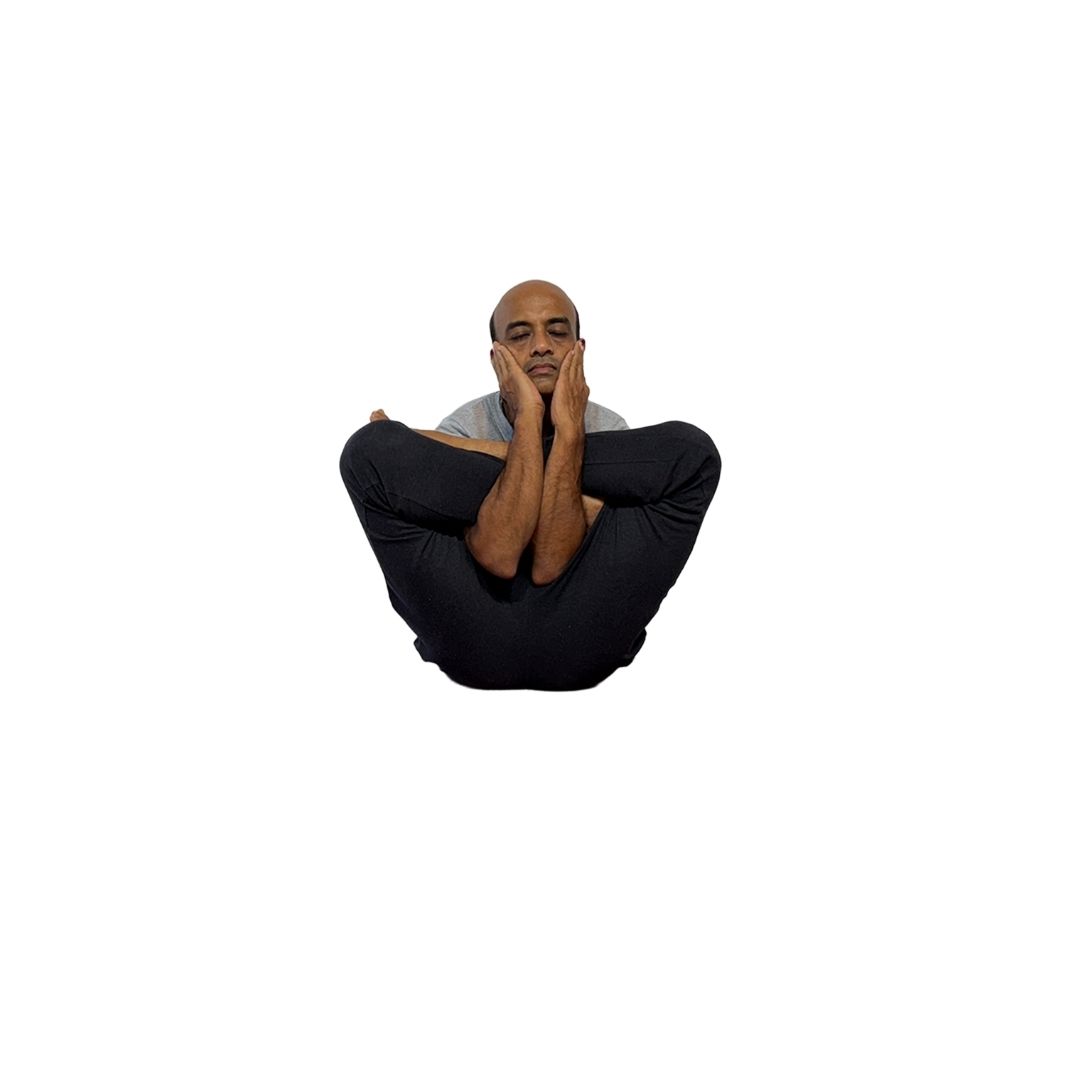
Garbha Pindasana (गर्भ पिंडासन), or Embryo Pose, is a seated yoga posture that involves a half-lotus position and a core-strengthening bind. The name comes from the Sanskrit words “garbha” (embryo or fetus), “pinda” (body), and “asana”
How to do Garbha Pindasana
Benefits of Garbha Pindasana
- Tones and Massages Internal Organs:
The compression of the abdomen in this pose massages and stimulates the digestive organs, including the liver, spleen, pancreas, and kidneys, which can improve digestion and aid in detoxification. - Strengthens the Core and Back:
Balancing on the tailbone requires significant engagement of the core muscles, which strengthens the abdomen and helps to improve posture. It also relaxes and stretches the spine, particularly the lumbar region. - Enhances Flexibility and Mobility:
The pose deeply stretches the hips, glutes, hamstrings, and ankles, increasing their flexibility and range of motion.
- Improves Balance and Concentration:
Balancing on the sacrum while holding the pose requires a great deal of focus and body-breath awareness, which helps to calm the mind and improve overall balance. - Calms the Nervous System:
The pose is said to have a calming effect on the nervous system, alleviating stress, anxiety, and anger. It can activate the parasympathetic nervous system, promoting a sense of peace.
Contraindications of Garbha Pindasana
Avoid or modify this pose if you have:
- Knee, Ankle, or Hip Injuries:
This pose puts significant pressure on these joints. If you have any injuries or a lack of flexibility, you risk further harm. - Spinal Problems:
Individuals with sciatica, a slipped disc, or other spinal issues should avoid this pose due to the deep spinal flexion and pressure on the back. - Recent Surgery:
If you have had any recent surgery, especially on the spine, hips, knees, or abdomen, you should not attempt this pose.
- High Blood Pressure or Vertigo:
Balancing in this pose requires a strong sense of stability. Those with high blood pressure or balance issues like vertigo should avoid it. - Pregnancy and Menstruation:
Pregnant women should not practice this pose. Women who are menstruating should also avoid it. - Lack of Body-Breath Connection:
This pose is complex and requires awareness of the body and breath to maintain balance. It’s not a pose for beginners.
Anatomy (Muscles involved)
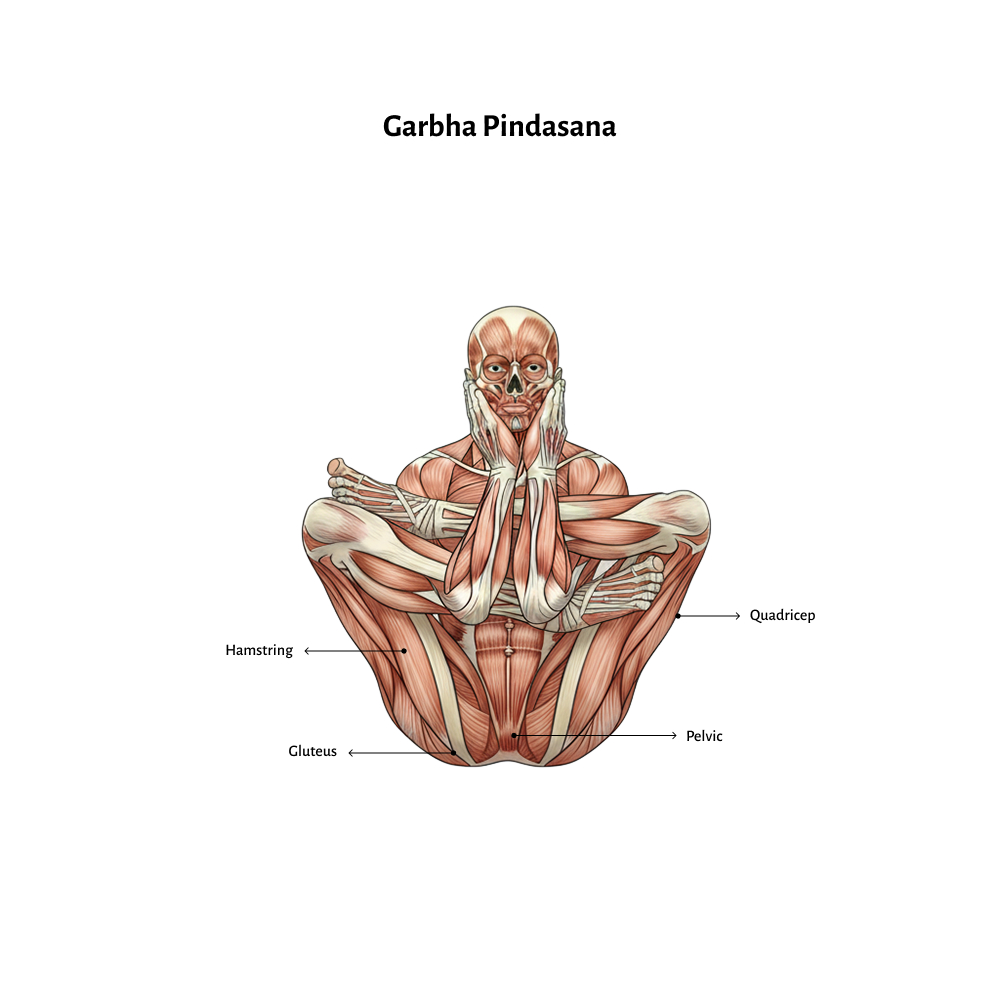
This pose engages a complex network of muscles and joints:
Hips and Pelvis:
The pose requires a deep external rotation of the hips to achieve the Padmasana position.
Spine and Core:
The pose is a deep spinal flexion, requiring strength from the abdominal muscles (rectus abdominis, obliques) to maintain the rounded shape and balance on the tailbone.
Muscles:
The pose stretches the glutes, hamstrings, and pelvic floor muscles while strengthening the core, hip flexors, and back muscles.
Joints:
The ankles, knees, and hip joints are all engaged. It is crucial to have sufficient flexibility in the hips to avoid putting excessive pressure on the knees.