Garudasana (गरुडासन)
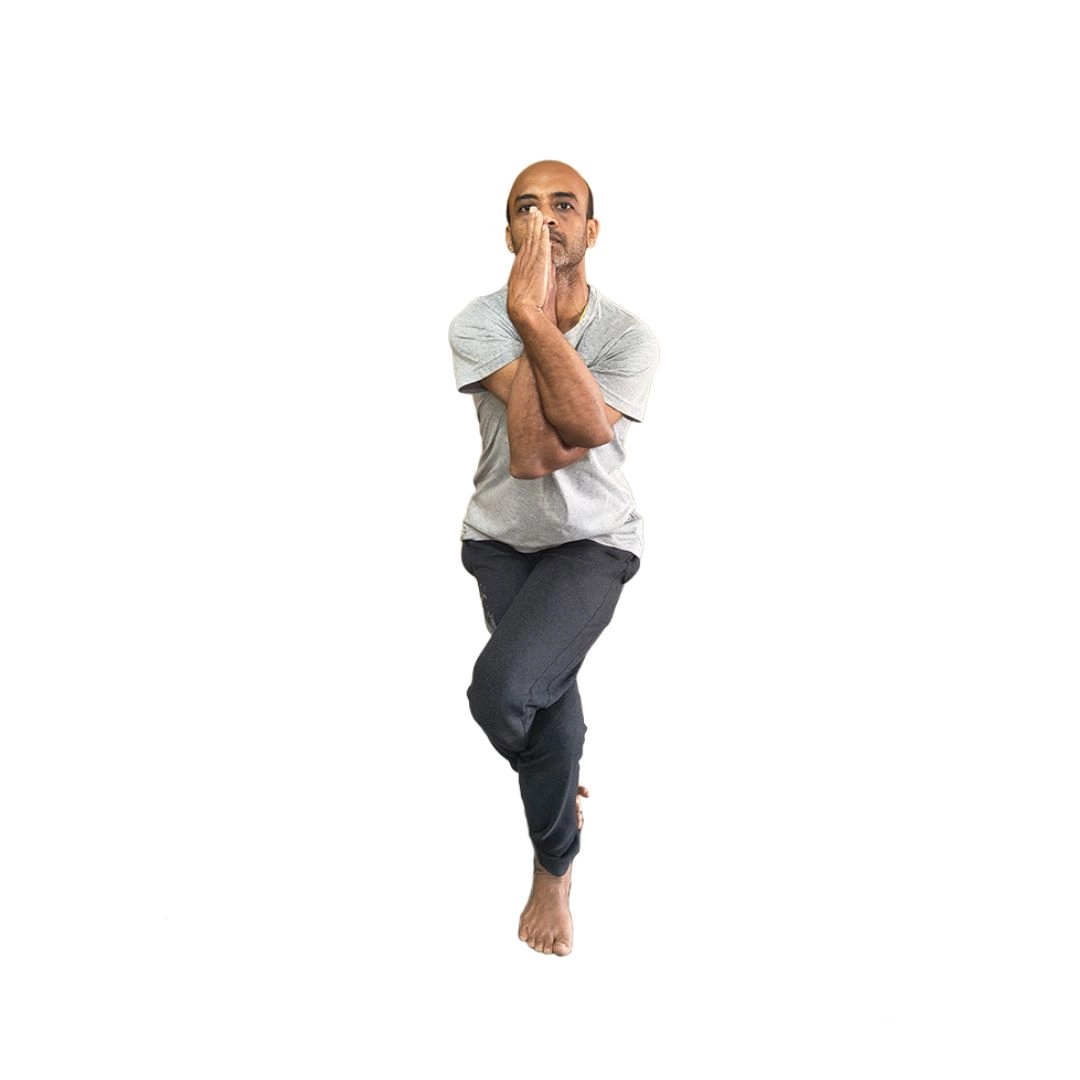
Garudasana (गरुडासन), or Eagle Pose, is a standing balancing posture that requires focus, coordination, and a sense of “unfolding.” The name comes from the Sanskrit words “Garuda” (the king of birds or an eagle-like mythical creature) and “asana” (posture). Unlike many other poses that expand outward, Garudasana involves wrapping the limbs inward toward the midline of the body.
How to do Garudasana
Benefits of Garudasana
- Improves Balance and Coordination:
Balancing on one leg while the limbs are entwined requires significant mental focus and neuromuscular coordination. - Stretches the Upper Back:
The arm position provides a deep stretch to the rhomboids, trapezius, and posterior deltoids, making it excellent for releasing tension held between the shoulder blades. - Strengthens the Legs:
The standing leg works hard to support the body, strengthening the ankles, calves, and quadriceps.
- Opens the Hips:
Crossing the thighs provides a gentle stretch to the outer hips and IT band. - Enhances Concentration:
Because it is a complex balance, it helps quiet the mind and improve overall focus.
Contraindications of Garudasana
Avoid or modify this pose if you have:
- Knee Injuries:
The twisting action of the legs can put stress on the knee joints. If you have knee pain, avoid hooking the foot behind the calf; simply cross the thighs. - Ankle or Shoulder Injuries:
Be cautious if you have recent injuries in these areas.
- Pregnancy:
Later stages of pregnancy may make balancing difficult; practicing near a wall for support is recommended.
Anatomy (Muscles involved)
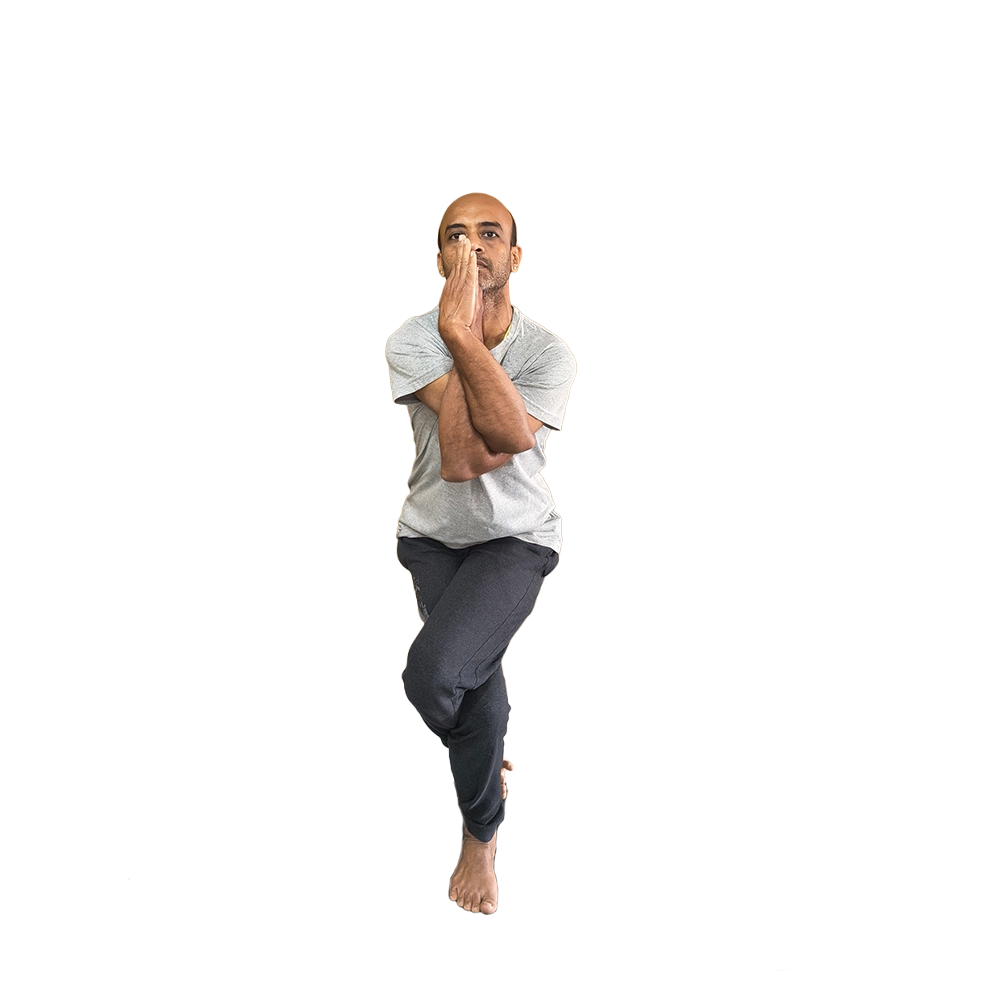
This pose engages a complex network of muscles and joints:
Muscles Engaged:
The core, gluteus medius (for stabilization), quadriceps, and calves of the standing leg.
Muscles Stretched:
The rhomboids, deltoids, and the outer hip muscles of the top leg.