Hanumanasana (हनुमानासन)
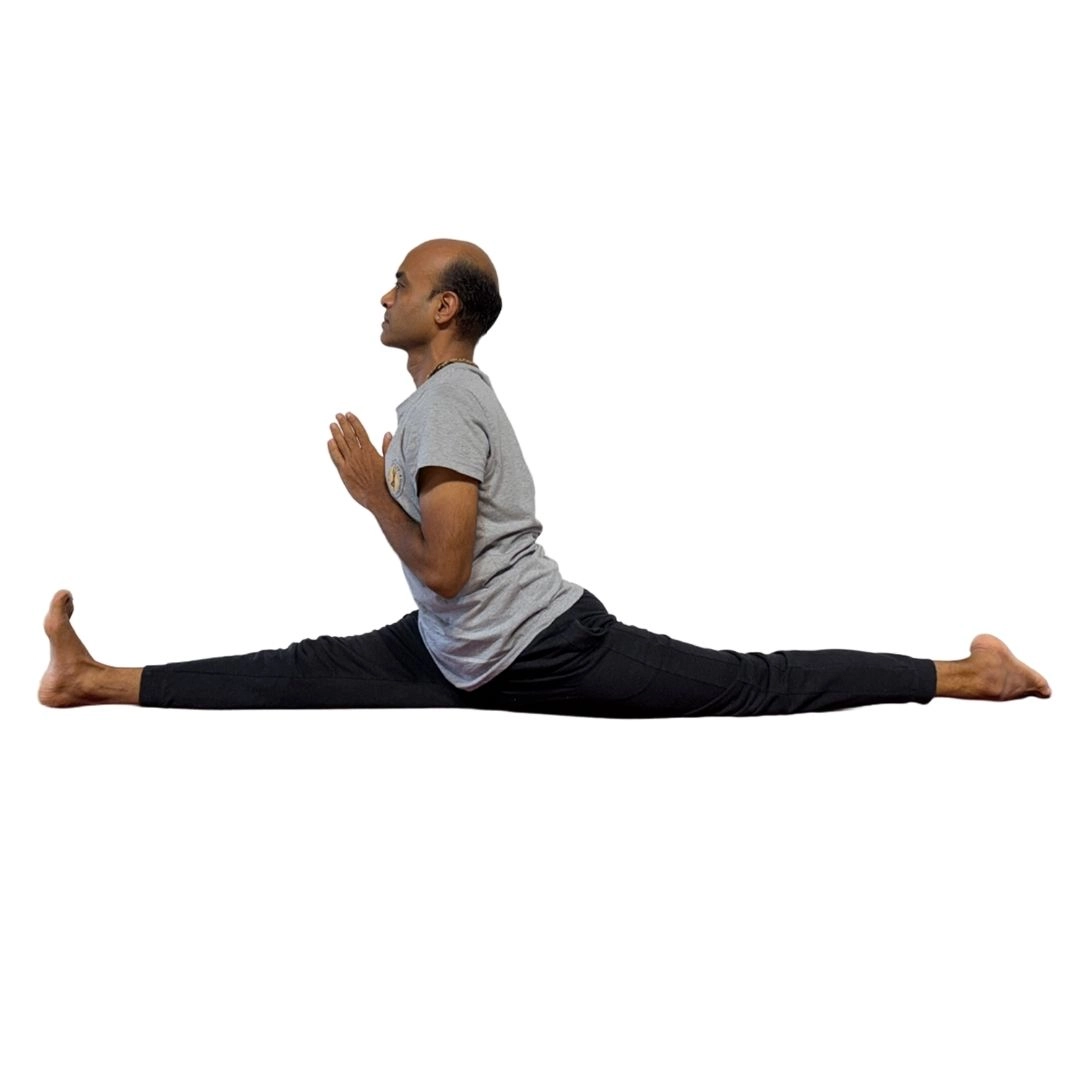
Hanumanasana (हनुमानासन), or Full Split Pose, is a challenging yoga posture that represents a deep hip and hamstring stretch. The pose is named after Hanuman, the monkey god from the Hindu epic Ramayana. This deep stretch requires a significant amount of flexibility and strength.
How to do Hanumanasana
Benefits of Hanumanasana
- Increases Flexibility:
It deeply stretches the hamstrings, hip flexors, groin, and calves. - Strengthens Muscles:
It builds strength in the quadriceps, glutes, and core muscles as they work to stabilize the body. - Improves Balance and Stability:
The pose requires a great deal of balance and body awareness.
- Relieves Tension:
The deep stretch can help release tension in the hips and legs, which can be beneficial for those with a sedentary lifestyle. - Mental and Spiritual Benefits:
The pose is said to foster courage, patience, and determination, reflecting the qualities of Lord Hanuman. It can also help relieve stress and anxiety.
Contraindications of Hanumanasana
Avoid or modify this pose if you have:
- Injuries:
Any recent or chronic injury in the hamstrings, groin, hips, knees, or ankles. - Sciatica:
While some sources suggest it can help, if you have acute sciatica or a slip disc, this pose can put undesirable pressure on the lumbar spine.
- Pregnancy:
The pose puts significant pressure on the groin and abdomen and should be avoided. - Hernia:
Individuals with a hernia should not attempt this pose.
Anatomy (Muscles involved)
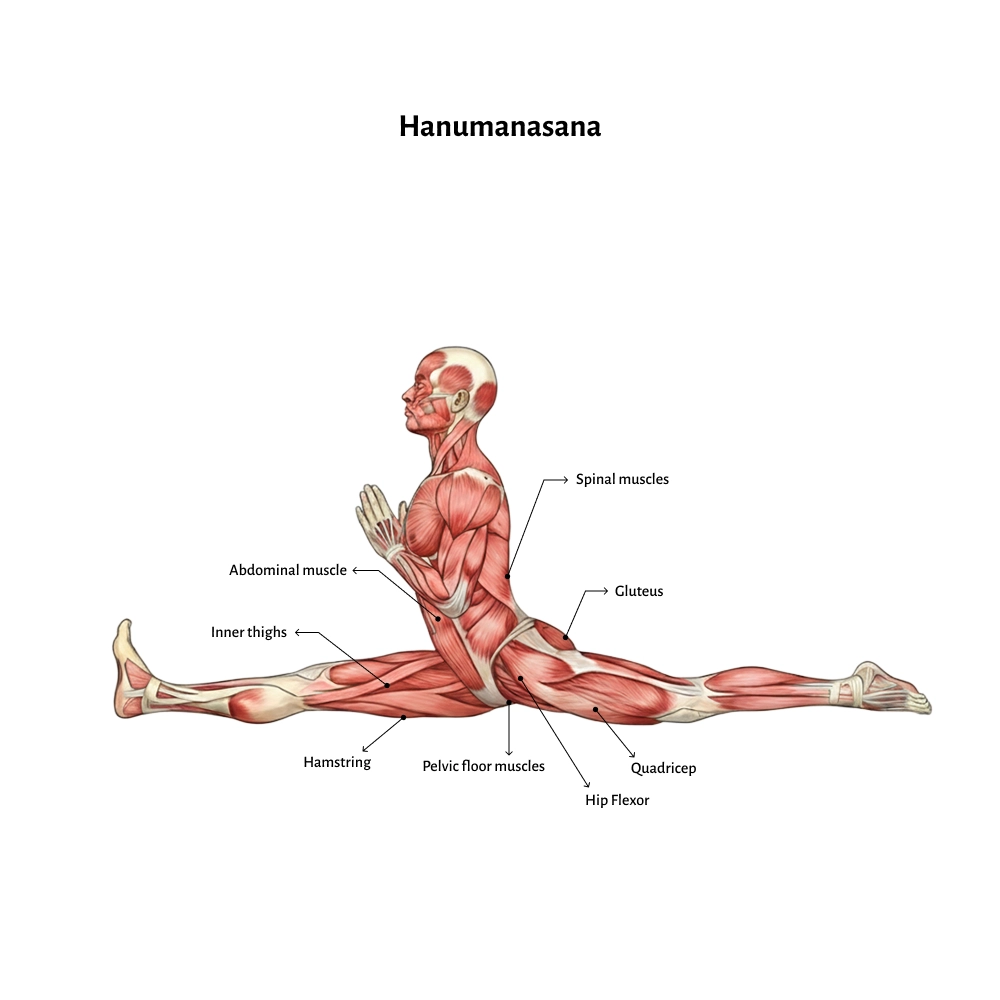
Hanumanasana is a complex pose that involves a deep stretch of several muscle groups:
Front Leg:
- Hamstrings:
The muscles at the back of the thigh (biceps femoris, semitendinosus, and semimembranosus) are in a state of deep lengthening. - Gluteus Maximus:
The large muscle of the buttocks is also stretched.
Back Leg:
- Hip Flexors:
The psoas and iliacus muscles, which are often tight, are intensely stretched. - Quadriceps:
The muscles on the front of the thigh are lengthened. - Core and Spine:
The abdominal muscles and erector spinae work to keep the torso upright and the pelvis stable.
The opposing actions in the legs—forward bending in the front leg and backward bending in the back leg—make this pose particularly intense. It’s crucial to use muscular engagement to protect your joints and prevent overstretching.