Janu Sirsasana (जाणु शीर्षासन)
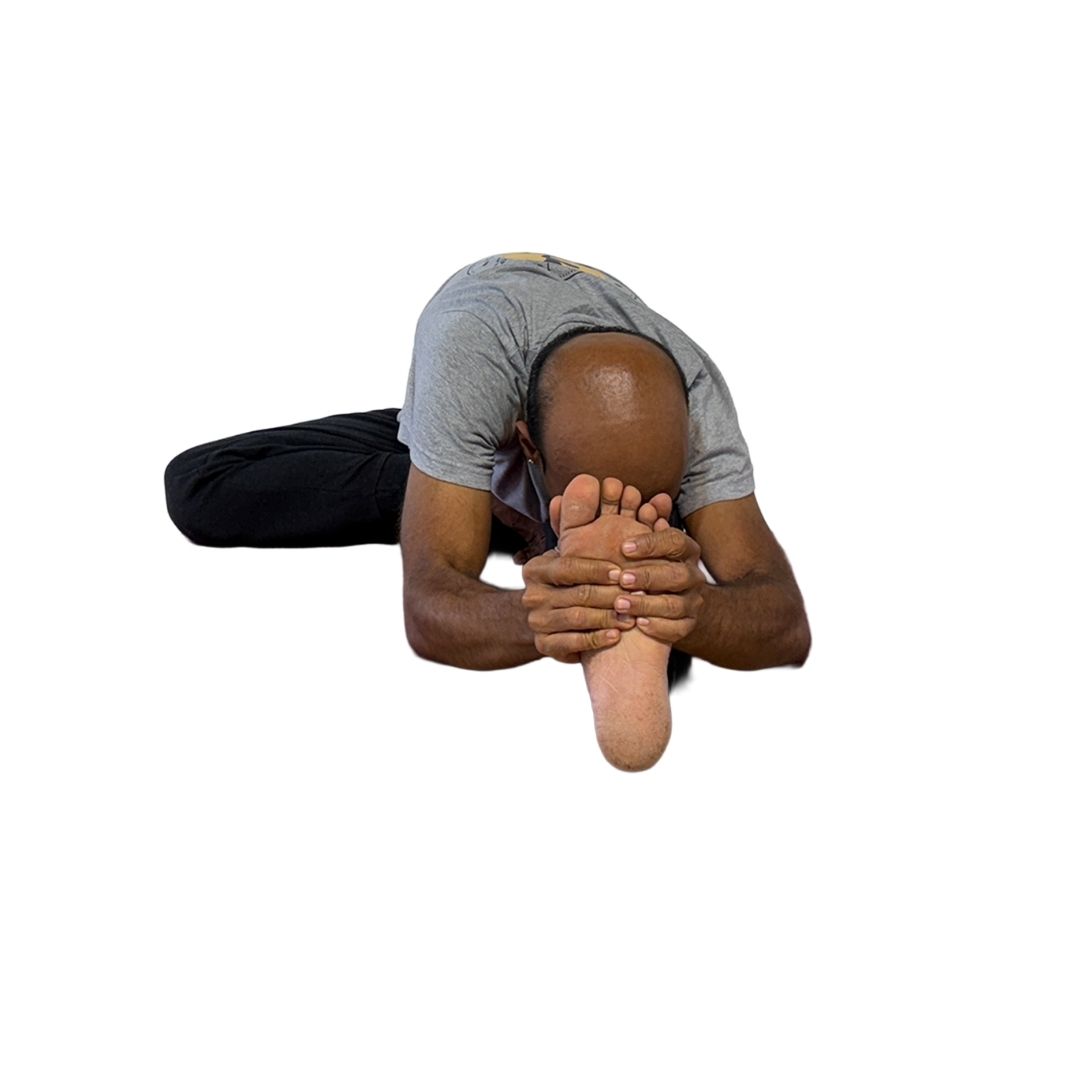
Janu Sirsasana जाणु शीर्षासन (Head-to-Knee Pose) is a seated forward bend with three main variations (A, B, and C). While the general principles are similar, each variation has a unique leg position that targets different areas of the hip and ankle.
How to do Janu Sirsasana
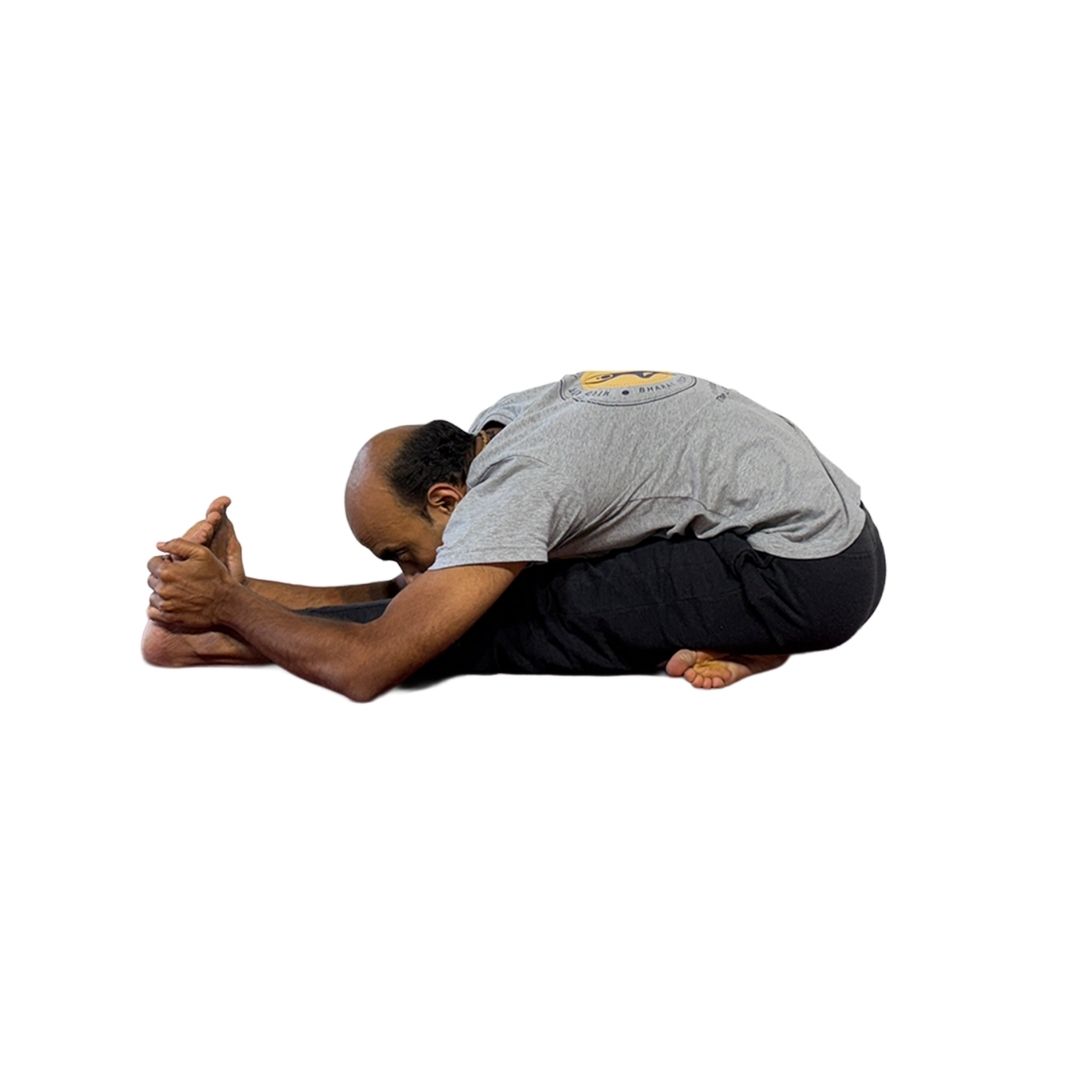
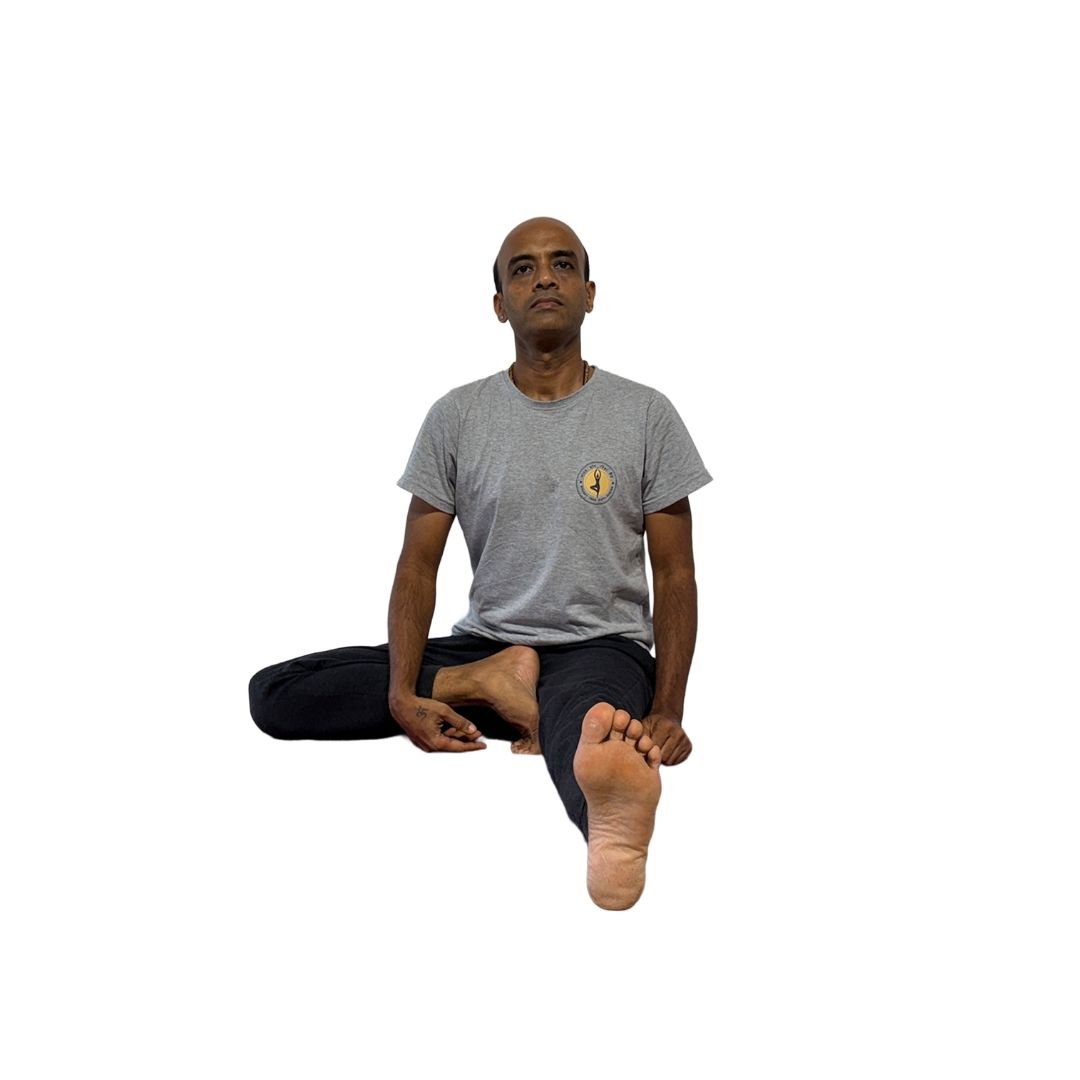
Benefits of Janu Sirsasana
- Deep Hamstring Stretch:
All variations provide an intense stretch for the hamstrings of the extended leg. - Hip and Groin Opening:
The bent leg in each variation helps to open the hip joint and stretch the groin muscles. - Spinal Flexibility:
The forward bend lengthens the spine, improving flexibility in the lower back and promoting better posture.
- Calming Effect:
As a forward bend, Janu Sirsasana calms the nervous system, helps to relieve stress and anxiety, and can be beneficial for those with insomnia. - Organ Stimulation:
The compression of the abdomen in the forward fold can stimulate the digestive and abdominal organs.
Contraindications of Janu Sirsasana
Avoid or modify this pose if you have:
- Knee Injuries:
The pose puts significant pressure on the bent knee. If you have a knee injury or chronic knee pain, use caution and place a folded blanket or bolster under the knee for support. - Lower Back Injuries:
Individuals with a herniated disc, sciatica, or severe lower back pain should avoid this pose or practice with a very straight back, bending only slightly from the hips.
- Diarrhea or Asthma:
The abdominal compression can be uncomfortable or problematic for these conditions. - Pregnancy:
The deep forward fold is generally not recommended for pregnant women, particularly in the later stages, as it puts pressure on the abdomen.
Anatomy (Muscles involved)
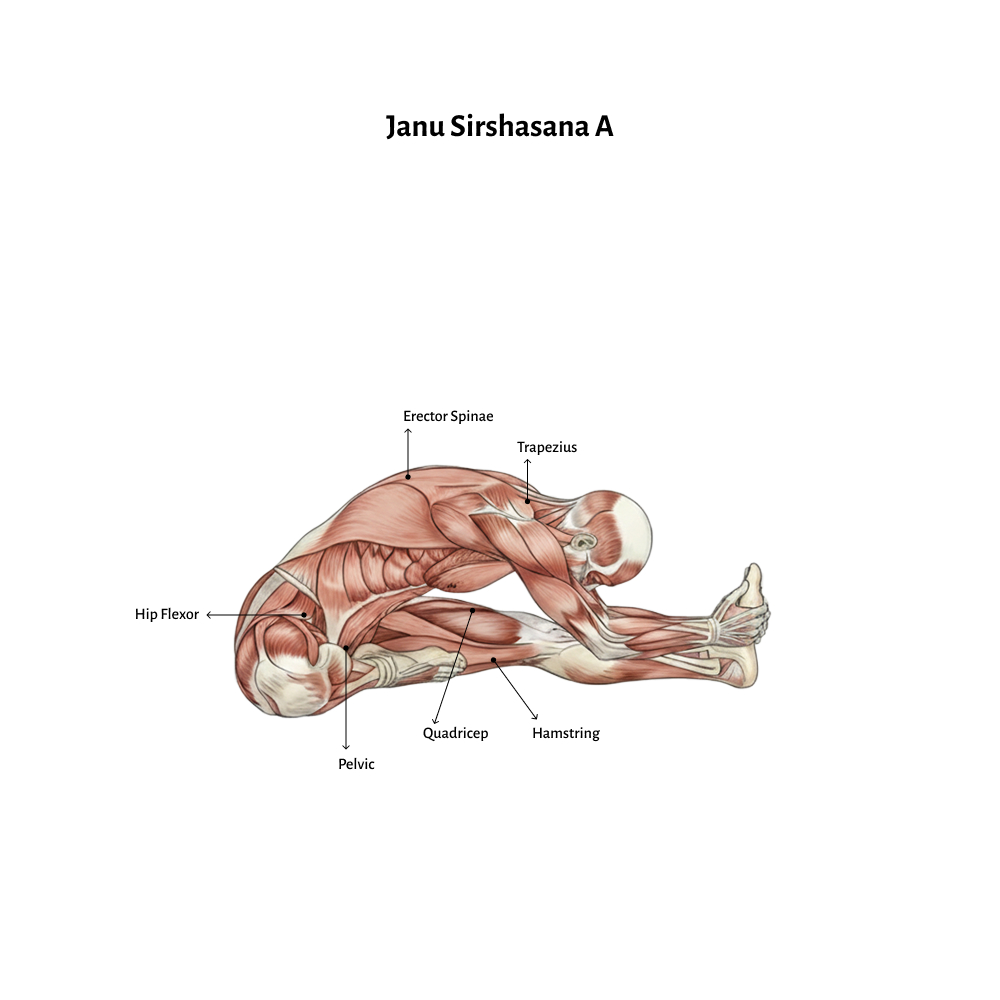
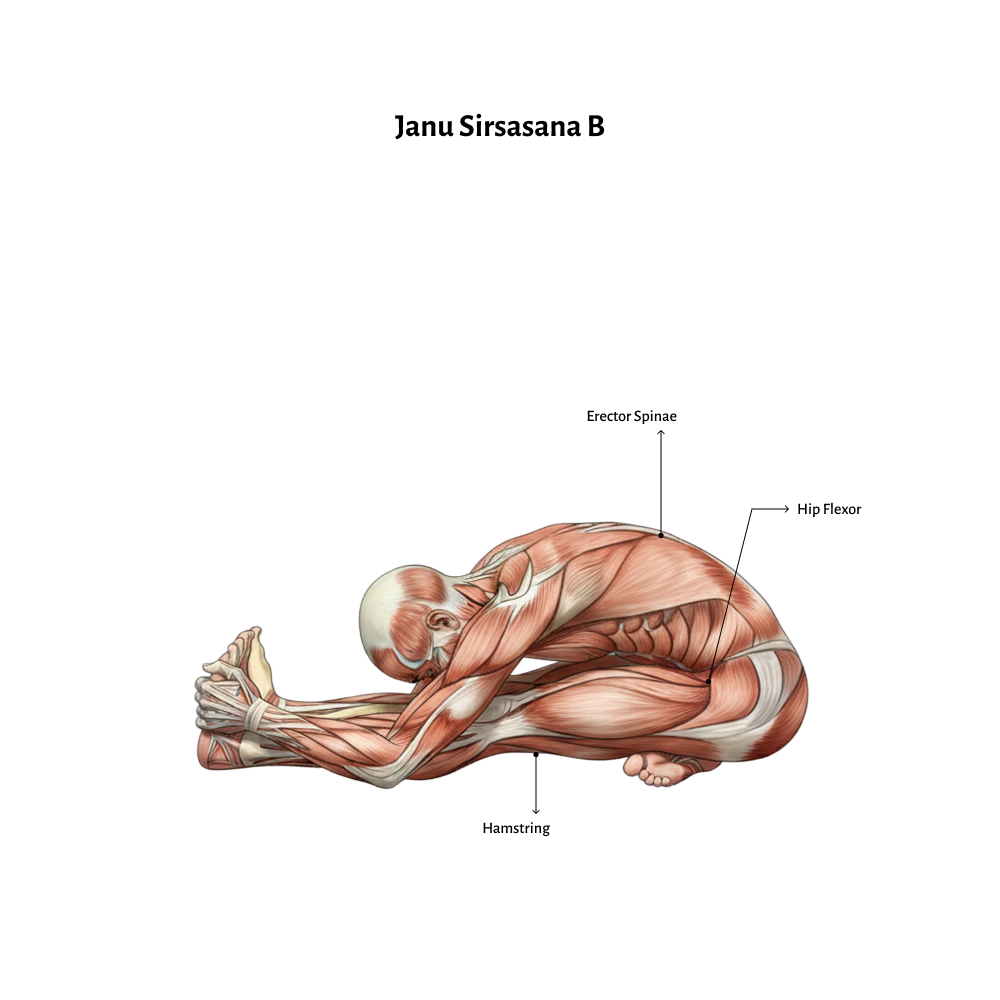
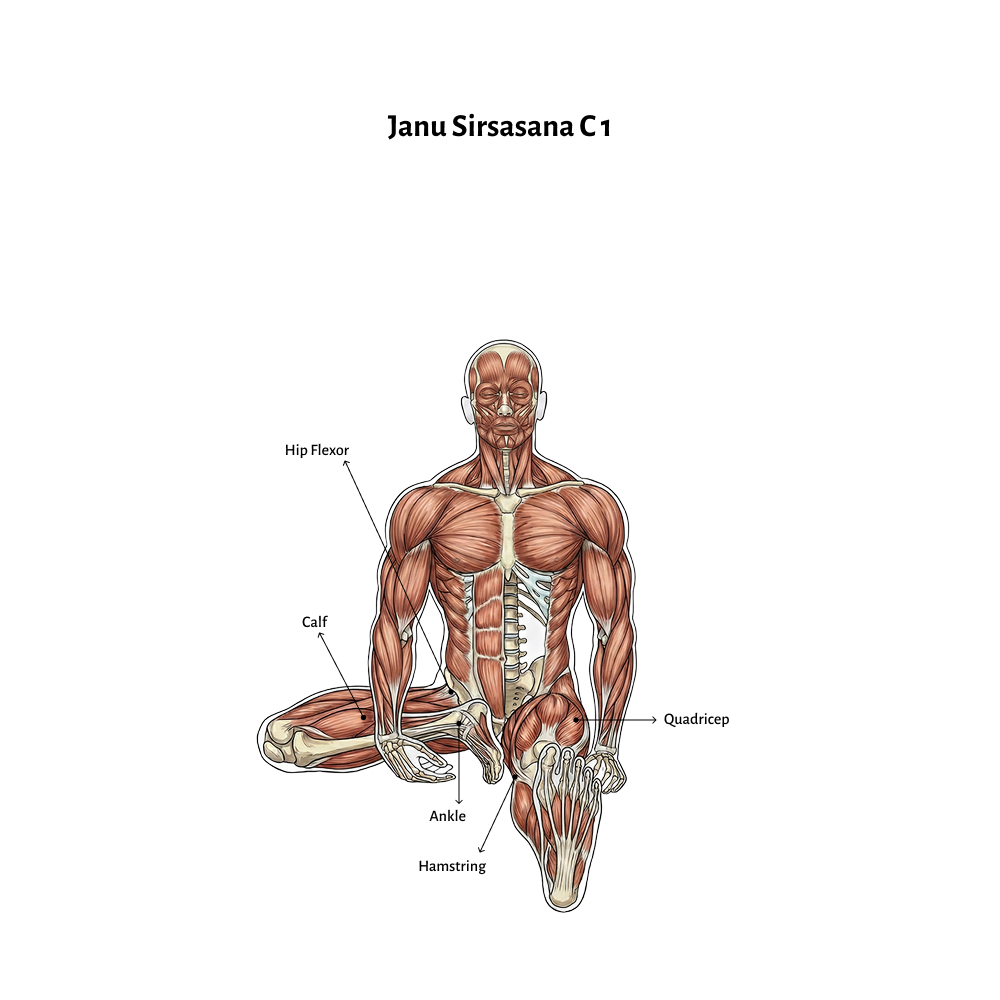
Janu Sirsasana engages and stretches a wide range of muscles and joints:
Muscles Stretched:
Hamstrings, gluteus maximus, calves, and muscles of the spine (erector spinae).
Joints Targeted:
Hips (external rotation on the bent leg side), knees, and ankles.
Muscles Strengthened:
The core muscles are engaged to stabilize the torso, and the quadriceps of the extended leg are engaged to protect the knee.