Karnapidasana (कर्णपीड़ासन)
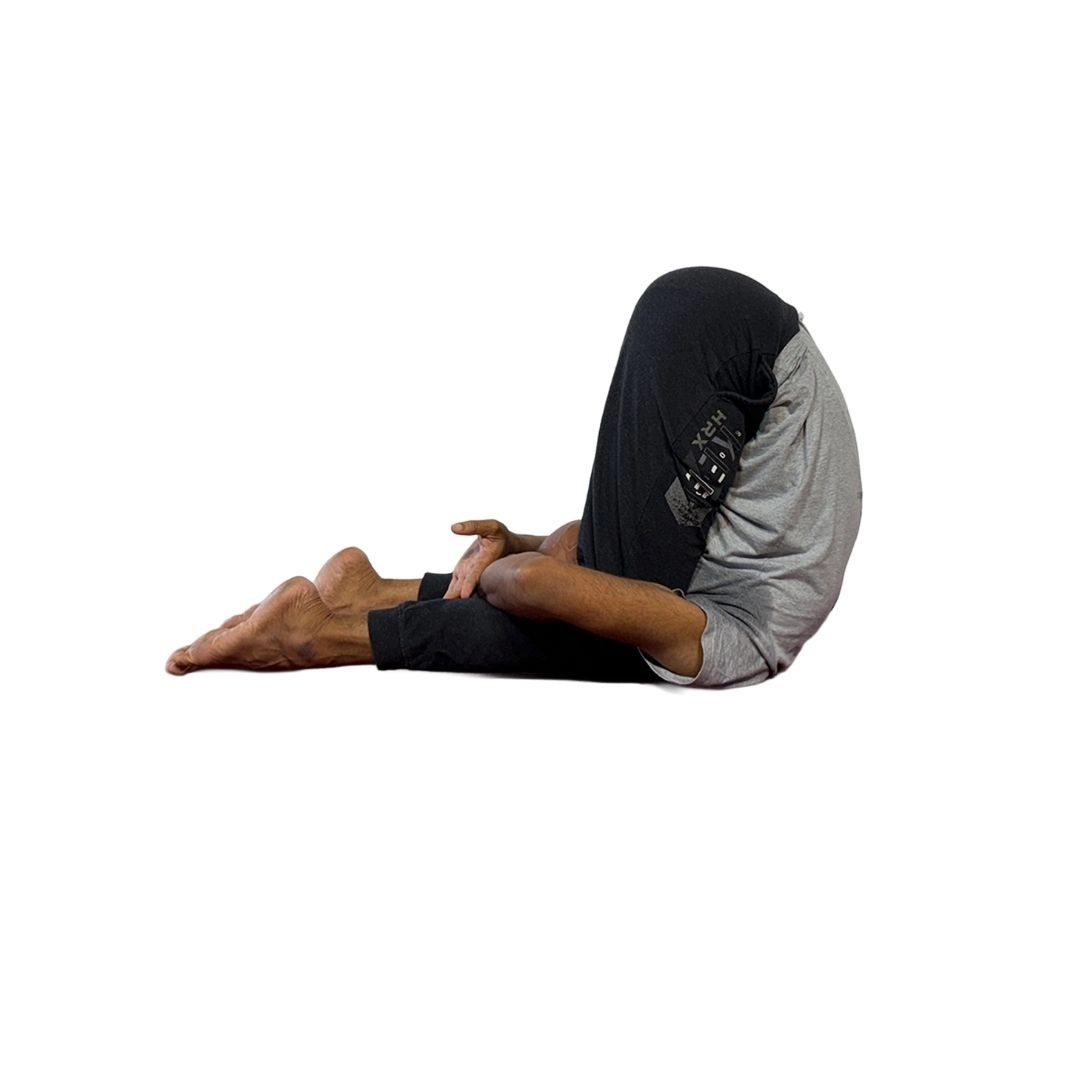
Karnapidasana (कर्णपीड़ासन), or Ear Pressure Pose, is an advanced yoga posture that combines the elements of an inversion and a forward bend. It is a deeper variation of Halasana (Plough Pose) and is often performed at the end of a sequence, as it is a deeply calming and introspective pose. The name comes from the Sanskrit words “karna” (ear), “pida” (pressure or pain), and “asana” (posture). The pose gets its name because the knees are placed next to the ears, creating a gentle pressure that helps to block out external sounds.
How to do Karnapidasana
Benefits of Karnapidasana
- Spinal Flexibility:
The pose provides a deep stretch to the entire spine, lengthening the spinal muscles and improving overall flexibility. - Calms the Nervous System:
By pressing the knees against the ears, external sounds are blocked, which helps to turn the senses inward and promotes a state of inner calm, reducing anxiety and stress. This is an example of Pratyahara, one of the eight limbs of yoga. - Stimulates Internal Organs:
The compression of the abdomen can massage and stimulate the abdominal organs, which may help improve digestion and relieve issues like constipation.
- Improves Circulation:
As an inversion, the pose helps to increase blood circulation to the brain, which can improve mental clarity and focus. It can also stimulate the thyroid gland, which plays a key role in metabolism. - Tones Muscles:
Karnapidasana strengthens and tones the back muscles, shoulders, hips, and hamstrings. - Relieves Fatigue and Insomnia:
The restorative nature of the pose can help alleviate fatigue and promote better sleep.
Contraindications of Karnapidasana
Avoid or modify this pose if you have:
- Neck or Spine Injuries:
The pose puts significant pressure on the neck and spine. It should be avoided by anyone with a slipped disc, sciatica, or any recent or chronic injury in these areas. - High Blood Pressure or Heart Conditions:
Inversions can increase blood pressure and heart rate, making this pose unsafe for individuals with heart conditions or high blood pressure. - Ear Problems:
If you have an ear infection or other middle ear issues, the pressure from the knees could be uncomfortable or even harmful.
- Pregnancy and Menstruation:
This pose is generally contraindicated for pregnant women and those on their menstrual cycle. - Herniated Disc:
People with a herniated disc should not perform this pose. - Weak Core Muscles:
A strong core is required to maintain stability and protect the spine. If your core muscles are weak, this pose could lead to injury.
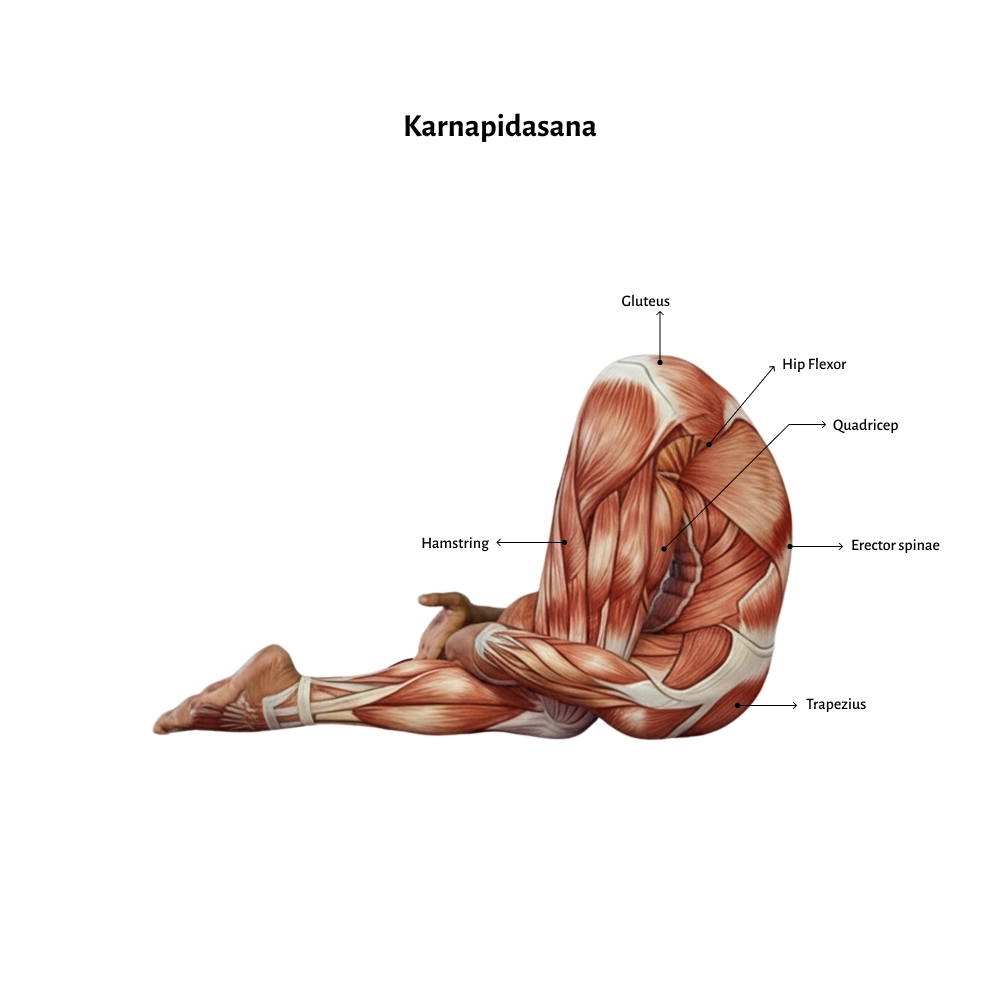
Anatomy (Muscles involved)
This pose engages a complex network of muscles and joints:
Spine:
The pose involves maximum flexion of the thoracic spine and a deep stretch of the spinal extensors.
Neck and Shoulders:
The pose places the weight of the body on the shoulders, with the head and neck in a deep forward bend. The muscles of the neck and upper back are stretched.
Hips and Hamstrings:
The hamstrings are stretched as the legs are brought overhead, and the hip flexors are engaged to maintain the pose.
Core:
The abdominal muscles are contracted, helping to stabilize the hips and lower back.