Kukkutasana कुक्कुटासन
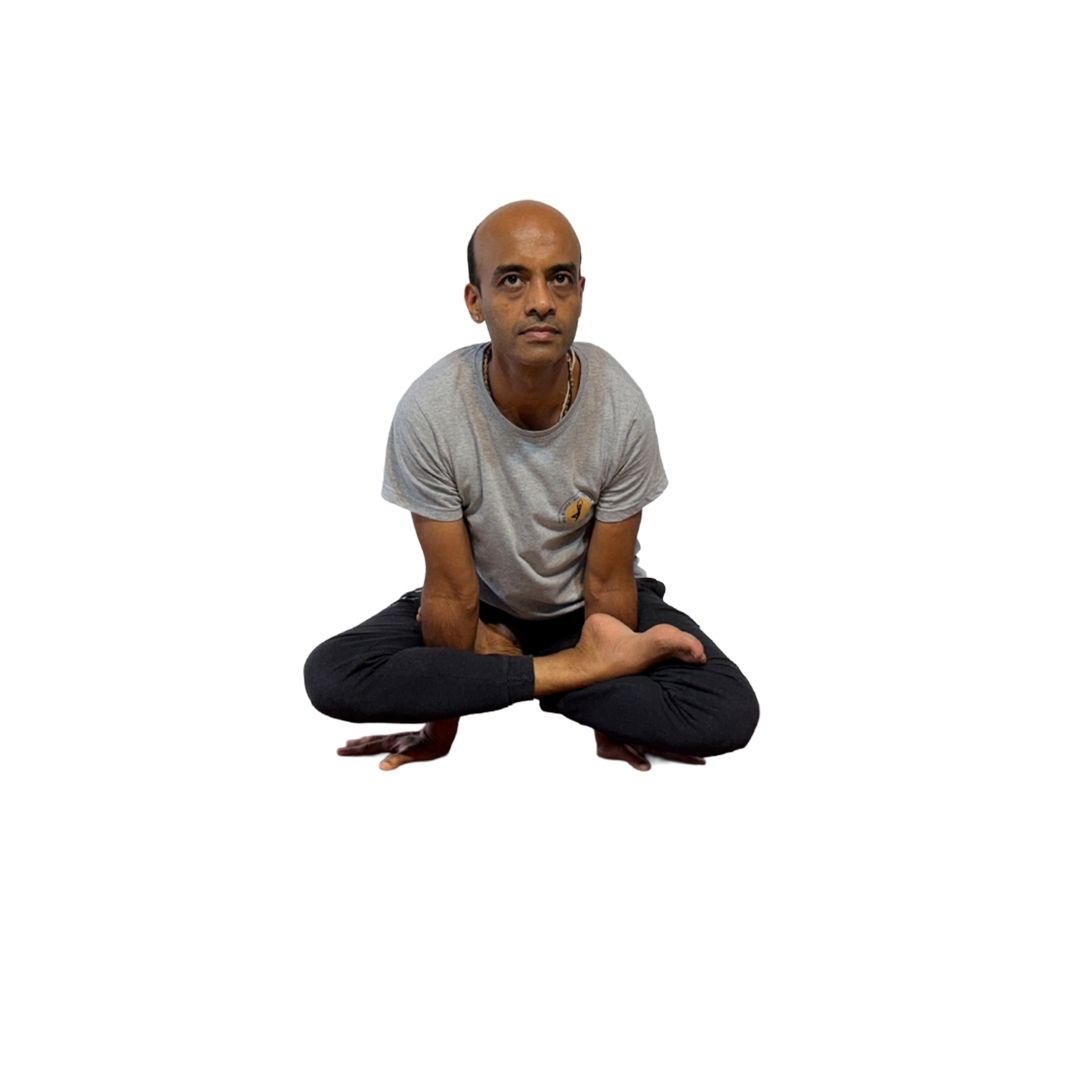
Kukkutasana कुक्कुटासन (Cockerel Pose) is an advanced arm-balancing yoga pose that requires significant strength and flexibility, particularly in the hips, arms, and wrists. It is a challenging posture that should only be attempted after mastering preparatory poses like Padmasana (Lotus Pose) and Tolasana (Scale Pose).
How to do Kukkutasana
Benefits of Kukkutasana
- Strengthens Arms and Shoulders: Kukkutasana places the entire body weight on the arms, which intensely strengthens the wrists, forearms, biceps, triceps, and shoulders.
- Tones the Core:
It requires significant core engagement to maintain balance, which helps to strengthen the abdominal and pelvic floor muscles. - Stretches and Increases Flexibility:
The pose stretches the hip rotators and muscles of the upper thighs and lower back, improving overall mobility in the hip and knee joints.
- Improves Balance and Concentration:
Balancing on your hands in this unique posture demands deep focus and concentration, enhancing your sense of balance and body awareness. - Stimulates Internal Organs:
The pressure on the abdominal area can stimulate the digestive organs, which may improve digestion.
Contraindications of Kukkutasana
Avoid or modify this pose if you have:
- Wrist, Elbow, or Shoulder Injuries:
The entire body weight is placed on the arms, which can aggravate any existing injuries.
- Knee Injuries:
The Lotus Pose position puts extreme pressure on the knee joints, which can be dangerous for anyone with knee issues or weak ligaments.
- High Blood Pressure or Heart Problems:
The inverted nature and effort of the pose can increase blood pressure.
- Hernia or Gastric Ulcers:
The abdominal compression can be harmful.
- Pregnancy or Menstruation:
This pose is not safe for pregnant women due to abdominal pressure and is often avoided during menstruation.
Anatomy (Muscles involved)
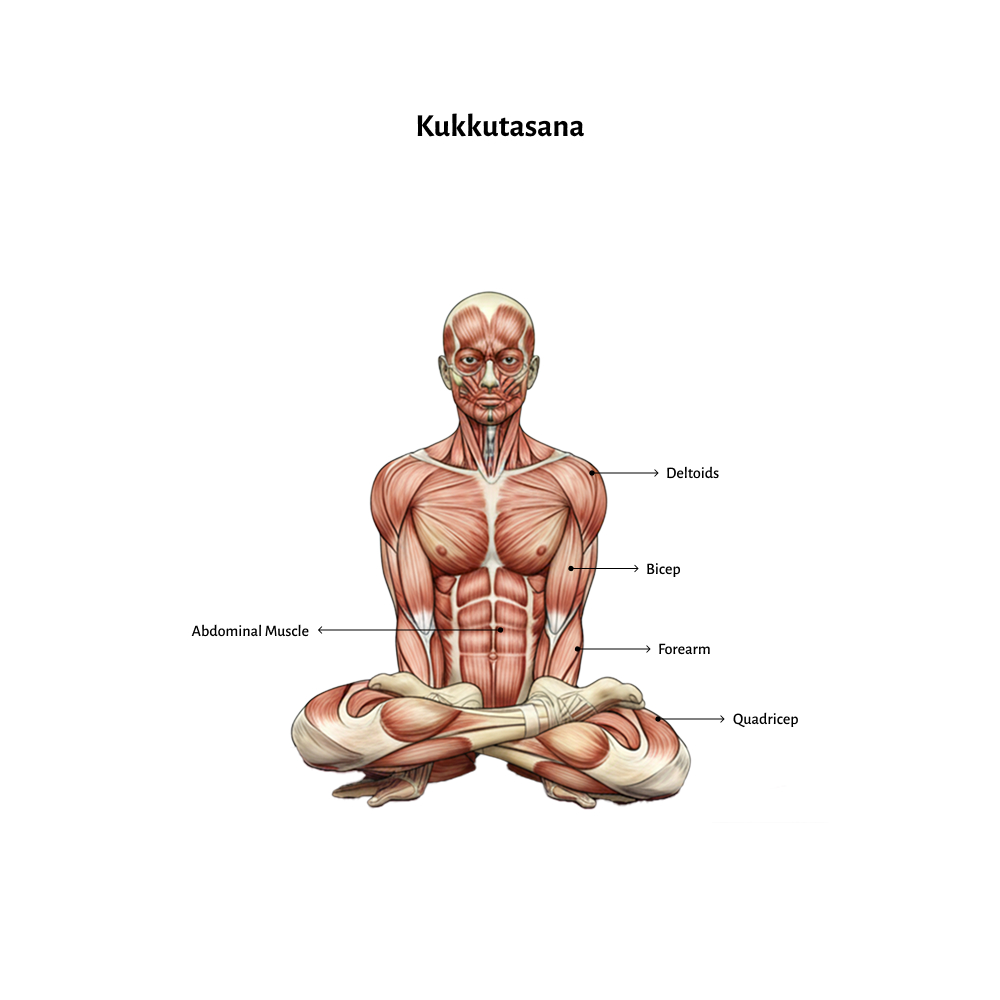
Kukkutasana engages and stretches a wide range of muscles and joints:
Upper Body:
The biceps, triceps, deltoids, and pectoralis major are all heavily engaged to lift and support the body. The small muscles of the hands and wrists are also strengthened.
Core:
The rectus abdominis (abs), transverse abdominis, and obliques are contracted to stabilize the torso.
Lower Body:
The pose requires significant flexibility in the hamstrings and gluteus medius to achieve the Lotus Pose. The hip rotators and abductors are also stretched.