Lolasana (लोलासन)
Lolasana (लोलासन), or Pendant Pose, is an advanced arm-balancing yoga pose that requires significant upper body and core strength. It is a challenging but rewarding pose for those who have a solid foundation in yoga.
How to do Lolasana
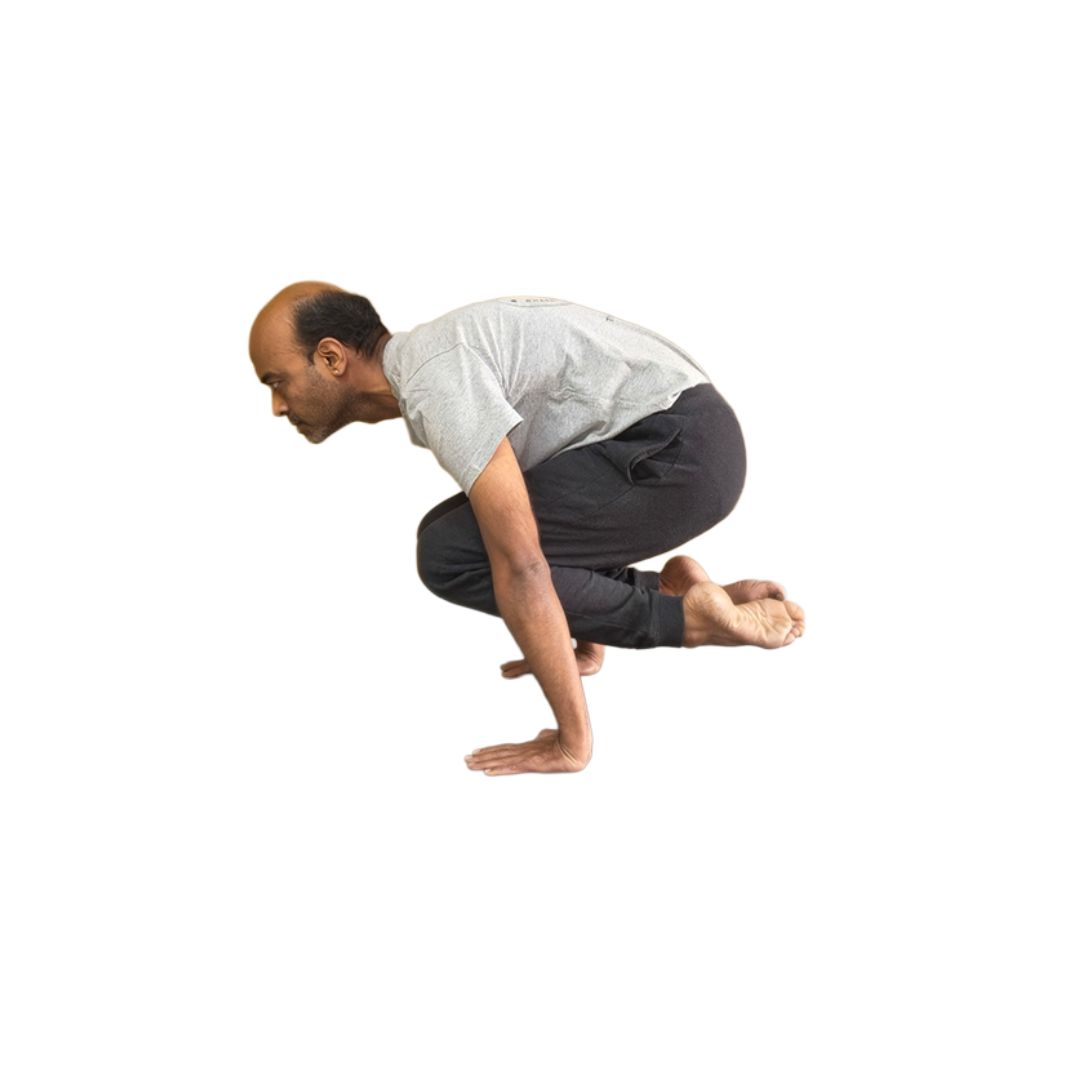
Benefits of Lolasana
- Strengthens the Upper Body:
Lolasana intensely strengthens the arms, wrists, shoulders, and upper back. It is an excellent preparatory pose for more advanced arm balances and inversions. - Tones the Core:
This pose requires immense core strength to lift and stabilize the lower body, working all layers of the abdominal muscles, including the rectus abdominis and obliques. - Improves Balance and Coordination:
It builds a strong mind-body connection by challenging your balance and requiring coordinated effort from multiple muscle groups.
- Prepares for Advanced Poses:
Lolasana is a foundational pose for other arm balances like Tolasana (Scale Pose) and jump-through transitions in Vinyasa and Ashtanga yoga. - Enhances Concentration:
The focus required to execute and hold the pose improves mental concentration and willpower.
Contraindications of Lolasana
Avoid or modify this pose if you have:
- Wrist, Shoulder, or Elbow Injuries:
The pose places a significant amount of weight and pressure on these joints. - High Blood Pressure or Heart Conditions:
Arm balances can increase blood pressure. - Pregnancy:
The intense abdominal contraction is not safe during pregnancy.
- Hernia or Other Abdominal Issues:
The extreme pressure on the core could worsen these conditions. - Back Pain:
Individuals with pre-existing back issues should approach this pose with caution.
Anatomy (Muscles involved)
Pashasana engages and stretches a wide range of muscles and joints:
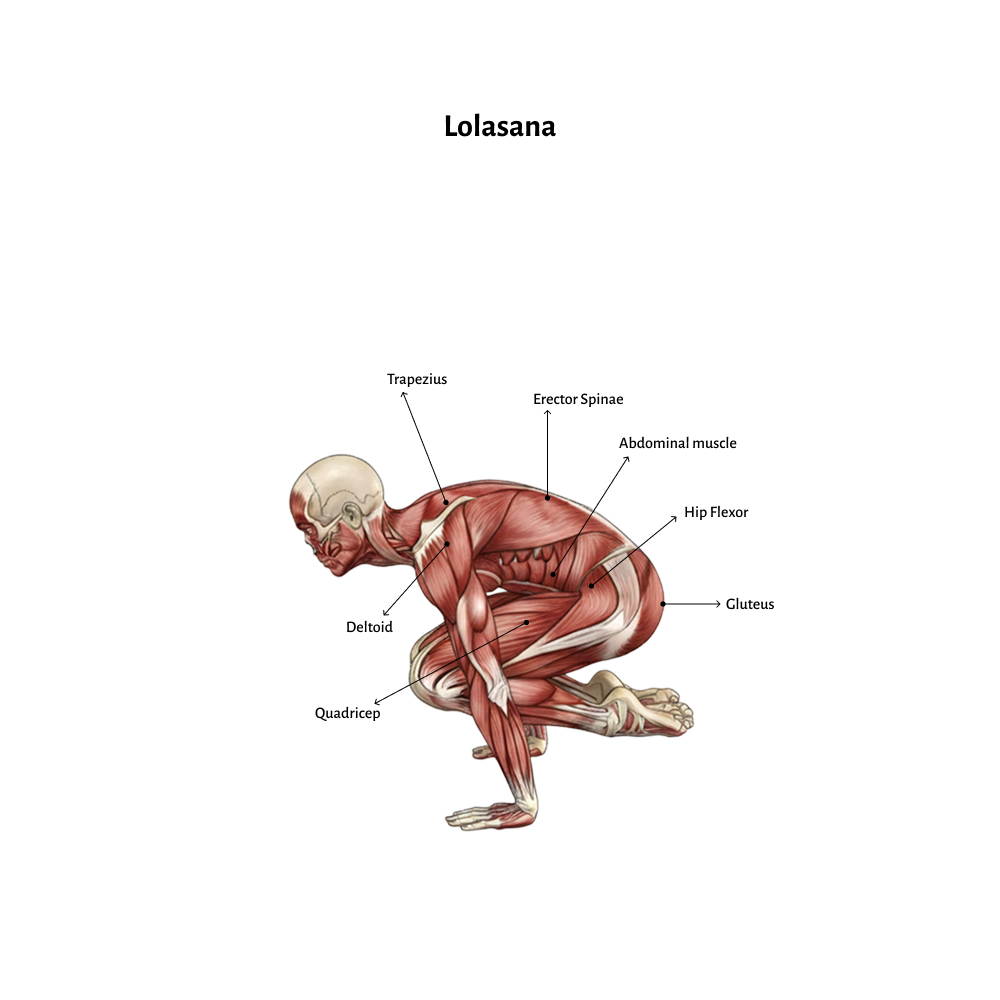
Core:
The rectus abdominis, transverse abdominis, and internal and external obliques work together to lift the pelvis and legs and keep the body stable.
Arms and Shoulders:
The triceps, biceps, deltoids, and pectoralis major are all heavily engaged to support the body’s weight.
Wrists and Forearms:
The flexors and extensors of the wrists and forearms are strengthened as they bear the entire body’s weight.
Hip Flexors:
The iliopsoas muscles work to pull the knees and thighs towards the chest.