Malasana (मलासन)
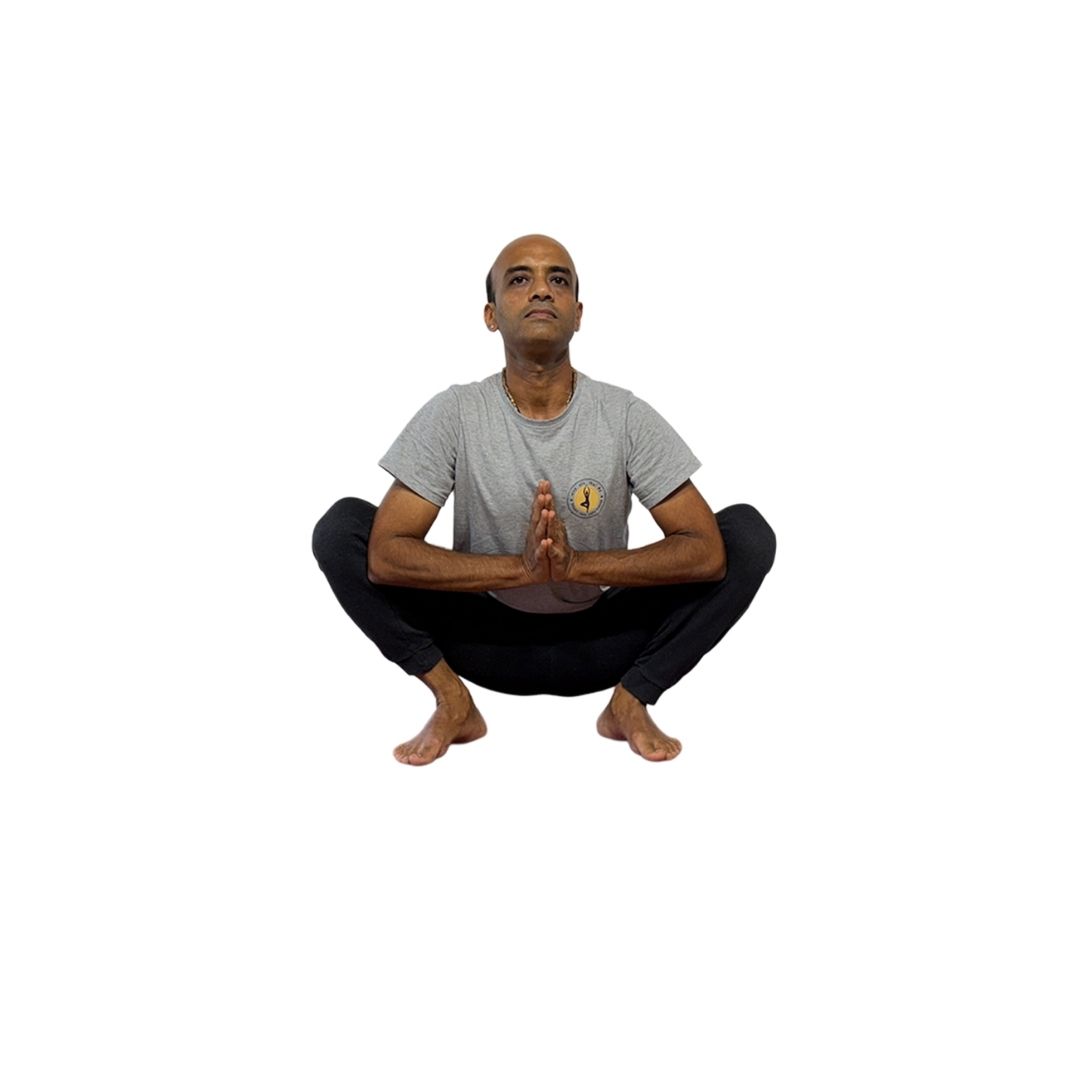
Malasana (मलासन), also known as Garland Pose or a yoga squat, is a deep squatting posture that is excellent for stretching and strengthening the hips, ankles, and groins. The name comes from the Sanskrit word “mala,” which has a few meanings, including “garland” or “impurities.”
How to do Malasana
Benefits of Malasana
- Improves Flexibility and Mobility:
Malasana is an excellent hip opener. It deeply stretches the hips, groins, ankles, and the back torso, improving overall flexibility and range of motion. - Strengthens the Lower Body:
The pose strengthens the muscles of the ankles, knees, thighs, and glutes. - Aids Digestion: The deep squat compresses the abdominal organs, which can help stimulate the digestive system and relieve issues like bloating and constipation.
- Strengthens the Pelvic Floor:
Malasana is particularly beneficial for women as it tones and strengthens the pelvic floor muscles. It is often recommended as a preparatory pose for childbirth. - Calms the Mind:
As a grounding pose, it helps to calm the nervous system, reduce stress, and promote a sense of stability and balance.
Contraindications of Malasana
Avoid or modify this pose if you have:
- Knee, Ankle, or Hip Injuries:
The pose places significant pressure on these joints. If you have any chronic pain or recent injuries in these areas, it’s best to avoid it. - Recent Abdominal Surgery:
The abdominal compression and engagement can be harmful after a recent surgery. - Lower Back Pain:
While the pose can help with some types of back pain, it can be a contraindication for severe or chronic back conditions.
- Dizziness or Vertigo:
The change in body position may cause dizziness. - Pregnancy (First Trimester):
While often recommended later in pregnancy, it’s best to avoid it in the first trimester. Always consult a healthcare professional before practicing.
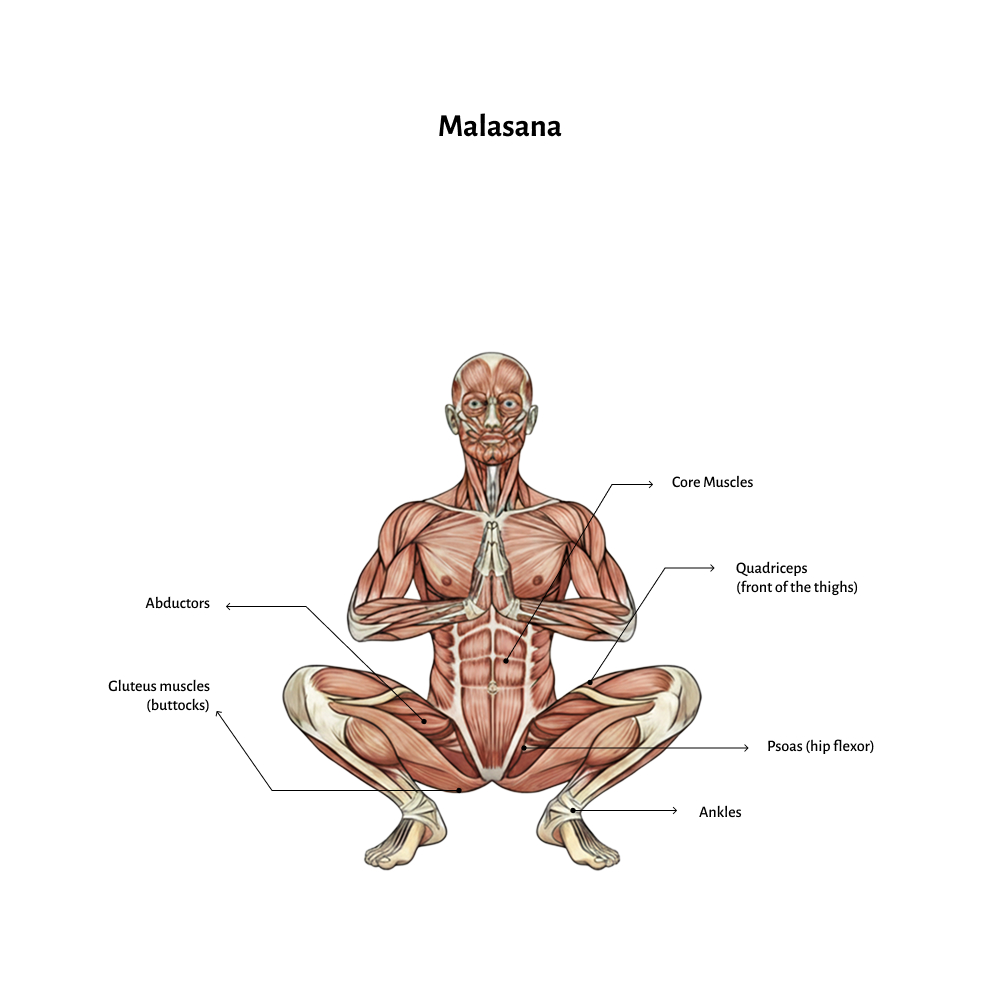
Anatomy (Muscles involved)
This pose engages a complex network of muscles and joints:
Hips:
The pose involves a deep external rotation and flexion of the hip joints.
Ankles and Knees:
It requires and improves the mobility and flexibility of the ankle and knee joints.
Spinal Muscles:
The pose works to lengthen and strengthen the spine, especially the lower back (erector spinae).
Pelvic Floor:
It actively engages and tones the pelvic floor muscles.
Quadriceps and Hamstrings:
The deep squat works on both the front and back of the thighs.