Mandukasana (मण्डूकासन)
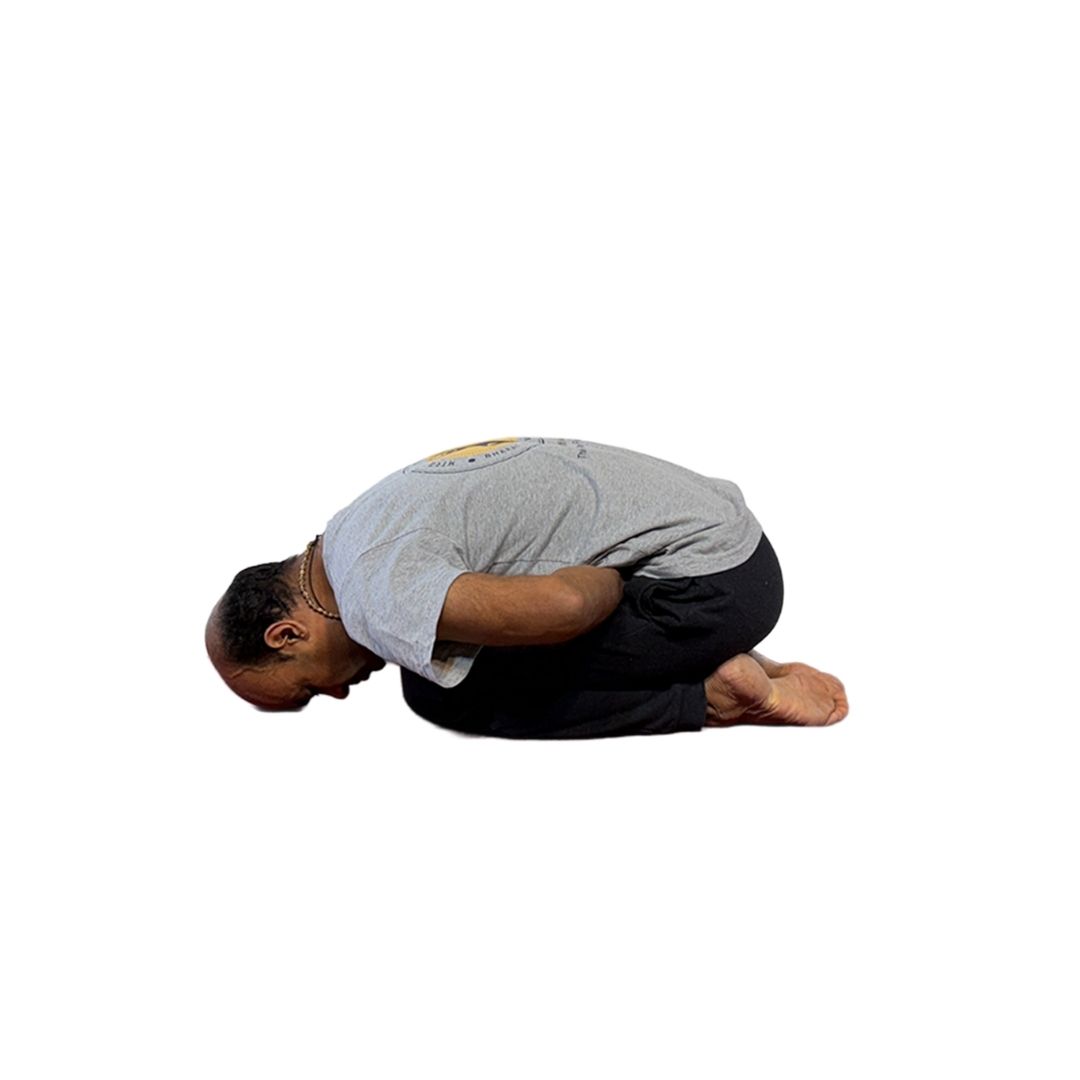
Mandukasana (मण्डूकासन), or Frog Pose, is a group of seated and kneeling yoga poses that get their name from the frog-like shape of the body. There are a few variations of this pose, but the most common one is a deep hip opener that stretches the inner thighs and groins.
How to do Mandukasana
Benefits of Mandukasana
- Stimulates Digestive Organs:
The pressure from your fists on the abdomen massages the internal organs, which can aid in digestion, relieve constipation, and help with issues like gas and bloating. - Manages Diabetes:
The pose is believed to stimulate the pancreas and improve the production of insulin, making it beneficial for managing blood sugar levels. - Stretches and Strengthens:
It provides a deep stretch to the shoulders, chest, ankles, and inner thighs, while also strengthening the core and back muscles.
- Reduces Belly Fat:
The pressure and forward bend can help tone the abdominal muscles and reduce fat around the belly, thighs, and hips. - Relieves Stress:
As a forward bend, it has a calming effect on the nervous system, helping to alleviate stress and anxiety. - Aids Menstrual Cramps:
The pose can help relieve discomfort associated with menstrual cramps.
Contraindications of Mandukasana
Avoid or modify this pose if you have:
- Knee, Ankle, or Hip Injuries:
This pose puts significant pressure on these joints. - Recent Abdominal Surgery:
The intense pressure on the abdomen can be harmful. - High Blood Pressure or Migraine:
The forward bend and inverted position may worsen these conditions.
- Hernia or Ulcers:
The pressure on the abdomen can be dangerous. - Pregnancy:
This pose is not safe for pregnant women due to the pressure on the abdomen. - Severe Back Pain:
If you have severe lower back pain, the forward fold may aggravate the condition.
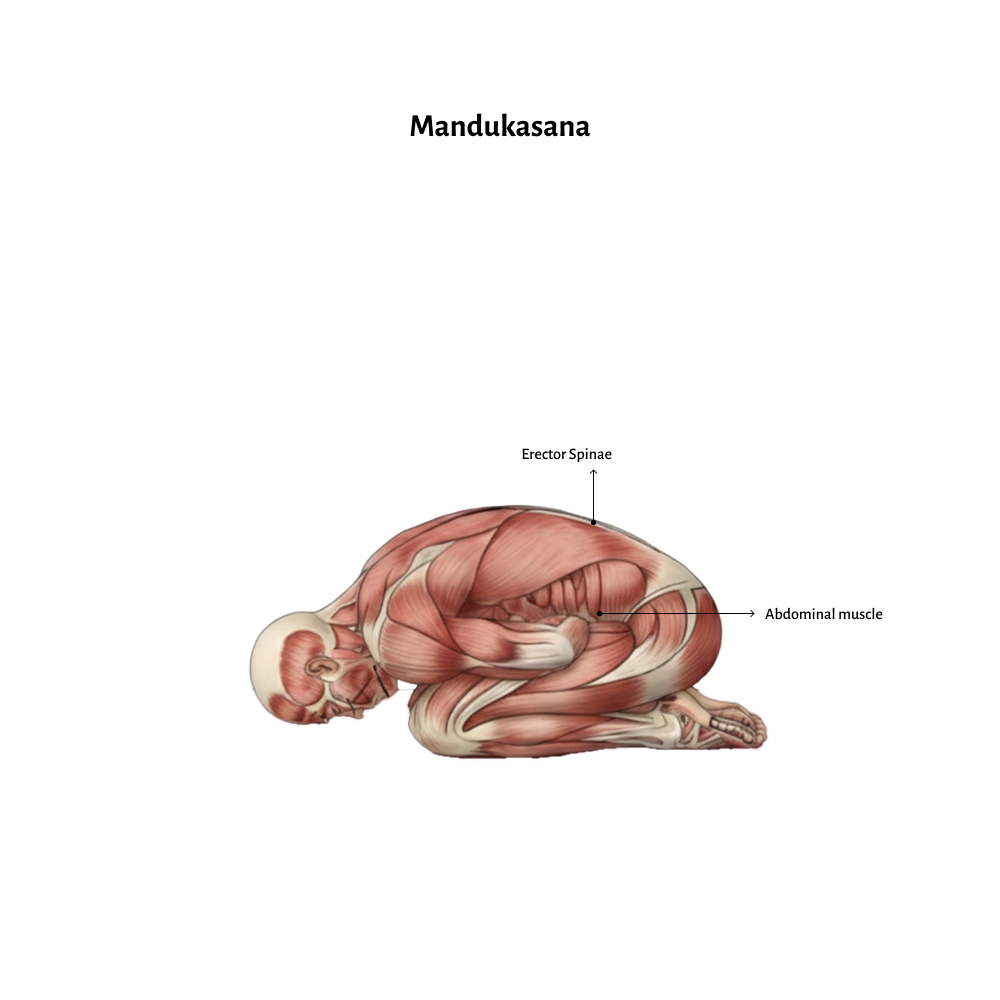
Anatomy (Muscles involved)
This pose engages a complex network of muscles and joints:
Hip Abduction:
The legs are moved away from the midline of the body, which is the primary action of the pose.
External Hip Rotation:
The hips are externally rotated.
Knee Flexion:
The knees are bent at a 90-degree angle.
Spinal Elongation:
It’s important to keep the spine long and avoid rounding the back, which can put unnecessary pressure on the lumbar spine.
Pelvic Stability:
The core must remain engaged to protect the lower back and prevent the pelvis from tilting forward too much.