Marichayasana (मरीच्यासन)

Marichayasana (मरीच्यासन), or Sage Marichi’s Pose, is a group of seated yoga postures named after the sage Marichi, the son of Brahma in Hindu mythology. There are four main variations of Marichayasana (A, B, and C), each with a unique combination of a forward fold, a twist, a bind, and a half-lotus.

How to do Marichayasana
Marichyasana A
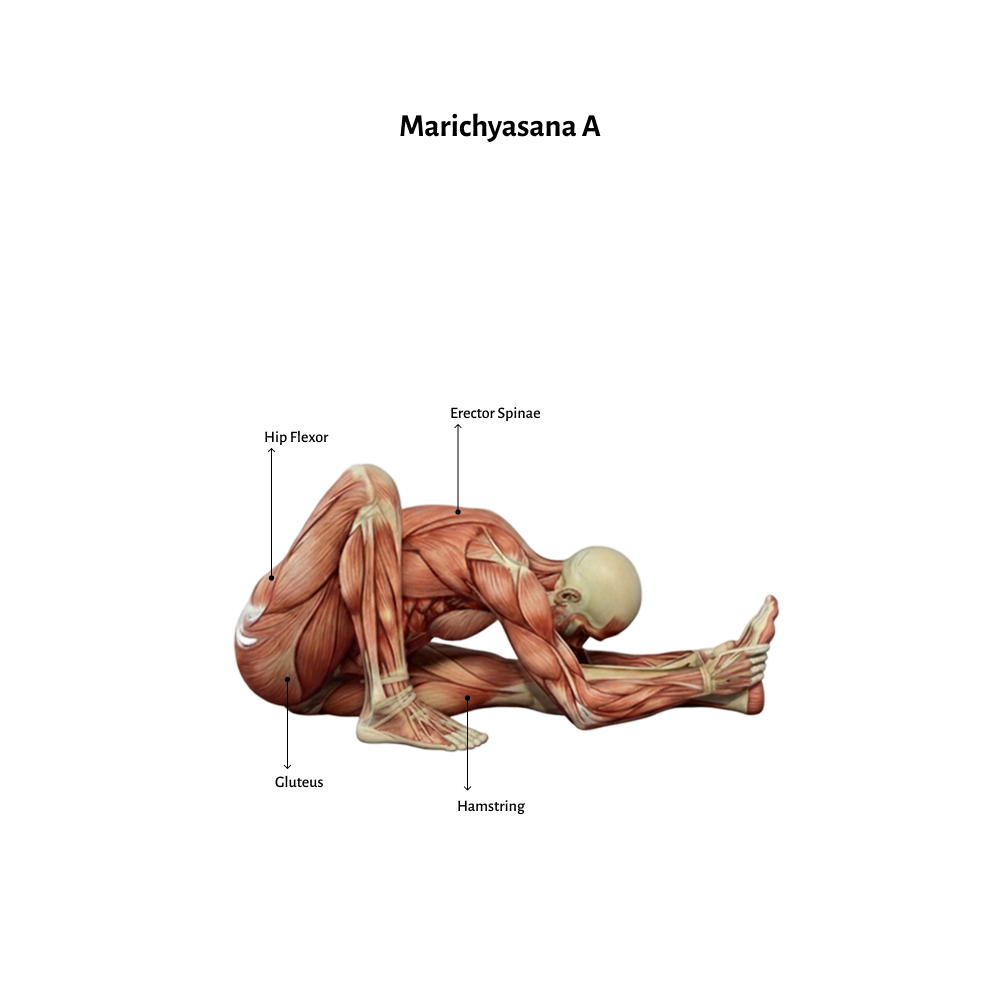
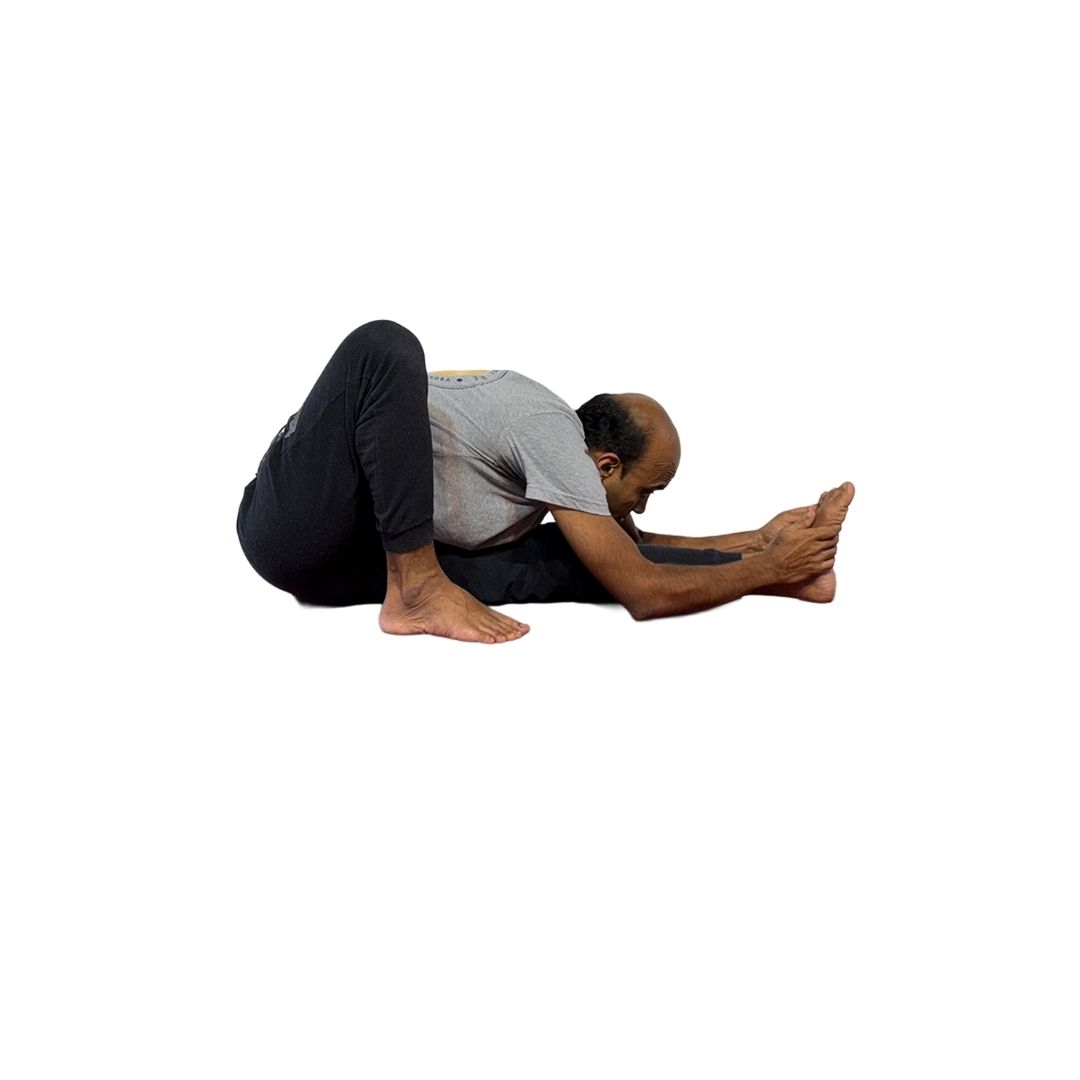
Marichyasana A is a seated forward fold with a bind. It is a preparatory pose for more complex twists.

How to Do:

  1. Begin in Staff Pose (Dandasana) with your legs extended in front of you.
  2. Bend your right knee and place your right foot flat on the floor, about a few inches away from your right sitting bone. Keep your left leg straight and active.
  3. Inhale and lengthen your spine.
  4. Exhale and lean your torso forward, bringing your right shoulder and arm to the inside of your right knee.
  5. Wrap your right arm around your right leg, reaching behind your back.
  6. Reach your left arm behind your back to clasp your right wrist or hand.
  7. On an exhale, fold deeper, bringing your forehead towards your extended leg.
  8. Hold for several breaths and then repeat on the other side.

Marichyasana B
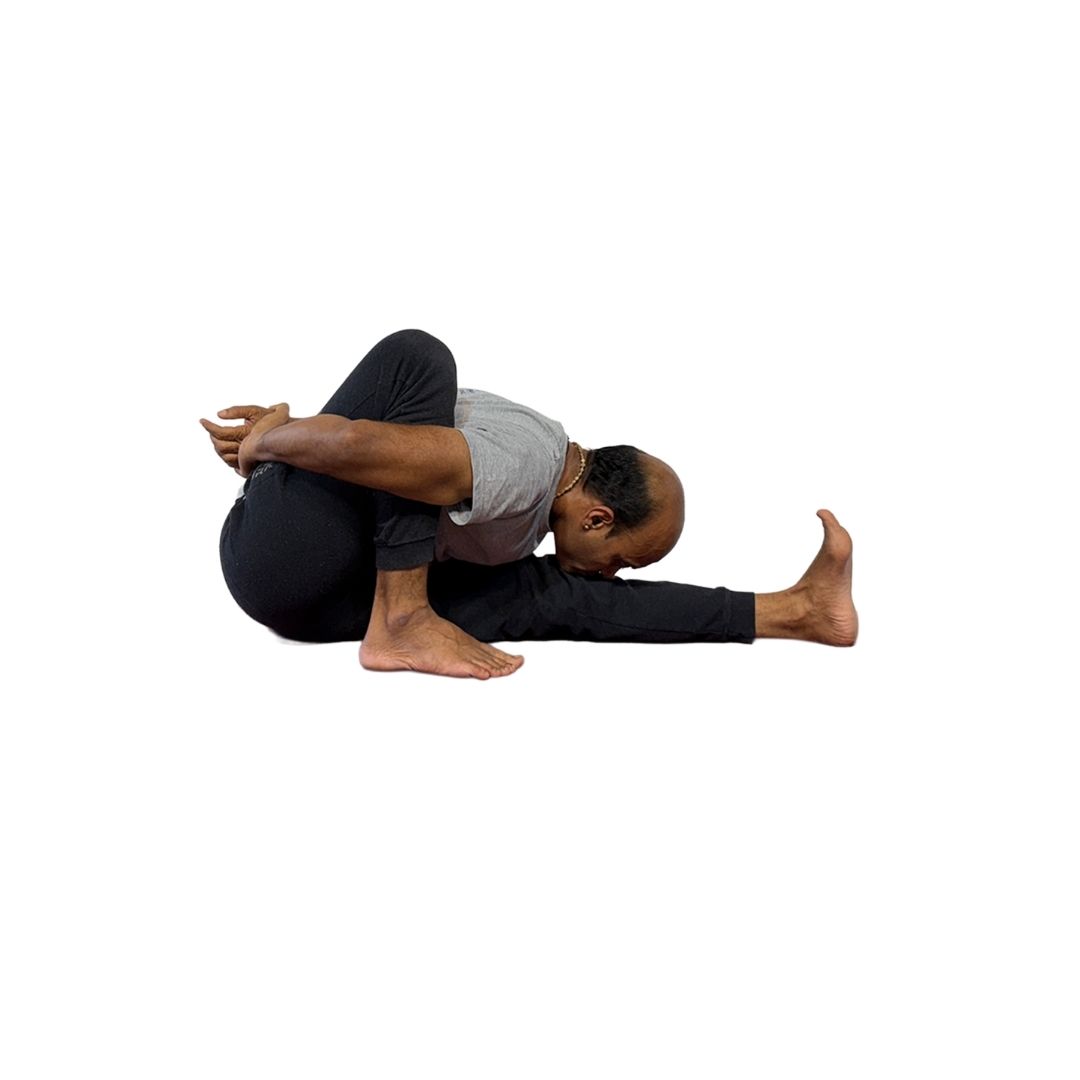
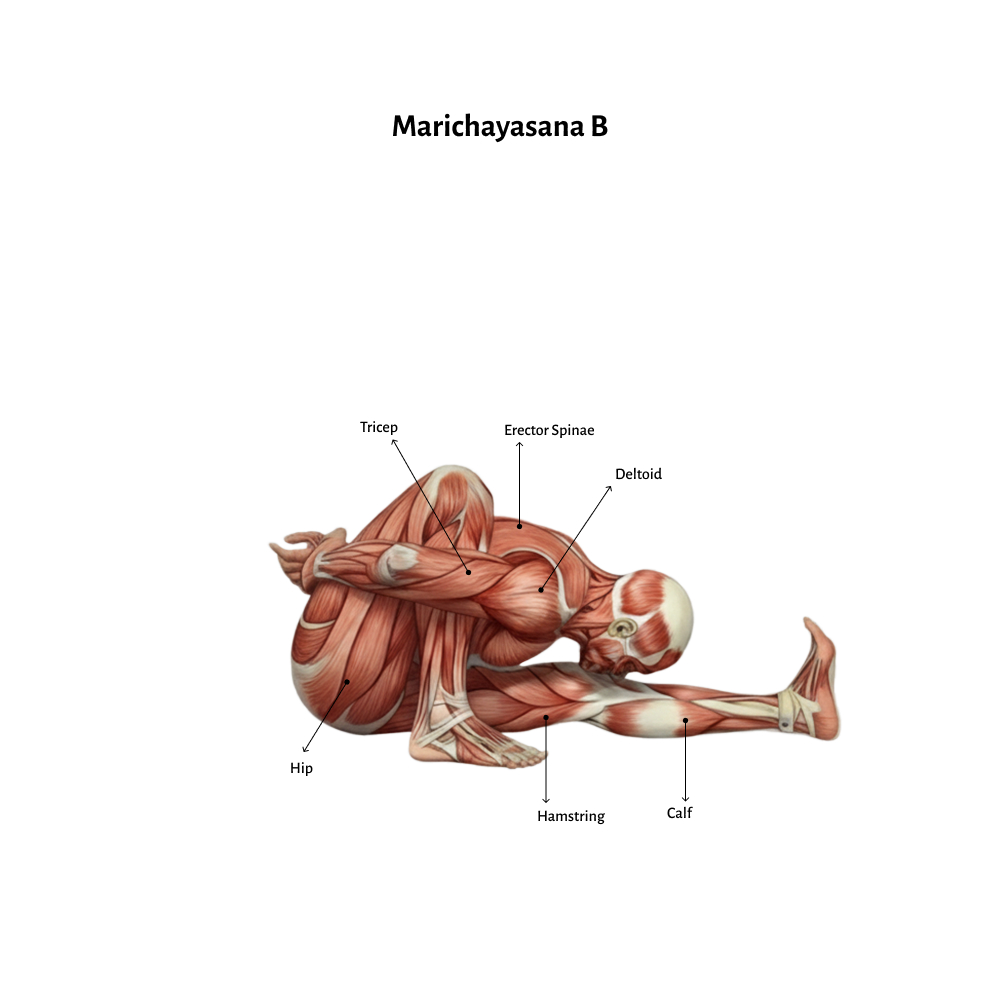
Marichyasana B is a more challenging forward fold than Marichyasana A, involving a half-lotus position.

How to Do:

  1. Start in Staff Pose (Dandasana).
  2. Bend your left knee and place your left foot in a half-lotus position on your right thigh. If this is not possible, place the foot as high on the thigh as you can.
  3. Bend your right knee, placing your right foot flat on the floor close to your right sitting bone.
  4. Inhale, lengthen your spine, and wrap your right arm around your right leg.
  5. Reach your left arm behind your back to clasp your right wrist or hand.
  6. Exhale and fold forward over your straight leg.
  7. Hold for several breaths and then repeat on the other side.

Marichyasana C
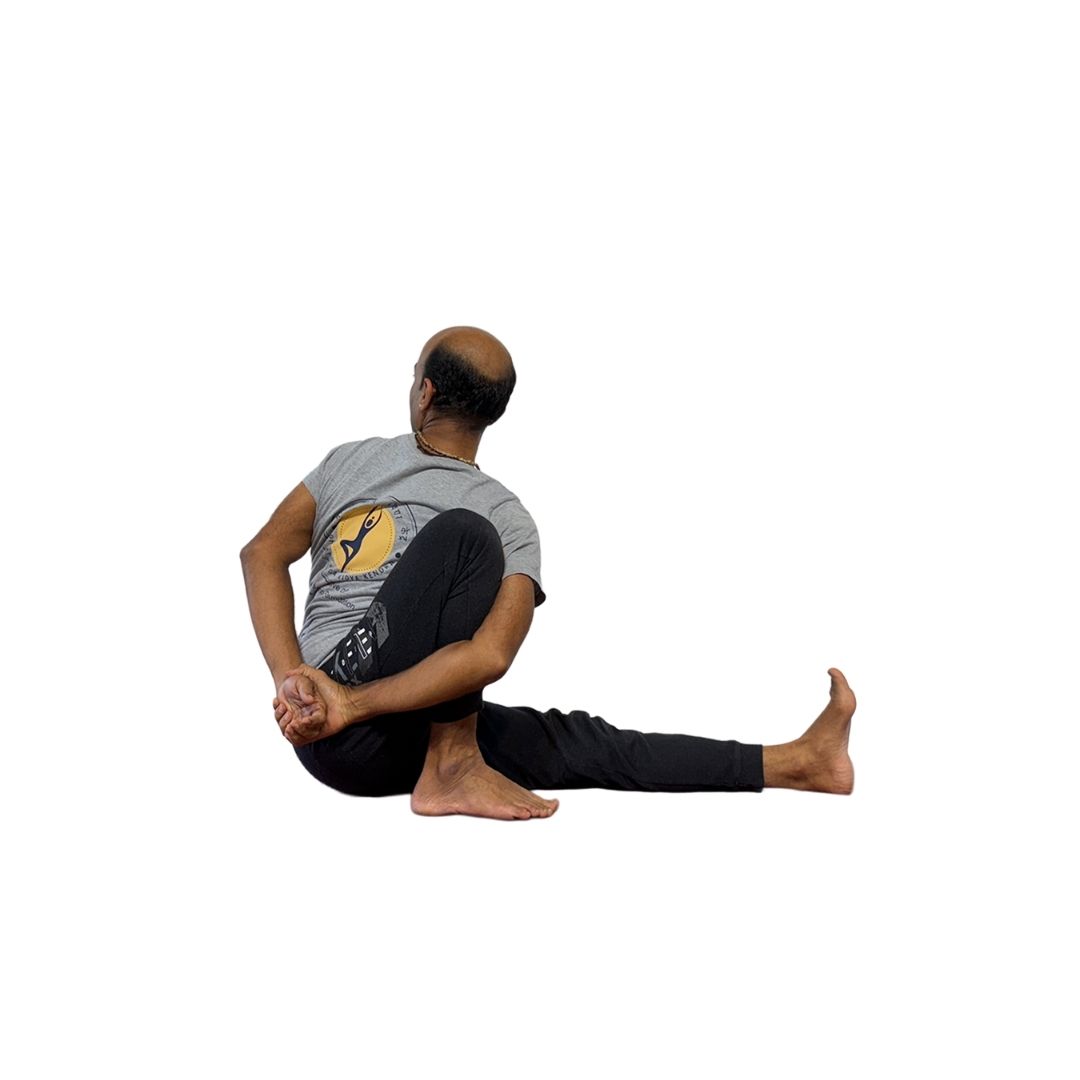
Marichyasana C is a seated twist that brings an element of detoxification to the pose.

How to Do:

  1. Begin in Staff Pose (Dandasana).
  2. Bend your right knee and place your right foot flat on the floor, close to your right sitting bone. Keep your left leg straight and active.
  3. Inhale and lengthen your spine.
  4. Exhale and twist your torso to the right. Place your right hand on the floor behind you for support.
  5. Bring your left elbow to the outside of your right knee. For a deeper twist, wrap your left arm around your right knee and reach for your right hand behind your back.
  6. On an exhale, deepen the twist, gazing over your right shoulder.
  7. Hold for several breaths and then repeat on the other side.

Benefits of Marichayasana

Marichayasana A

  • Stretches and lengthens the hamstrings and shoulders.
  • Calms the nervous system due to the forward folding action.
  • Stimulates abdominal organs, aiding digestion.

Marichayasana B

  • Deeply opens the hips and stretches the hamstrings.
  • Improves flexibility in the ankles and knees, preparing for more advanced lotus-based poses.
  • Stimulates the digestive organs.

Marichayasana C

  • Increases spinal mobility and flexibility.
  • Massages and stimulates the abdominal organs, aiding in detoxification.
  • Helps to relieve back pain and stiffness.
  • Tones the abdominal muscles.

Contraindications of Marichayasana

Avoid or modify this pose if you have:

Marichayasana A

  • Lower back or hamstring injury.
  • Shoulder or rotator cuff injury.
  • Pregnancy.

Marichayasana B

  • Knee or ankle injury.
  • Lower back pain or injury.
  • Tight hips.

Marichaysana C

  • Spine, shoulder, or neck injury.
  • High or low blood pressure.
  • Pregnancy.

Anatomy (Muscles involved)

This pose engages a complex network of muscles and joints:

Marichayasana A

Stretches:
Hamstrings of the straight leg, hips, and shoulders.

Strengthens:
Core and back muscles to maintain a straight spine during the forward fold.

Marichayasana B

Stretches:
Hips, ankles, hamstrings, and shoulders.

Strengthens:
Core and back muscles. The pose requires significant hip flexibility.

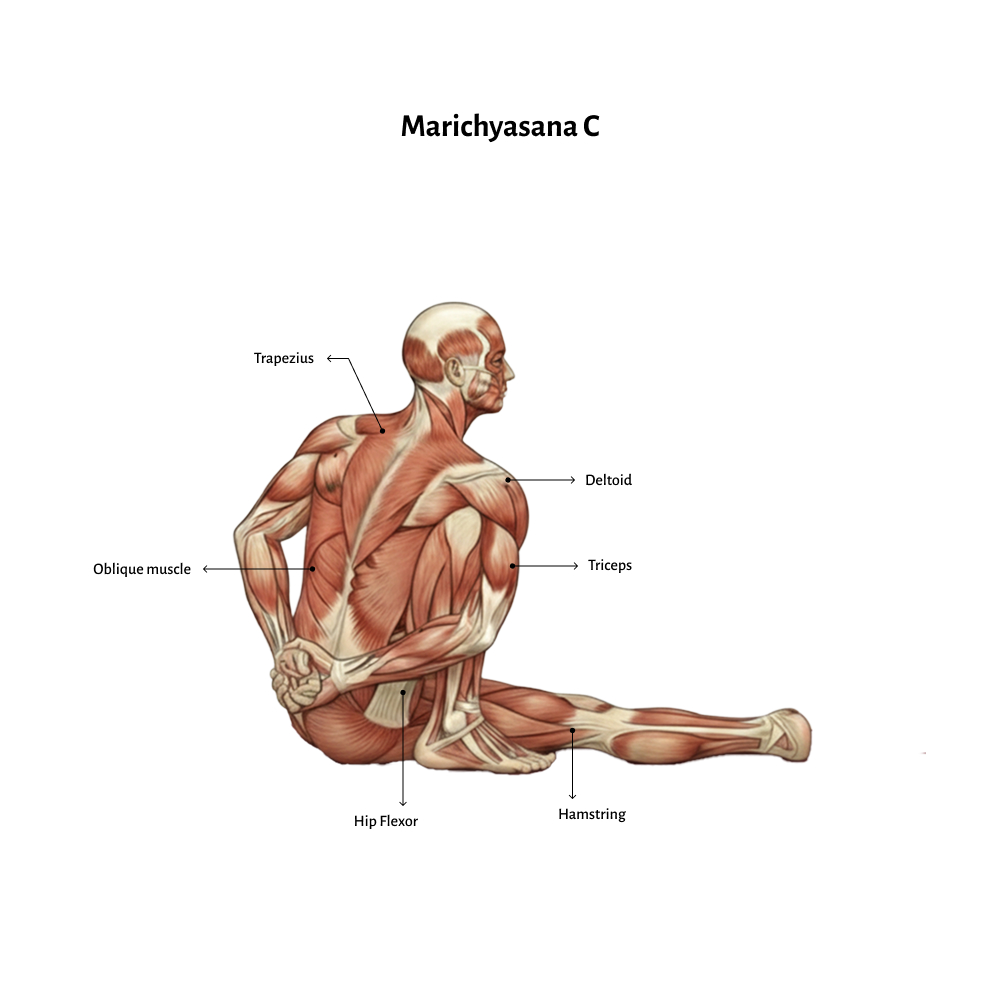
Marichayasana C

Stretches:
Spine, shoulders, hips, and neck.

Strengthens:
Back muscles and core, which are essential for maintaining the twist. The oblique muscles are particularly engaged.