Matsyasana (मत्स्यासन)
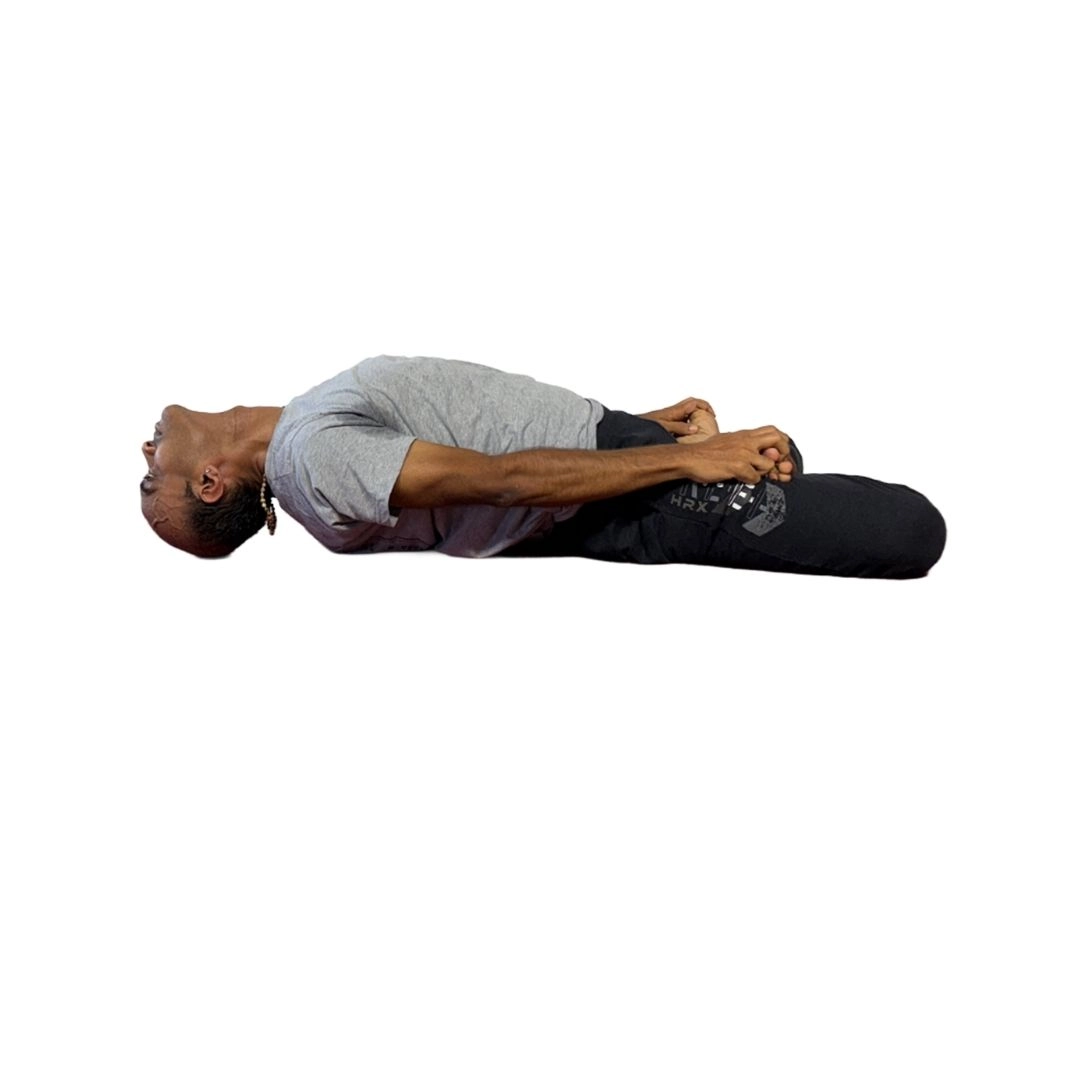
Matsyasana (मत्स्यासन), or Fish Pose, is a gentle backbend and heart-opening yoga posture. The name comes from the Sanskrit words “matsya” (fish) and “asana” (posture). The pose is said to resemble a fish, and it is traditionally believed that practicing it makes one able to float in water like a fish. Matsyasana is a great counter-pose to shoulder stands and other inversions, as it gently stretches the neck and chest.
How to do Matsyasana
Benefits of Matsyasana
- Improves Posture:
By stretching and strengthening the muscles of the back, neck, and shoulders, Matsyasana helps correct slouched or rounded shoulders and promotes spinal alignment. - Enhances Breathing:
The deep chest-opening action expands the rib cage and lungs, which can improve lung capacity and aid in respiratory conditions like asthma and bronchitis. - Stimulates Glands:
The gentle compression and stretch in the neck area stimulate the thyroid and parathyroid glands, which are vital for metabolism and hormone regulation.
- Strengthens and Stretches:
The pose strengthens the upper back and neck muscles while providing a deep stretch to the throat, chest, abdomen, and intercostal muscles (between the ribs). - Aids Digestion:
Matsyasana gently massages the abdominal organs, which can help stimulate digestive function and relieve issues like bloating and constipation. - Reduces Stress and Anxiety:
The combination of a heart-opening posture and deep breathing can help calm the nervous system, reducing stress and anxiety.
Contraindications of Matsyasana
Avoid or modify this pose if you have:
- Neck or Back Injury:
Individuals with a serious injury to the neck, spine, or lower back should avoid this pose or practice it only under the guidance of a qualified yoga instructor. - Migraine or Headache:
The pose can put pressure on the head and neck, which may exacerbate a headache or migraine. - High or Low Blood Pressure:
The inversion and head position can affect blood pressure, so it should be avoided by those with blood pressure issues.
- Insomnia:
While it can be relaxing, the stimulating nature of the pose may not be suitable for those with insomnia. - Pregnancy:
Pregnant women, particularly in the later stages, should avoid deep backbends like Matsyasana. - Hernia or Peptic Ulcer:
The abdominal stretch may not be suitable for individuals with these conditions. - Recent Surgery:
Avoid the pose if you have had any recent abdominal, neck, or shoulder surgery.
Anatomy (Muscles involved)
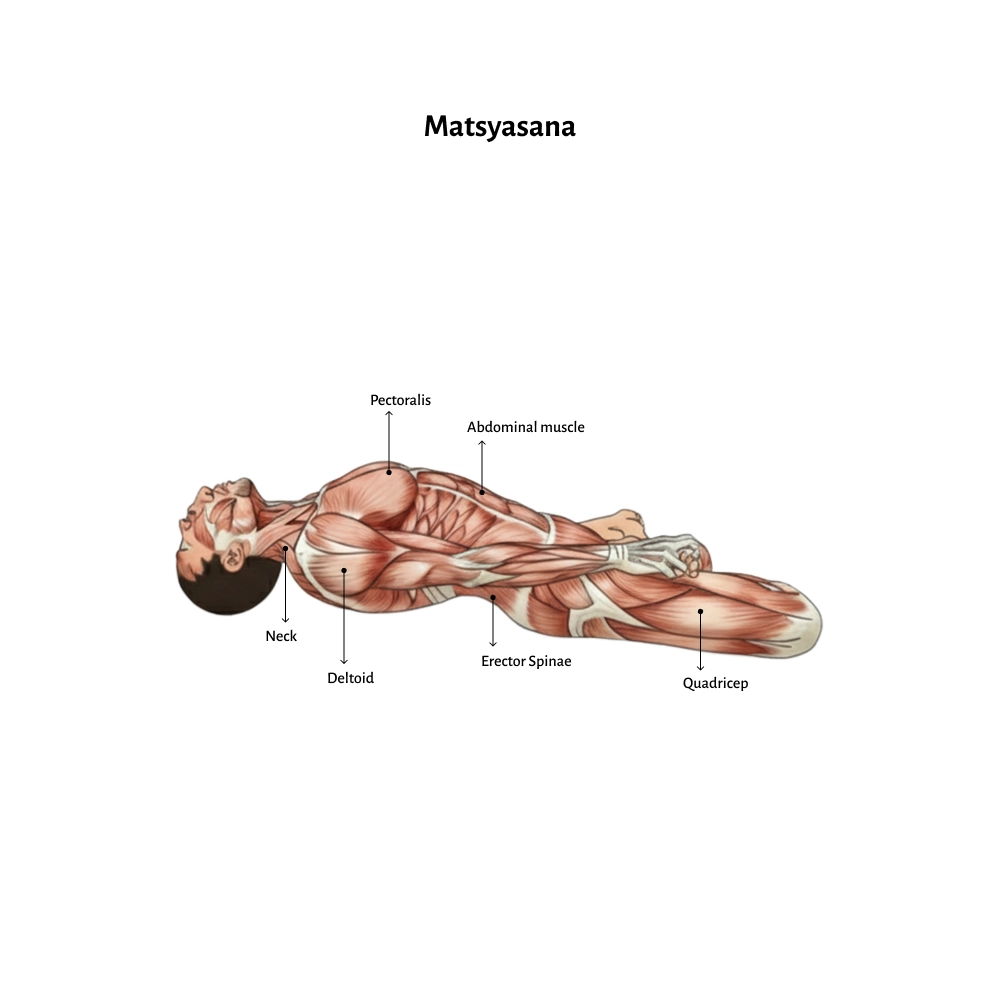
This pose engages a complex network of muscles and joints:
Muscles:
Stretches the psoas, intercostals, and abdominal muscles. It strengthens the muscles of the neck, upper back (rhomboids), and shoulders.
Spine:
The pose creates a backward bend, increasing the flexibility and mobility of the thoracic and cervical spine.
Glands:
It stimulates the thyroid, parathyroid, and pituitary glands through the stretch and compression in the throat region.
Respiratory System:
The lift of the chest expands the rib cage and diaphragm, allowing for deeper and more effective breathing.