Natarajasana (नटराजासन)
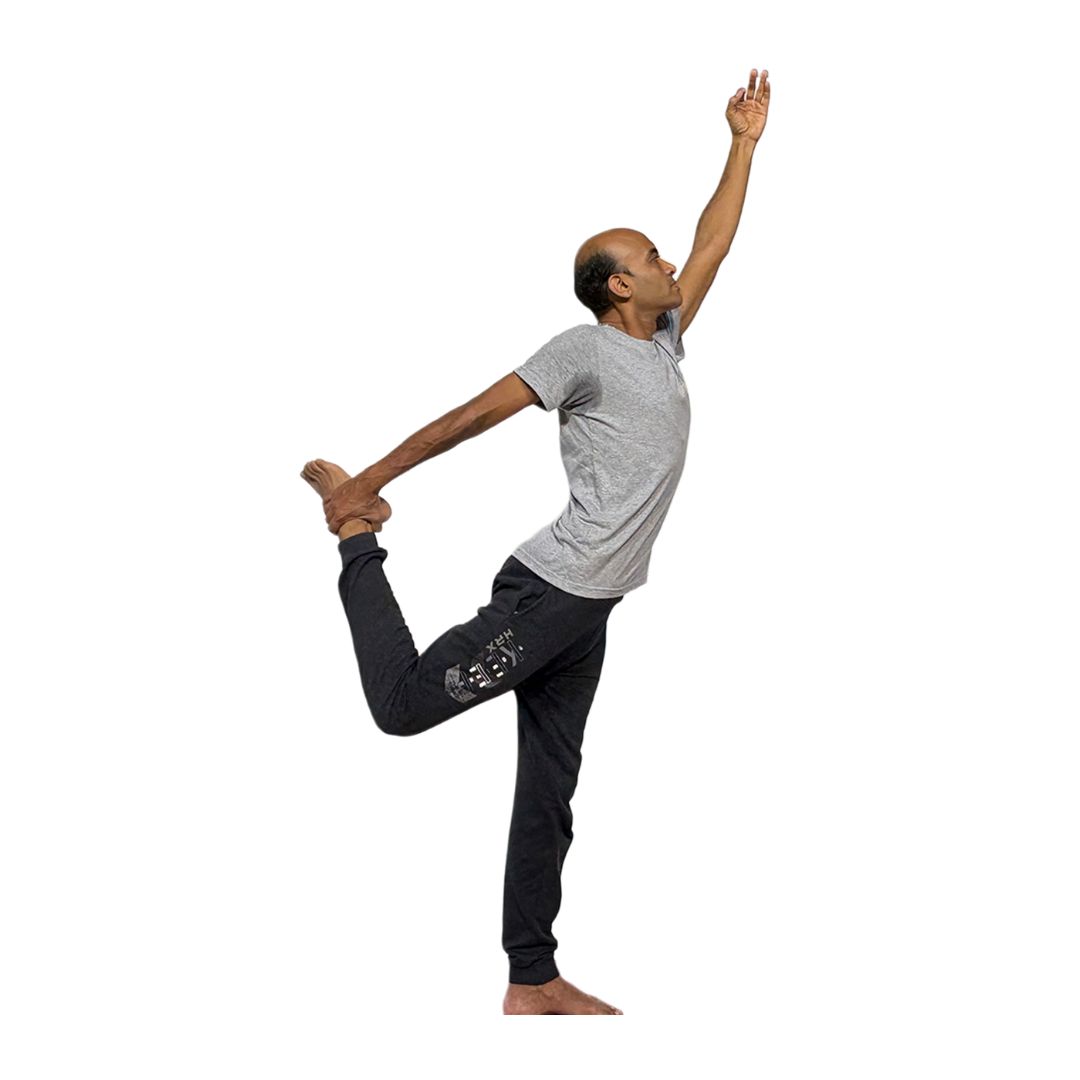
Natarajasana (नटराजासन), also known as Dancer Pose or Lord of the Dance Pose, is a standing balancing backbend in yoga. The pose is named after Nataraja, a form of the Hindu god Shiva, who is the cosmic dancer. It is a challenging asana that requires a combination of strength, balance, and flexibility.
How to do Natarajasana
Benefits of Natarajasana
- Improves Balance and Concentration
It is a balancing pose that requires intense focus, which helps to improve both physical balance and mental concentration. - Strengthens the Body
It strengthens the muscles of the legs, ankles, and core. - Increases Flexibility
It provides a deep stretch to the shoulders, chest, abdomen, groins, and thighs. - Stimulates Digestion
The deep stretch in the abdomen can help to massage the internal organs and improve digestion.
- Reduces Stress
The mindful practice and focus required can help to calm the mind and relieve stress and anxiety. - Improves Posture
It helps to elongate the spine and strengthen the back muscles, counteracting the effects of slouching. - Enhanced Mental Clarity
Holding the pose requires focus and concentration, which can help to improve memory and mental sharpness
Contraindications of Natarajasana
Avoid or modify this pose if you have:
- Injuries
Recent or chronic injuries to the ankles, knees, hips, or shoulders. - Spinal Issues
Conditions like a slipped disc, bulging disc, or severe lower back pain. - Vertigo or Dizziness
The balancing nature of the pose can be unsafe for those with balance disorders.
- Blood Pressure or Heart Conditions
People with high or low blood pressure or heart problems should be cautious and consult with a professional. - Pregnancy
Pregnant women should avoid this pose, as it can put unnecessary pressure on the abdomen and back.
Anatomy (Muscles involved)
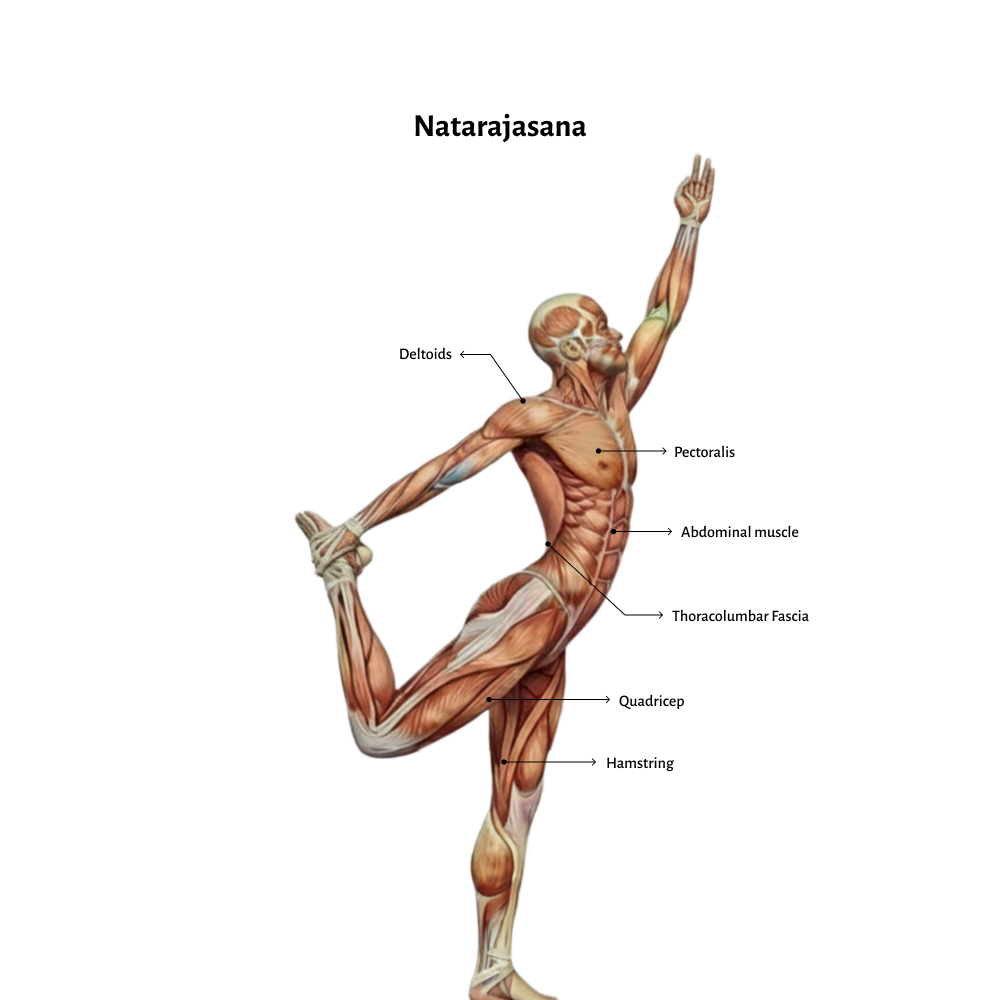
Natarajasana engages and stretches a wide range of muscles and joints:
Standing Leg
The quadriceps and hamstrings of the standing leg work to keep it straight and strong. The muscles in the foot and ankle, especially the peroneals, are active to maintain balance.
Lifted Leg
The quadriceps are stretched, while the hamstrings and glutes work to lift the leg higher. The hip flexors are also deeply stretched.
Torso
The core muscles (abdominals and obliques) are engaged to stabilize the spine and prevent it from swaying. The erector spinae muscles along the back are active to support the backbend.
Shoulders and Chest
The pectorals and deltoids are stretched, while the rotator cuff muscles are engaged to stabilize the shoulder joint. The chest is opened, and the shoulders are pulled back.