Navasana (नावासन)
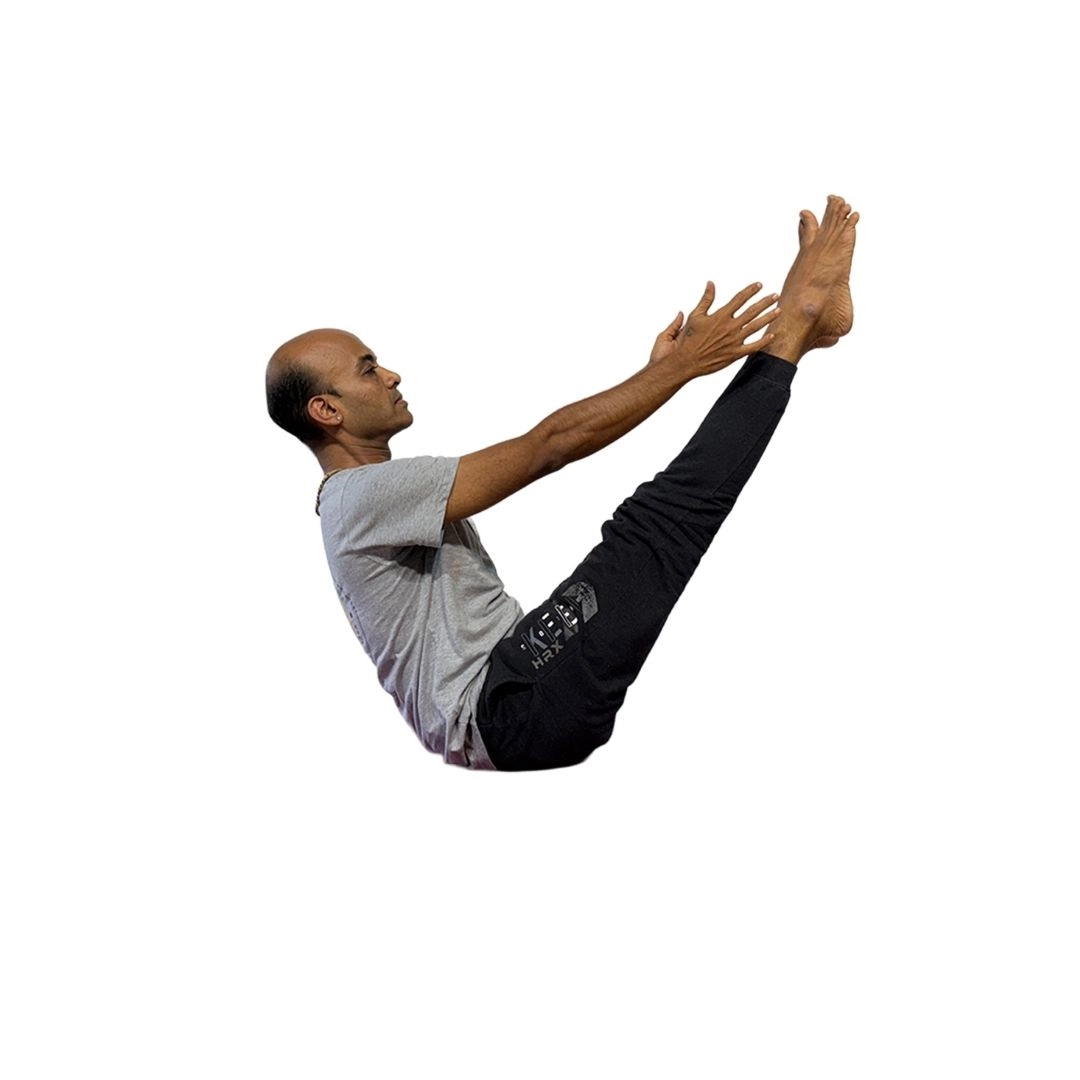
Navasana (नावासन), or Boat Pose, is a challenging seated posture that builds core strength, improves balance, and tones the abdominal muscles. The name comes from the Sanskrit word “nava” (boat) and “asana” (posture). In this pose, the body is balanced on the sitting bones, with the legs and torso lifted, creating a shape that resembles a boat.
How to do Navasana
Benefits of Navasana
- Strengthens the core:
It is an excellent pose for building strength in the abdominal muscles, including the rectus abdominis, transverse abdominis, and obliques. - Improves balance and stability:
Balancing on your sitting bones requires focus and helps to improve overall body balance and stability. - Tones muscles:
Navasana tones the muscles of the legs, arms, and back.
- Stimulates organs:
The pose can stimulate the abdominal organs, which may improve digestion and metabolism. - Enhances focus and concentration:
The concentration required to hold the pose can help to calm the mind and improve mental focus. - Reduces stress:
By promoting deep breathing and concentration, Navasana can help alleviate stress and mental fatigue.
Contraindications of Navasana
Avoid or modify this pose if you have:
- Spinal or back injuries:
The pose puts pressure on the spine, so it’s not recommended for those with severe back pain, a herniated disc, or recent back surgery. - Asthma:
The core engagement can make breathing difficult for those with respiratory issues. - Headache or low blood pressure:
The pose can exacerbate these conditions.
- Pregnancy and menstruation:
The strong abdominal engagement and pressure on the abdomen make this pose unsafe during these times. - Weak joints:
Individuals with weak knees, ankles, or hip joints should approach this pose with caution and use modifications.
Anatomy (Muscles involved)
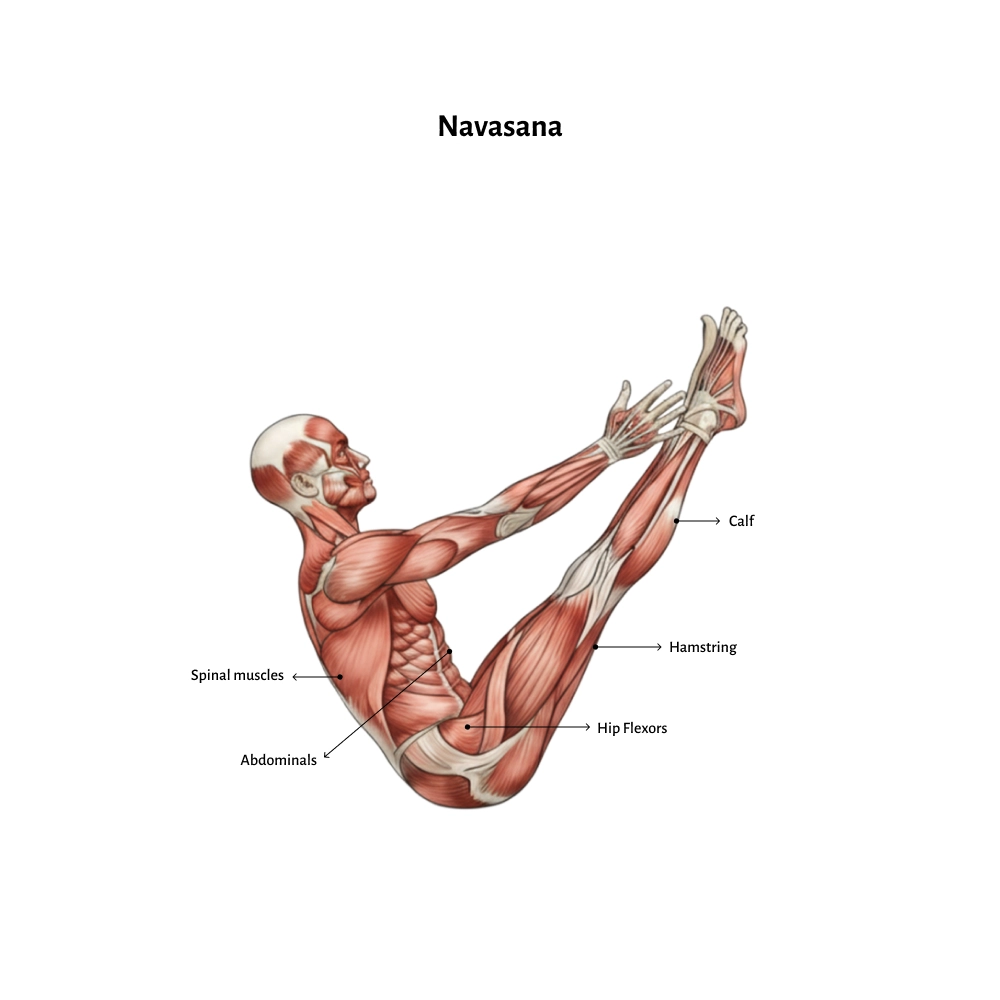
This pose engages a complex network of muscles and joints:
Core Muscles:
The abdominal muscles, particularly the rectus abdominis and transverse abdominis, are the primary muscles engaged to maintain the “”V”” shape and support the spine.
Hip Flexors:
The iliopsoas muscles (a combination of the psoas major and iliacus) are crucial for lifting the legs.
Spinal Muscles:
The erector spinae muscles in the back work to keep the spine straight and prevent rounding.
Quadriceps:
These muscles on the front of the thighs are active, especially when the legs are straightened.
Hamstrings:
While the hamstrings are lengthened, they also work to support the legs.
Adductors:
These inner thigh muscles work to keep the legs squeezed together.