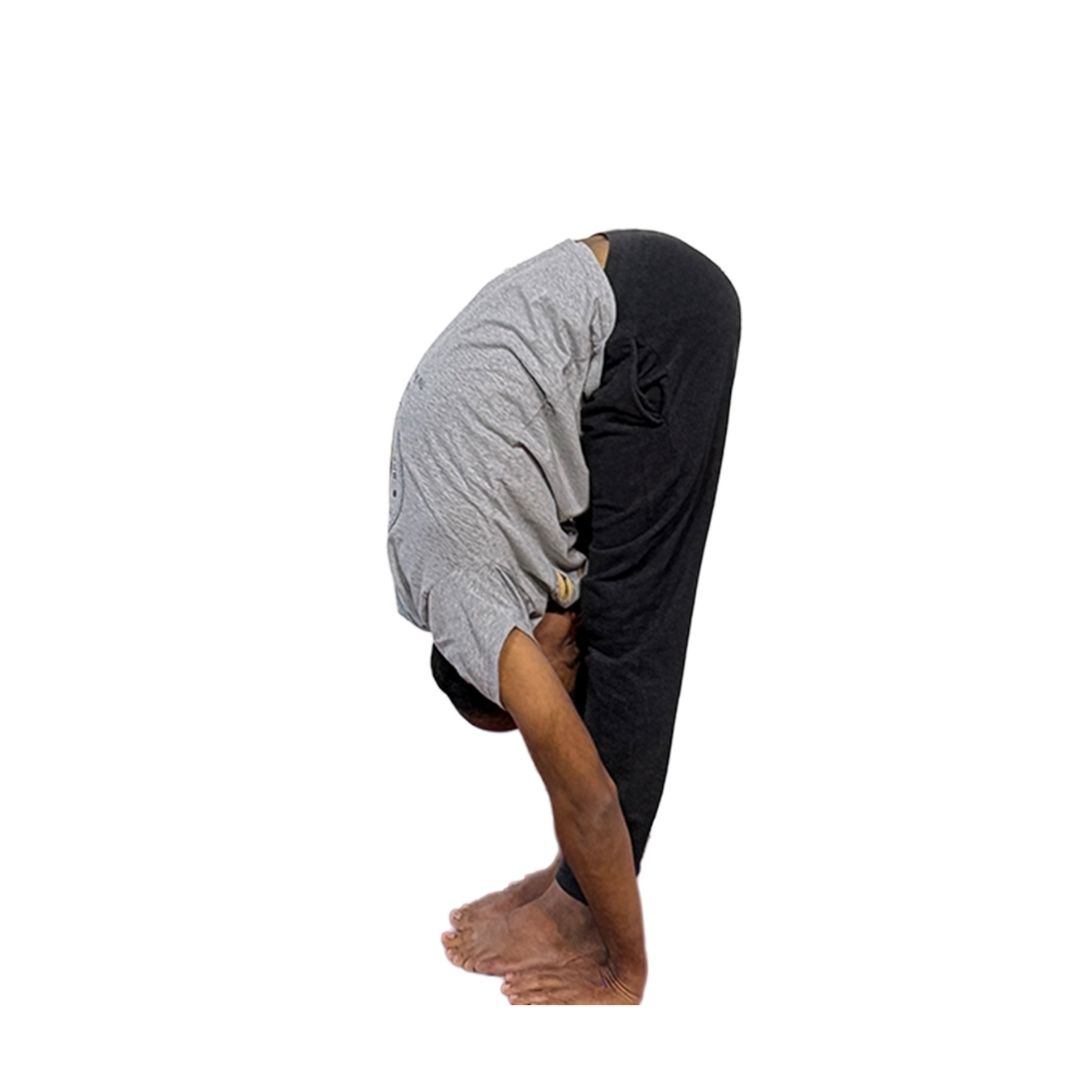
Padahastasana (पादहस्तासन)
Padahastasana (पादहस्तासन), which means “Hand-to-Foot Pose,” is another standing forward bend in yoga that is often practiced in conjunction with Padangusthasana. The name is derived from the Sanskrit words “pada” (foot), “hasta” (hand), and “asana” (posture). It is a slightly more advanced version of the forward fold, as it involves placing the hands under the feet.
How to do Padahastasana
Benefits of Padahastasana
- Increases Flexibility:
This pose deeply stretches the hamstrings, calves, and the entire back of the body. - Strengthens Muscles: It strengthens the ankles, legs, and core muscles.
- Improves Digestion: The forward fold compresses the abdomen, massaging the digestive organs and aiding in digestion and relieving constipation.
- Calms the Mind:
The pose has a soothing effect on the nervous system, which helps reduce stress and anxiety. - Improves Circulation:
By inverting the body, it increases blood flow to the head, which can improve oxygen supply to the brain and promote mental clarity.
Contraindications of Padahastasana
Avoid or modify this pose if you have:
- Severe back pain or injury:
This includes herniated discs, slipped discs, or spinal stenosis. The forward bend can put excessive pressure on the spine and worsen the condition. - Sciatica:
The deep stretch can aggravate the sciatic nerve. - High blood pressure or heart conditions:
As an inversion, the pose brings the head below the heart, which can increase blood pressure and is not recommended for those with uncontrolled hypertension or other heart issues.
- Vertigo or dizziness:
The change in head position can exacerbate these conditions. - Migraines or epilepsy:
The inversion aspect can trigger or worsen symptoms. - Glaucoma or myopia:
The increased pressure in the head can be harmful to the eyes. - Recent abdominal surgery or hernia:
The pressure on the abdominal wall can be dangerous.
Anatomy (Muscles involved)
Padahastasana engages and stretches a wide range of muscles and joints:

Hamstrings:
The large muscles at the back of the thighs are intensely stretched in this pose.
Calves:
The calf muscles (gastrocnemius and soleus) are also stretched.
Gluteus Maximus:
The glute muscles are engaged and stretched.
Spine:
The erector spinae muscles along the spine are stretched, increasing spinal flexibility.
Wrists:
Placing your feet on your palms provides a stretch to the muscles in your wrists.