Padma Mayurasana (पद्म मयूरासन)
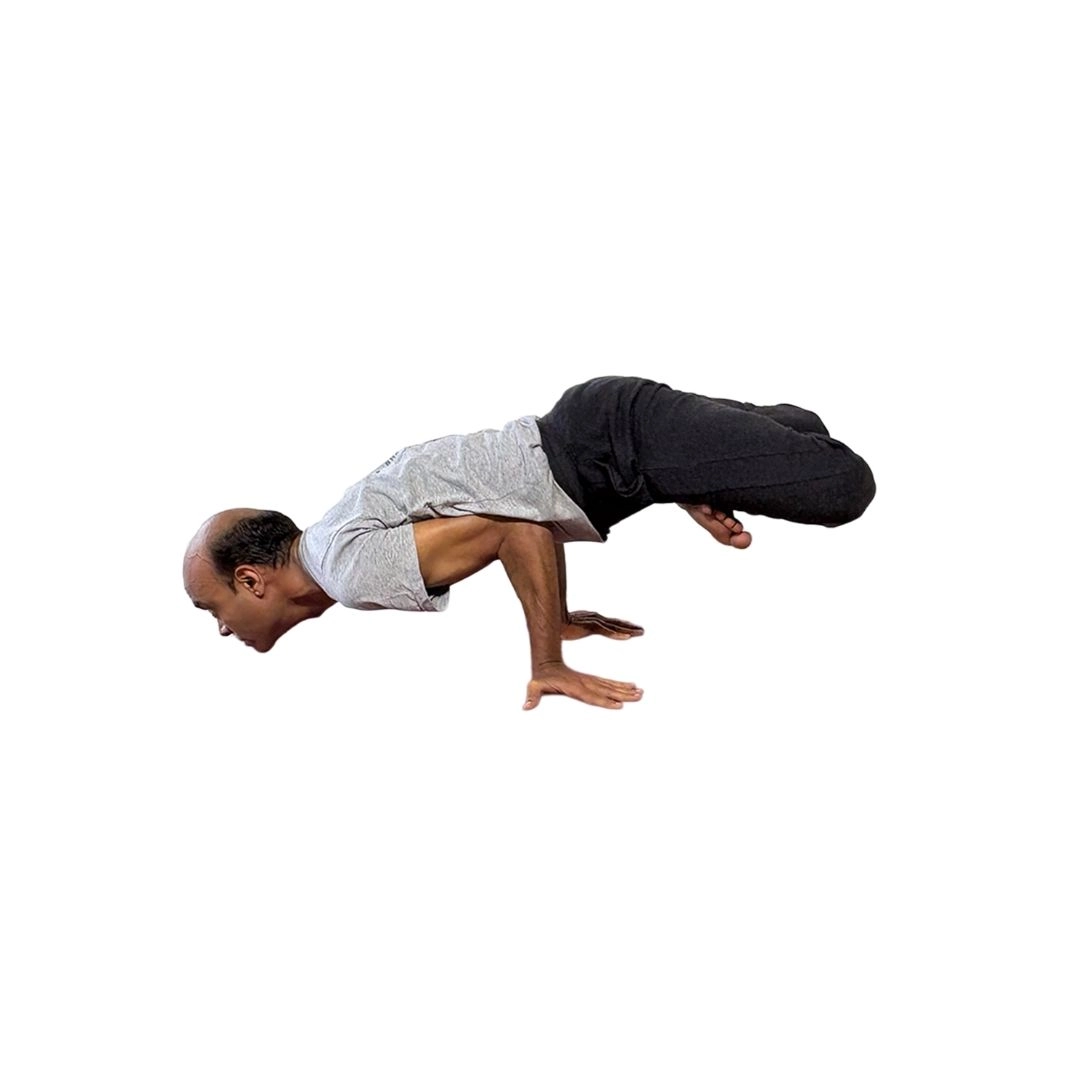
Padma Mayurasana (पद्म मयूरासन), or Lotus Peacock Pose, is a highly advanced arm-balancing yoga posture that combines the full expression of Mayurasana (Peacock Pose) with the deep hip-opening of Padmasana (Lotus Pose). The name comes from the Sanskrit words “padma” (lotus), “mayura” (peacock), and “asana” (posture).
How to do Padma Mayurasana
Benefits of Padma Mayurasana
- Strengthens the Upper Body:
This pose builds significant strength in the wrists, forearms, arms, and shoulders. - Massages and Tones Abdominal Organs:
The pressure of the elbows on the abdomen is believed to stimulate and massage the digestive organs, including the liver, spleen, and pancreas, which can improve digestion and metabolism. - Detoxifies the Body:
By stimulating the digestive and circulatory systems, this pose is thought to aid in the body’s natural detoxification process.
- Improves Balance and Concentration:
Holding this challenging pose requires intense focus, which can improve mental concentration and body-mind coordination. - Tones the Core:
The pose requires a strong engagement of the core muscles to maintain stability and keep the body parallel to the floor.
Contraindications of Padma Mayurasana
Avoid or modify this pose if you have:
- Any injury to the wrists, elbows, or shoulders.
- Weak or injured knees.
- High blood pressure or heart conditions.
- Hernia, peptic, or duodenal ulcers.
- Intestinal problems or abdominal inflammation.
- Pregnancy or menstruation.
- Sciatica.
Anatomy (Muscles involved)
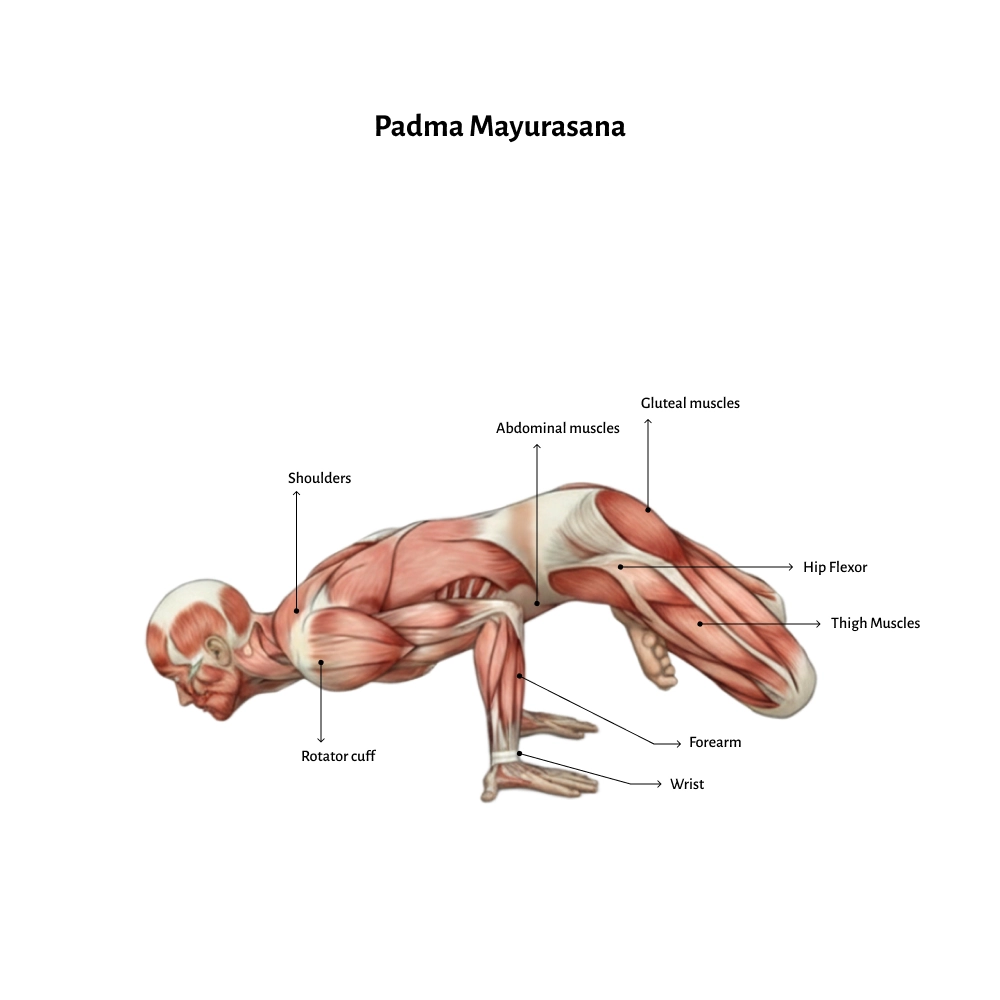
This pose engages a complex network of muscles and joints:
Wrist:
The wrists are in dorsiflexion, bearing the majority of the body’s weight.
Elbow:
The elbows are bent and pressed into the abdomen.
Shoulder:
The shoulder joints are engaged, with muscles working to stabilize and support the body.
Core:
The abdominal muscles, including the transverse abdominis, obliques, and rectus abdominis, are strongly engaged to maintain a straight line from head to feet.
Legs (in Padmasana):
The hips are in deep external rotation, and the knees are flexed. The muscles of the hips, thighs, and ankles are also engaged to hold the Lotus position and maintain balance.