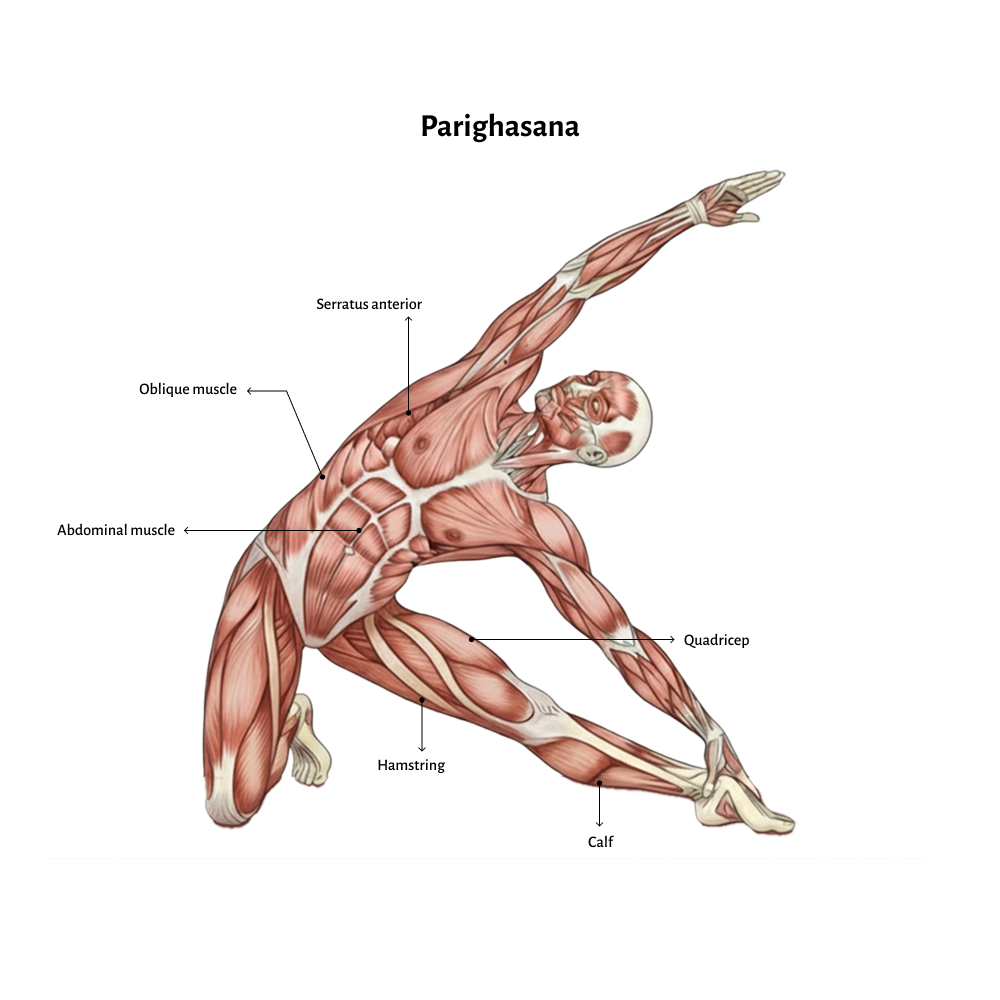
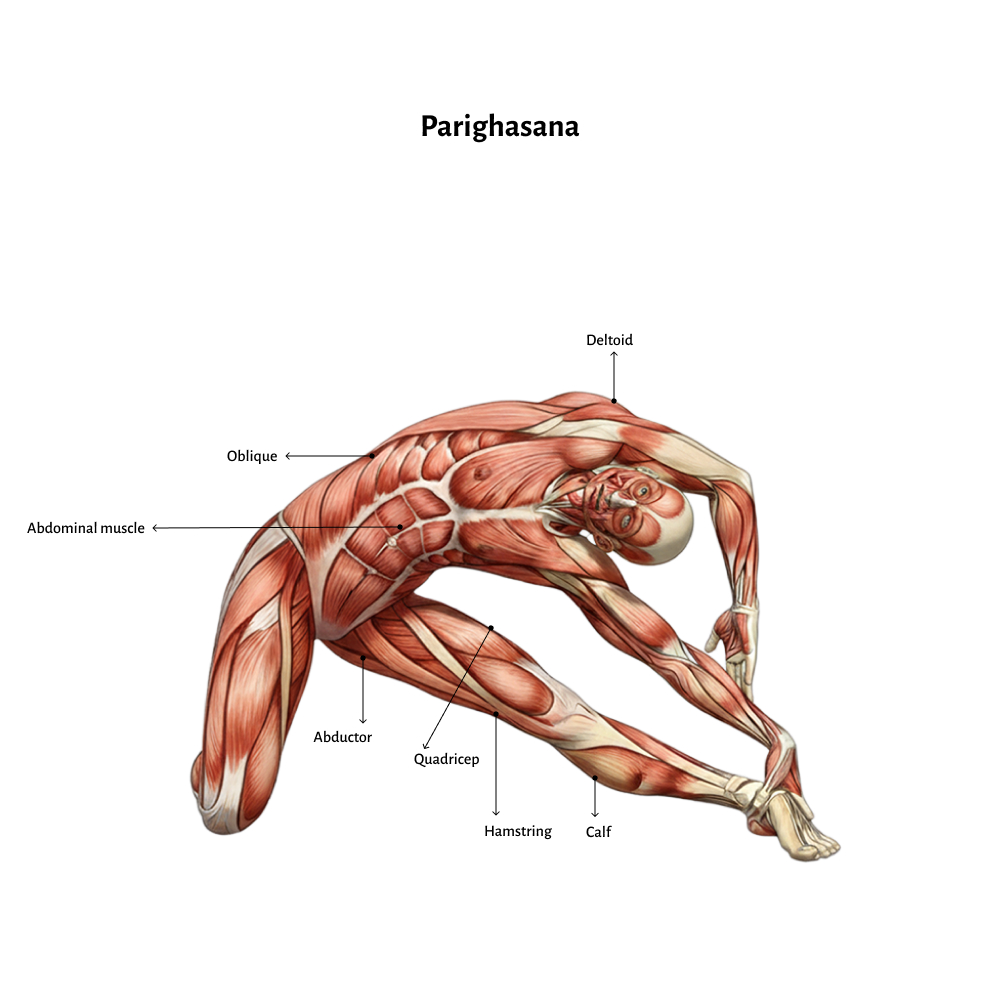
Parighasana (परिघासन)
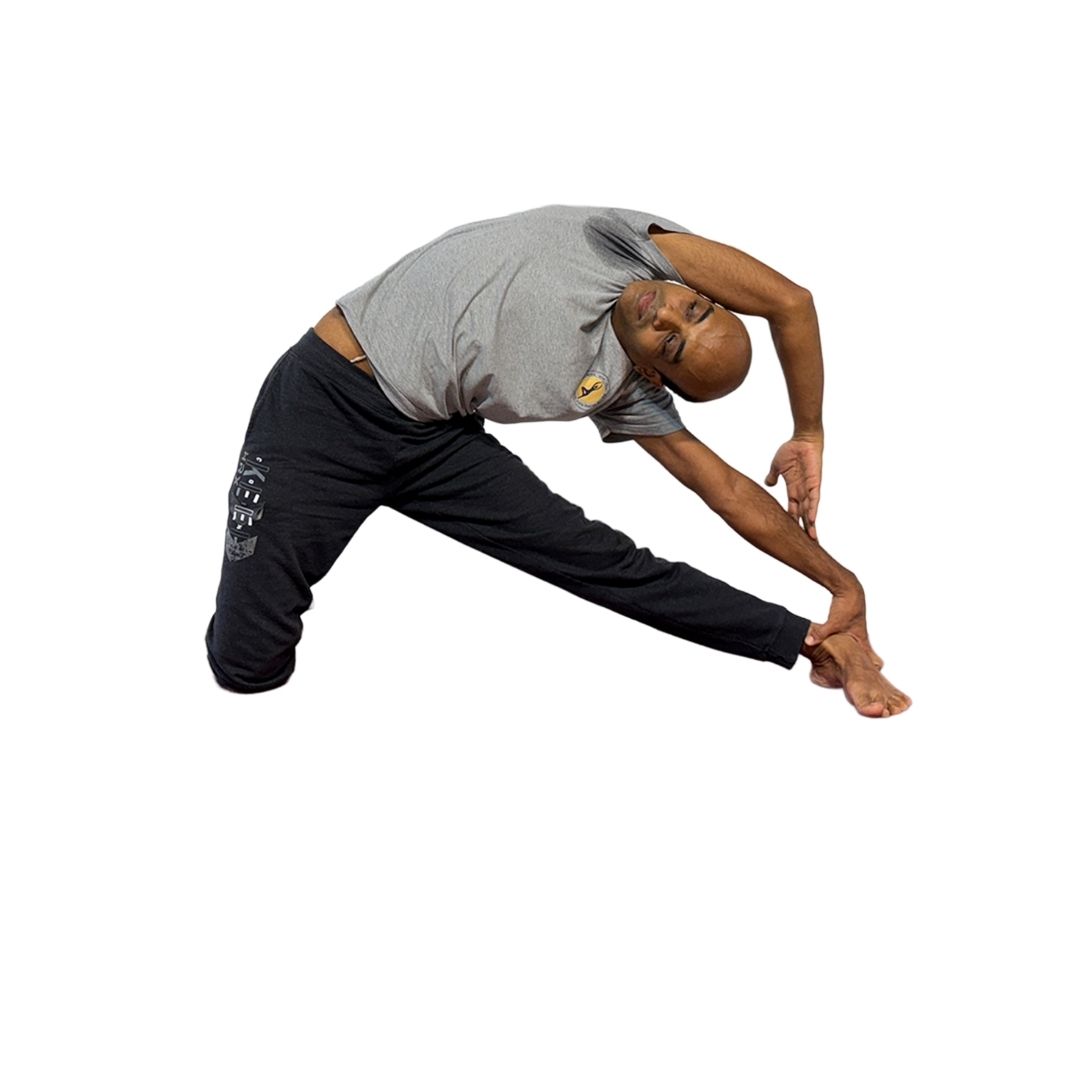
Parighasana (परिघासन), or Gate Pose, is a simple yet powerful kneeling posture that provides a deep side body stretch. The name comes from the Sanskrit words “parigha” (a crossbar or gate), and “asana” (posture). The pose gets its name because the body resembles a gate’s crossbar, with the arms and legs creating a symmetrical shape.
How to do Parighasana
Benefits of Parighasana
- Stretches and Lengthens:
Parighasana provides an intense stretch for the entire side body, including the intercostal muscles (between the ribs), the obliques, and the latissimus dorsi. It also stretches the hamstrings, inner thighs, and calves of the extended leg. - Strengthens:
The pose strengthens the core muscles, glutes, pelvic floor, and the standing leg.
- Improves Flexibility and Posture:
It increases the range of motion in the spine and hips, helping to release stiffness in the lower back and improve overall posture. - Enhances Breathing:
By stretching the intercostal muscles, it helps open the chest and diaphragm, allowing for deeper breaths and improved lung capacity. - Stimulates Organs:
The lateral stretch can stimulate and massage the abdominal organs, which may aid in digestion.
Contraindications of Parighasana
Avoid or modify this pose if you have:
- Knee, Ankle, or Hip Injuries:
The pose puts weight on the kneeling knee and the joints of the extended leg. Use a blanket for the kneeling knee or avoid the pose entirely if the injury is severe. - Shoulder or Rib Cage Injuries:
The intense stretch can aggravate injuries in these areas.
- Recent Surgeries:
Especially abdominal or heart-related surgeries. - Hernia:
The deep stretch of the abdominal muscles can be detrimental. - Severe Lower Back Pain:
Overstretching can worsen the condition. Listen to your body and avoid forcing the pose.
Anatomy (Muscles involved)
This pose engages a complex network of muscles and joints:
Knee Extension:
The knee of the extended leg is in full extension.
Knee Flexion:
The knee of the standing leg is in deep flexion.
Hip Abduction:
The straight leg is abducted (moved away from the midline)
Lateral Spinal Flexion:
The spine bends to the side.
Spinal Elongation:
It’s essential to lengthen the spine first, out of the hips, before beginning the side bend. This prevents compression of the vertebral discs.