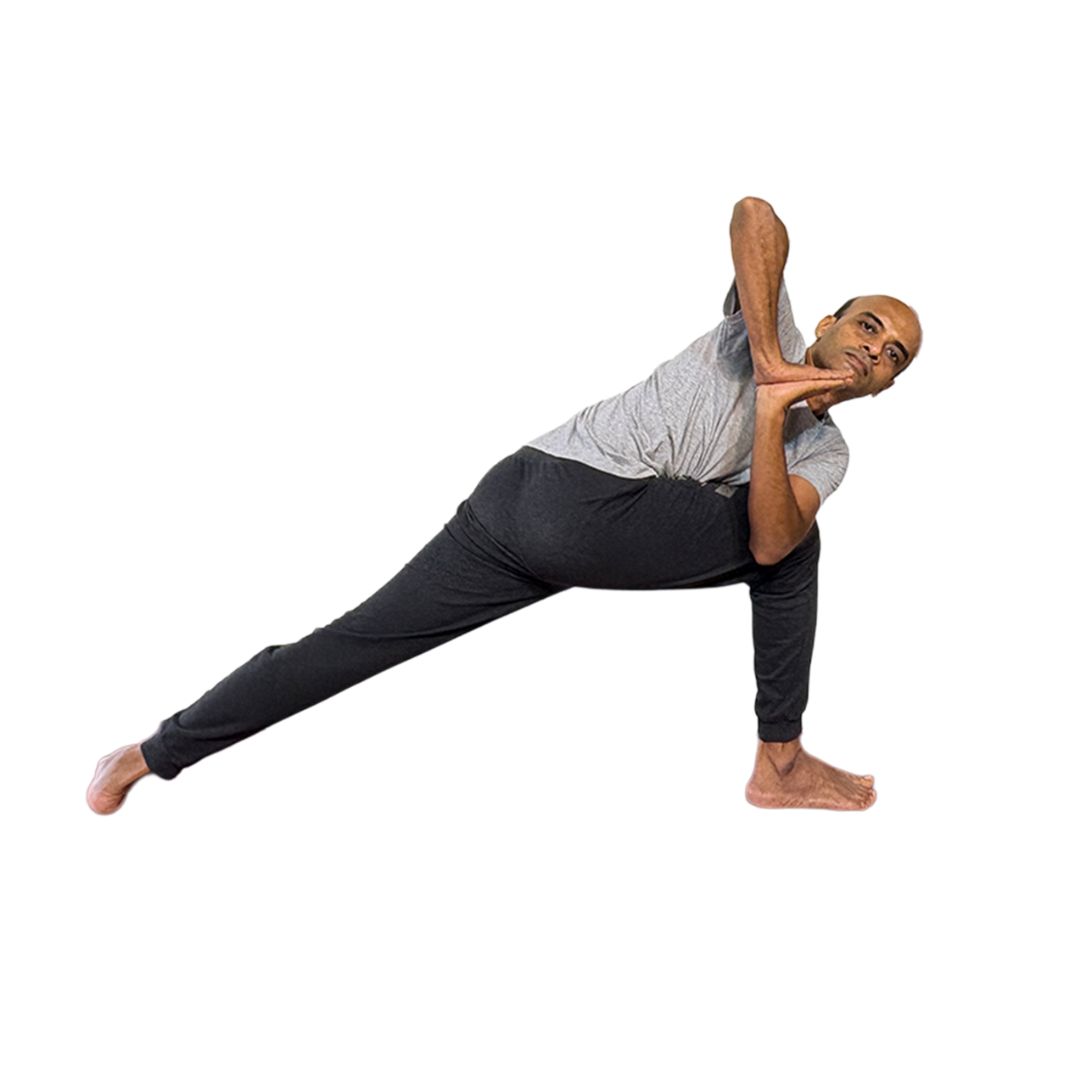
Parivrtta Parsvakonasana (परिवृत्त पार्श्वकोणासन)
Parivrtta Parsvakonasana (परिवृत्त पार्श्वकोणासन), or Revolved Side Angle Pose, is a powerful standing posture that combines a deep twist with a balance-testing lunge. If Utkatasana (Chair Pose) is about building the fire, this pose is about using that fire to “wring out” the body.
How to do Parivrtta Parsvakonasana
Benefits of Parivrtta Parsvakonasana
- Massages Internal Organs: The deep compression of the abdomen is thought to stimulate digestion and aid in “detoxifying” the liver and kidneys.
- Improves Balance: Balancing in a twist is significantly harder than a standard lunge; it forces your small stabilizer muscles in the ankles and feet to work overtime.
- Strengthens the “Commuter Muscles”: Since you don’t own a car, your quads, glutes, and ankles likely do a lot of heavy lifting. This pose strengthens those areas while stretching the psoas and calves.
- Increases Spinal Mobility: It helps maintain the “suppleness” of the spine by rotating the vertebrae, which can get stiff from carrying bags or walking with a heavy backpack.
Contraindications of Parivrtta Parsvakonasana
Avoid or modify this pose if you have:
- Back or Spinal Injuries:
The intensity of this twist can be too much for those with herniated discs. - High Blood Pressure:
Holding deep twists can temporarily increase pressure; move slowly.
- Neck Issues:
If looking up at your hand hurts your neck, keep your gaze down at your front foot.
Pro Tip: If the balance feels too “wobbly,” drop your back knee to the floor for a Revolved Crescent Lunge. You get 100% of the twist benefits with only 20% of the “I might fall over” anxiety.
Anatomy (Muscles involved)
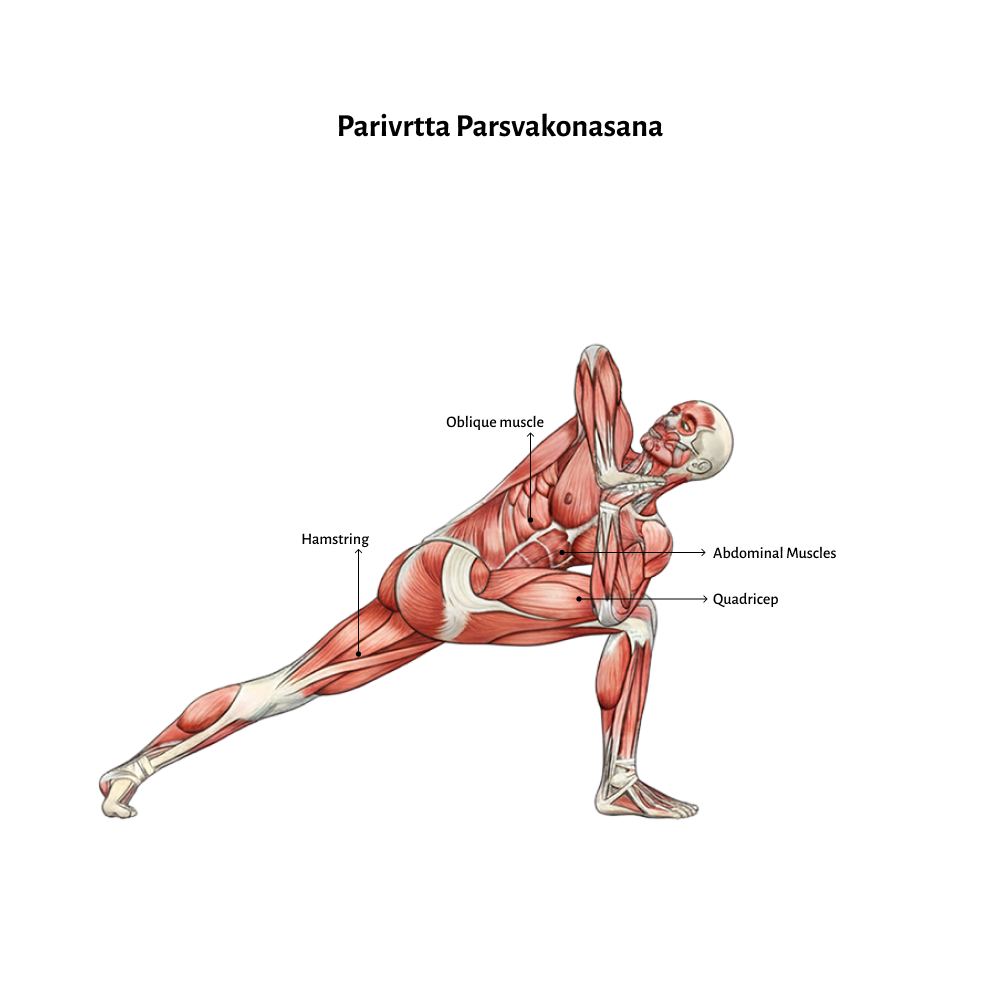
Parivrtta Parsvakonasanaengages and stretches a wide range of muscles and joints:
The Stabilizers (Lower Body):
- Quadriceps: Your front thigh works overtime to maintain that 90° bend.
- Gluteus Medius & Maximus: These keep your hips level and prevent the “”wobble”” that comes with balancing in a twist.
- Anterior Tibialis & Calves: Crucial for grounding your feet and ankles, especially if you spend a lot of time walking on city pavement.
The Engines (Core & Torso):
- Obliques:
These are the primary drivers of the twist. They “”wring”” your torso around your spine. - Transverse Abdominis:
Your deepest core muscle acts like a corset, protecting your lower back while you’re rotated.
The Frame (Upper Body):
- Rhomboids & Trapezius: These engage to pull your top shoulder back and open your chest toward the sky.
- Triceps: Specifically in the arm pressing against the thigh, helping create the leverage for the twist.