Parsvottanasana (पार्श्वोत्तनासन)
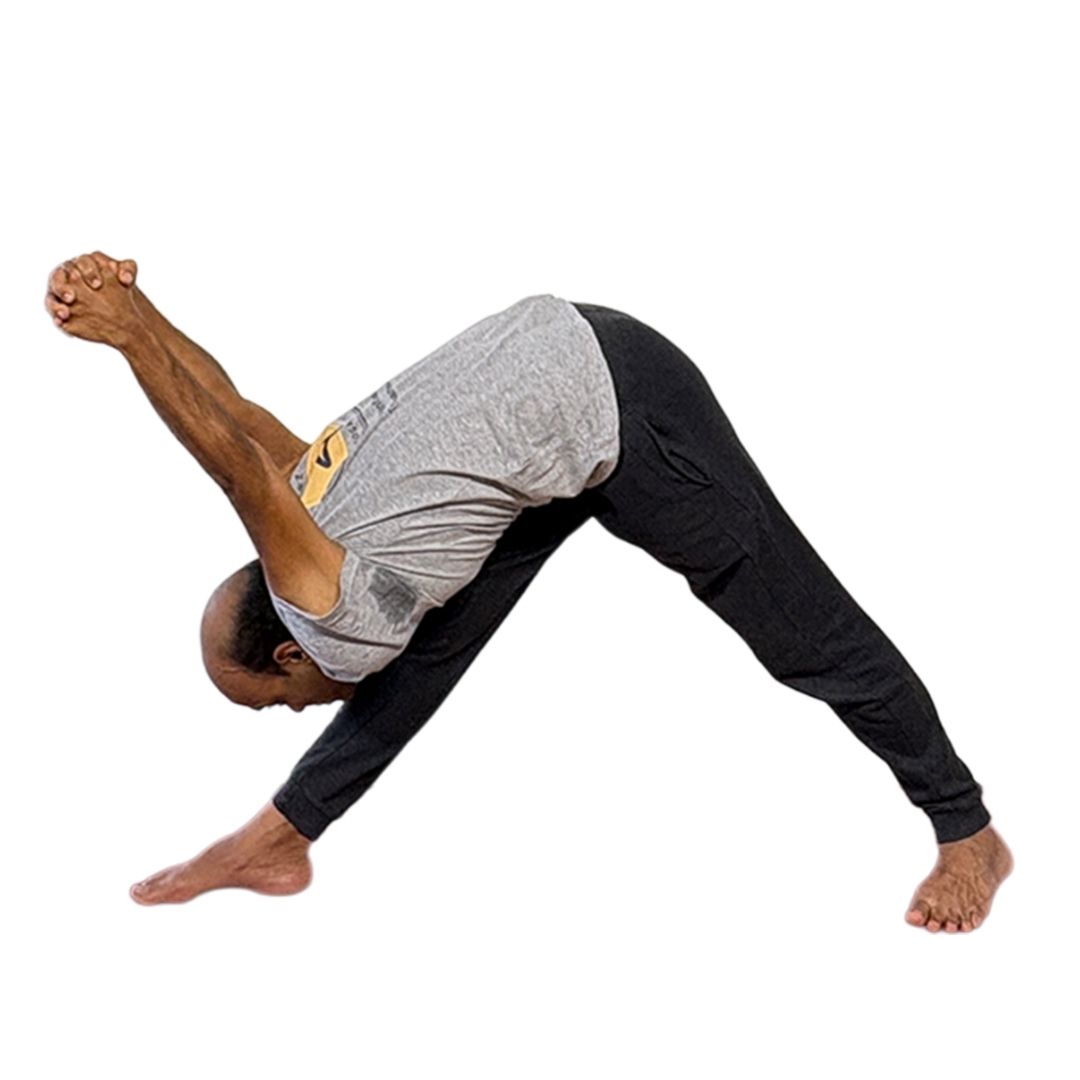
Parsvottanasana (पार्श्वोत्तनासन), or Intense Side Stretch Pose, is a forward bend that combines a hamstring stretch with a gentle spinal twist. The name comes from the Sanskrit words “parsva” (side or flank), “uttana” (intense stretch), and “asana” (posture).
How to do Parsvottanasana
Benefits of Parsvottanasana
- Stretches and Strengthens: It provides an intense stretch for the hamstrings, calves, and hips while strengthening the legs, ankles, and core muscles.
- Improves Flexibility: The deep forward bend helps to open the lower back and increase the elasticity of the hip joints and spine.
- Enhances Balance and Focus: The asymmetrical nature of the pose challenges your balance and requires concentration, improving your mind-body connection.
- Aids Digestion: The forward fold massages the abdominal organs, which can help stimulate digestion.
- Calms the Mind: As a forward fold, it helps to soothe the nervous system and calm the mind.
Contraindications of Parsvottanasana
Avoid or modify this pose if you have:
- Injuries:
Any recent or chronic injuries in the ankles, knees, legs, hips, hamstrings, back, shoulders, or neck.
- High Blood Pressure:
The forward bend and inversion can cause a rush of blood to the head.
- Dizziness or Vertigo:
The change in blood flow and position can exacerbate these conditions.
- Pregnancy:
The abdominal pressure in the forward fold is not recommended for pregnant women.
- Tight Hamstrings:
Warm up thoroughly and consider bending the front knee or using blocks under your hands to avoid overstretching.
Anatomy (Muscles involved)
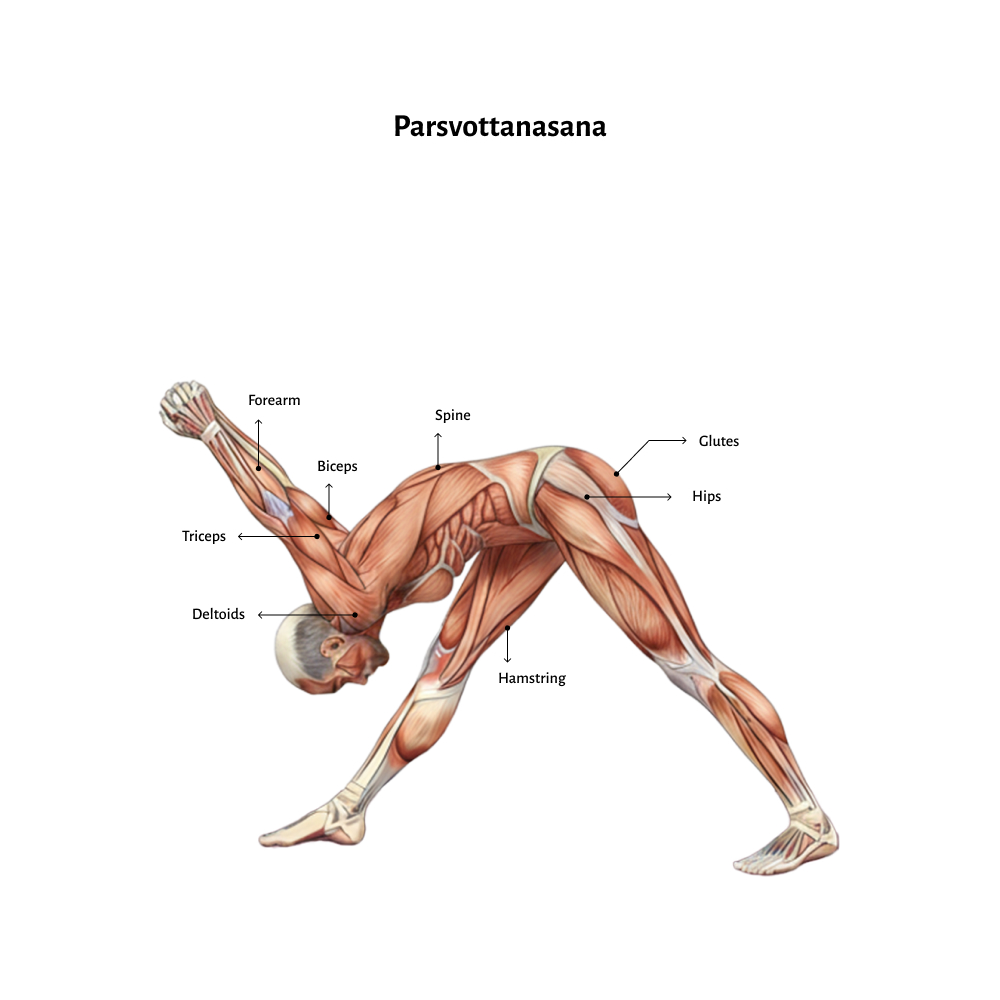
Parsvottanasana engages and stretches a wide range of muscles and joints:
Hamstrings:
On both legs, they are intensely stretched, especially on the front leg.
Gluteus and Hips:
The pose helps to open the hips and release tension.
Spinal Muscles:
The forward bend lengthens and strengthens the spine, improving posture.
Shoulders and Wrists:
The reverse prayer hand position works to improve the flexibility and range of motion in the shoulder and wrist joints.