Pindasana (पिंडासन)
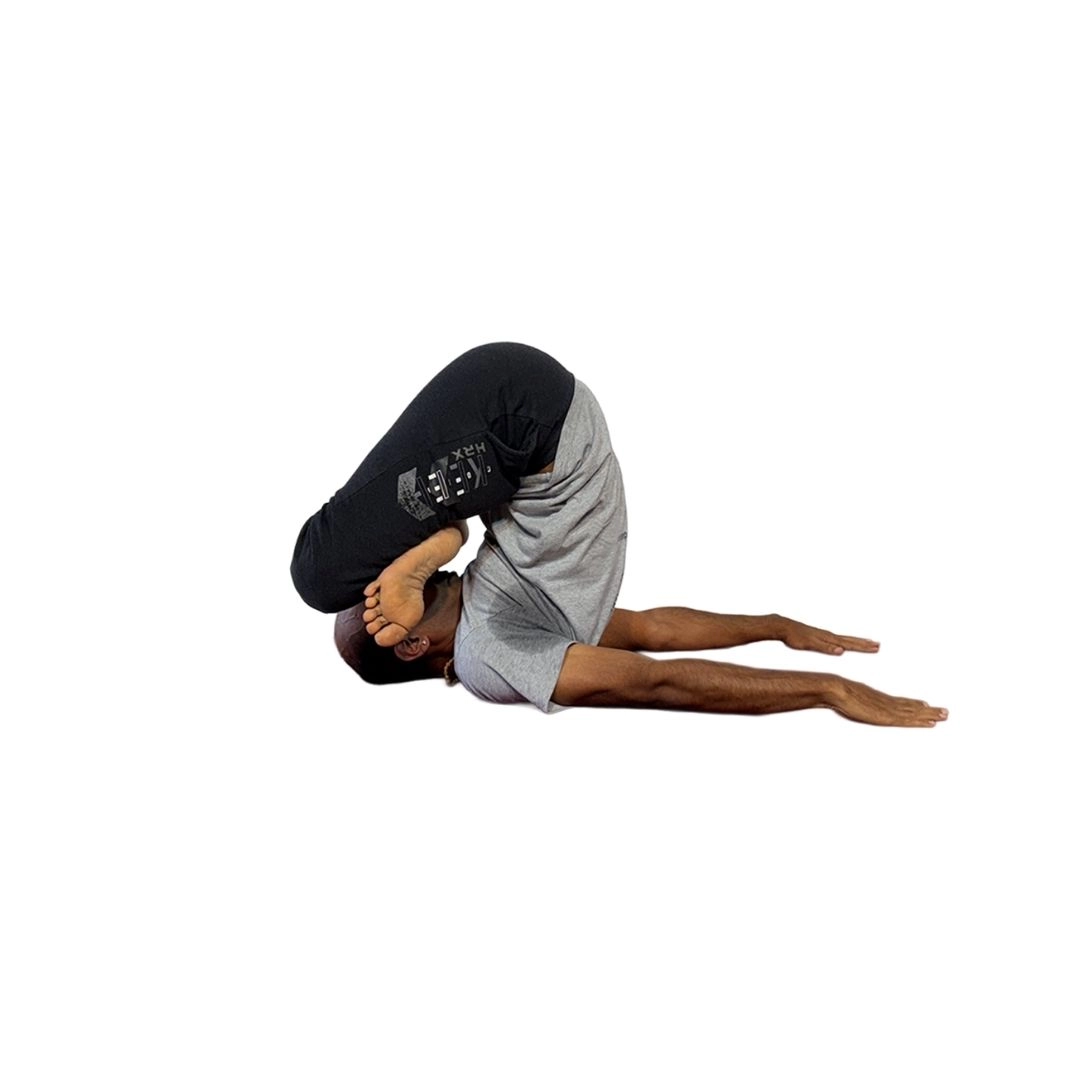
Pindasana (पिंडासन), or Embryo Pose, is a challenging yoga posture that builds on the foundation of Padmasana (Lotus Pose). The name comes from the Sanskrit word “pinda” (embryo or fetus) and “asana” (posture). The final shape of the pose resembles a fetus curled in the womb, which is why it is often referred to as Embryo Pose.
How to do Pindasana
Pindasana is a complex pose that requires a lot of flexibility and balance. It is usually performed as a transition from Shoulderstand.
Benefits of Pindasana
Pindasana offers a wide range of physical and mental benefits:
- Strengthens and tones:
The pose strengthens the muscles of the arms, shoulders, neck, and core. - Increases flexibility:
It deeply stretches the hips, knees, and ankles due to the Lotus position. It also lengthens and relaxes the spine, particularly the lumbar region.
- Improves digestion:
The compression of the abdomen massages the internal organs, which can help with digestive issues like gas and constipation. - Boosts circulation:
As an inversion, Pindasana increases blood flow to the upper body and head. - Enhances balance and focus:
Balancing in this complex inversion requires significant concentration, which helps to calm the mind and improve mental stability.
Contraindications of Pindasana
Due to its advanced and inverted nature, Pindasana is not suitable for everyone. Avoid this pose if you have:
- Neck or shoulder injury:
The pose puts a significant amount of weight and pressure on the neck and shoulders. - High blood pressure:
Inversions can increase blood pressure, so it’s best to avoid them if you have this condition. - Spinal issues:
People with back injuries, a slipped disc, or other spinal problems should not practice this pose.
- Knee or ankle issues:
The Lotus position puts extreme pressure on the knee and ankle joints. If you have any pre-existing conditions or stiffness in these areas, do not attempt this pose. - Recent surgery:
Avoid if you have had recent surgery on the abdomen, hips, knees, or ankles. - Menstruation:
Some traditions of yoga advise against practicing inversions during menstruation. - Pregnancy:
This pose should not be practiced during pregnancy.
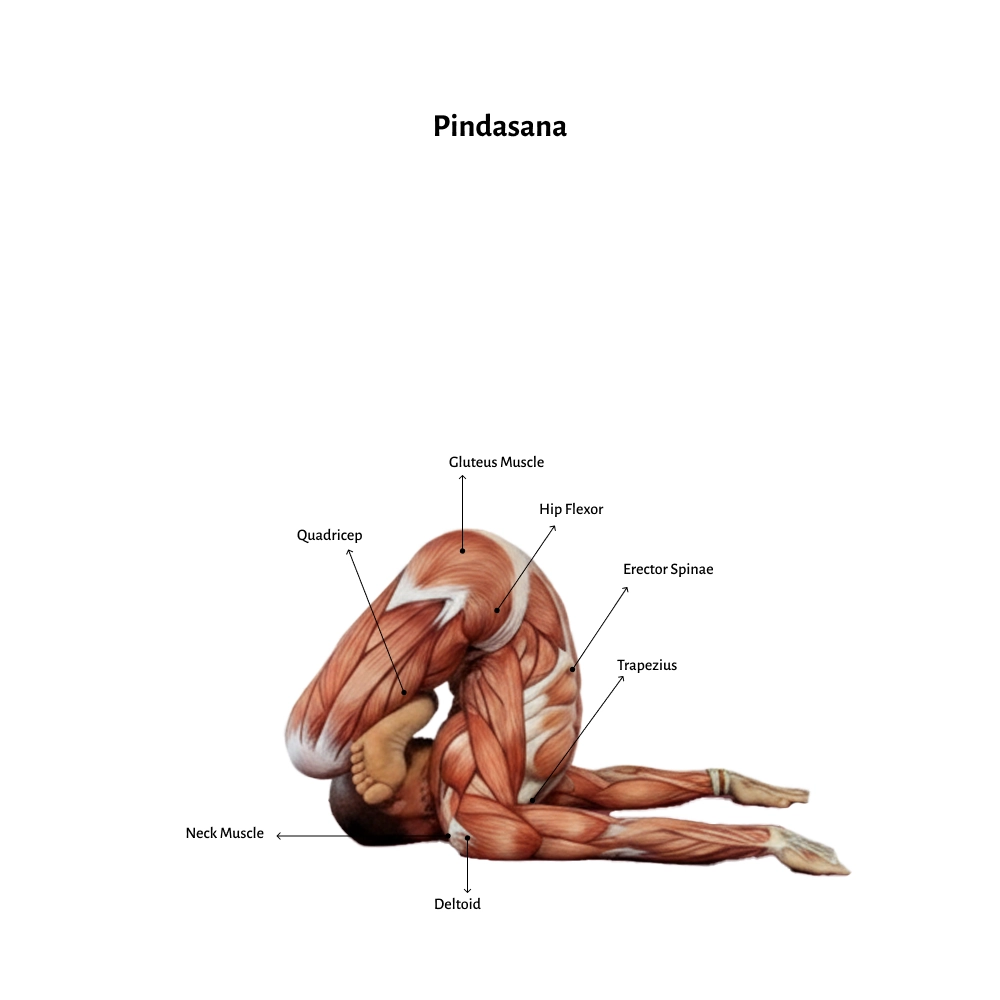
Anatomy (Muscles involved)
Core:
Abdominal muscles (core) are engaged to help stabilize the body.
Legs:
The hip flexors, glutes, hamstrings, and muscles of the calves and ankles are all deeply stretched and activated in the lotus position.
Upper Body:
The shoulders, neck, and back muscles (especially the thoracic and lumbar spine) are strengthened and supported as the body balances on the shoulders.
Arms:
The arms are engaged to support the back in the initial stages and then to clasp the legs in the final pose.