Salamba Sarvangasana (सालम्ब सर्वांगासन)
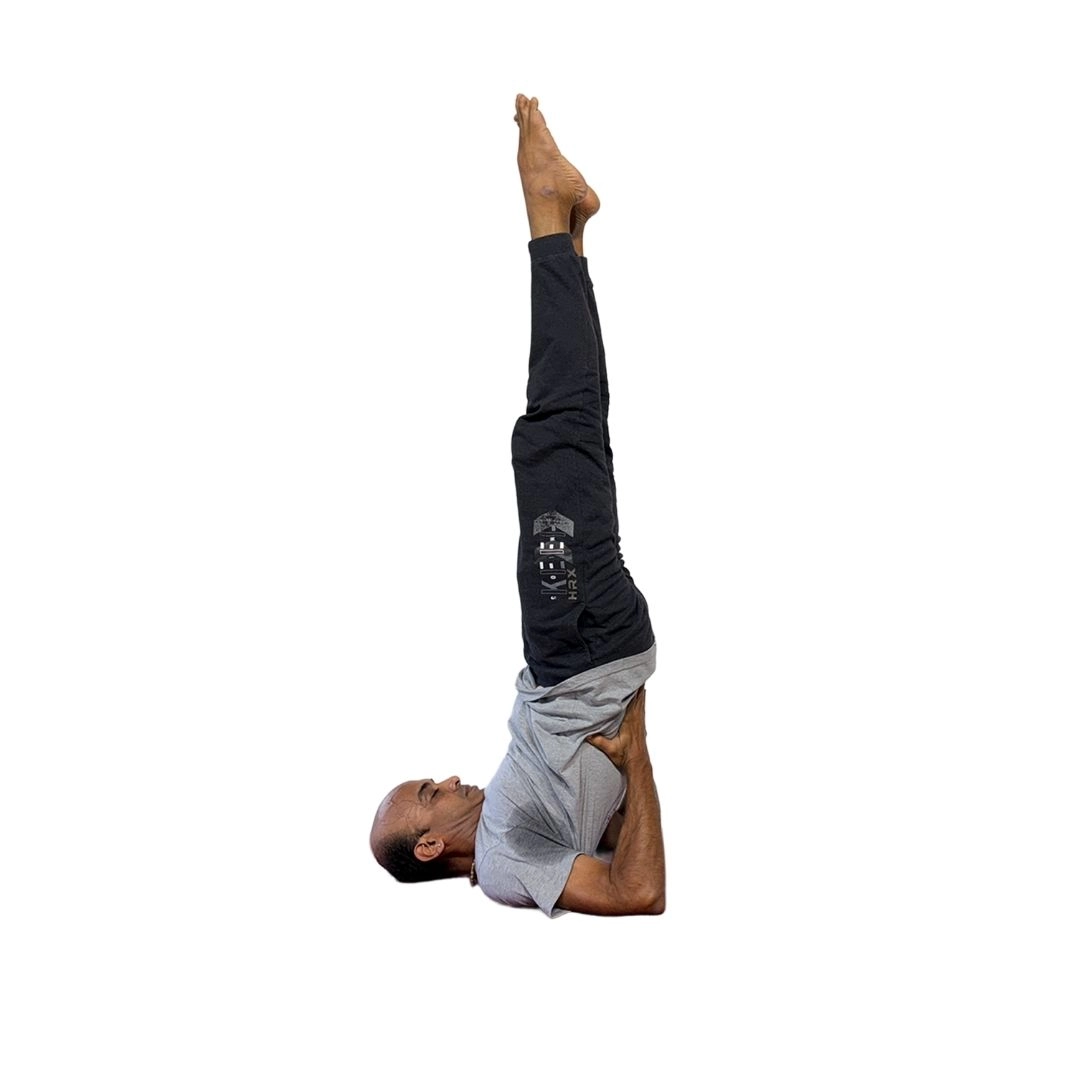
Salamba Sarvangasana (सालम्ब सर्वांगासन), or Supported Shoulder Stand, is a fundamental inversion in yoga. It is often called the “Queen of all Asanas” because of its wide-ranging benefits for the entire body. The name comes from the Sanskrit words “salamba” (supported), “sarva” (all), “anga” (limbs or body parts), and “asana” (posture). The “supported” aspect of the name refers to the hands supporting the back, and in some traditions, the use of blankets under the shoulders.
How to do Salamba Sarvangasana
Benefits of Salamba Sarvangasana
- Circulatory and Lymphatic System:
As an inversion, it reverses the flow of gravity, which helps improve blood circulation and lymphatic drainage. This can reduce fluid retention in the legs and feet. - Endocrine System:
The chin-to-chest lock (Jalandhara Bandha) created in this pose gently stimulates the thyroid and parathyroid glands, which are important for metabolism. - Nervous System:
It is a calming and grounding pose that helps to soothe the nervous system, relieving stress, anxiety, and mild depression. It can also help improve sleep quality.
- Musculoskeletal System:
It strengthens the shoulders, arms, and core muscles while stretching the back, neck, and shoulders. - Digestive System:
The pose can stimulate the abdominal organs, which may aid in digestion and relieve constipation.
Contraindications of Salamba Sarvangasana
Avoid or modify this pose if you have:
- Neck or Spinal Injuries:
This is the most critical contraindication. The pose places significant pressure on the cervical spine, and it should be avoided if you have any neck pain, herniated discs, or other spinal issues. - High Blood Pressure or Heart Conditions:
The inversion can increase blood flow to the head, which may be dangerous for individuals with these conditions. - Glaucoma or Excessive Myopia:
The increased pressure in the head can be harmful to the eyes.
- Menstruation:
Many yoga traditions recommend avoiding inversions during the menstrual cycle. - Pregnancy:
Inversions are generally not recommended during pregnancy without an experienced teacher’s guidance. - Ear or Throat Infections:
The change in blood flow may cause discomfort or exacerbate these conditions.
Anatomy (Muscles involved)
This pose engages a complex network of muscles and joints:
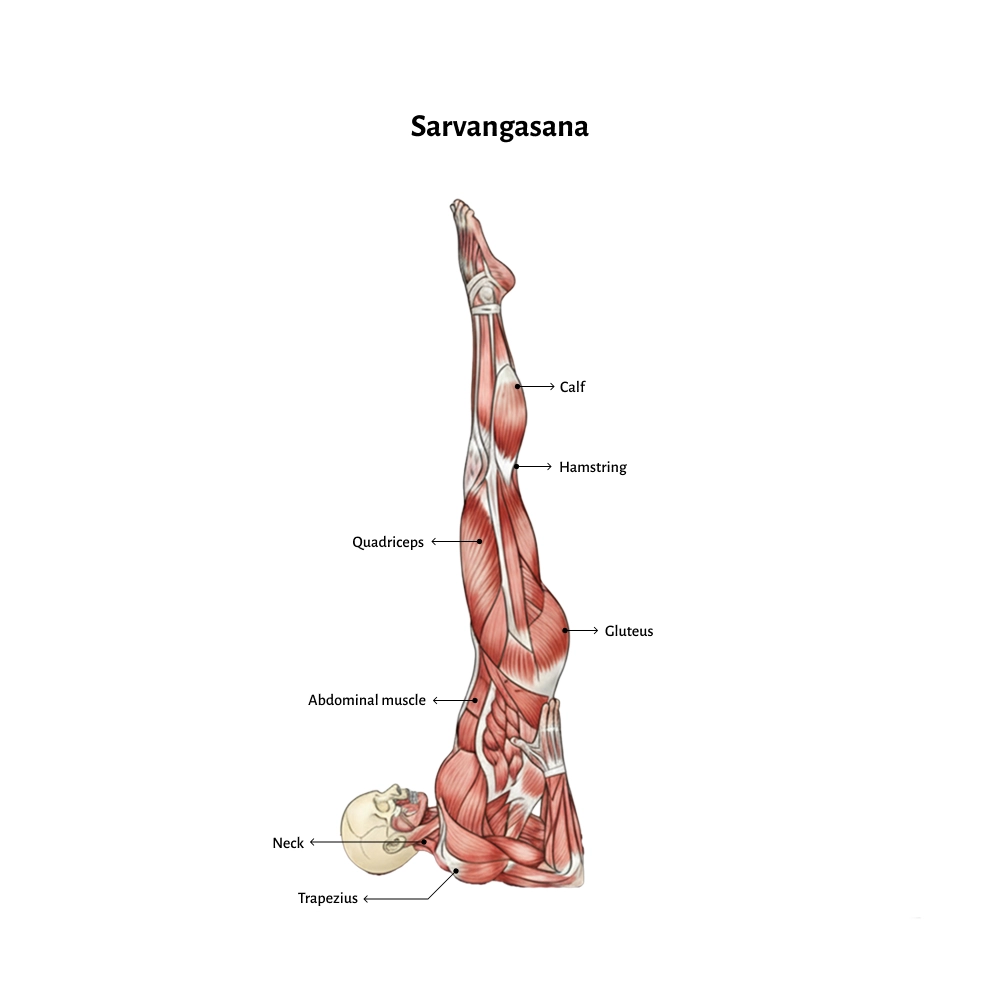
Muscles Engaged:
The pose primarily engages the muscles of the neck, shoulders, and back to support the body’s weight. The core muscles (abdominals and back extensors) are also engaged to maintain stability and alignment.
Joint Actions:
The spine is in a state of flexion, and the shoulder joints are hyperextended and externally rotated. The neck is deeply flexed, which is why proper support is essential to prevent injury to the cervical vertebrae.
Ligaments and Tissues:
The muscles and connective tissues along the back of the body, including the hamstrings and calves, are stretched to achieve the vertical alignment of the legs.
Muscles strengthened:
- Arms and shoulders:
The triceps, deltoids, and serratus anterior. - Core:
The transverse abdominis and rectus abdominis to stabilize the spine. - Legs:
The quadriceps engage to protect the knees and deepen the hamstring stretch.