Sarvanga Badha Setu Bandhasana
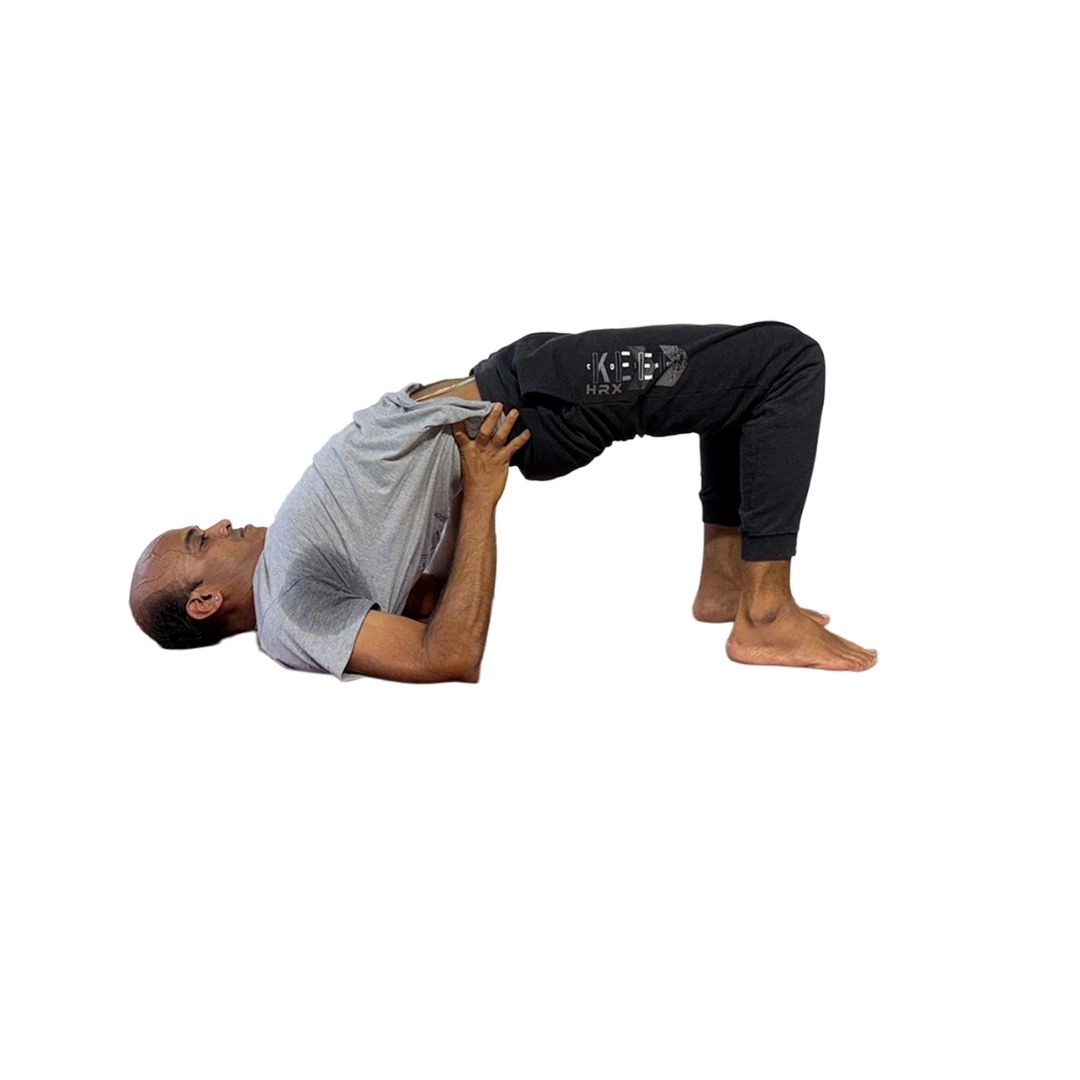
Sarvanga Badha Setu Bandhasana, which is a variation of Setu Bandhasana (Bridge Pose). The most common name for this pose is simply Setu Bandhasana or Bridge Pose. The full Sanskrit name, Setu Bandha Sarvangasana, combines a few terms: “setu” (bridge), “bandha” (lock or bond), “sarva” (all), “anga” (limb), and “asana” (posture), indicating that it is a “bridge lock with all limbs.” The term “badha” can be interpreted as a “bound” or “locked” variation, which typically refers to holding the ankles with the hands in the full expression of the pose.
How to do Sarvanga Badha Setu Bandhasana
Benefits of Sarvanga Badha Setu Bandhasana
- Strengthens and Stretches:
It strengthens the muscles of the back, buttocks, and hamstrings. At the same time, it provides a deep stretch for the chest, neck, and spine. - Improves Posture:
By strengthening the back and opening the chest, this pose helps to counteract the effects of a sedentary lifestyle and poor posture. - Stimulates Organs:
The pose stimulates the abdominal organs, which can improve digestion. It also stimulates the thyroid gland, which helps regulate metabolism.
- Calms the Mind:
As a mild inversion, it can help to calm the nervous system and reduce feelings of anxiety, stress, and depression. - Relieves Pain:
It can be therapeutic for backaches, mild headaches, and insomnia. - Increases Energy:
It is considered a heart-opening pose that helps to increase blood circulation and invigorate the body.
Contraindications of Sarvanga Badha Setu Bandhasana
Avoid or modify this pose if you have:
- Neck or Shoulder Injury:
The full weight of your upper body rests on your shoulders and the back of your head in this pose. If you have any current or chronic neck or shoulder injuries, it is best to avoid it. - Spinal Problems:
Individuals with severe spinal issues like a herniated disc, slip disc, or other back injuries should avoid this pose or practice it only under the guidance of a qualified instructor. - Knee Pain:
If you have knee pain, be mindful of how you are engaging your feet and legs. Ensure your knees are aligned with your ankles and not splaying out.
- High Blood Pressure:
Some inversions and heart-opening poses can be problematic for people with high blood pressure. It is important to consult a doctor before practicing. - Pregnancy (Late Term):
The pose can be difficult and put undue pressure on the abdomen and pelvis. It’s best to consult a doctor and an experienced yoga teacher before attempting this pose during pregnancy.
Anatomy (Muscles involved)
This pose engages a complex network of muscles and joints:
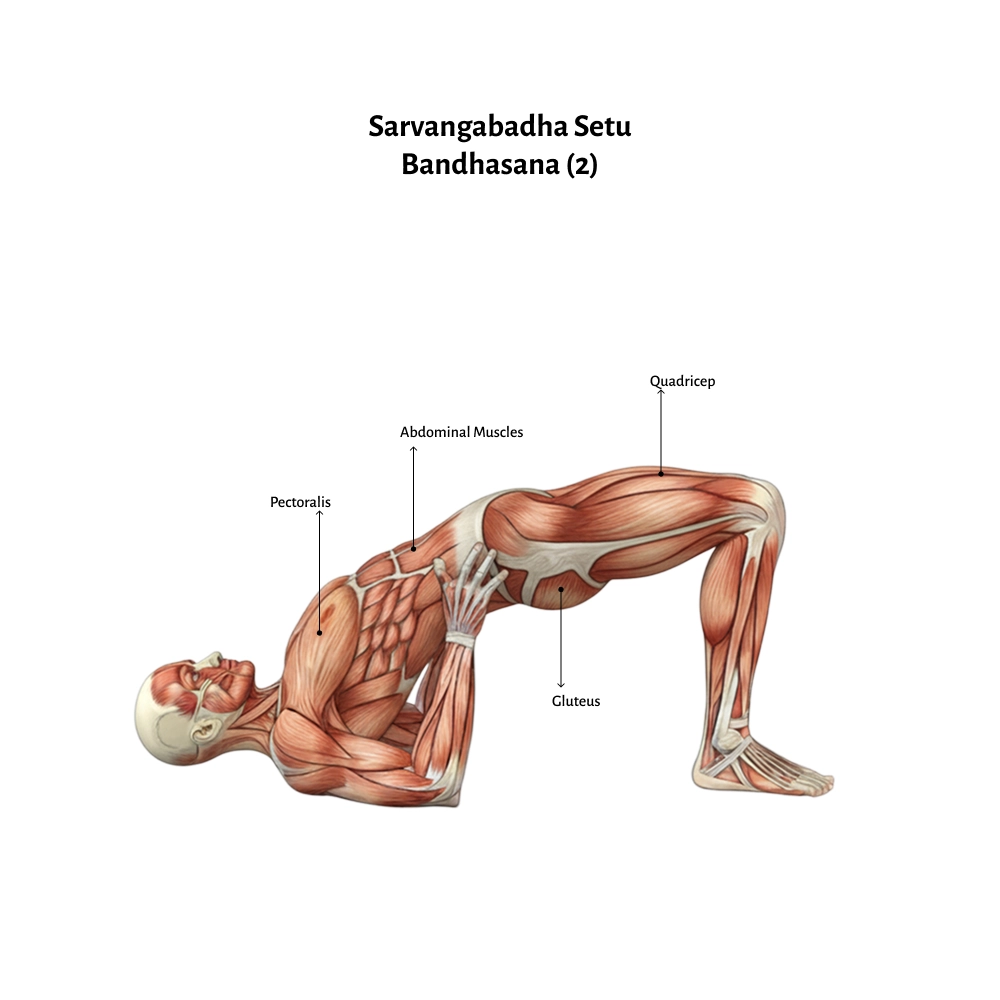
Muscles Engaged (Strengthened):
- Spinal Erectors:
Muscles along the spine that help with back extension. - Gluteus Maximus:
The main muscle of the buttocks, which lifts the hips. - Hamstrings:
The muscles at the back of the thighs that assist in hip extension. - Abdominals and Core:
The core muscles are engaged to stabilize the torso.
Muscles Stretched:
- Psoas and Hip Flexors:
Muscles at the front of the hips that are often tight from sitting. - Chest and Shoulders:
The chest is opened, and the shoulders are stretched as they are rolled underneath the body. - Neck and Throat:
The front of the neck and throat get a gentle stretch.