Supta Kurmasana (सुप्त कूर्मासन)
Supta Kurmasana (सुप्त कूर्मासन), or Sleeping Tortoise Pose, is an extremely advanced and deep yoga posture. It is a more intense variation of Kurmasana (Tortoise Pose) and is considered one of the most challenging forward bends. The name comes from the Sanskrit words “supta” (sleeping), “kurma” (tortoise), and “asana” (posture).
How to do Supta Kurmasana
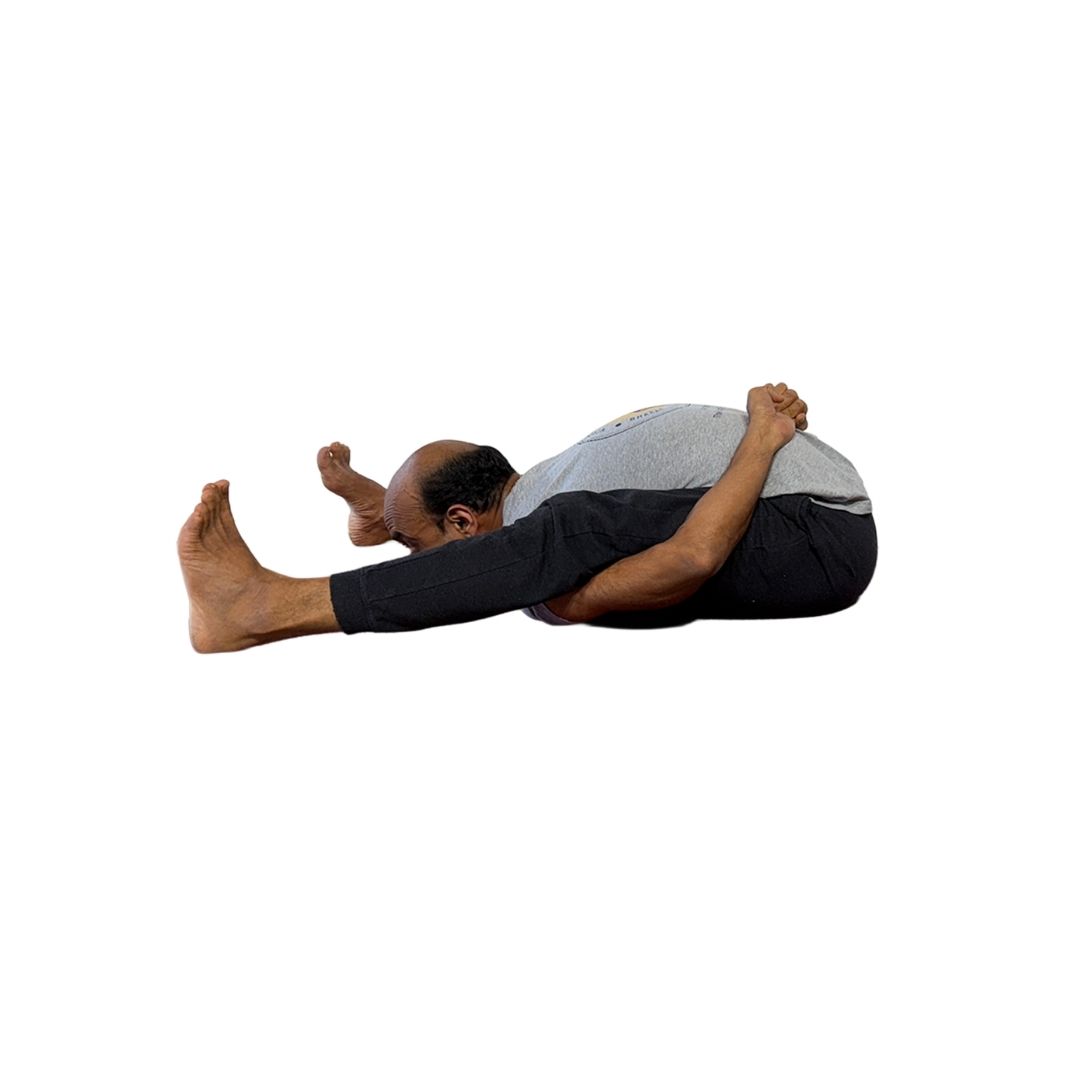
Benefits of Supta Kurmasana
- Deep Hip and Hamstring Opening:
The pose provides an intense stretch to the hamstrings, inner thighs, and hips, which can lead to increased flexibility and range of motion. - Spinal Elongation:
It lengthens and decompresses the spine, which can alleviate back and neck discomfort. - Shoulder Flexibility:
The bind behind the back deeply stretches the shoulders, improving their internal rotation.
- Stimulates Abdominal Organs:
The compression of the abdomen in the forward fold can help to stimulate digestive organs and promote better digestion. - Calming Effect:
As a deep forward fold, Supta Kurmasana has a calming and grounding effect on the nervous system, helping to reduce stress and anxiety.
Contraindications of Supta Kurmasana
Avoid or modify this pose if you have:
- Injuries:
Any recent or chronic injuries to the ankles, knees, hips, back, neck, or shoulders. - High Blood Pressure or Heart Conditions:
The deep forward bend and inversion can be dangerous for individuals with these conditions. - Sciatica:
The pose can put pressure on the sciatic nerve.
- Pregnancy:
The deep compression of the abdomen is not recommended. - Glaucoma:
The inverted nature of the pose can increase pressure in the eyes.
Anatomy (Muscles involved)
This pose engages a complex network of muscles and joints:
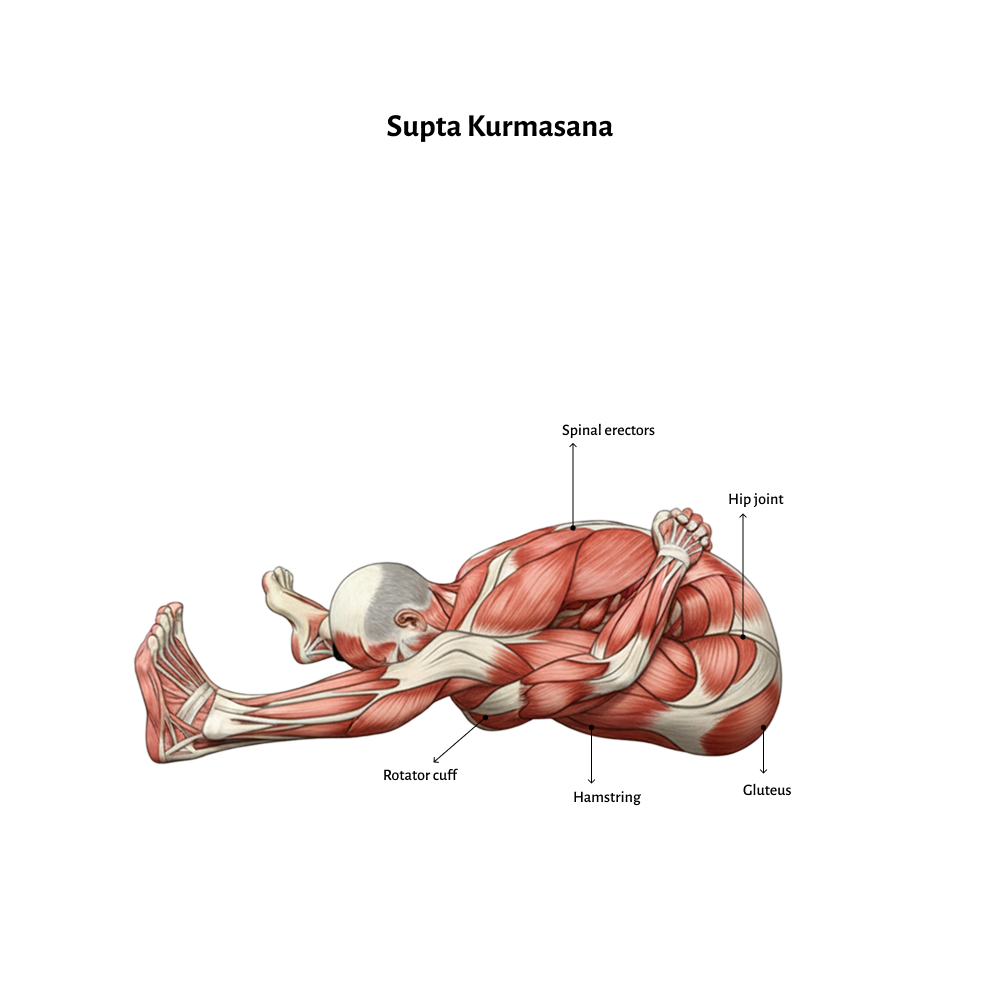
Hamstrings and Adductors:
These are the primary muscles being stretched.
Gluteus Medius and Minimus:
The pose requires external rotation of the hips.
Spinal Flexors:
The muscles along the spine are engaged to facilitate the deep forward bend.
Shoulder Rotators:
The deltoids and rotator cuff muscles are stretched and strengthened through the internal rotation required for the bind.