Supta Padangusthasana (सुप्त पादांगुष्ठासन)
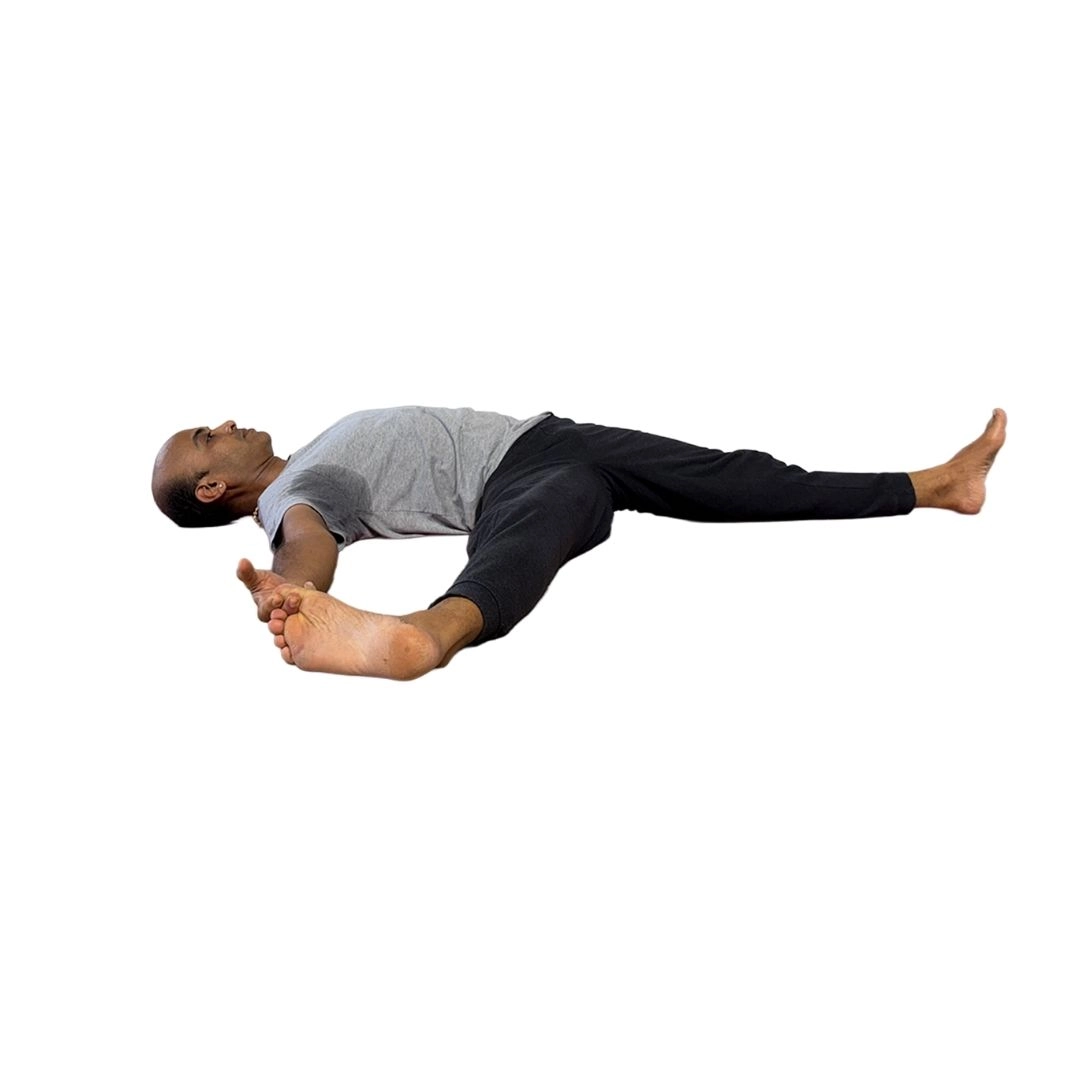
Supta Padangusthasana (सुप्त पादांगुष्ठासन), or Reclining Hand-to-Big-Toe Pose, is a foundational yoga posture that provides a deep stretch to the hamstrings, hips, and calves. The name comes from the Sanskrit words “supta” (reclining), “padangustha” (big toe), and “asana” (posture).
How to do Supta Padangusthasana
Benefits of Supta Padangusthasana
- Stretches and Lengthens:
Deeply stretches the hamstrings, calves, and inner thighs. - Relieves Back Pain:
By keeping the spine supported on the floor, the pose can create traction in the lower back, relieving compression and tension. It’s often recommended for sciatica and general lower back stiffness. - Increases Flexibility:
Improves flexibility in the hips and groin. - Improves Digestion:
The pose can stimulate and massage the abdominal organs, aiding digestion and relieving issues like bloating and constipation.
- Strengthens Muscles:
Engages and strengthens the core, quadriceps, and leg muscles. - Therapeutic for Ailments:
Considered therapeutic for flat feet, high blood pressure, and certain reproductive health issues. - Calming and Restorative:
The supine position and focused stretching promote a sense of calm and relaxation, helping to relieve stress and prepare the body for more advanced poses.
Contraindications of Supta Padangusthasana
Avoid or modify this pose if you have:
- Injuries:
Avoid this pose if you have a recent or chronic injury to the hamstrings, knees, hips, or shoulders. - Sciatica:
If you experience pain from sciatica, practice with extreme caution and only to a comfortable degree. Do not force the stretch, as it could aggravate the condition. - Hip Pathologies:
Those with hip pathologies or limited hip range of motion should modify the pose and use a strap to avoid strain.
- Headaches:
If you have a headache, avoid lifting your head in more advanced variations. A pillow or bolster under the head can be used for support. - Pregnancy:
The variations of this pose are generally considered safe during pregnancy, but it’s essential to listen to your body and avoid any strain on the abdomen.
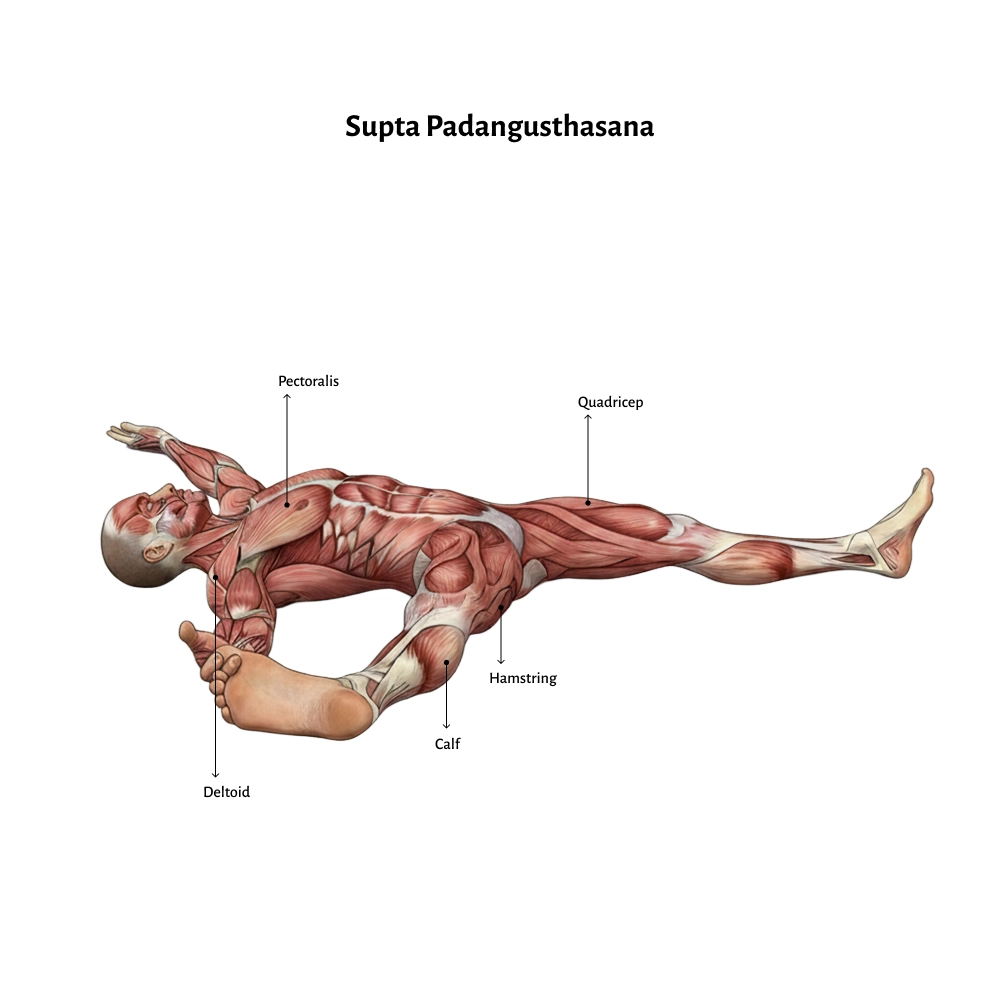
Anatomy (Muscles involved)
This pose engages a complex network of muscles and joints:
Quadriceps:
These muscles on the front of both thighs are engaged to keep the legs straight and stabilized.
Core Muscles:
The abdominal muscles are active to stabilize the pelvis and prevent the lower back from arching off the floor.
Hip Flexors and Glutes:
The muscles around the hips are stretched and opened, particularly the gluteus maximus on the lifted leg.