Tiryak Bhujangasana (तिर्यक् भुजंगासन)
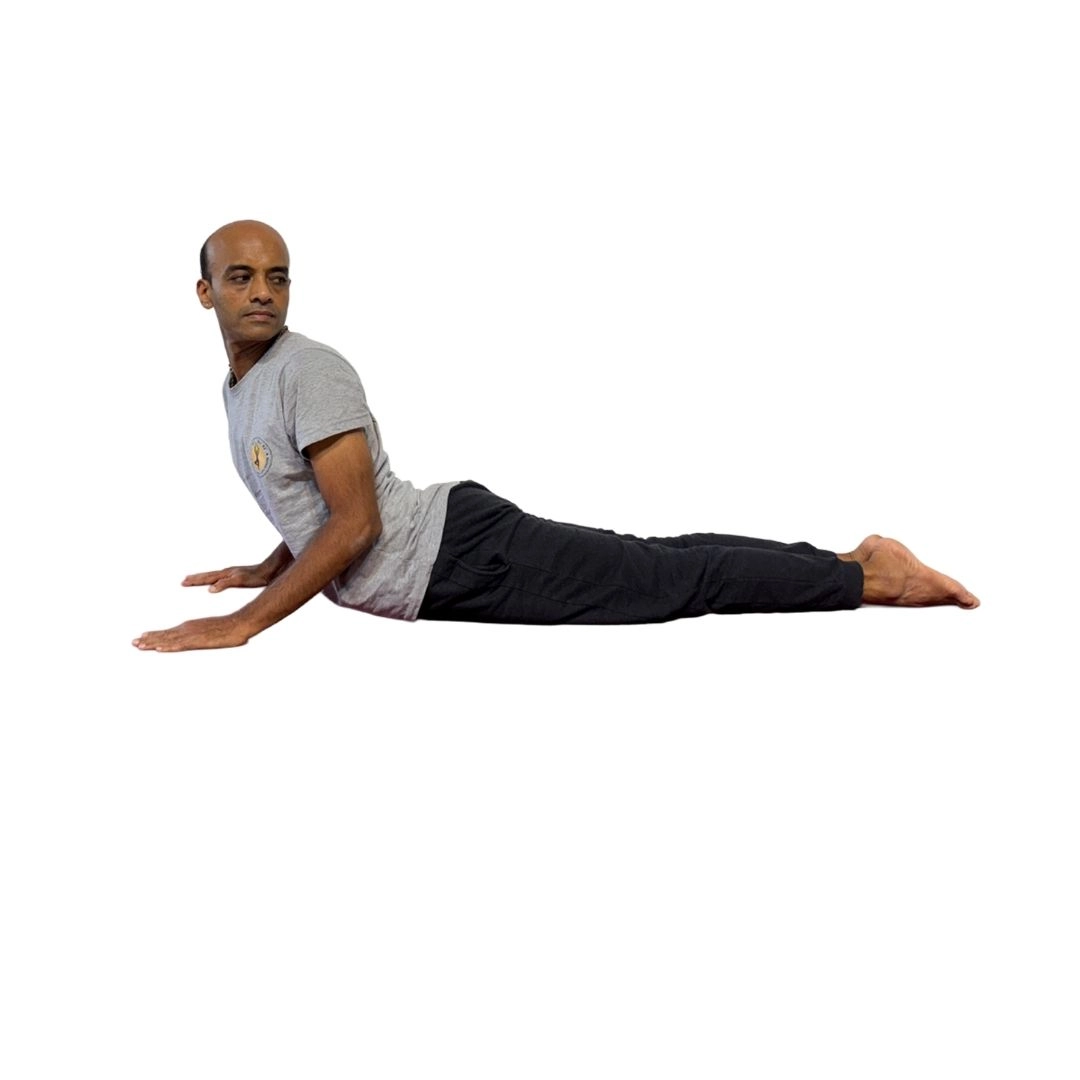
Tiryak Bhujangasana (तिर्यक् भुजंगासन), or Twisting Cobra Pose, is a variation of the traditional Bhujangasana (Cobra Pose). The name comes from the Sanskrit words “tiryak” (oblique, twisting), “bhujanga” (serpent or cobra), and “asana” (posture). It is a backbend with a lateral twist, which provides a deeper stretch to the back and abdomen while stimulating the internal organs.
How to do Tiryak Bhujangasana
Benefits of Tiryak Bhujangasana
- Spinal Health:
It enhances the flexibility and strength of the spine, helping to correct postural defects in the upper back. - Abdominal Toning:
The twisting motion massages and tones the abdominal and pelvic organs, which can improve digestion, alleviate constipation, and support reproductive health. - Respiratory System:
By expanding the chest and lungs, this pose helps to improve lung capacity, which can be beneficial for those with issues like asthma or bronchial breathing.
- Muscle Strengthening:
It strengthens the muscles of the back, arms, and shoulders. - Therapeutic Effects:
The pose may provide relief from chronic back pain, mild sciatica, and other issues related to the vertebral column. It also helps to stimulate the nervous system and can have an energizing and de-stressing effect.
Contraindications of Tiryak Bhujangasana
Avoid or modify this pose if you have:
- Back and Spinal Injuries:
Individuals with a back injury, herniated disc, or recent spinal surgery should avoid this pose. - Recent Abdominal Surgery:
The abdominal twisting can put strain on healing tissues. - Hernia or Peptic Ulcers:
The pressure on the abdomen may aggravate these conditions. - High Blood Pressure:
Forceful twists can elevate blood pressure.
- Pregnancy:
Pregnant women should not perform this pose due to the pressure on the abdomen and pelvis. - Wrist, Arm, or Shoulder Injuries:
The pose puts weight on the hands and arms, so those with injuries in these areas should be careful. - Hyperthyroidism:
Some sources suggest avoiding this pose if you have an enlarged thyroid gland.
Anatomy (Muscles involved)
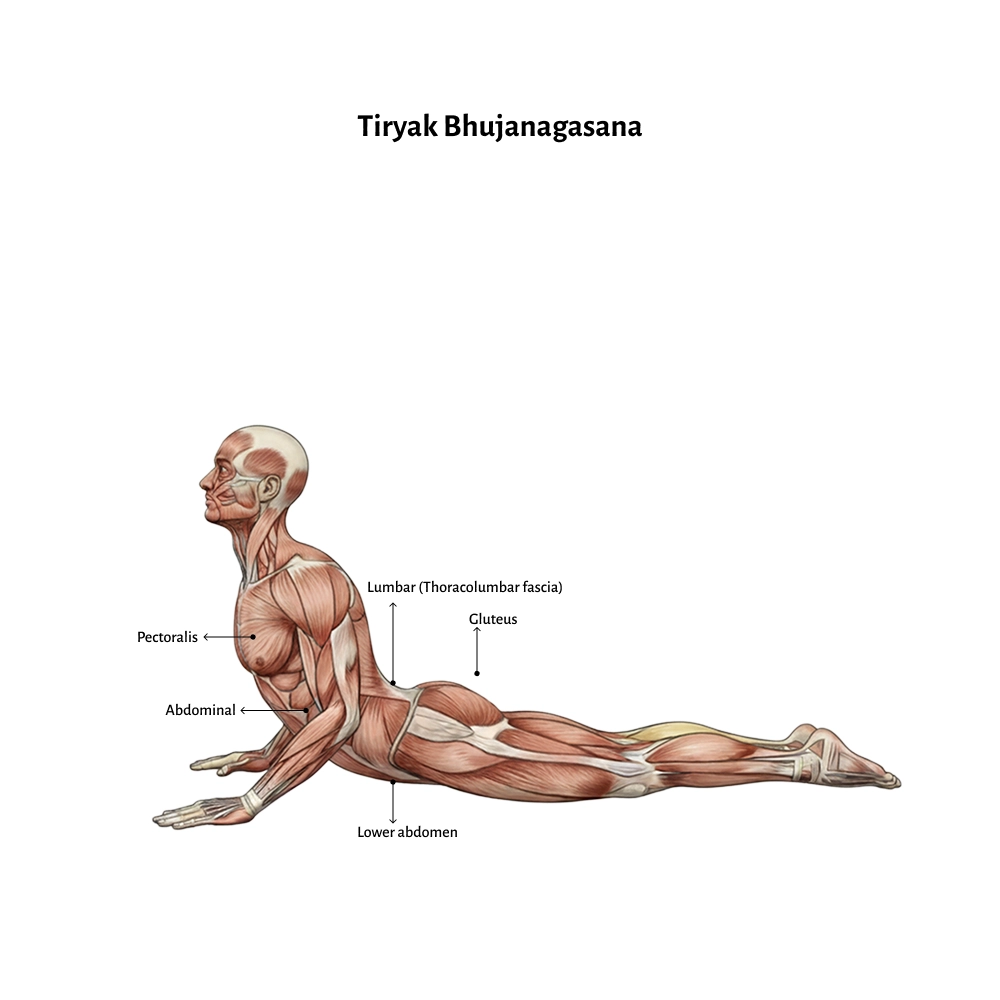
This pose engages a complex network of muscles and joints:
Spine:
The twisting and back-bending movements engage the erector spinae muscles, which run along the length of the spine, as well as the obliques and other muscles involved in spinal rotation.
Abdomen:
The diagonal stretch targets the internal and external oblique muscles, helping to tone and strengthen the core.
Shoulders and Arms:
The pose strengthens the deltoids, triceps, and pectoralis major as you press up with your hands.
Chest and Lungs:
The chest expansion stretches the intercostal muscles, which are between the ribs, improving breathing capacity.