Titibasana (टिट्टिभासन)
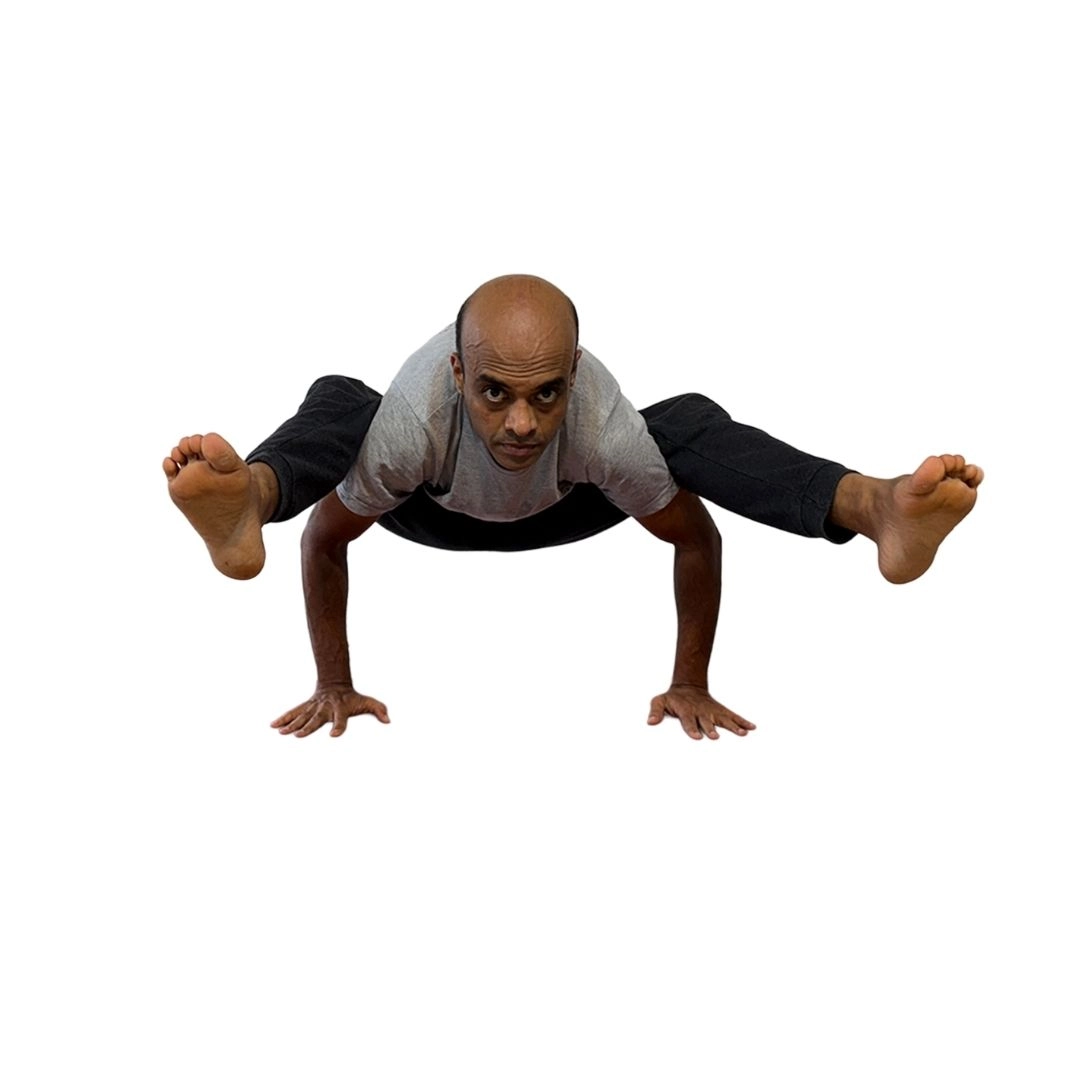
Titibasana (टिट्टिभासन), also known as Firefly Pose, is an advanced arm-balancing yoga posture that combines a deep forward bend with a powerful core and arm engagement. The name comes from the Sanskrit words “tittibha” (firefly) and “asana” (posture). The pose resembles a firefly with its legs and arms stretched out, creating a shape that appears to hover just above the ground.
How to do Titibasana
Benefits of Titibasana
- Strengthens Upper Body and Core:
Titibasana is an incredible arm-strengthening pose, building power in your wrists, forearms, biceps, triceps, and shoulders. It also requires significant core engagement, toning your abdominal muscles. - Stretches Hamstrings and Inner Thighs:
The deep forward fold and the wide, straightened legs provide a powerful stretch for the hamstrings and the adductor muscles of the inner thighs.
- Improves Balance and Focus:
Balancing your entire body weight on your hands while extending your legs requires a high degree of concentration and physical equilibrium. This practice enhances both physical balance and mental focus. - Boosts Energy and Digestion:
As a forward bend, it can have a calming effect on the nervous system. The compression of the abdomen also stimulates the digestive organs.
Contraindications of Titibasana
Avoid or modify this pose if you have:
- Wrist, Elbow, or Shoulder Injuries:
The pose places a lot of weight and pressure on these joints. Avoid it if you have any existing or chronic issues. - Back or Hip Injuries:
The deep forward bend can be stressful for the lower back and hips.
- Carpal Tunnel Syndrome:
The extreme wrist flexion can aggravate this condition. - Pregnancy:
It’s generally not recommended for pregnant women. - High or Low Blood Pressure:
The inversion-like nature of the pose can affect blood pressure.
Anatomy (Muscles involved)
This pose engages a complex network of muscles and joints:
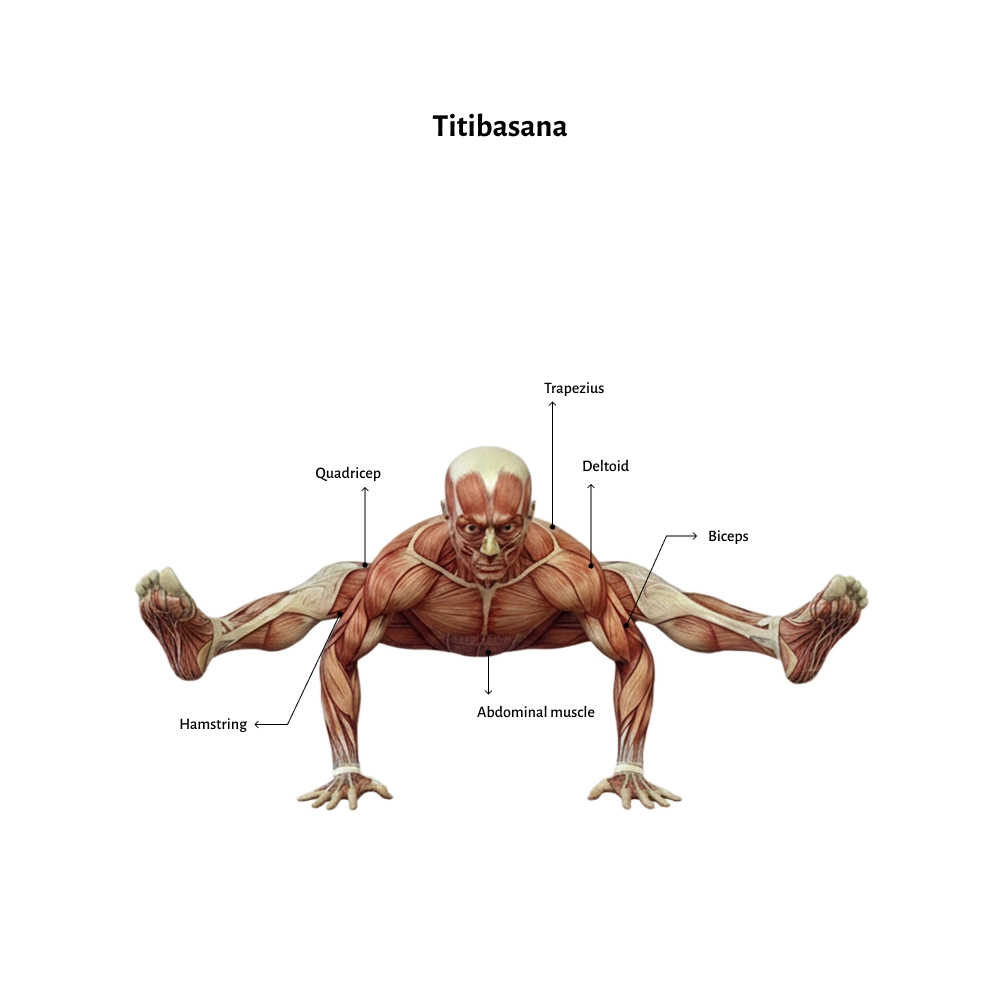
Arms and Shoulders:
The primary muscles engaged are the triceps, deltoids, and pectoralis major to support the body’s weight and stabilize the pose. The serratus anterior is crucial for protracting the shoulder blades and broadening the upper back.
Core:
The abdominal muscles, including the transverse abdominis and rectus abdominis, are strongly engaged to lift the pelvis and keep the body stable.
Legs:
The quadriceps are active in straightening the legs, while the hamstrings are stretched. The adductors (inner thigh muscles) are simultaneously engaged to keep the legs on the arms and stretched by the wide V-shape.
Hips:
The hip flexors, particularly the psoas, are working to keep the hips in a flexed position.