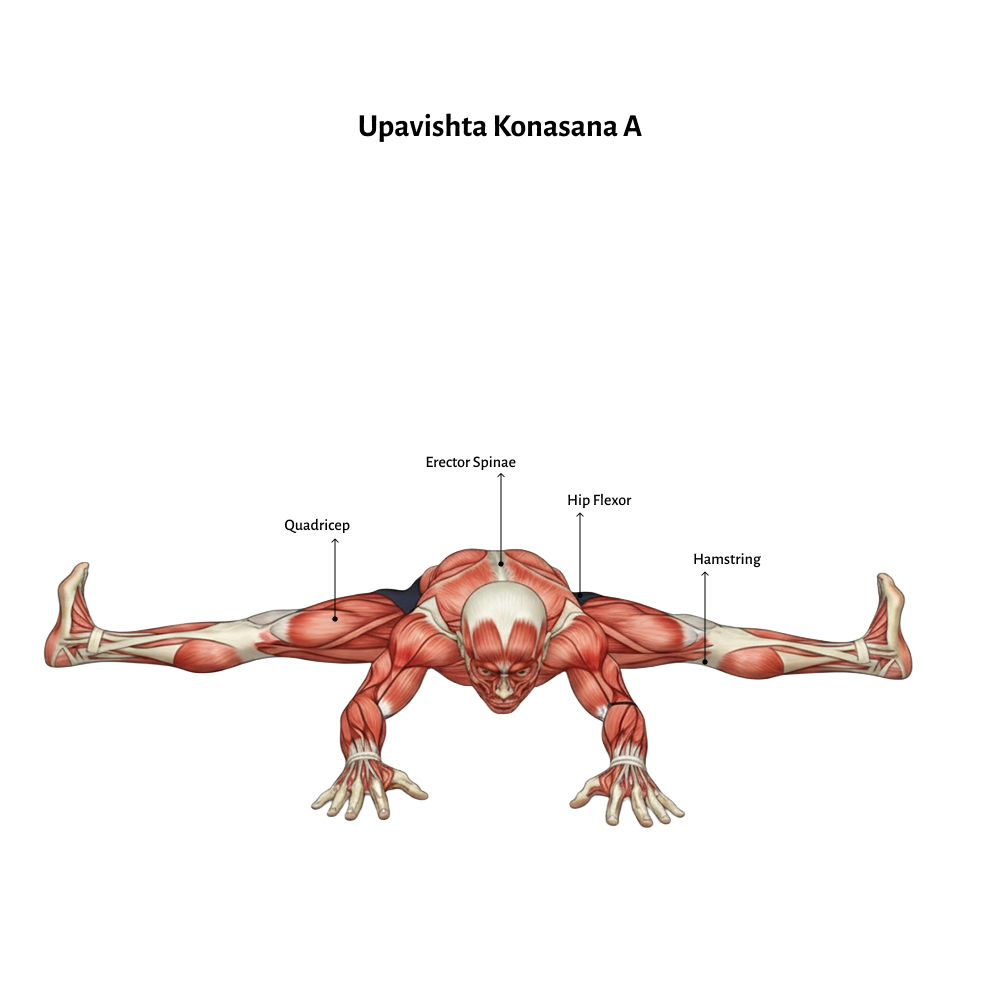
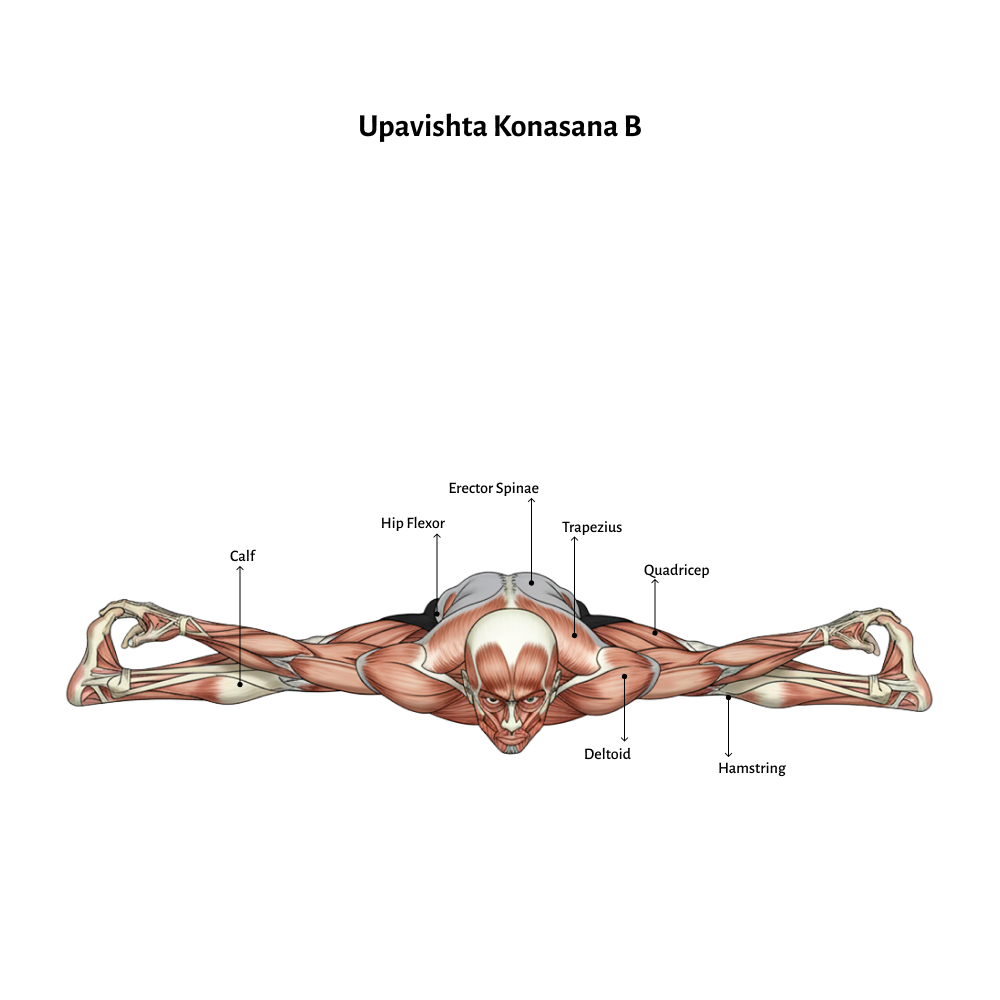
Upavistha Konasana (उपविष्ट कोणासन)
Upavistha Konasana (उपविष्ट कोणासन), or Wide-Angle Seated Forward Bend, is a seated yoga posture that provides a deep stretch to the hamstrings, inner thighs, and hips. The name comes from the Sanskrit words “upavistha” (seated), “kona” (angle), and “asana” (posture).
How to do Upavistha Konasana
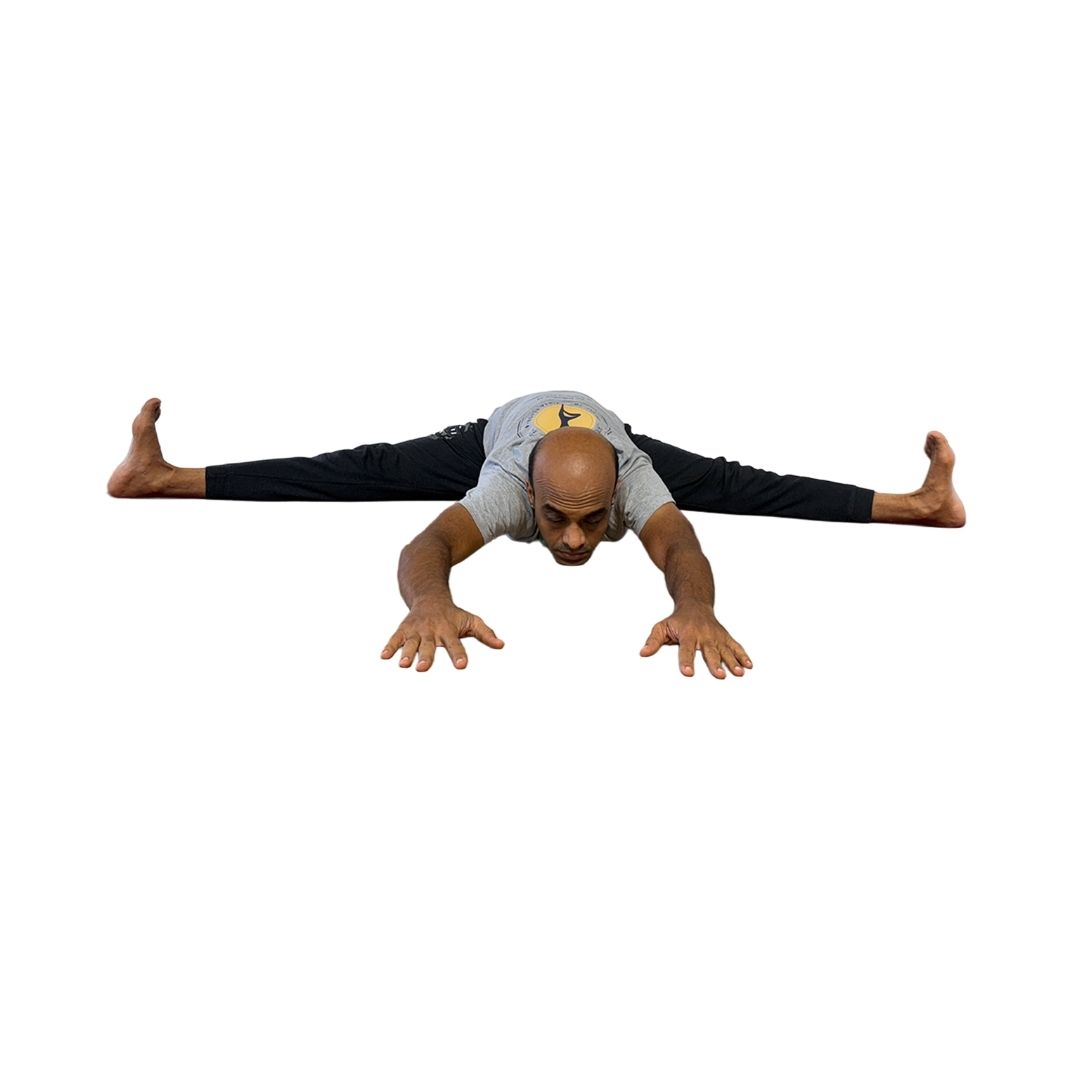
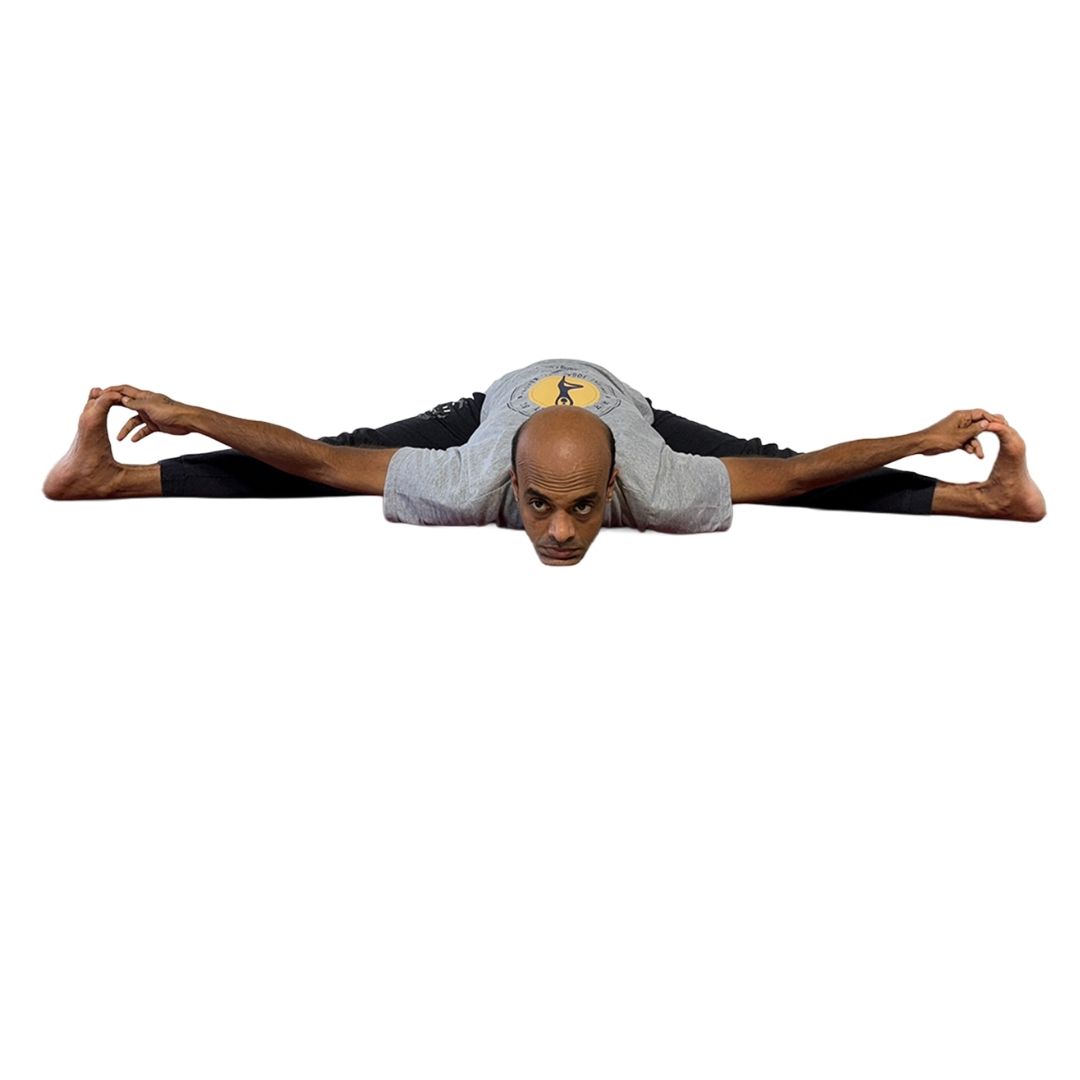
Benefits of Upavistha Konasana
Both variations of Upavishta Konasana offer numerous benefits:
- Stretches and Strengthens:
They provide an intense stretch for the hamstrings, inner thighs (adductors), and calves. They also strengthen the core, hip flexors, and quadriceps. - Improves Flexibility:
Regular practice increases flexibility in the hips, legs, and spine, which can help prevent injuries. - Stimulates Organs:
The forward bend in Upavishta Konasana A and the core engagement in B stimulate the abdominal organs, which can aid in digestion.
- Calming and Stress-Relieving:
Both poses can help release stress and tension stored in the hips and pelvis. - Improves Posture:
By lengthening the spine and strengthening the back muscles, these poses can help correct postural imbalances. - Therapeutic:
They are considered therapeutic for conditions like sciatica, arthritis, and can help alleviate menstrual pain.
Contraindications of Upavistha Konasana
Avoid or modify this pose if you have:
- Lower back injury:
If you have severe lower back pain, a herniated disk, or sacroiliac joint issues, be very careful or avoid the forward bend. - Knee or hip injury:
The pose puts stress on these joints. - Spondylitis:
A condition of the spine.
- Pregnancy:
Pregnant women should avoid deep forward bends and consult with their doctor or a qualified yoga instructor. - High or low blood pressure:
Be cautious and do not strain yourself. - Gastrointestinal issues:
If you have any acute digestive issues.
Anatomy (Muscles involved)
This pose engages a complex network of muscles and joints:
Hip Abduction:
The legs are moved away from the midline of the body, which is a major action of the pose.
Hip Flexion:
The torso folds forward at the hip joints. It’s crucial that this action comes from the hips and not the lower back to protect the spine.
Knee Extension:
The knees are straightened.
Anterior Pelvic Tilt:
The pelvis rotates forward. This is the most important anatomical action for a safe and effective forward fold.
Spinal Elongation:
The spine is lengthened from the tailbone to the crown of the head.”