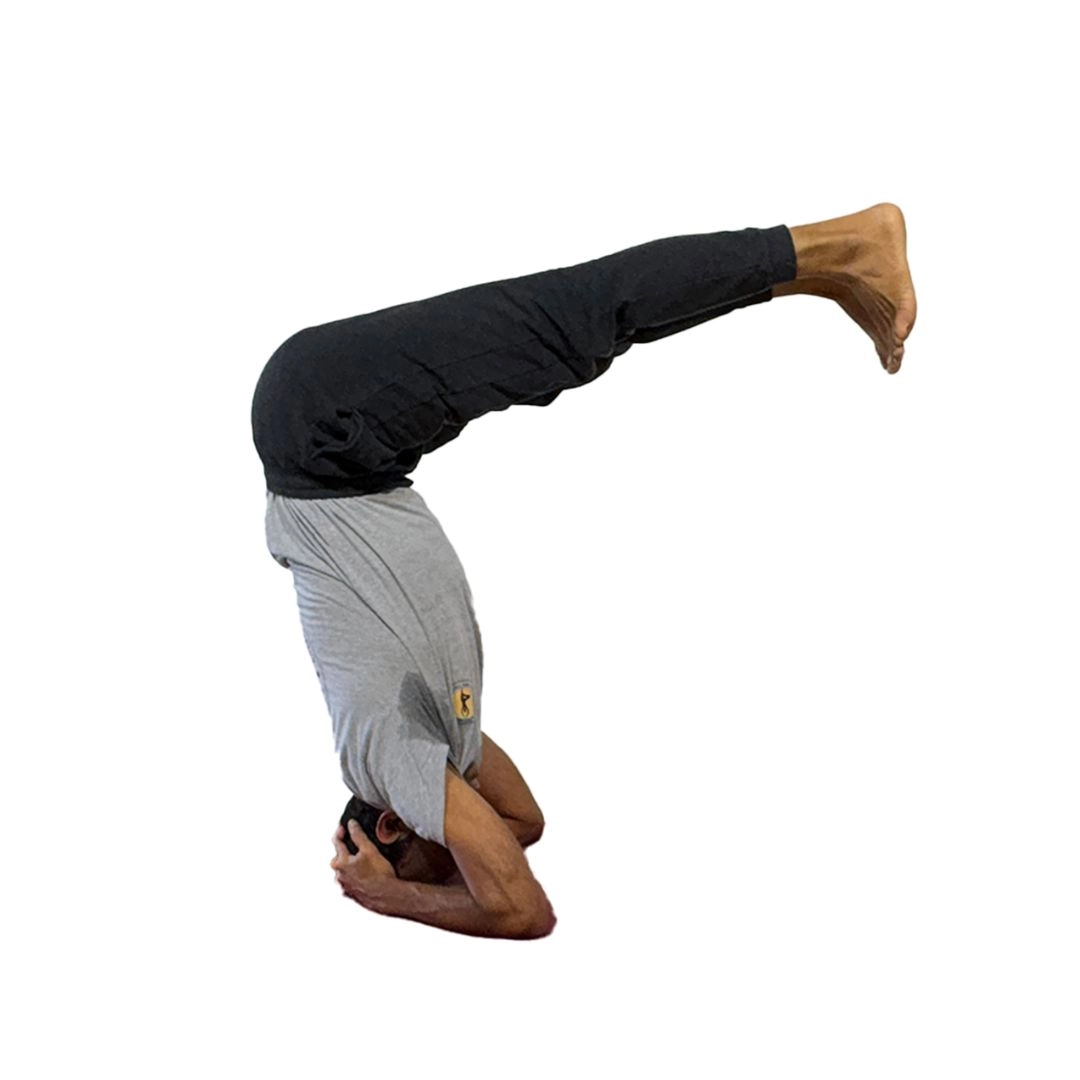
Urdhva Dandasana (ऊर्ध्व दण्डासन)
Urdhva Dandasana (ऊर्ध्व दण्डासन), or Upward-Facing Staff Pose, is an advanced inversion that is a challenging variation of Sirsasana (Headstand). The name comes from the Sanskrit words “urdhva” (upward), “danda” (staff), and “asana” (posture). The pose gets its name from the shape of the body, as the legs are held parallel to the floor, creating a staff-like line.
How to do Urdhva Dandasana
Benefits of Urdhva Dandasana
- Strengthens and Stretches:
This pose is a full-body workout. It strengthens your arms, shoulders, core, legs, and back muscles. It also stretches your chest, spine, and abdomen. - Improves Posture:
By strengthening the core and back, this pose can help correct rounded shoulders and hunched posture. - Boosts Energy:
As an inversion, it stimulates the nervous and endocrine systems, helping to reduce stress and boost energy levels.
- Enhances Flexibility:
It can increase flexibility in the spine, hips, and shoulders. - Improves Balance and Concentration:
Maintaining the pose requires a great deal of focus, improving both physical balance and mental clarity.
Contraindications of Urdhva Dandasana
Avoid or modify this pose if you have:
- Injury:
Avoid this pose if you have any injury to your neck, back, shoulders, arms, elbows, or wrists. - Blood Pressure:
Individuals with high or low blood pressure should avoid inversions. - Headaches/Migraines:
This pose can increase pressure in the head, which may be a problem for those with headaches or migraines.
- Heart Problems:
The inversion can put strain on the heart and circulatory system. - Spondylitis:
People with this condition should avoid this pose. - Pregnancy:
Inversions are generally not recommended during pregnancy.
Anatomy (Muscles involved)
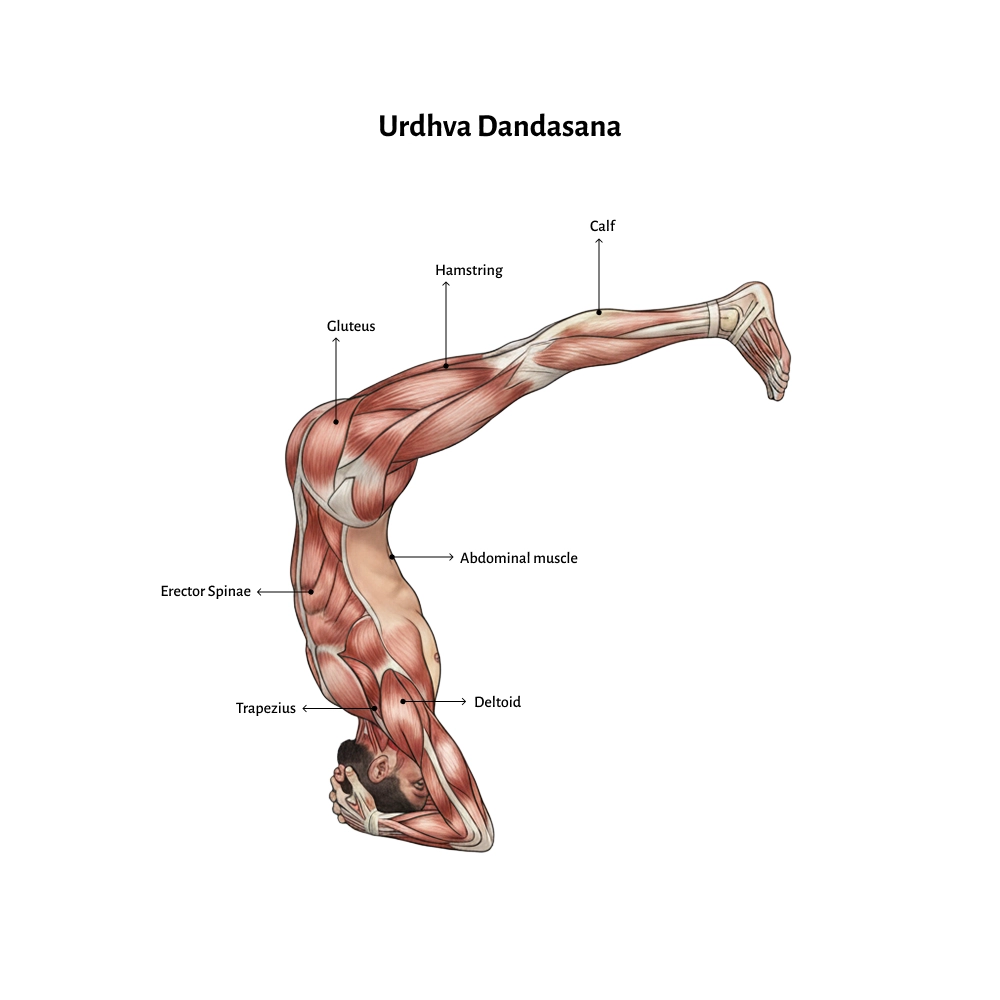
This pose engages a complex network of muscles and joints:
Arms and Shoulders:
The pose requires significant strength in the arms and shoulders to support the body’s weight. The triceps and deltoids are particularly active.
Core:
The abdominal muscles, including the transverse abdominis and rectus abdominis, are crucial for stabilizing the torso and maintaining the L-shape.
Spine:
The erector spinae muscles along the spine are engaged to keep the back straight.
Legs:
The quadriceps, hamstrings, and gluteus maximus are all engaged to hold the legs in position.
Pelvis and Hips:
The pose strengthens the muscles around the pelvis and hips, promoting stability.