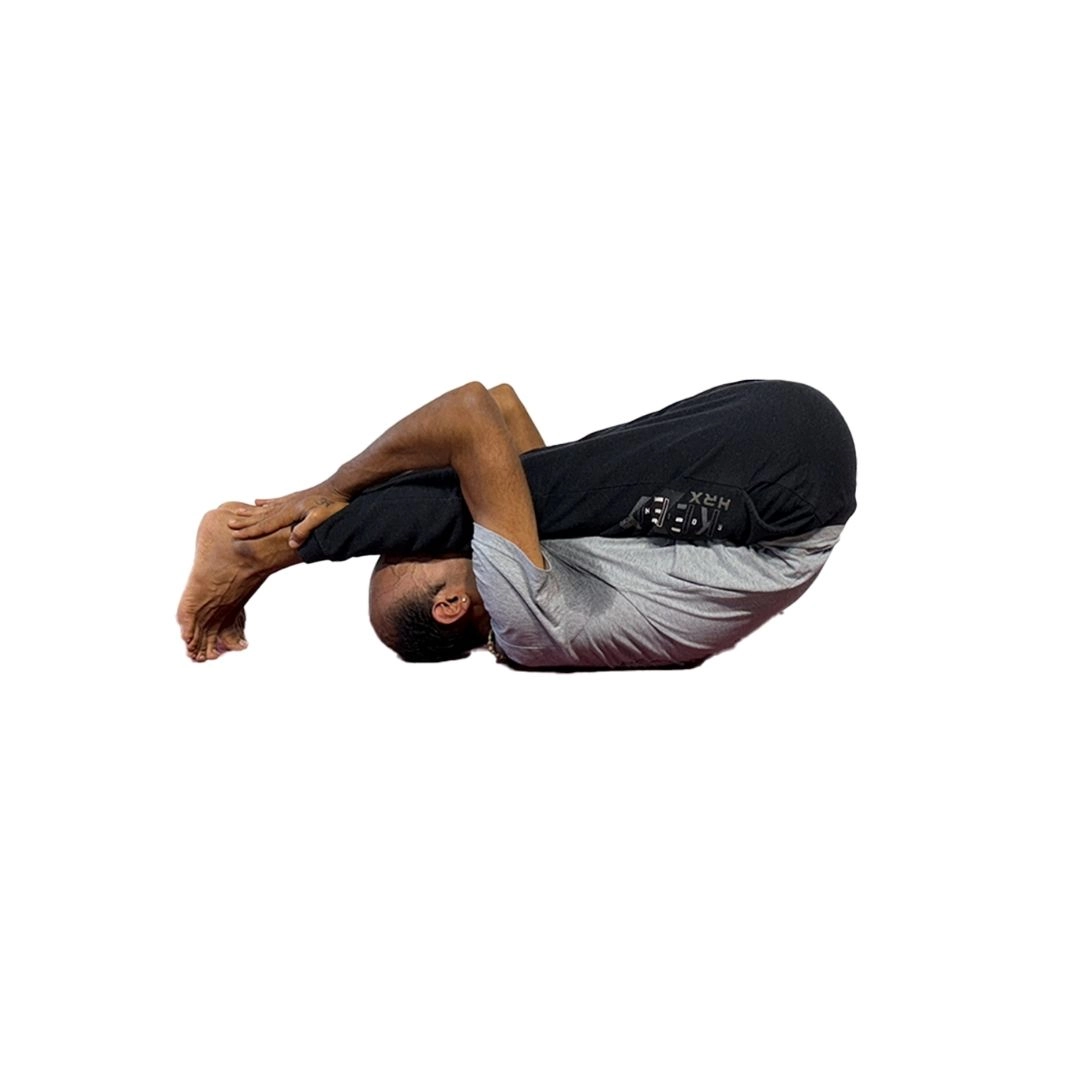
Urdhva Mukha Paschimottanasana (ऊर्ध्व मुख पश्चिमोत्तानासन)
Urdhva Mukha Paschimottanasana (ऊर्ध्व मुख पश्चिमोत्तानासन), or Upward-Facing Intense West Stretch, is an advanced seated balancing posture in yoga. It is a challenging variation of Paschimottanasana (Seated Forward Bend) and Ubhaya Padangusthasana (Both Big Toes Pose). The name comes from the Sanskrit words “urdhva” (upward), “mukha” (face), “paschima” (west, referring to the back of the body), “uttana” (intense stretch), and “asana” (posture).
How to do Urdhva Mukha Paschimottanasana
Benefits of Urdhva Mukha Paschimottanasana
- Stretches and Strengthens:
It provides a deep stretch for the hamstrings, calves, and back. It also strengthens the core, hip flexors, and abdominal muscles, which are crucial for maintaining balance in the pose. - Improves Flexibility:
Regular practice increases the flexibility of the legs, hips, and spine, improving overall range of motion. - Tones and Massages:
The pose tones the abdominal muscles and can improve digestion by massaging the internal organs.
- Calms the Mind:
Like many forward bends, this pose has a calming and cooling effect on the body and mind. It can help reduce stress and anxiety. - Enhances Concentration:
The need to balance on the sit bones requires intense focus and concentration, which can improve mental clarity. - Corrects Posture:
By stretching the legs and back, it can help correct postural defects.
Contraindications of Urdhva Mukha Paschimottanasana
Avoid or modify this pose if you have:
- Injuries:
Avoid if you have any injuries to the hips, lower back, hamstrings, knees, or wrists. - Recent Surgery:
It is contraindicated for anyone recovering from internal organ surgery due to the intense pressure on the abdomen and core. - Spinal Issues:
People with conditions like a slipped disc, sciatica, or severe backaches should avoid this pose.
- High Blood Pressure:
The pose can put pressure on the circulatory system, so those with high blood pressure should be cautious or avoid it. - Pregnancy and Menstruation:
Pregnant women and those on their menstrual cycle should avoid this pose due to the intense abdominal pressure. - Other Ailments:
People with conditions such as a hernia, hemorrhoids, or severe digestive issues like IBS should also avoid this pose.
Anatomy (Muscles involved)
This pose engages a complex network of muscles and joints:
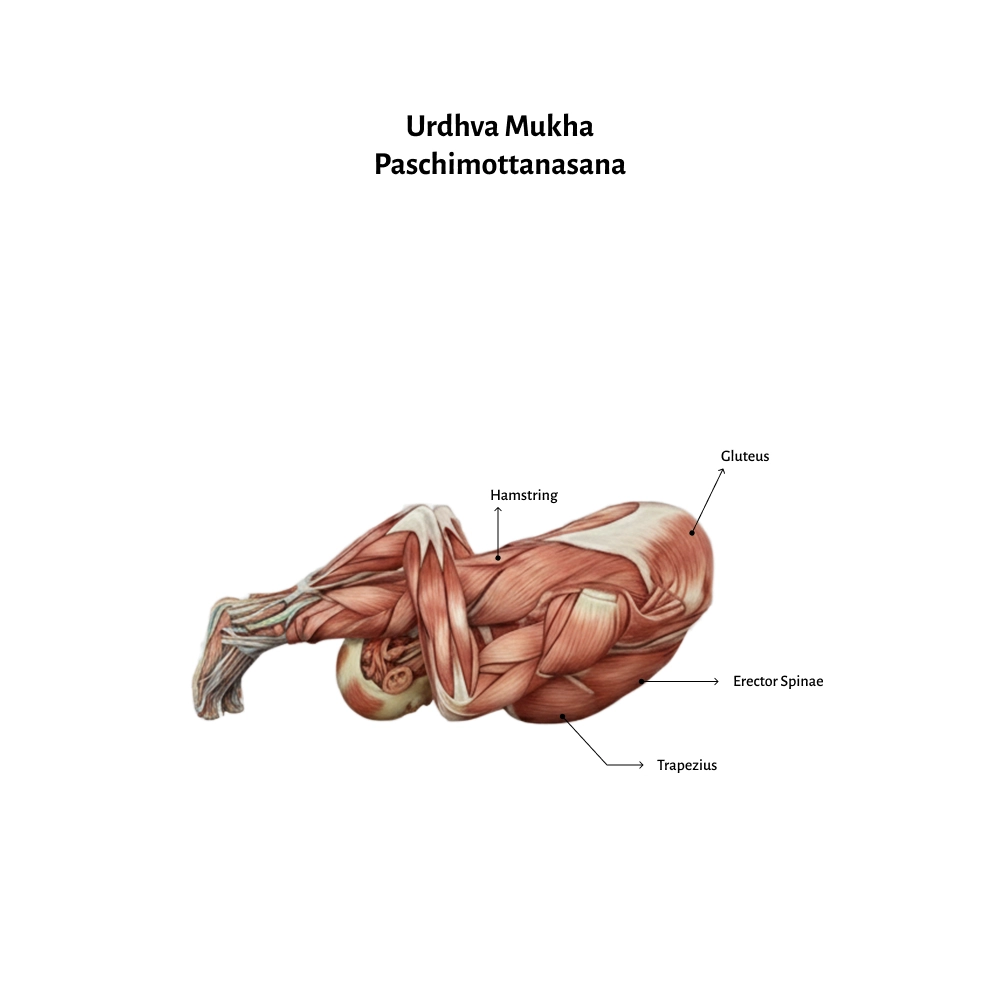
Hamstrings and Calves:
These muscles are intensely stretched as the legs are straightened.
Core (Abdominals, Pelvic Floor, Psoas):
These muscles are crucial for balancing and stabilizing the body on the sit bones.
Gluteus Muscles:
These are also engaged and stretched.
Spine:
The muscles along the spine are lengthened, and the spine itself is stretched and strengthened.
Arms and Shoulders:
The biceps and triceps are active as the hands hold the feet, and the shoulders are engaged to open the chest.