Urdhva Mukha Svanasana (ऊर्ध्व मुख श्वानासन)
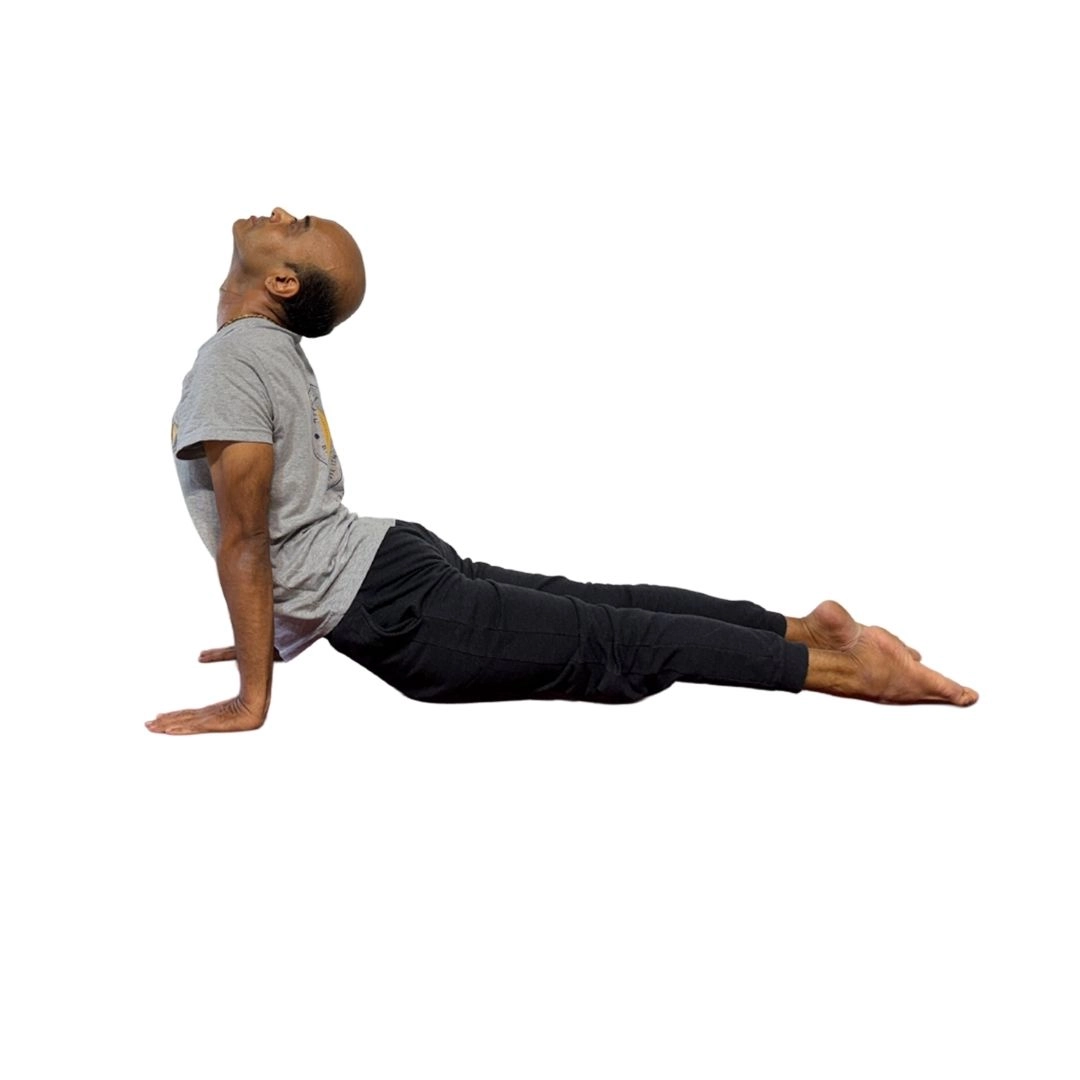
Urdhva Mukha Svanasana (ऊर्ध्व मुख श्वानासन), or Upward-Facing Dog Pose, is a foundational yoga posture and a key component of Sun Salutations (Surya Namaskar). The name comes from the Sanskrit words “urdhva” (upward), “mukha” (face), “svana” (dog), and “asana” (posture). In this pose, the practitioner lifts their torso and thighs off the ground, resembling a dog stretching upward.
How to do Urdhva Mukha Svanasana
Benefits of Urdhva Mukha Svanasana
- Strengthens and Tones:
It builds strength in the arms, shoulders, wrists, and spine. It also tones the legs and glutes. - Stretches and Opens:
It provides a deep stretch to the chest, lungs, shoulders, and abdomen. It also helps to open the heart and create space in the thoracic spine. - Improves Posture:
By strengthening the back muscles and stretching the chest, this pose can help counteract the effects of prolonged sitting and improve overall posture.
- Stimulates Organs:
The abdominal stretch can stimulate the organs, improving digestion. - Reduces Stress and Fatigue:
This energizing pose can help fight fatigue, stress, and mild depression. It increases energy and vitality. - Therapeutic for Ailments:
It can be beneficial for conditions like sciatica, asthma, and back pain.
Contraindications of Urdhva Mukha Svanasana
Avoid or modify this pose if you have:
- Injuries:
Avoid this pose if you have recent or chronic injuries to the wrists, shoulders, or back. It’s not recommended for those with carpal tunnel syndrome. - Pregnancy:
Pregnant women, especially after the first trimester, should avoid this pose due to the intense abdominal stretch. - Spinal Conditions:
Individuals with spinal ailments like scoliosis, kyphosis, or acute lumbar spondylitis should be cautious or avoid the pose.
- Headaches:
This pose can be a trigger for some people with headaches. - Weakness:
If you have weak joints, especially in the wrists or shoulders, or weak body frames, it’s best to modify the pose or avoid it to prevent joint dislocation. - High Blood Pressure or Heart Conditions:
People with heart conditions or high blood pressure should consult a doctor or an experienced yoga instructor before practicing this pose.
Anatomy (Muscles involved)
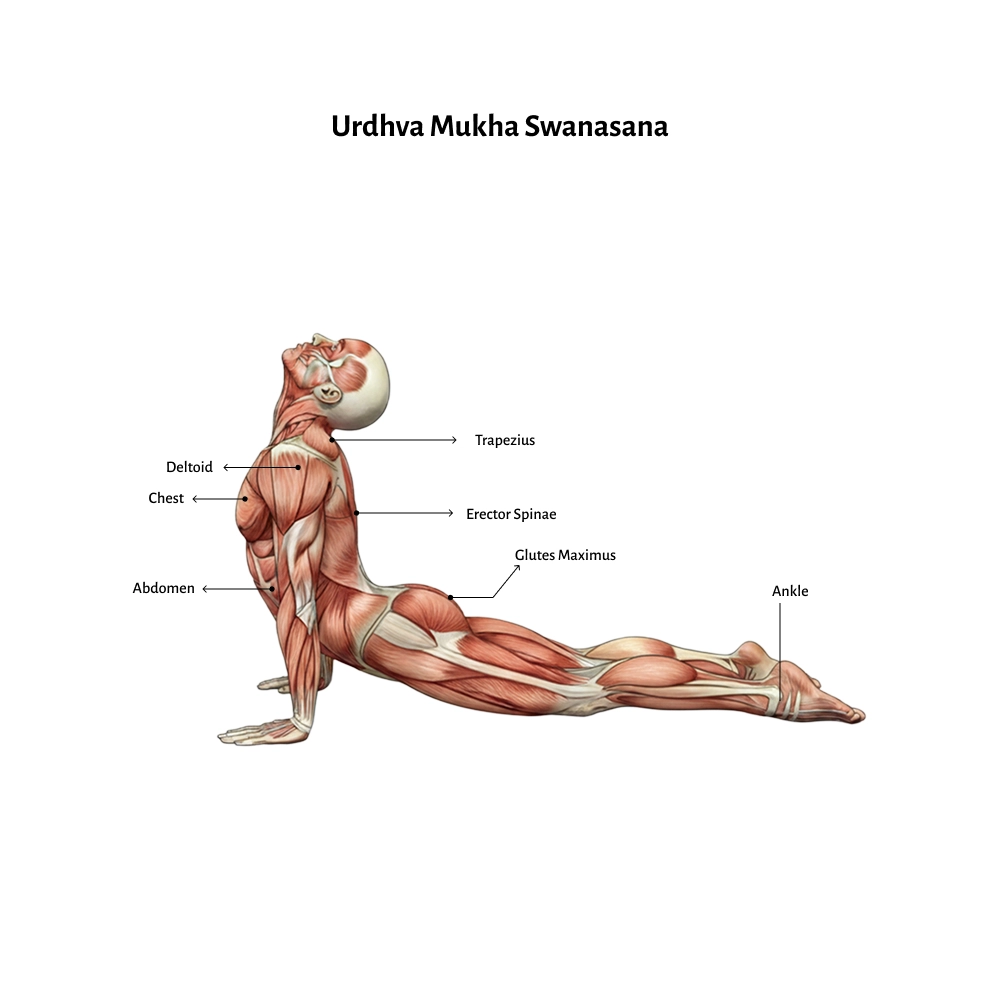
This pose engages a complex network of muscles and joints:
Muscles Strengthened:
- Arms and Shoulders:
Triceps, biceps, and shoulder stabilizers (e.g., rhomboids). - Back:
Erector spinae (muscles that run along the spine), which extend the vertebral column. - Core:
The abdominals are engaged to protect the lower back and support the lift. - Legs:
Quadriceps, hamstrings, and gluteus maximus are active to keep the legs lifted and engaged.
Muscles Stretched:
- Front Body:
Psoas (hip flexors), quadriceps, and the muscles of the abdomen, chest, and shoulders. - Spine:
The spine is extended in a backbend, particularly the thoracic and lumbar regions. - Ankles and Feet:
The front of the ankles and feet are stretched as the tops of the feet press into the floor.