Utkatasana (उत्कटासन)
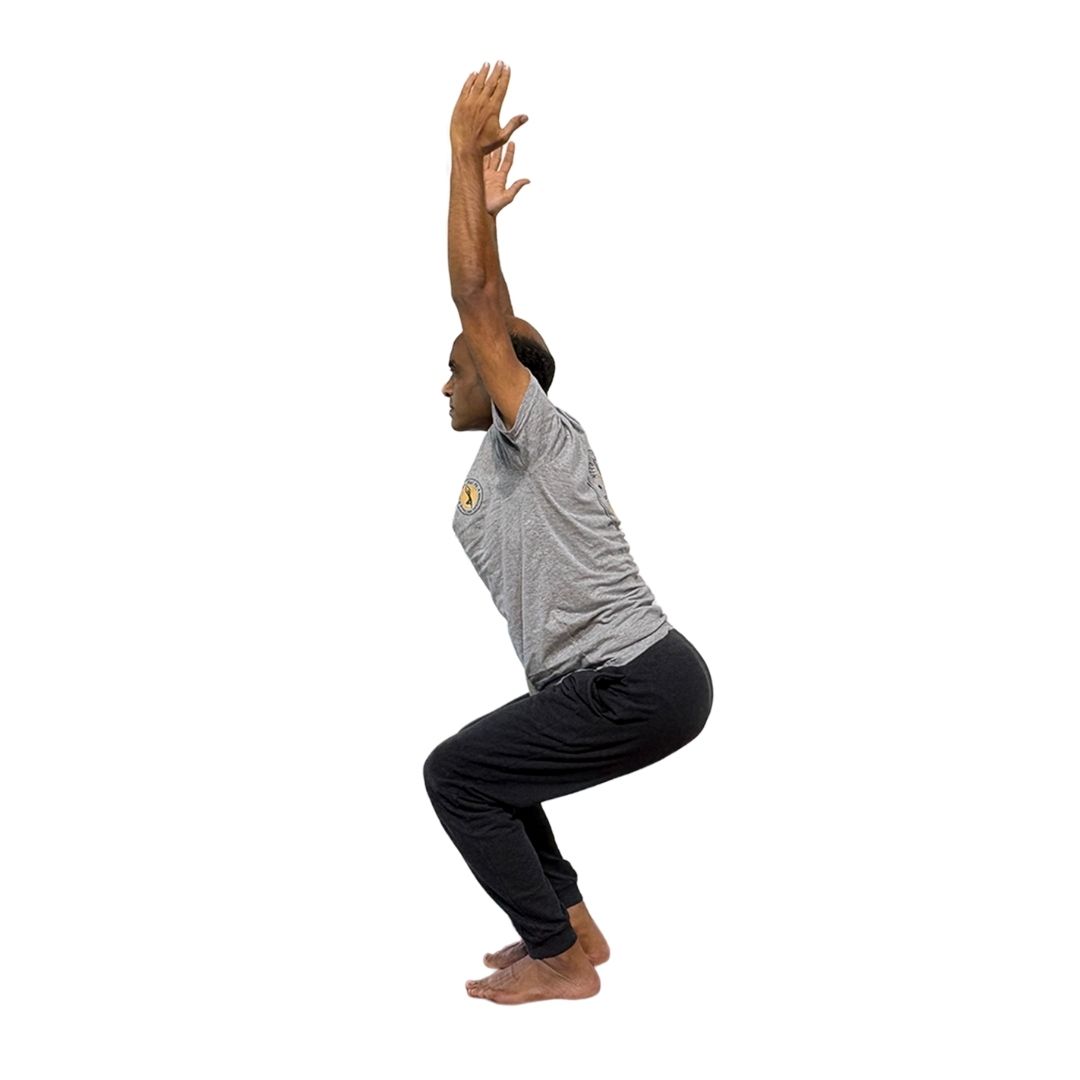
Utkatasana (उत्कटासन), also known as Chair Pose or Fierce Pose, is a foundational standing posture that builds strength and heat throughout the body. While it may look like you are simply sitting in an invisible chair, it is a demanding posture that builds heat rapidly and requires significant willpower and lower-body strength.
How to do Utkatasana
Benefits of Utkatasana
- Strengthens: It tones the legs, ankles, calves, and feet. It also strengthens the core, hip flexors, and back muscles.
- Improves Posture: By strengthening the core and back, it helps correct postural imbalances and can alleviate back pain.
- Stretches: It stretches the shoulders, chest, and hips.
- Boosts Energy: The intense nature of the pose stimulates the heart and cardiovascular system, increasing blood flow and boosting energy.
- Enhances Mental Focus: Holding the challenging pose requires concentration, which helps to calm the mind and improve focus.
Contraindications of Utkatasana
Avoid or modify this pose if you have:
- Knee Injuries: The pose puts significant pressure on the knees.
- Ankle or Hip Injuries: These joints are actively engaged, and the pose can exacerbate existing issues.
- Low Back Pain: While it can help improve back health, it can also worsen acute or chronic lower back injuries.
- Headaches or Insomnia: The pose can increase heart rate and blood pressure, which may not be advisable for those with these conditions.
- High or Low Blood Pressure: Individuals with blood pressure issues should be cautious. A modified version with hands at the heart center can be safer.
- Pregnancy: It is generally not recommended for the third trimester due to the strenuous nature and pressure on the pelvis.
Anatomy (Muscles involved)
The pose engages several key muscle groups:
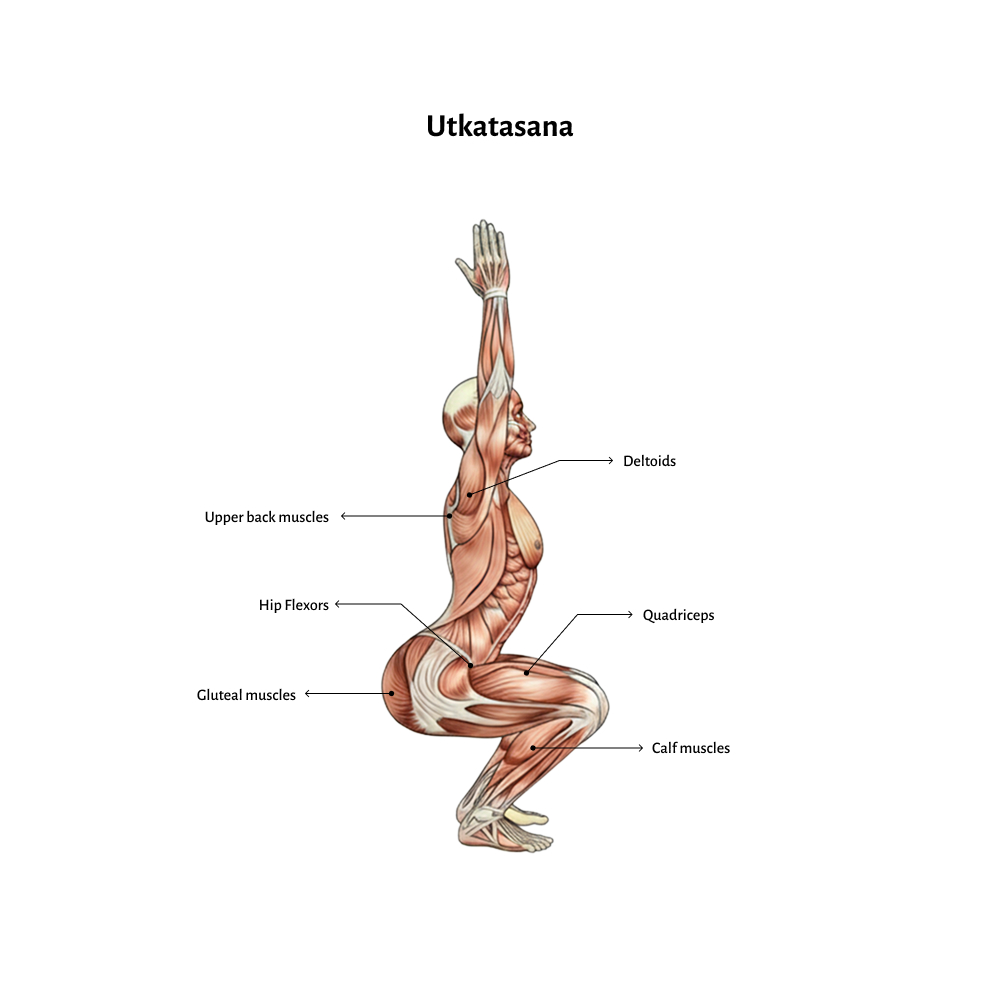
Legs
Quadriceps, hamstrings, and glutes.
Core
Abdominal and lower back muscles (erector spinae).
Arms and Shoulders
Deltoids, trapezius, and latissimus dorsi.