Utpluthih (उत्प्लुतिः)
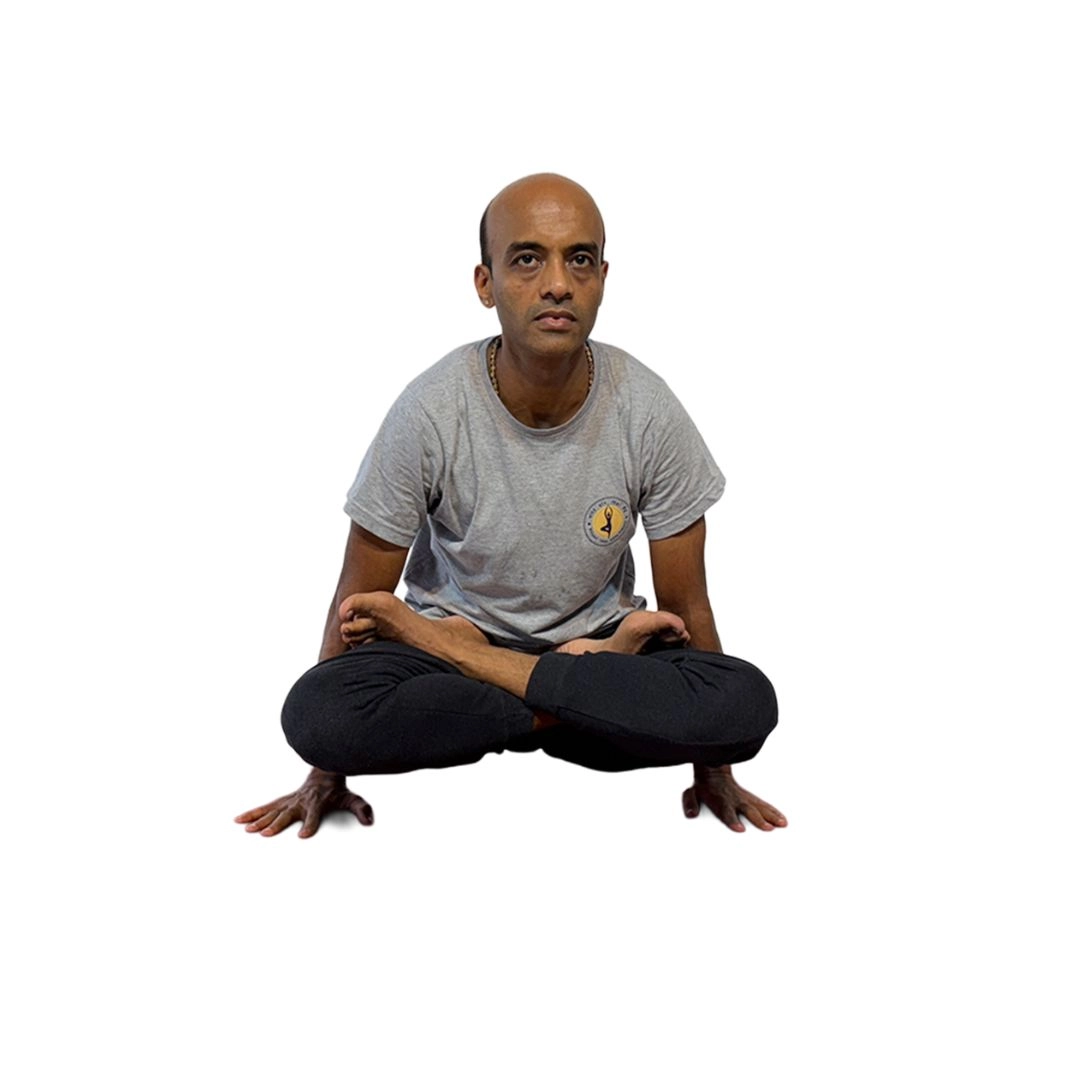
Utpluthih (उत्प्लुतिः), or Lifted Lotus Pose, is a challenging arm-balancing pose in yoga. The name comes from the Sanskrit words ut (upward), pluthih (to lift), and is also known as Tolasana (Scale Pose) or Lulitasana (Swing Pose). This pose is an excellent test of strength, balance, and focus, and it is typically performed at the end of a seated sequence.
How to do Utpluthih
Benefits of Utpluthih
Utpluthih is an intense posture that offers numerous physical and energetic benefits:
- Strengthens the upper body:
It builds significant strength in the arms, wrists, shoulders, and chest. The biceps, triceps, and brachioradialis muscles are particularly engaged. - Develops core strength:
This pose is a powerful core workout, targeting the abdominal muscles, glutes, and pelvic floor. It helps to tone and stabilize the core. - Improves balance and focus:
Balancing the entire body on the hands requires immense concentration and body awareness, which enhances both physical and mental balance.
- Stimulates the digestive system:
The deep engagement of the core and abdominal muscles can help to improve digestion. - Activates chakras:
In a more spiritual context, this pose is believed to activate and balance the Mooladhara (Root), Svadhisthana (Sacral), and Manipura (Solar Plexus) chakras, bringing a sense of groundedness, stability, and confidence.
Contraindications of Utpluthih
Avoid or modify this pose if you have:
- Wrist, elbow, or shoulder injuries:
The entire body weight is placed on the hands and arms, which can exacerbate existing injuries. - Hip or knee problems:
The deep flexion and external rotation of the hips and knees in Padmasana can be harmful if you have any pre-existing conditions or injuries in those joints.
- Lack of preparation:
If you are not yet comfortable and stable in Padmasana or if your upper body and core strength are not developed, it is best to practice preparatory poses like Lolasana (Pendant Pose) or Bakasana (Crow Pose) first. - Recent surgery:
Avoid this pose after any recent surgery, especially in the abdominal or upper body areas.
Anatomy (Muscles involved)
This pose engages a complex network of muscles and joints:
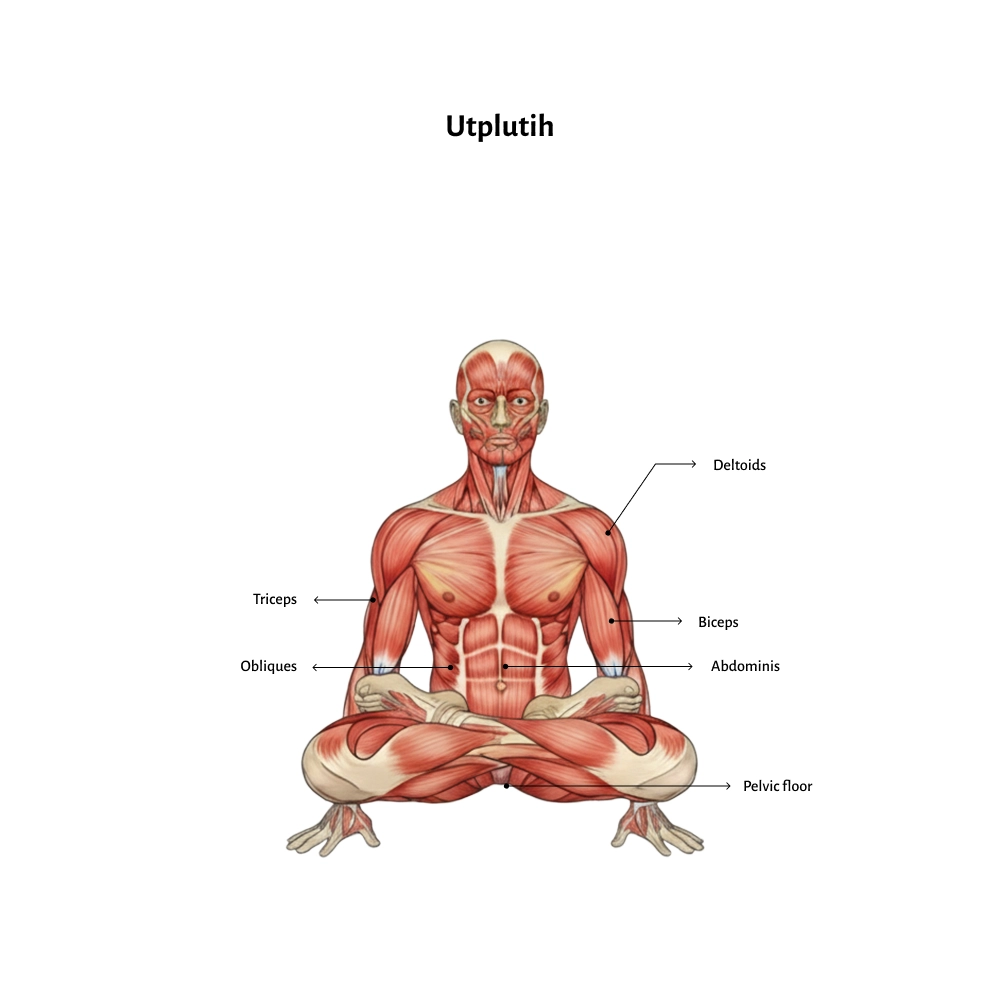
Arms and Shoulders:
Deltoids, pectoralis major, biceps, triceps, and latissimus dorsi are all active in lifting and stabilizing the body.
Core:
The transverse abdominis, rectus abdominis, obliques, and the muscles of the pelvic floor (Mula Bandha) are crucial for the lift and for holding the pose.
Hips and Legs:
The hip flexors and glutes are engaged to keep the Padmasana compact and lifted. The knees and ankles are in a deep flexion and external rotation.
Spine:
The muscles along the spine are engaged to keep the back lifted and straight, preventing rounding.