Uttana Padasana (उत्तान पादासन)
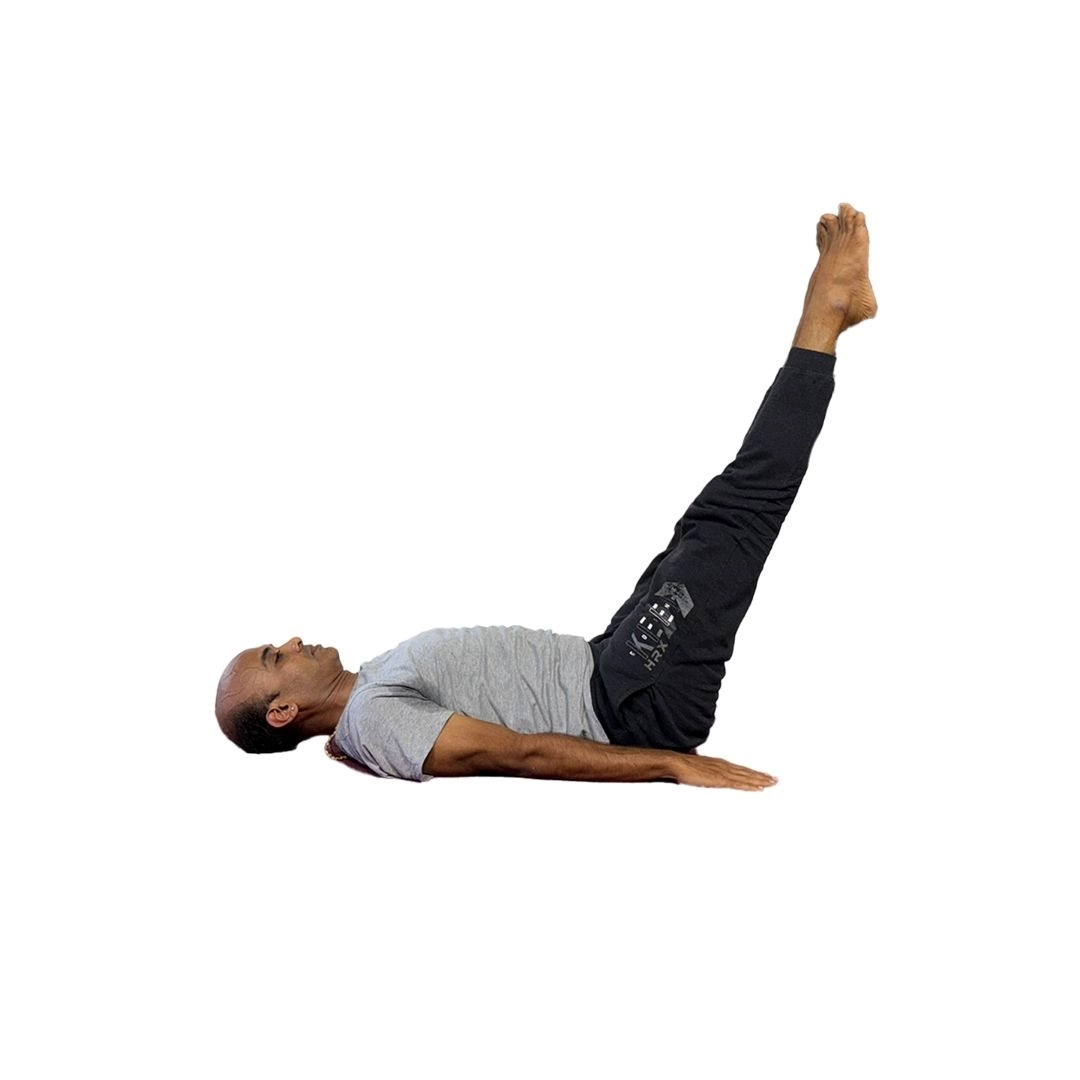
Uttana Padasana (उत्तान पादासन), or Raised Leg Pose, is a simple but effective yoga posture that strengthens the core and abdominal muscles. The name comes from the Sanskrit words “uttana” (raised, intense stretch), “pada” (foot), and “asana” (posture). This pose is an excellent way to build foundational strength in the abdominal region without putting strain on the back.
How to do Uttana Padasana
Benefits of Uttana Padasana
- Strengthens the Core:
It is an excellent pose for building strength in the abdominal muscles, including the rectus abdominis, obliques, and deep core muscles. - Aids Digestion:
By stimulating the abdominal organs, it can help relieve issues like indigestion, bloating, gas, and constipation. - Improves Circulation:
Lifting the legs against gravity enhances blood flow to the heart and upper body. It can also be beneficial for conditions like varicose veins.
- Tones the Body:
Regular practice helps in toning the legs, hips, and lower abdomen, and can help in reducing belly fat. - Strengthens the Spine:
It supports the lumbar region and can help in relieving mild lower back pain and improving overall spine flexibility. - Calms the Mind:
The pose can help in reducing stress, anxiety, and nervousness. It is also believed to balance the Manipura (Solar Plexus) and Muladhara (Root) chakras.
Contraindications of Uttana Padasana
Avoid or modify this pose if you have:
- Severe Back or Neck Injuries:
The pose can put strain on the lower back and neck if not performed correctly. - High or Low Blood Pressure:
The change in blood flow can be a concern for individuals with blood pressure issues. - Recent Abdominal Surgery:
It is crucial to avoid any poses that put pressure on the abdomen after a surgery.
- Hernia:
The engagement of the core muscles can be harmful if you have a hernia. - Pregnancy:
Pregnant women should avoid this pose as it engages the pelvic floor and puts pressure on the abdomen.
Anatomy (Muscles involved)
This pose engages a complex network of muscles and joints:
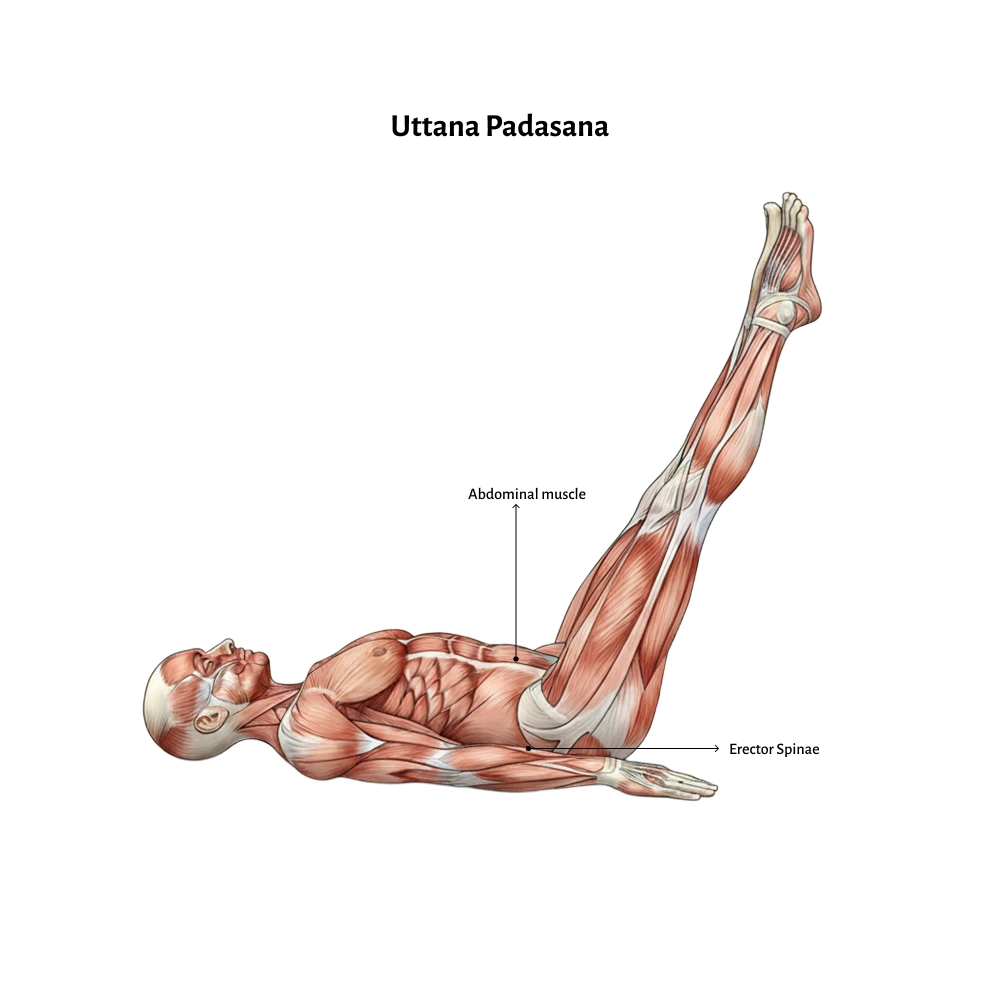
Abdominal Muscles:
The core muscles, including the rectus abdominis, transverse abdominis, and obliques, are actively engaged to lift and stabilize the legs.
Hip Flexors:
The psoas muscles, which connect the upper body to the thighs, are crucial for lifting the legs.
Quadriceps:
These muscles on the front of the thighs are engaged to keep the legs straight.
Lower Back Muscles:
The muscles supporting the lumbar spine are engaged to maintain a stable back and prevent arching.