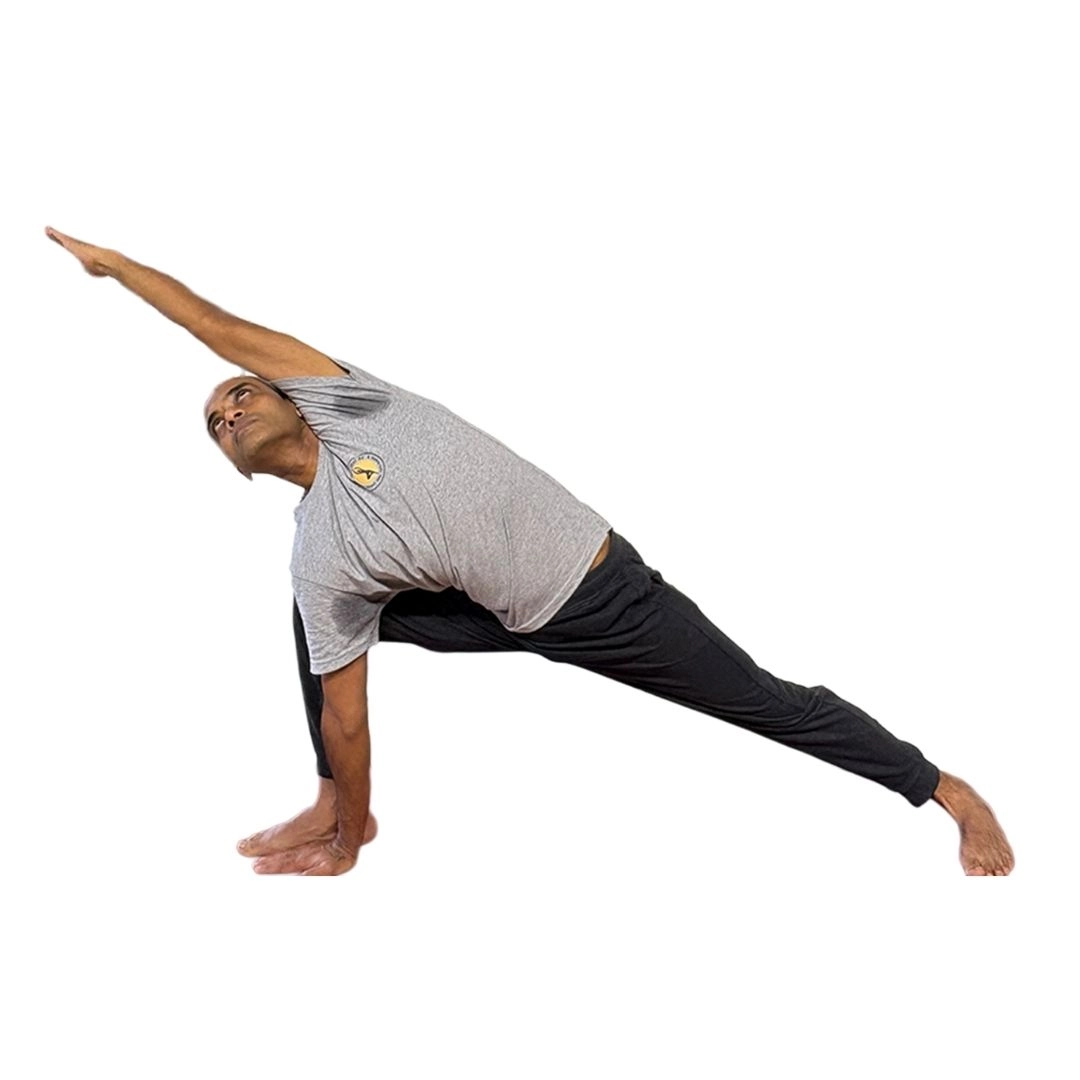
Utthita Parsvakonasana (उत्थित पार्श्वकोणासन)
Utthita Parsvakonasana (उत्थित पार्श्वकोणासन), or Extended Side Angle. The name is derived from four Sanskrit words Utthita: Extended
Parsva: Side or Flank kona: Angle and Asana: Posture or Seat.
How to do Utthita Parsvakonasana
Benefits of Utthita Parsvakonasana
- Strengthens:
Ankles, knees, thighs, and hips. - Stretches:
Groin, hamstrings, calves, spine, shoulders, and chest. - Improves:
Stamina, balance, and core strength.
- Stimulates:
Abdominal organs, aiding in digestion and detoxification. - Relieves:
Mild lower backache and sciatica. - Therapeutic for:
Flat feet, infertility, and osteoporosis.
Contraindications of Utthita Parsvakonasana
Avoid or modify this pose if you have:
- Head or Neck Injury:
Avoid turning your head to look up; look straight ahead instead. - Knee or Hip Injury:
Practice with caution and only modify the pose by resting the forearm on the thigh, or keep the stance shorter.
- High Blood Pressure:
Some sources advise avoiding the full pose or practicing with caution, perhaps by not extending the arm overhead and keeping the head neutral, to avoid discomfort from neck and eye movements. - Migraine:
If the head and neck movement is difficult, keep the head neutral or avoid the pose.
Anatomy (Muscles involved)
This pose engages a complex network of muscles and joints:
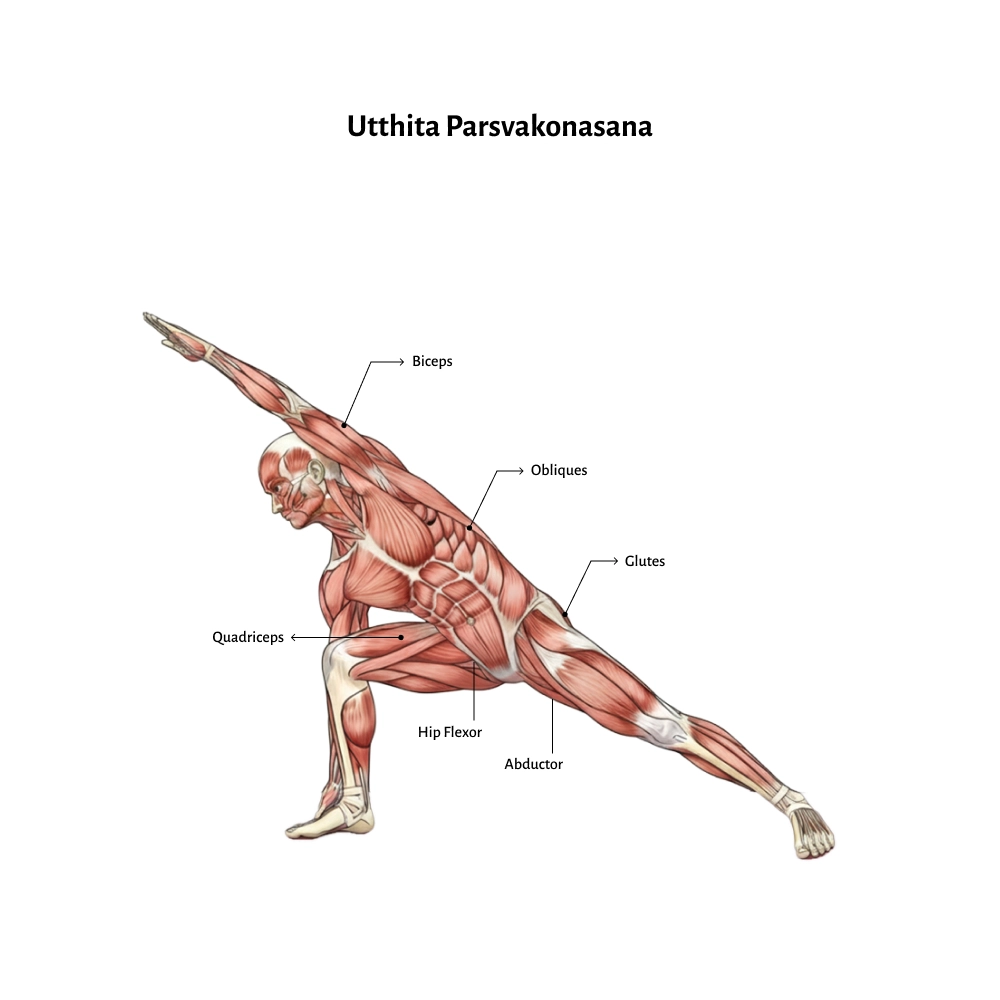
Muscles Stretched (Lengthened):
- Side Body:
Obliques and intercostal muscles (muscles between the ribs) on the extended side (top side). - Hips/Groin:
Adductor muscles (inner thigh) and psoas of the back leg. - Legs:
Hamstrings and calves of the front leg (to a lesser degree), and the Achilles tendon of the back foot.
Muscles Strengthened (Engaged)
- Legs:
- Quadriceps: Of the bent (front) leg, working eccentrically to maintain the bend.
- Gluteus Maximus: Of the front leg, helping to stabilize the hip.
- Gluteus Medius & Minimus: Of the front leg, assisting with proper knee tracking.
- Core / Torso:
Abdominal muscles, including the obliques and rectus abdominis, engaged to support lateral flexion and prevent the torso from collapsing onto the thigh. - Back:
Upper back and shoulder blade muscles (rhomboids and trapezius) engaged to open the chest and maintain shoulder alignment.