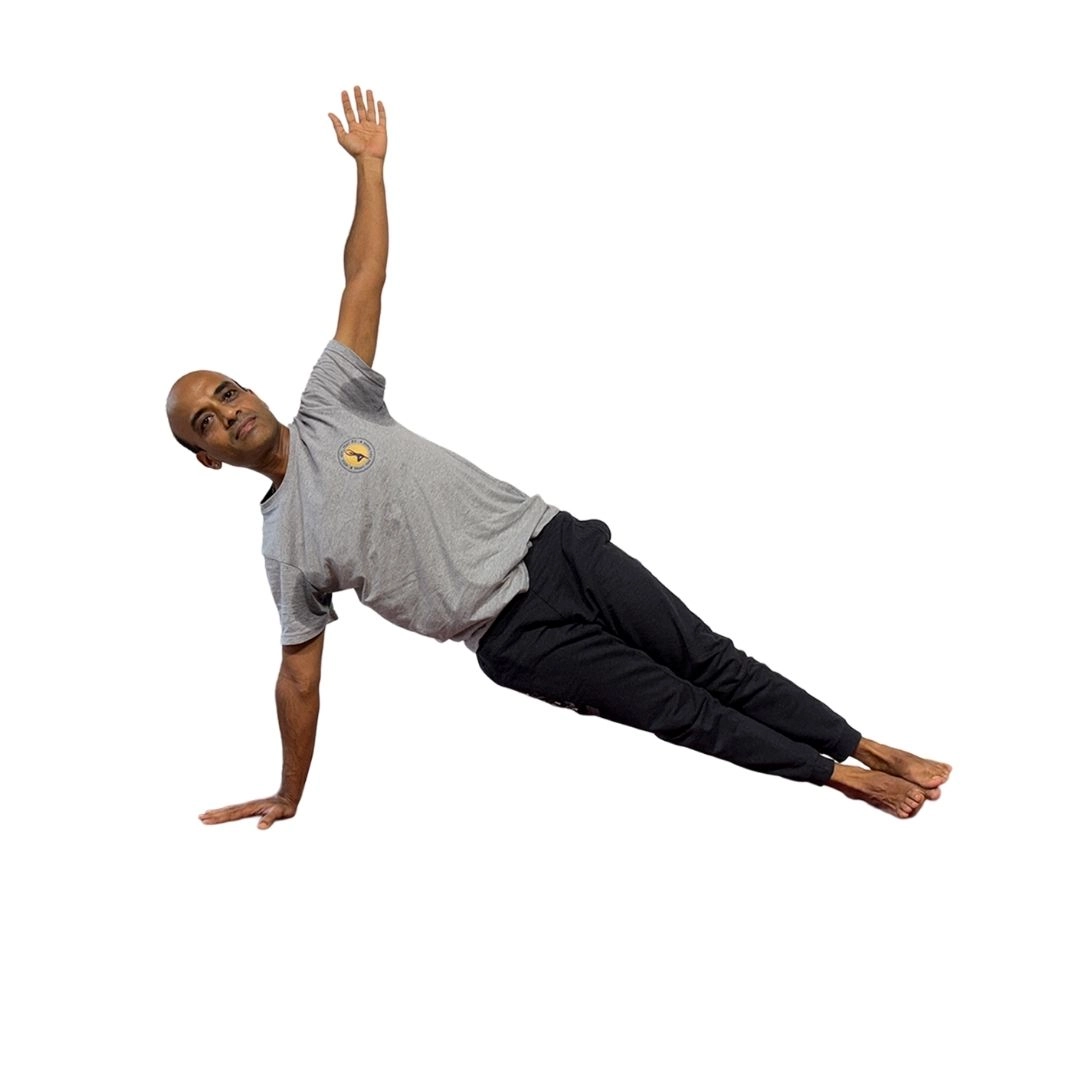
Vasisthasana (वसिष्ठासन)
Vasisthasana (वसिष्ठासन), or Side Plank Pose, is a challenging arm-balancing yoga posture that strengthens the core, arms, and legs while improving balance. The pose is named after the sage Vasistha, one of the seven great rishis (sages) of ancient India.
How to do Vasisthasana
Benefits of Vasisthasana
- Strengthens Core Muscles:
It engages the obliques, transverse abdominis, and other deep core muscles, building stability and supporting the spine. - Tones Arms, Wrists, and Shoulders:
The pose requires significant upper body strength to support your body weight, which tones and strengthens the arms, wrists, and shoulders. - Improves Balance and Stability:
Balancing on one arm and leg challenges your body, improving overall balance and coordination.
- Stretches and Lengthens:
It stretches the muscles along the sides of the torso, hips, and legs, promoting flexibility. - Enhances Focus and Concentration:
The mental focus required to hold the pose helps to improve concentration and mental clarity. - Can Improve Posture:
By strengthening the core and back muscles, regular practice can help improve posture and spinal alignment.
Contraindications of Vasisthasana
Avoid or modify this pose if you have:
- Wrist, elbow, or shoulder injuries:
The pose places a lot of weight on the supporting arm and wrist, which can exacerbate existing injuries. - Carpal tunnel syndrome or arthritis in the hands/wrists:
The pressure can be painful and harmful. - Chronic back pain or a herniated disc:
The pose requires a strong and stable spine, and it can put strain on the back.
- High blood pressure, vertigo, or migraines:
The balancing aspect of the pose may cause dizziness or worsen these conditions. - Pregnancy (especially in later trimesters):
The pose can be difficult to balance and may put undue pressure on the abdomen.
Anatomy (Muscles involved)
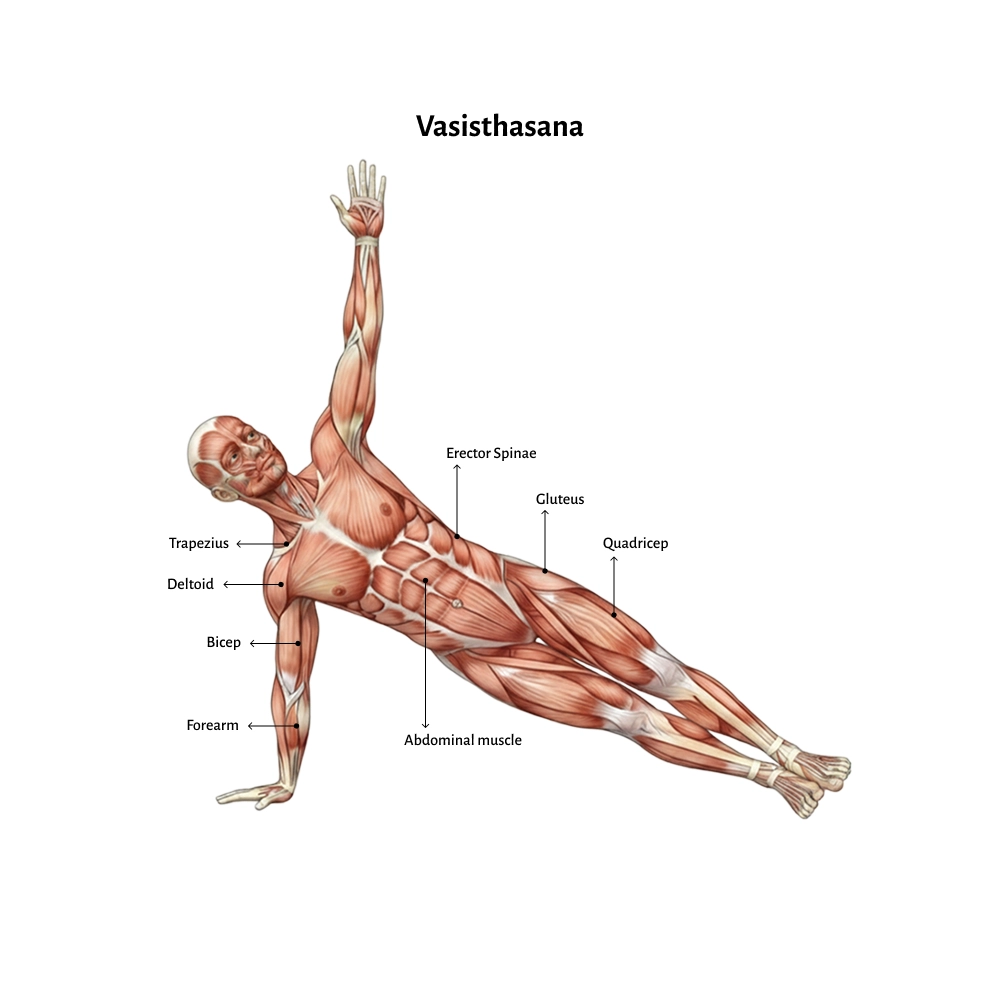
This pose engages a complex network of muscles and joints:
Supporting Arm & Shoulder:
The triceps and rotator cuff muscles (infraspinatus, teres minor, subscapularis) are active in stabilizing the shoulder joint and extending the elbow. The serratus anterior muscle also plays a key role in stabilizing the shoulder blade.
Core:
The obliques (internal and external) are crucial for lifting and stabilizing the hips, preventing them from sagging. The transverse abdominis and rectus abdominis also engage to support the spine.
Legs & Hips:
The gluteus medius and tensor fascia lata on the sides of the hips work to lift the pelvis. The quadriceps and hamstrings are engaged to keep the legs active and straight. The peroneus longus and brevis muscles in the lower leg help to stabilize the supporting foot.