The Four Pillars of Inner Strength
January represents a threshold—a doorway between what has been and what could be. We all stand at this threshold with lists of resolutions: to eat better, to work smarter, to be kinder. Yet, how often do we find ourselves back in old patterns by February? The ancient sages of Vedanta suggest that we often try to build the roof of a house before we have laid the foundation. In the spiritual tradition, this foundation is known as Sadhana Chathusthaya—the Fourfold Qualifications.
These aren’t just archaic rules for monks in the Himalayas. They are the psychological muscles required to navigate modern life with grace, resilience, and clarity. Whether you are managing a boardroom, a classroom, or a chaotic household, these four pillars are your toolkit for inner stability.
1. Viveka: The Art of True Discernment
Imagine you are at a buffet. There are dishes that look colorful and sugary, and others that look simple but are nourishing. Viveka is the intelligence that chooses the nutritious over the merely tasty. In our daily lives, Viveka is the ability to distinguish between the Permanent (what feeds the soul) and the Temporary (what merely stimulates the senses).
We practice Viveka when we ask: “Will scrolling social media for another hour give me peace, or will a 10-minute walk do that?” It is the inner compass that constantly points True North, separating the noise of the world from the voice of your intuition. It separates the “Preyas” (pleasant now, painful later) from the “Shreyas” (good for the soul).
Practical Practice: This week, apply the “Two-Day Rule.” Before making a non-essential purchase or reacting to a triggering email, wait two days. Use your Viveka to see if the desire or anger is real, or just a passing cloud.
2. Vairagya: The Freedom of Dispassion
The word “dispassion” often sounds cold, doesn’t it? We mistakenly think it means not loving our families or not enjoying a sunset. But true Vairagya is not indifference; it is independence. It is the capacity to enjoy the world without being crushed when things change—because things always change.
Think of a Trustee of a wealthy estate. A bank trustee manages millions of dollars with great care and precision. They protect it, invest it, and watch it grow. Yet, if the market fluctuates, they don’t lose sleep, because they know, deep down, “This money does not belong to me.” Vairagya invites us to live as trustees of our lives. Love your children, build your career, tend your garden—but hold them lightly, knowing you are a caretaker for the Divine.
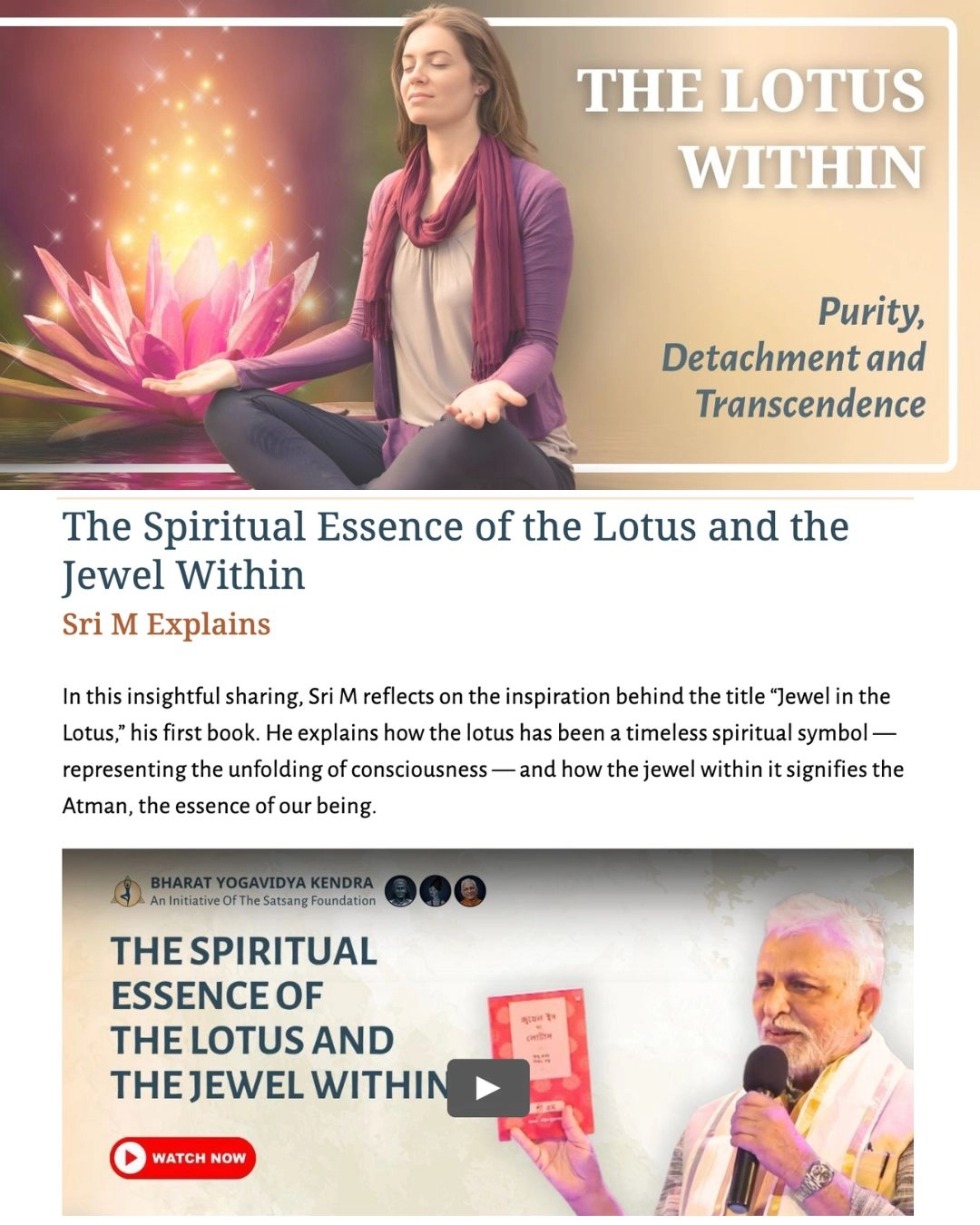
Another beautiful analogy is the Lotus Leaf. It sits in the water, yet the water beads up and rolls off, leaving the leaf dry. Be in the world, but don’t let the world drown you.
3. Shat Sampat: Your Six Inner Treasures
The third pillar is actually a collection of six mental disciplines. Think of them as your spiritual immune system.
- Shama (Calmness of Mind): This is the driver of the car deciding not to take a dangerous route. It is “Mind Management”—preventing a negative thought before it takes root.
- Dama (Control of Senses): If Shama fails and the car starts rolling, Dama is the brakes. It’s the physical strength to close the laptop, put down the dessert fork, or walk away from an argument.
- Uparati (Self-Withdrawal): In 2026, this is the art of Digital Minimalism. It is finding satiety in your own duty (Svadharma) rather than seeking constant distraction. It is the “Joy of Missing Out” (JOMO) on the noise to focus on the signal.
- Titiksha (Endurance): This is the superpower of resilience. It is bearing the heat, the cold, the traffic jam, and the rude comment without complaining. It isn’t just gritting your teeth; it’s a cheerful acceptance that builds emotional “anti-fragility.”
- Shraddha (Faith): Not blind belief, but the confidence of a scientist running an experiment. It is the trust that the path has been walked by others and will work for you too.
- Samadhana (Focus): The laser-like concentration that burns through obstacles. It is the “flow state” where the dancer becomes the dance, and the worker becomes the work.
4. Mumukshutva: The Hunger for Freedom
Finally, we come to the fuel that drives it all. Mumukshutva is the intense burning desire for liberation. It is the realization that “I want to be free from this cycle of stress and anxiety.”
Imagine a man trapped in a Burning House. He doesn’t stop to play with toys or check his phone. He has one singular focus: Get out. Mumukshutva is the realization that our attachment to the temporary is a burning house, and we must seek the fresh air of freedom. Or think of a hungry man—he doesn’t want a lecture on food; he wants to eat. When this desire for truth wakes up in you, no obstacle can stand in your way.
Building Your Foundation As we step into this New Year, let us not just make resolutions to change our actions. Let us resolve to change our minds. Let us cultivate the clarity of Viveka, the freedom of Vairagya, the wealth of Shat Sampat, and the fire of Mumukshutva.
When the foundation is strong, the house will stand—no matter what the weather brings.
Hari Om Tat Sat.