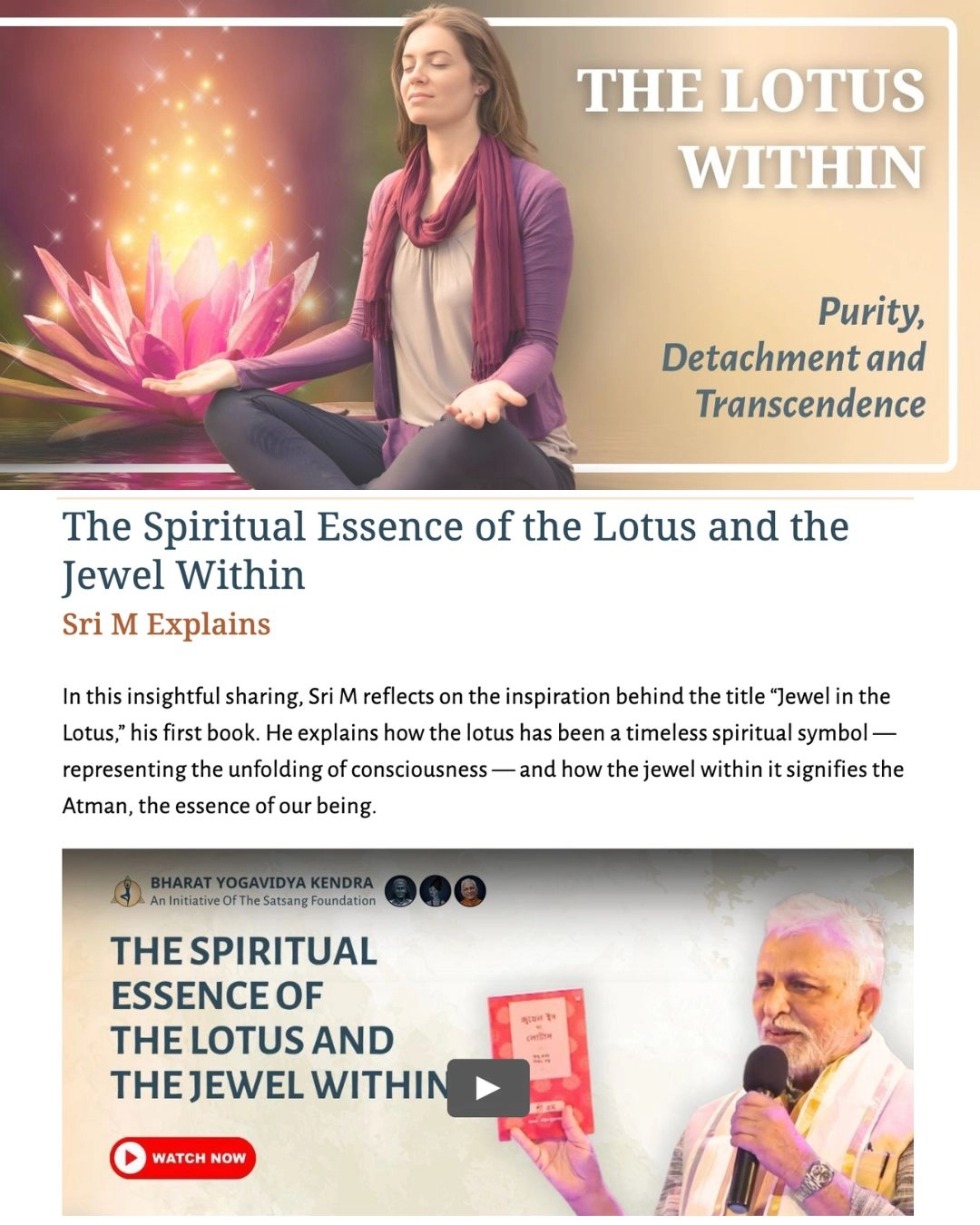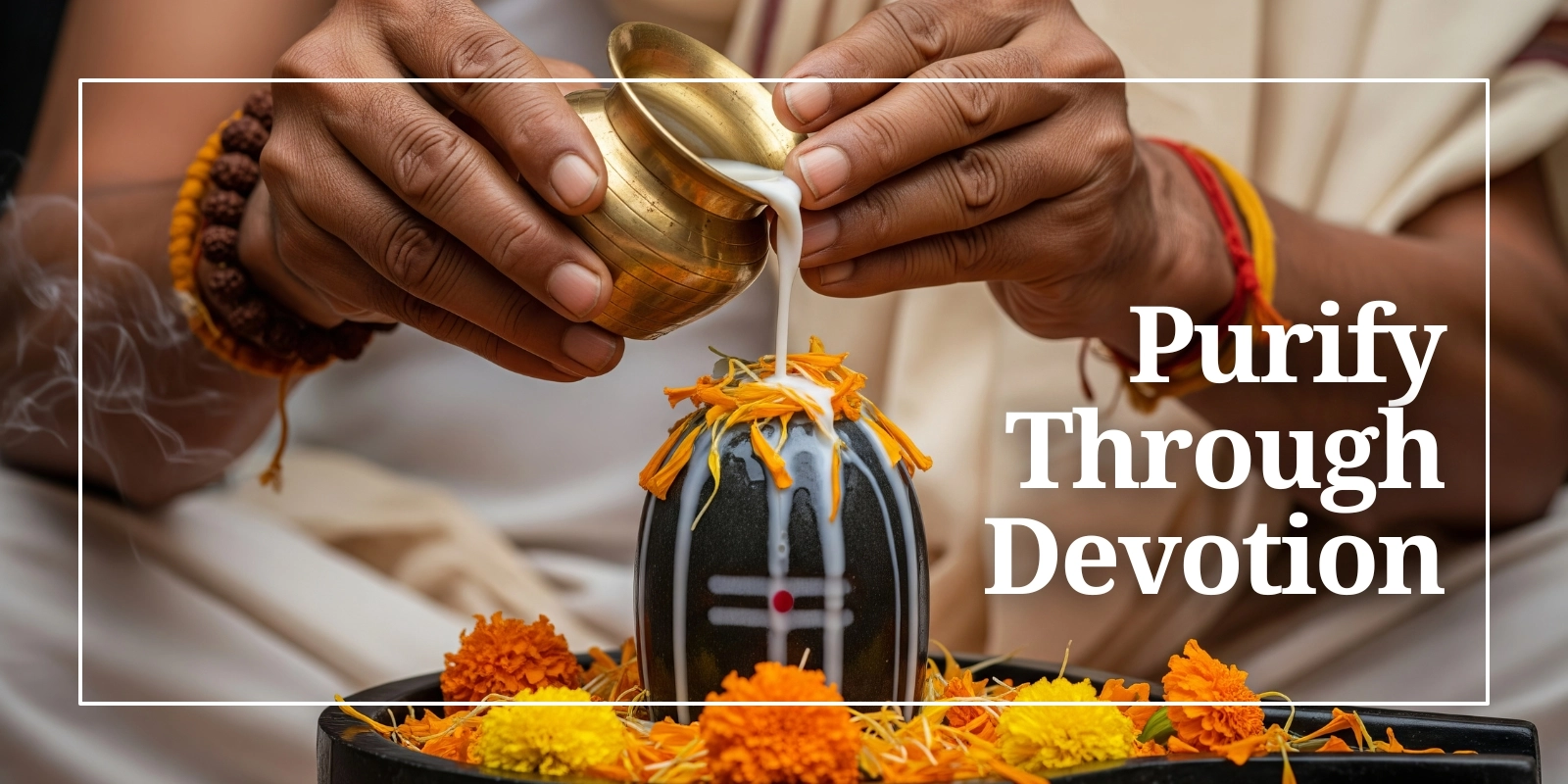
Devotion is not meant to be a mood that comes and goes. In the Gita, bhakti is presented as a discipline that refines the inner life—quietly, steadily, and without spectacle.
Sri M reminds us that Chapter 12 does not reduce devotion to ritual or emotional intensity. Krishna speaks of devotion through qualities that can be lived: control of the senses, tranquility under all circumstances, and the welfare of all living beings in the heart. These are not abstract ideals; they are the real markers of purification. A person may sing, pray, or worship daily, but if the mind remains agitated in ordinary situations, or if the heart carries division and dislike, devotion has not yet done its deeper work.
Krishna’s compassion is also practical: for most human beings, name and form help the mind hold the Divine. What matters is not the form chosen, but the sincerity and steadiness with which one returns. And Krishna offers a simple purifier that anyone can practise—offer the fruits of action. When outcomes are surrendered, the mind becomes lighter, and peace follows naturally.
May this month bring devotion that makes us kinder, steadier, and inwardly free.
Purify Through Devotion
Sri M Explains
Talk with M
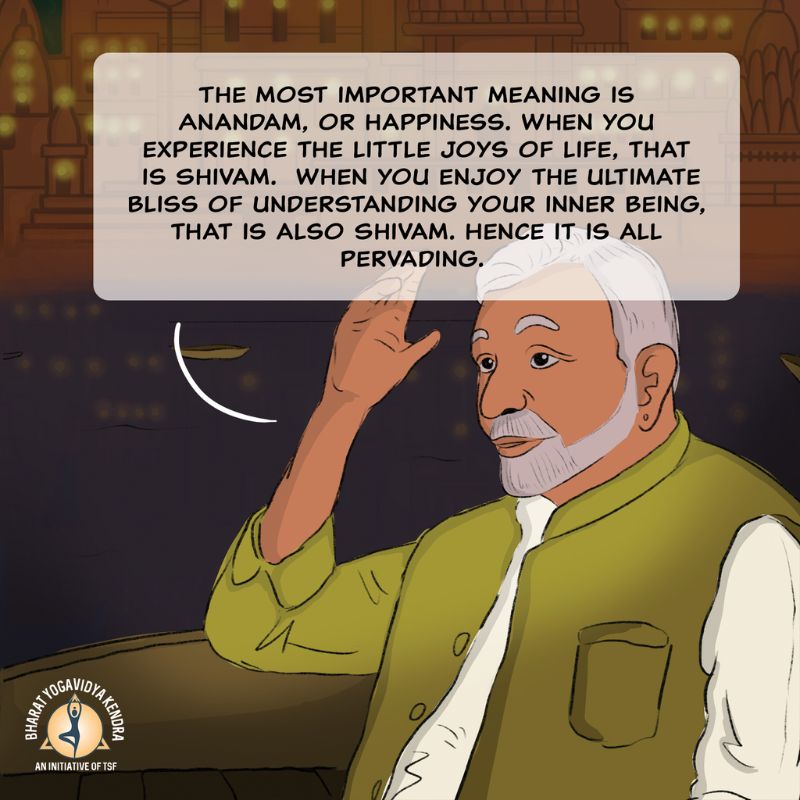

BLOG POST
Spiritual Cleansing Through Devotion
Devotion is often spoken of as an emotion—something tender, uplifting, occasionally intense. But the Gita presents bhakti in a far more grounded way. Bhakti is not a mood. It is a method—a way of training the heart so that the mind becomes lighter, steadier, and clean enough to recognise what is real.
As Sri M explains in this teachings Bhakti Yoga appears only after the 10th and 11th chapters because Arjuna must first become ready. Until then, the mind functions like an accountant—everything is measured through profit and loss, logic and justification. The 10th chapter begins to loosen this certainty as Krishna speaks from a scale that doesn’t fit ordinary reasoning—“Among mountains I am Meru… among immovables I am the Himalayas…” And then the 11th chapter breaks the mind’s neat arithmetic entirely. Something immense is revealed, and the limited intellect recognises its own boundary.
This does not mean the Gita rejects intelligence. Quite the opposite—our tradition even prays for sharpened intellect. But a refined intellect eventually discovers its limit, and that discovery becomes an opening. It allows the heart to participate. It prepares the inner life for bhakti.
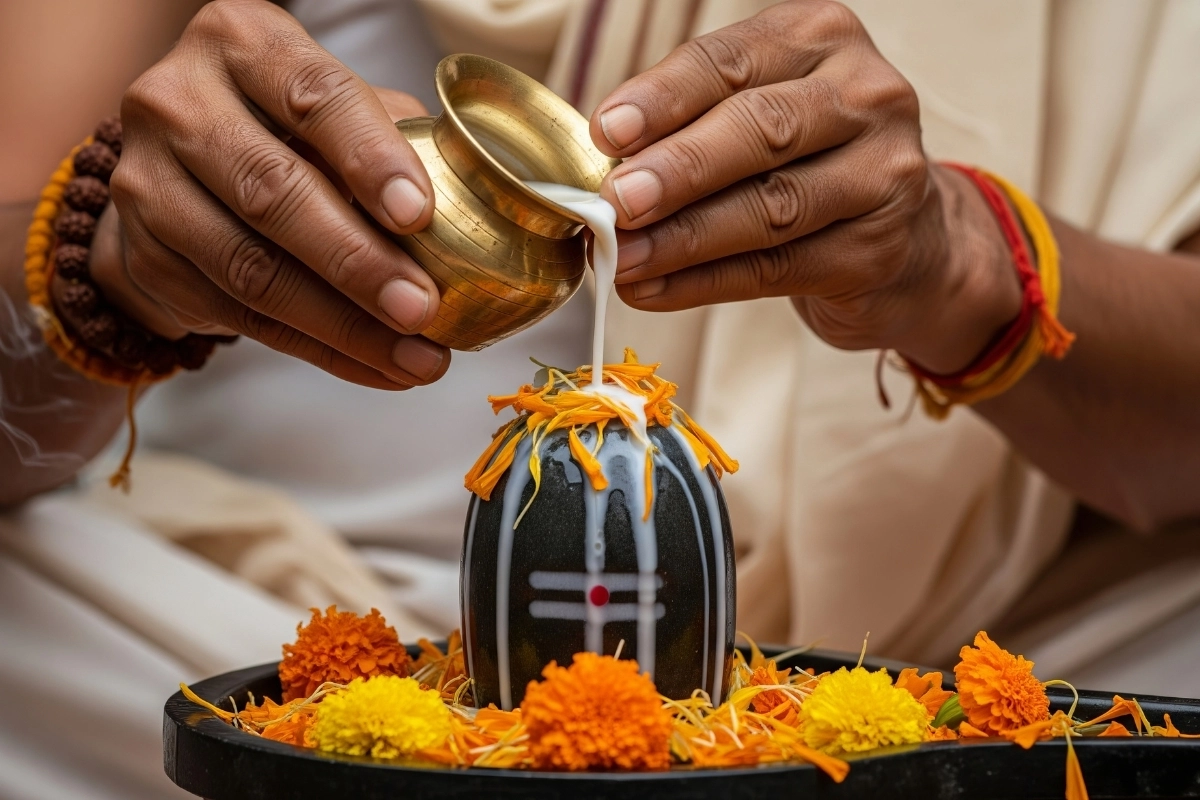
The question that still matters
Chapter 12 begins with a question that is still alive in spiritual communities today:
Some worship the Divine as a Person—through form, name, relationship, and love. Others contemplate the Supreme as imperishable, unmanifest, beyond words. Who is the greater yogi?
Krishna’s answer is deeply practical. He does not rank paths as if spirituality were a competition. Instead, he shifts the attention to what truly determines progress: the inner condition of the seeker. Sri M states it plainly: if the essential qualities are missing, one may “worship a hundred times,” but it will not lead far. The form of worship is not the deciding factor. The quality of mind and heart is.
Three marks of a devotee
Krishna’s definition of a true bhakta is both simple and demanding. Sri M highlights these again and again because they cut through spiritual pretence:
- Control of the senses
- Tranquility under all circumstances (not only in meditation)
- Welfare of all living beings in the heart
These are not abstract ideals. They are measurable in daily life. A person cannot claim devotion while remaining harsh, hostile, or divisive. Sri M puts it sharply: if someone says, “I am a great devotee, but I hate those people,” Krishna would not recognise such a person as a bhakta. Devotion that purifies makes the heart wider, not narrower.
Form, formless, and the compassion of symbolism
Krishna also acknowledges something profoundly compassionate: devotion to the formless Absolute can be more difficult for embodied human beings. Not because the formless is lesser—many great rishis have walked that path—but because human life is structured by name and form (nāma-rūpa). The mind recognises, remembers, and relates through forms, symbols, and names. Even the sense of “I” is tied to name and form.
Sri M explains this with humour: the morning mirror is a daily confession of how attached most people are to form. So Krishna does not demand that the mind leap immediately into the intangible. He allows form, symbol, sound, and relationship as legitimate bridges. A form can be used as an anchor until the mind becomes capable of resting in the vast.
This is why symbols matter across religions. It is also why bhakti does not require intellectual superiority—only sincerity and steadiness.
Bhakti’s ladder: a path designed for real people
One of the most practical gifts of Chapter 12 is that Krishna gives a graded path, not a single impossible instruction. Sri M draws this out beautifully: Krishna keeps offering Arjuna a workable step—almost like giving a “long rope,” not for escape, but for ascent.
- Fix the mind on the Divine, if possible.
- If not, practise returning, through systematic training of attention.
- If that is difficult, serve. Worship through service—seeing the Divine in others and responding with practical compassion.
- If even that feels too difficult, surrender.
- And running through all these steps is one purifier Krishna repeatedly emphasizes: abandon the fruits of action.
A mind that clings to outcomes becomes heavy—whether the outcomes are pleasant or painful. Even success does not free the mind; it often creates more craving. Failure can create bitterness and fear. But when the fruits of action—good and bad—are genuinely offered to the Divine, the mind becomes lighter because the burden of agency reduces.
Sri M points out something subtle here: even meditation can become another ego-project—“I meditated for hours and nothing happened.” The mind still keeps score. Bhakti purifies when even the results of meditation are offered: practice continues, but the “I” relaxes, and the mind becomes clearer.
Kunti’s prayer: devotion without bargaining
When Krishna is about to depart after the war, he offers her a boon. Kunti asks for something startling: “Bring all sorrows upon me.”
Not because she loves pain, but because she understands human nature: it is usually in sorrow that the heart calls God sincerely. If sorrow keeps coming, she will keep calling Krishna, and Krishna will keep appearing in her heart. She wants nothing else.
Kunti’s prayer is not a template for performance. It is meant to show what devotion looks like when it becomes mature—when love is deeper than comfort, and remembrance is valued more than outcomes.
The Gita’s spiritual life begins with honesty and self-knowledge: knowing where one truly stands.
What “purify through devotion” means in practice
Purification through bhakti is not measured by visions or dramatic experiences. It is measured by the steady transformation of the inner life:
- Less agitation in real situations, not just in quiet settings
- Less hostility and division; more goodwill towards all beings
- Less clinging to results; more steadiness in action
- Less fear; more inner stability
- Less obsession with “me”; more humility and gratitude
In short: devotion purifies when it relocates the centre of life—from demand to offering, from agitation to remembrance, from self-importance to the welfare of all.
A simple bhakti practice for February
To make this month’s theme practical, the discipline can be kept simple and steady:
- Daily remembrance (7–10 minutes)
A name, a mantra, or a short prayer—done with sincerity, not display. - Offering the fruits of one important action each day
Before beginning: “Let this be Yours.”
After completing: “Let the result also be Yours.” - One act of welfare each week
A quiet act of help offered without publicity—done as worship, not as identity.
Bhakti does not demand a change of outer life first. It asks for a change in inner orientation. And when that orientation becomes steady, purification happens almost naturally: the mind becomes lighter, the heart becomes cleaner, and spiritual life stops being an idea—and becomes a lived reality.
BOOK REVIEW
Narada Bhakti Sutras by Swami Chinmayananda
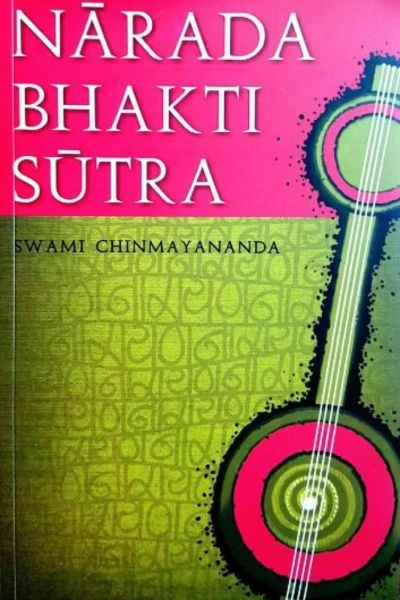
When we speak about devotion, the first book that comes to mind is the Narada Bhakti Sutras. Attributed to Maharshi Narada, this book is a set of 84 aphorisms on Bhakti, the concept of devotion.
The aphorisms, as the name suggests are with deep spiritual context, tightly packed with depth and meaning, yet the commentary by Swami Chinmayananda helps us understand the essence. There is both clarity and simplicity in the way different aspects of devotion are explained. Here, the aspect of devotion is treated not as a mere emotional worship, but as an inner attitude of love, surrender and constant remembrance of the Divine.
The book explains what Divine love is all about, its greatness, how to develop it, aids to love Divine, obstacles in the practice and remedies and finally the fruits of love Divine. The various explanations help the reader understand that bhakti is not separate from daily life, rather, it is a way of living with awareness, humility, and dedication.
The commentary moves beyond philosophy and speaks directly to the heart of a seeker. Each sutra is unpacked with relatable examples, subtle insights, and practical reflections, encouraging the reader to cultivate purity of intention and deepen their relationship with the Divine. The book also gently removes common misconceptions, showing that true devotion is free from ritualistic rigidity and is centred in selfless love.
For yoga practitioners and spiritual aspirants, this book serves as both a study text and a companion for inner growth. It reminds us that among all paths, the path of devotion is the most natural, leading one from longing to love, and from love to union.
Narayana Narayana
YOGA GUIDE
Purify Through Emotion
Purifying through emotion is a profound practice that aligns with the spiritual insights of the Narada Bhakti Sutras, which emphasize devotion, surrender, and the transformation of inner states to attain purity and clarity. This guide integrates one yoga asana and one pranayama technique designed to help release emotional blockages and cultivate a purified heart and mind.
The practice focuses on opening the heart center and calming the mind, facilitating the flow and release of emotions in a balanced, conscious way.
Yoga Asana: Anahatasana (Heart Melting Pose)

Purpose:
This pose gently opens the chest and heart area, encouraging emotional release and vulnerability, which aligns with the Bhakti Sutras’ emphasis on surrender and devotion.
Steps:
- Start in a tabletop position (hands and knees).
- Walk your hands forward, lowering your chest toward the floor while keeping your hips elevated over your knees.
- Rest your forehead or chin on the mat.
- Allow your chest to melt toward the ground, feeling a gentle stretch across the heart center.
- Breathe deeply and hold for 1-3 minutes, focusing on softening emotional tension in the chest.
- To release, slowly walk your hands back and come to a seated position.
Benefits:
- Opens the heart chakra (Anahata), facilitating emotional purification.
- Calms the nervous system and reduces stress.
- Encourages surrender and receptivity, key themes in Narmada Bhakti Sutras.
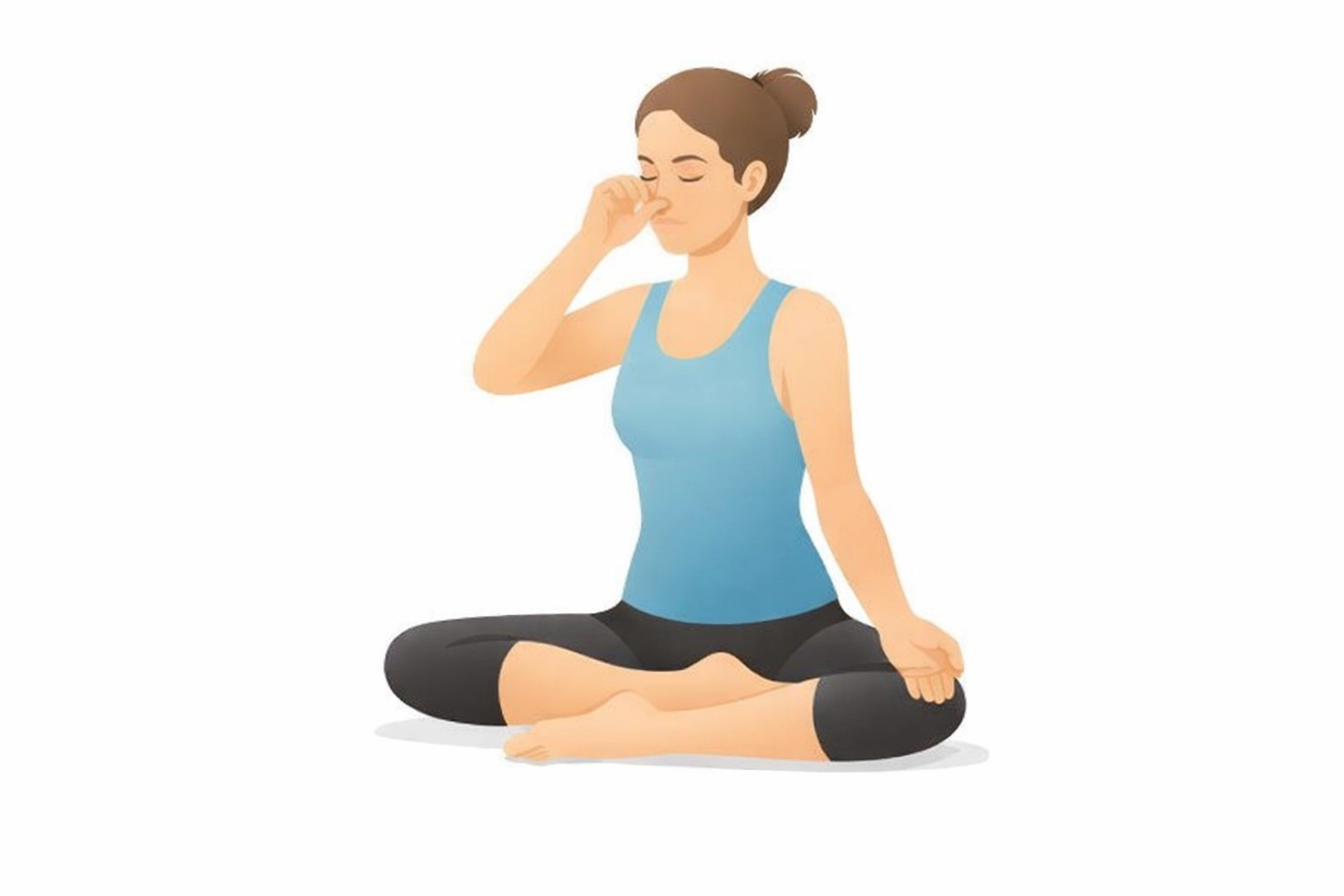
Pranayama: Chandra Bhedana (Left Nostril Breathing)
Purpose:
This pranayama activates the parasympathetic nervous system, cooling the mind and emotions, promoting emotional balance and purification.
Steps:
- Sit comfortably with your spine erect.
- Use your right thumb to close your right nostril.
- Inhale slowly and deeply through your left nostril.
- Close your left nostril with your ring finger, release the right nostril, and exhale slowly through the right nostril.
- Inhale through the right nostril.
- Close the right nostril again and exhale through the left nostril.
- This completes one cycle.
- Practice for 5-10 minutes, maintaining smooth, even breaths.
Benefits:
- Balances emotional fluctuations by calming the mind.
- Purifies the subtle energy channels (nadis), supporting emotional clarity.
- Encourages inward focus and devotion, echoing the Sutras’ guidance on turning the mind toward the divine.
- This combined practice of Anahatasana and Chandra Bhedana pranayama creates a powerful process of emotional purification through opening the heart and calming the mind, resonating deeply with the devotional and transformative spirit of the Narmada Bhakti Sutras. Regular practice nurtures surrender, devotion, and emotional clarity, leading to a purified inner state.
YOGA RESOURCE
Bhakthi: The Heart’s purification path
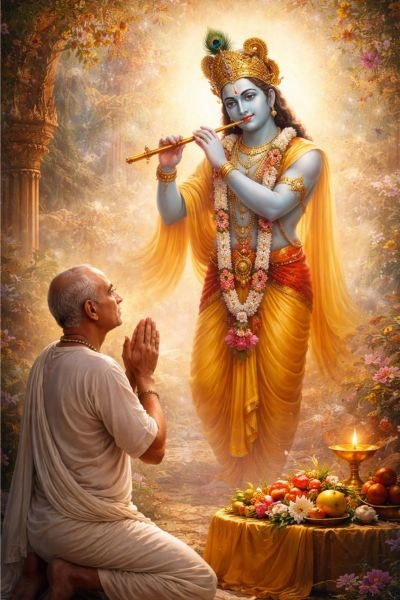
In many spiritual traditions, Bhakti (devotion) is often compared to a “detergent for the soul.” While other paths like Jnana (knowledge) use the sharp scalpel of intellect to cut through illusion, Bhakti uses the warmth of love to melt away the mental and emotional “crust” we collect just by living.
In the eyes of the great gurus, Bhakthi (devotion) isn’t just a sentimental feeling or a Sunday morning ritual; it is a systematic psychological and spiritual detergent. It is often described as the most accessible tool for Chitta Shuddhi—the purification of the mind-stuff.
Here is how the masters break down Bhakthi as a purifying force:
- The Power of Substitution
Gurus like Swami Vivekananda and Paramahansa Yogananda emphasized that the mind cannot be made “empty” through sheer willpower. Instead, Bhakthi purifies by replacing lower-frequency desires with a higher-frequency focus.
The Mechanism: Instead of fighting anger or greed (which often just gives them more energy), you redirect that emotional intensity toward the Divine.
The Result: The “dirt” of the ego is displaced by the “light” of devotion. As Sri Ramakrishna famously said, “As the needle of a compass always points North, let your mind always point toward God; then the waves of the world cannot disturb you.” - Dissolving the Ego (The Solvent)
In the Vedantic tradition, the primary “impurity” is the sense of separate identity (the ego). Adi Shankara defined Bhakthi in his Vivekachudamani as “the seeking after one’s own real nature.”
Surrender (Prapatti): By practicing total surrender, the devotee acknowledges that “I am not the doer.” This thins the ego, which is the root of all mental impurities like pride, jealousy, and anxiety.
The Soap Analogy: Just as soap clings to dirt to wash it away, Bhakthi clings to the “I-consciousness” and eventually dissolves both into the Infinite. - The Nine-Fold Path (Navavidha Bhakthi)
Traditional gurus often point to the Srimad Bhagavatam, which outlines nine specific “tools” within Bhakthi to scrub the various layers of the psyche.
| Form of Bhakti | Practical Action | The Purifying “Scrub” |
|---|---|---|
| 1. Shravanam | Listening to divine stories or wisdom. | Cleanses the Intellect: It flushes out mental noise and misinformation absorbed from the world. |
| 2. Kirtanam | Chanting or singing. | Cleanses the Speech/Vibration: Replaces harsh words or gossip with high-vibrational sound. |
| 3. Smaranam | Constant remembrance. | Cleanses the Subconscious: Overwrites traumatic or obsessive thought patterns with a single focus. |
| 4. Pada-sevanam | Serving the “feet” (humanity or a teacher). | Cleanses the Social Ego: Eradicates the savior complex and fosters genuine humility. |
| 5. Archanam | Ritual worship (flowers, incense, etc.). | Cleanses the Senses: Disciplines the eyes, nose, and hands to seek beauty in a structured way. |
| 6. Vandanam | Bowing down/Prostrating. | Cleanses Pride: The physical act of placing the head (ego) below the heart (love). |
| 7. Dasyam | Feeling like a servant. | Cleanses Doership: Releases the stress of feeling like you are the only one in control of your life. |
| 8. Sakhyam | Divine friendship. | Cleanses Fear: Removes the distance between you and the Divine; you stop fearing God and start loving a friend. |
| 9. Atma-nivedanam | Total self-surrender. | Final Dissolution: The I is completely washed away into the Infinite. |
- Bhakthi as “Emotional Engineering”Modern gurus often describe Bhakthi as a way to “tenderize” a heart hardened by the world.
a) Refinement of Emotions: We all have emotions. Bhakthi takes raw, “wild” emotions (like passion) and refines them into Preme (unconditional love).
b) The Fire Metaphor: Bhakthi is often called Bhakthi-Agni (the fire of devotion). Just as gold is purified by being thrown into fire to burn off the dross, the soul is purified by the heat of longing for the Divine. - Chitta Shuddhi (Cleansing the Subconscious)
In Sanskrit, Chitta Shuddhi refers to the purification of the mind-stuff. Our past impressions (Samskaras) are like sediment at the bottom of a lake.The Visual: Imagine a glass of muddy water. You can try to pick out the dirt (intellect), or you can put it under a running tap of clean water (Bhakti). Eventually, the overflow carries the mud away until only the clear water remains.Why this works for you
Since you navigate the world without a car, you likely experience the “grit” of daily life more directly—the noise of the street, the wait for the bus, the physical movement through crowds. Gurus would say this is your perfect monastery. Using Smaranam (remembrance) or Japa (repetition of a mantra) during a commute is the ultimate “on-the-go” purification, turning a mundane transit into a moving meditation.
INTERACTIVE COMMUNITY SECTION
Bhakti in Real Life
Bhakti in Real Life” — 6 Quick Q&As
- Q1. When do you remember the Divine most naturally?
A) In silence
B) In difficulty
C) In beauty
D) In service
E) Other: - Q2. What pulls the mind away most?
A) Anger
B) Worry
C) Desire
D) Comparison
E) Restlessness
- Q3. Which practice feels most doable this week?
A) 10 min japa
B) One offering before work
C) One act of seva
D) One mindful pause before speaking - Q4. A “pure” moment of devotion feels like:
A) Quiet gratitude
B) Trust
C) Tears
D) Stillness
E) Courage - Q5. What is hardest to offer to the Divine?
A) My plans
B) My image
C) My comfort
D) My need to be right
E) My fear - Q6. In one line: “Devotion purified me when…” __________
“Send your answers (and one line) — we’ll feature a few anonymously next month.”
COMMUNITY COLUMN
Journey of a Satsangi Part 1: His name is M?
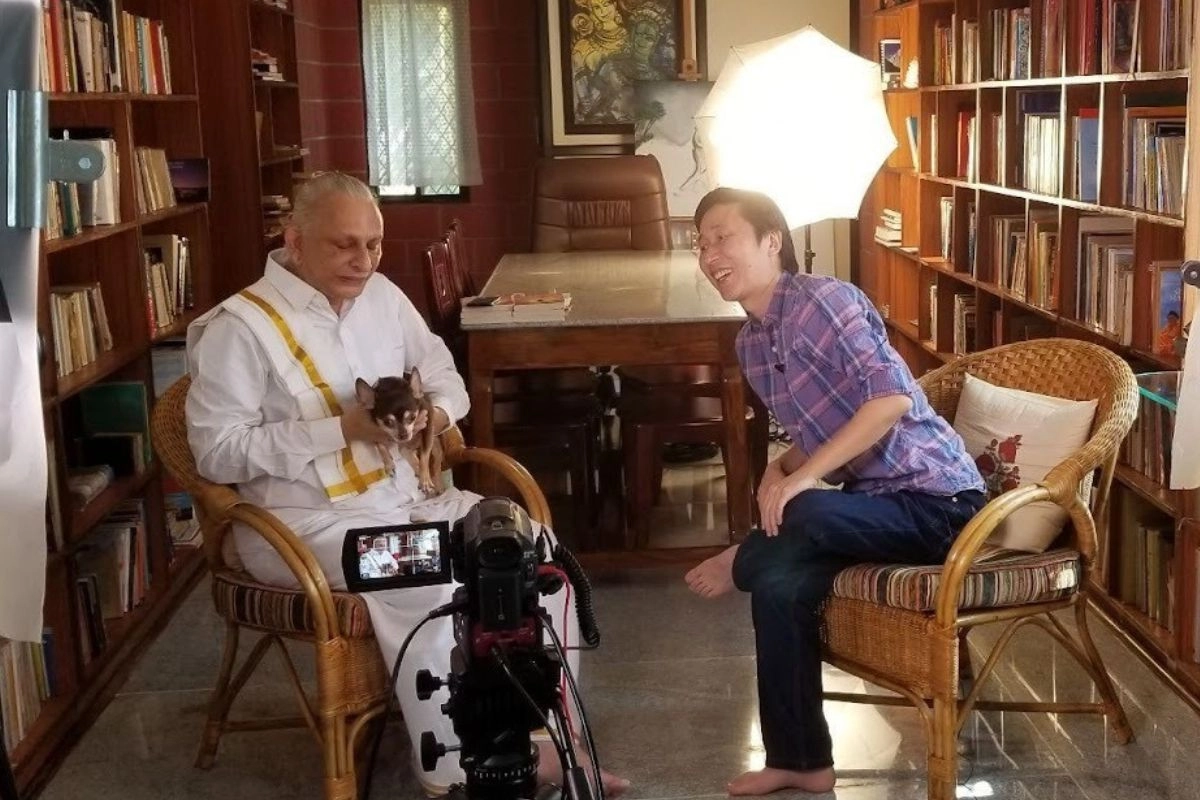
Hello, my name is Sam Moon and, over the course of the next few months, I will attempt to trace the winding, often surprising path that led me to becoming a Satsangis. The story will include why I came to India in the first place, how I learned about Sri M, and how I was given the privilege to do a couple of youtube interviews with him discussing the connection between science, the Upanishads and consciousness. Along the way, I’ll share my experiences volunteering at a number of Sri M led initiatives including the Peepal Grove School, Satsang Vidyalaya and the Satsang Skill Development Center as well as my experience attending the BYK Yoga Teacher Training Course in December 2025.
To begin, when I first came to India back in 2017, I have to admit, I knew very little about the Indian people, society, culture or even the spiritual teachings for that matter. So it came as a big surprise to my wife, Diane, when I told her I needed to make a trip to India. In fact, Diane had been following India spirituality for many years and had constantly been asking me to visit India as one of our vacation spots. Our conversations usually went like this:
Diane: “Let’s go to India this winter for our vacation! There are so many spiritual places I want to visit!”
Sam: “Why would we want to go to such a silly place? It’s so far and I have Indian friends who tell me not to go. They say that they escaped the place and wouldn’t even go back themselves…lets go to (insert any one of Cuba/Las Vegas/Mexico/Florida) instead”
Diane: “Ok fine…but let’s make a trip to India one day…”
You see, I grew up loving science and mathematics, which at the time, left very little room for spirituality or religion. I thought Diane’s interest in spirituality was a passing interest and didn’t think too much about it.
It was in 2016/2017 that I really started questioning the things I knew. At the time, I was researching AI/Machine Learning and it got me to thinking that it took so much hardware and programming to get machines to do the simplest things, yet somehow we are born and intelligence seems to emerge out of nowhere so effortlessly, without the need of a programmer.
The mathematics that first caught my attention as a way to understand how intelligence or consciousness might emerge in nature was fractal geometry. I won’t dive into fractal geometry just yet (I’ll save that for when I talk about my interview with Sri M), but I will say this: Diane somehow managed to convince me that there was a real connection between this mathematics and Indian spirituality. And the more I looked into this, the more striking that connection felt-so much so that I began to wonder whether ancient Indians had already grasped the essence of fractal geometry, and that modern mathematicians were simply rediscovering insights that had been known all along.
Through Diane’s coaxing, I even started to listen to talks from spiritual leaders from India. I have to say I was mesmerized by these talks. It seemed like they knew so much about the human condition and why people can’t seem to stay happy.
So my thought was, why don’t I go volunteer at one of in India and see if I can learn more about the connection between science and spirituality. At the time, I was transitioning from a career in finance (which I had worked at for ~10 years) and was trying to get back to my computer engineering roots (which was what I studied in undergrad). As mentioned earlier, in 2016/2017 I was researching into AI and I was in the stages of writing a paper on how to use AI to create autonomous Uncrewed Aerial Systems (UAS or more simply drones). I felt I could finish writing the paper while volunteering.
The next day, I reached out to few well known places to let them know about my desire to volunteer at their schools. The conversations did not go the way I had hoped. I won’t get into too much detail but they were very adamant that I could only volunteer with them if I completed their yoga programs, which would have delayed me for several months. I didn’t want to wait that long and after many unsuccessful attempts to convince them over Skype, I thought maybe I would be able to convince them better in person. That was when I decided to travel to India and visit there centre.
I can still clearly remember the day that I made the decision to go to India. My emotions were all over the place-excitement, fear, joy, and anxiety taking turns in the spotlight. That night, I wasn’t able to sleep at all and I lay in bed wondering whether I was making the right decision. Around 4am, something shifted, and I came to the decision that I would go to India and, whatever happened, I would just try and accept all the moments and enjoy the whole process. It was then that a calmness came over me and an overwhelming sense that I was doing what I needed to do. Tears came involuntarily and I cried silently for a while and finally was able to drift to a fitful sleep.
I spoke with Diane the next day about my intentions to go to India. The conversations were uncomfortable to say the least, and led to some broken dishes. Diane had just started a new job and was unable to make a trip out to India so early into her job. She definitely didn’t think it was fair that I would go to India without her. While I did agree with her reasoning, I had an uncontrollable need and burning desire to go. After a long discussion (argument?), Diane relented and accepted my decision.
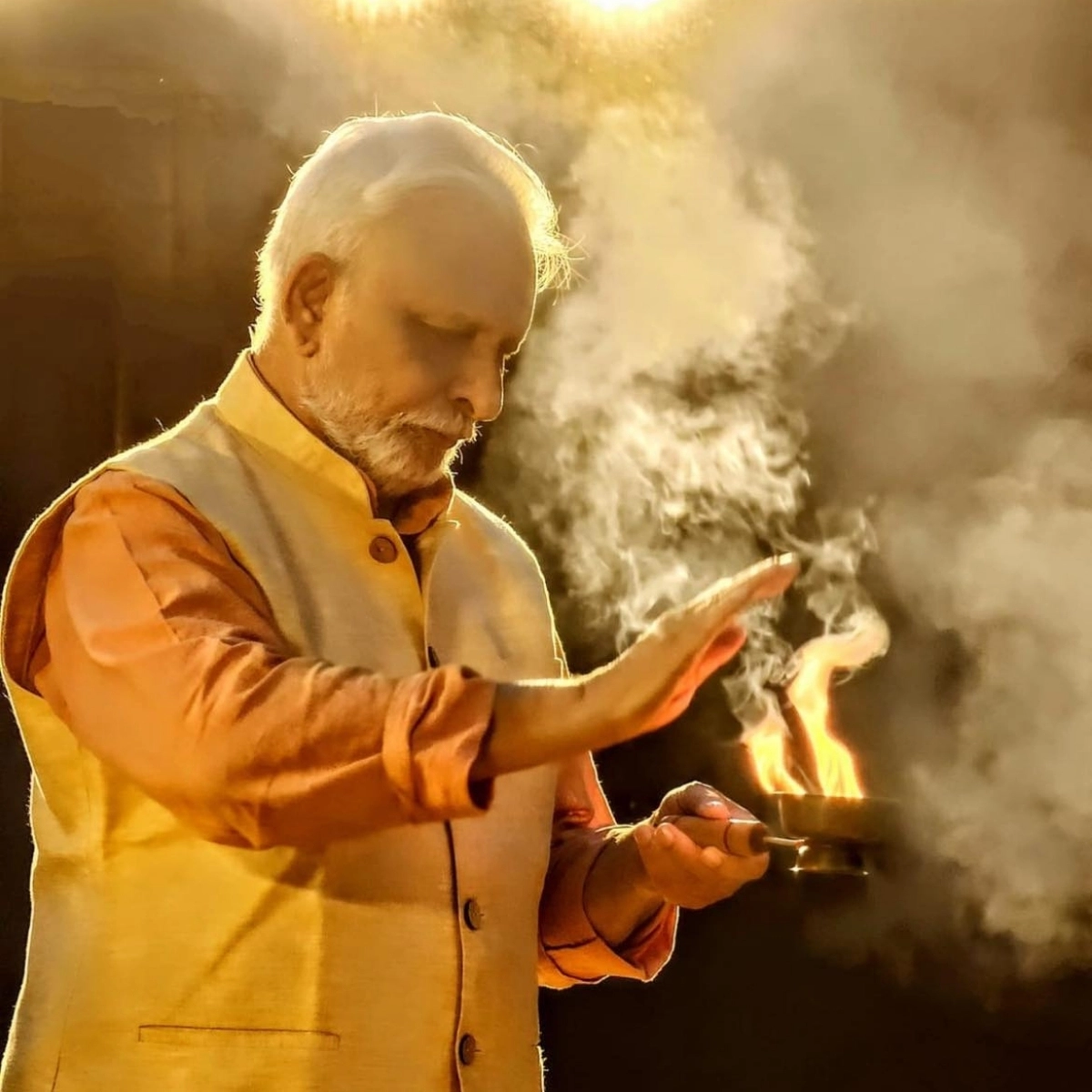
I booked the first available flight to India which was in November 2017. My flight took me from Toronto-Frankfurt-Delhi. It was on the flight to Delhi that I met a gentleman by the name of Prabs (short for Prabakur).
I have to say, even to this day, I have never gotten into a conversation with a stranger on a flight before- except this one time. For some reason, I got to speaking with Prabs and he was curious about what brought me to India. I let him know about my plan to volunteer and to learn more about the connection between science and Indian spirituality. Prabs was a founder of an AI startup and had a spiritual upbringing (being from the Brahmin caste) so was very intrigued with my background and reason for coming to India. It was during our talk that Sri M came up.
Prabs: “That is a very interesting story. Have you heard of another spiritual teacher by the name of Sri M by any chance?”
Sam: “Sir who? How do you spell that?”
Prabs: “S R I, Sri is like sir and has a similar meaning and M as in M
Sam: “His name is M??”
Prabs: “Haha yes, Sri M is not as well known, because he is much more low-key, than other spiritual leaders but his understanding of the spiritual scriptures is extraordinary.”
At the time, I thought it was strange that a person had a letter for a name and I was still focused on the center I had planned to visit so I wrote his name into my notebook and didn’t think too much about it. Prabs and I also exchanged contact details and he said if I happened to make my way to Delhi that I should give him a call.
I had no idea that this simple seeming conversation would have such a profound impact on my life.
Satsang is a Sanskrit term derived from sat (meaning truth) and sangha (meaning company/community) and refers to gathering with like-minded individuals, often with a guru, to listen to spiritual teachings aimed at elevating consciousness and fostering spiritual growth
Ayurvedic Wisdom
Purification Through Bhakthi in Ayurveda

Bhakti, or devoted love and surrender, is used in Ayurveda as a profound psychological and spiritual tool to promote healing, mental balance, and emotional well-being by cultivating a sattvic (pure) mind. It functions by reducing stress-induced illnesses, fostering inner peace through devotion, and connecting individual consciousness with higher, natural energies.
Integration of Bhakti in Ayurveda
- Cultivating Sattva (Purity): Bhakti is considered a way to cleanse the mind of Rajas (passion/action) and Tamas (inactivity), fostering a Sattvic state essential for holistic health.
- Mind-Body Connection: Devotional practices reduce stress, anxiety, and depression, which are seen as root causes of many psychological and physical ailments.
- Ritualistic Practices (Pooja): Devotional actions, such as offering prayers, chanting, and singing, are used to elevate the mind and create a peaceful, healing environment.
- Lifestyle and Rituals: Incorporating Bhakti into daily routines (Dinacharya) through meditation, chanting, or visiting holy places helps in spiritual and emotional healing.
- Surrender and Trust: Bhakti helps individuals let go of the need for total control, reducing mental burden and fostering a sense of trust in a higher power.
- Healing Through Intention: The emotional state of love, compassion, and gratitude inherent in Bhakti is believed to promote overall health and wellbeing.
In essence, Bhakti in Ayurveda is used to achieve a state of harmony by nurturing the spiritual and mental aspects of a person, complementing physical therapies and dietary adjustments.
TESTIMONIALS
YogaM
Namaste everyone.
I’m thankful that I got the opportunity to join YogaM Course and learn so much. Today I was able to overcome one of my biggest fears and do yoga by myself. Thank you so much Vivek for teaching us every asana step by step and thank you so much dear sanghis for encouraging and sharing experiences, I’m extremely grateful for the way this year has unfolded.
Shweta Prabhu Verleker
YogaM, January 2026 Batch
Upcoming Courses & Retreats
![Logo of Bharat Yogavidya Kendra [BYK]](https://bharatyogavidyakendra.in/wp-content/uploads/2025/07/BYK-Logo-300px.png "BYK-Logo-300px")
Thank you for reading
In this issue of Yogavidya, we have:
- Purify Through Devotion
- Talk with M
- Spiritual Cleansing Through Devotion
- Narada Bhakti Sutras by Swami Chinmayananda
- Purify Through Emotion
- Bhakthi: The Heart’s purification path
- Bhakti in Real Life
- Journey of a Satsangi Part 1: His name is M?
- Purification Through Bhakthi in Ayurveda
- YogaM
- Yogavidya | BYK Monthly Newsletter