Yoga Vasishtha: The Mind That Makes the World
Last month we read two of the Yoga Upanishads. One of them had a line we kept coming back to. The mind is the cause of both bondage and freedom. This month we read a text that takes that one line and unfolds it into thirty-two thousand verses.
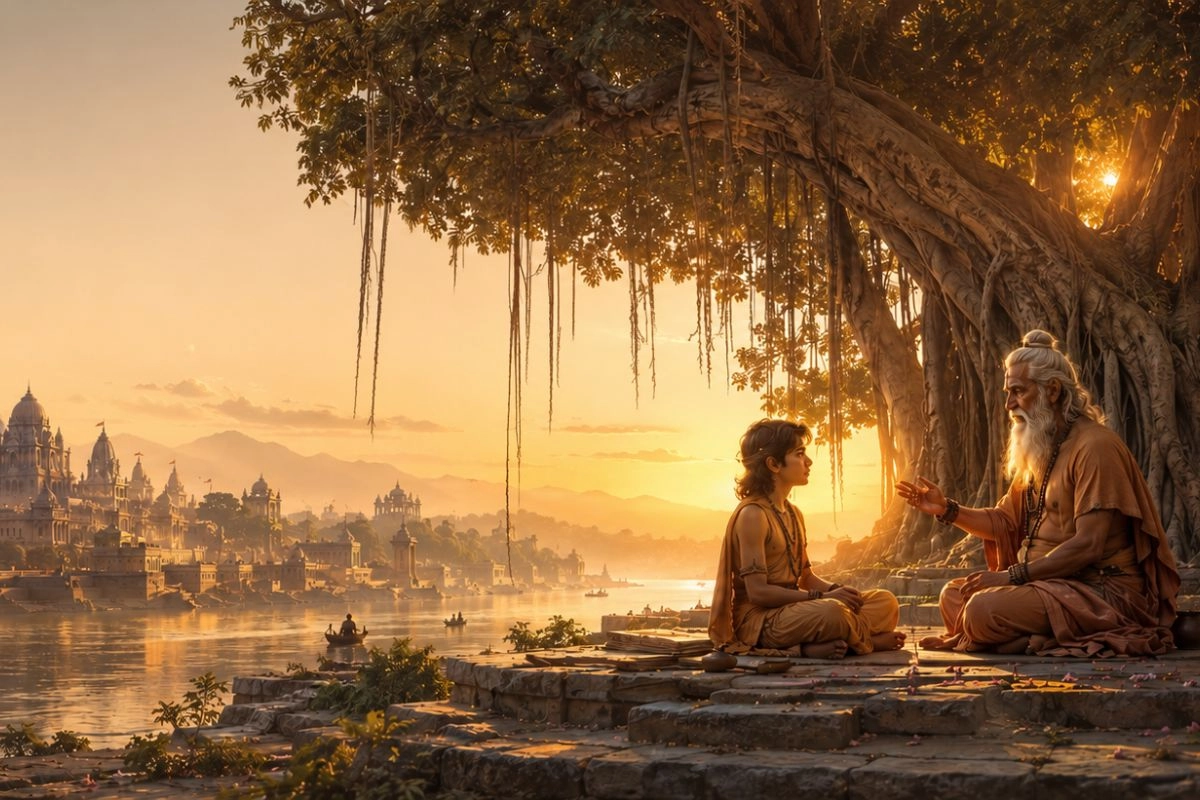
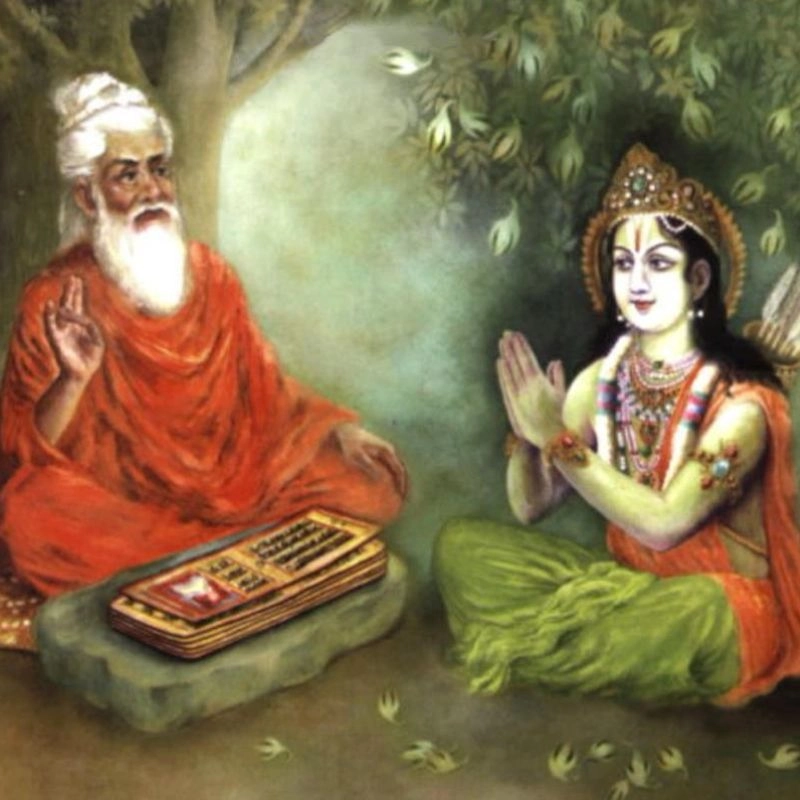
The Yoga Vasishtha is a long conversation between the sage Vasishtha and the young prince Rama. Rama has just come back from a journey through the kingdoms. He has seen what people chase, and what is left of them at the end. He sits in his father’s court and refuses to do anything. The questions he asks are not the kind a young prince is supposed to ask. What is the point of any of this? Why does nothing finally last?
Vasishtha does not try to comfort him. He says — yes, you are right, the world as you have been seeing it is hollow. But the trouble is not with the world. The trouble is with the seeing.
The text is full of stories. One tells of Queen Lila, who finds out that her dead husband is alive in another world, and that other world is happening inside this one. Another tells of Chudala, a queen who became free quietly while her husband, the king, went off to look for freedom in the forest. Each story is making the same point a different way. The world we live in is mostly the mind’s own work.
The Yoga Upanishads gave us a line. The Yoga Vasishtha takes the same line and turns it over for thousands of pages.
The text is long. There is no hurry.
Om Tat Sat.
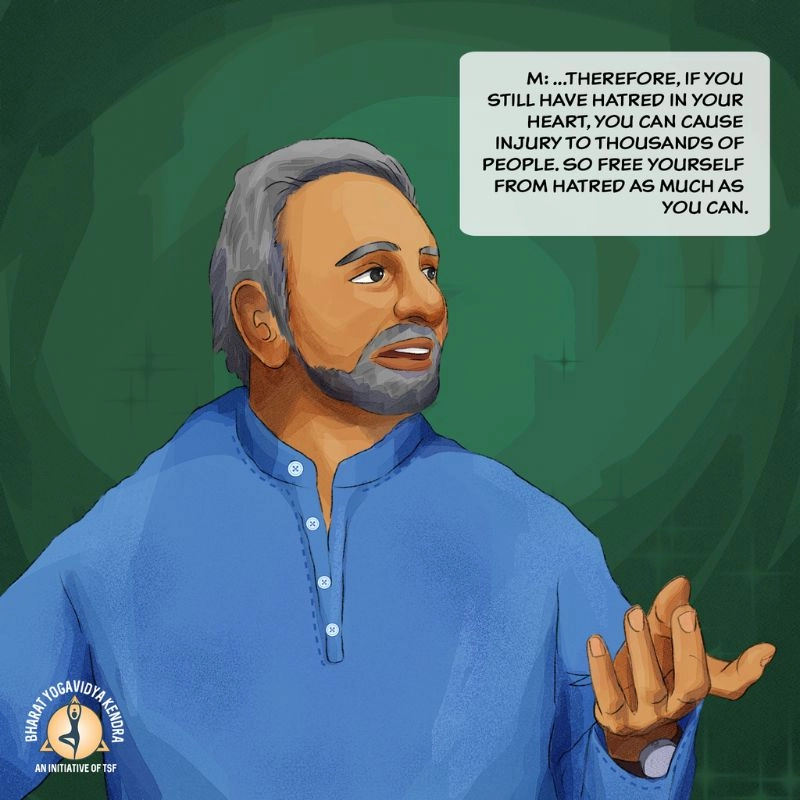
Four Gatekeepers to Freedom | Yoga Vasishtha | Sri M
Sri M Explains
Talk with M
BLOG POST
Chittam Eva Hi Samsarah (The Mind Itself is the World)
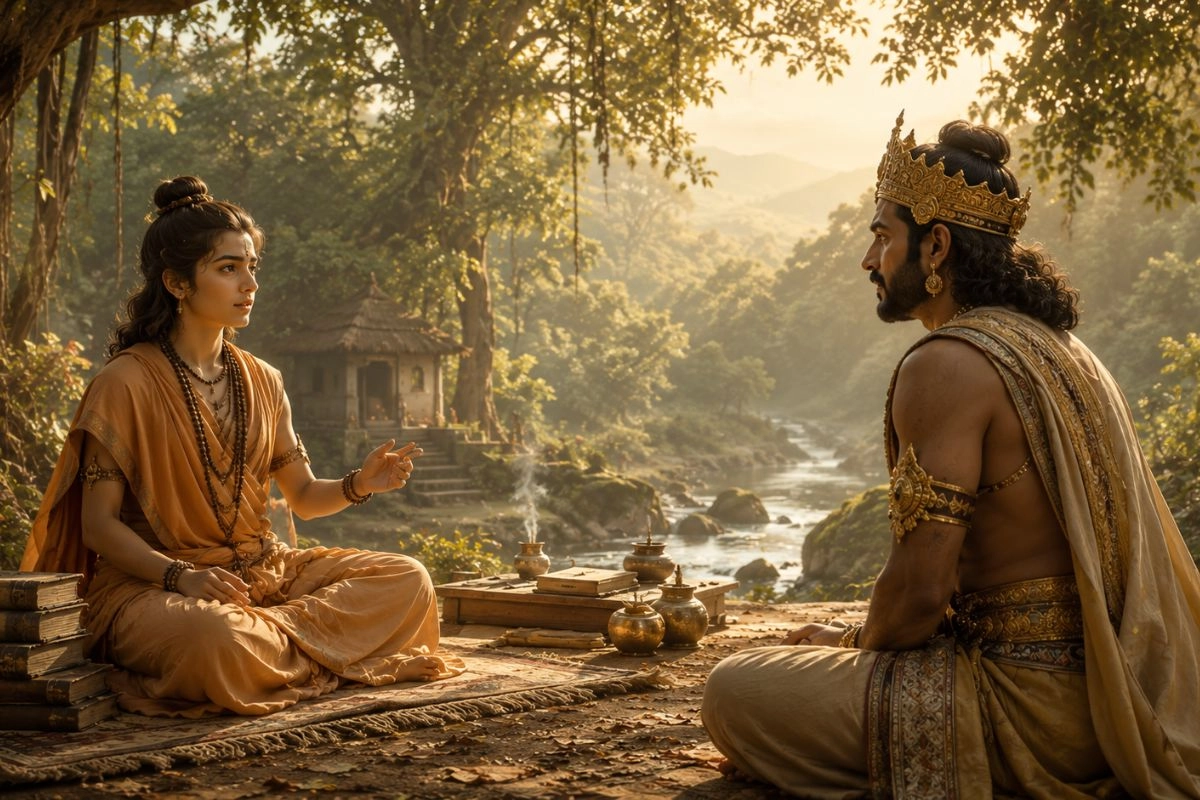
The Yoga Vasishtha is one of the longest books in our tradition. About thirty-two thousand verses. It is the kind of book most people start and never finish, and that is fine. It was not really meant to be read straight through.
It is attributed to Valmiki, the same Valmiki who wrote the Ramayana, though it is not really a story of Rama. It is a conversation. The young prince Rama, only sixteen, has come back from a journey across the kingdoms. He has seen everything a young prince could see, and instead of being delighted with it, he is heavy. He sits in his father’s court and refuses to do anything. He has the kind of question you cannot answer in a sentence. What is all this for? Why does nothing finally satisfy?
His teacher, the sage Vasishtha, is called. And what follows — the text says it goes on for many days — is the whole long answer.
Vasishtha does not try to cheer him up. He takes the question seriously. He says — yes, you are right, the world as you have been seeing it is hollow. But the trouble is not with the world. The trouble is with the seeing.
—
Last month we read a line from the Amrita Bindu Upanishad. *Mana eva manushyanam karanam bandha mokshayoh.* The mind, for a human being, is the cause of both bondage and freedom. The Yoga Vasishtha picks up that line and pushes it further. The mind is not just the cause of how you feel about the world. The mind is the cause of the world itself.
This is a strong claim. The text spends thirty-two thousand verses making it.
The Sanskrit phrase the Vasishtha comes back to is *chittam eva hi samsarah.* The mind itself is samsara. There is no separate world outside, waiting to either trouble you or set you free. There is the mind, and what the mind sees, and what the mind sees is what we call the world.
Sir has put it this way many times. We do not see things as they are. We see them as we are. Two people walk into the same room. One sees an old friend. The other sees a rival. The room is not doing anything different. The mind is.
The Yoga Vasishtha is making Sir’s point, but it pushes it further than we are usually comfortable going. Everything we experience — the room, the friend, the rival, the day, the body itself — is mind. The book is not saying the mind colours the world. It is saying the mind makes it.
The first time one hears this, it sounds wrong. The book knows this. It does not argue. It tells stories.
—
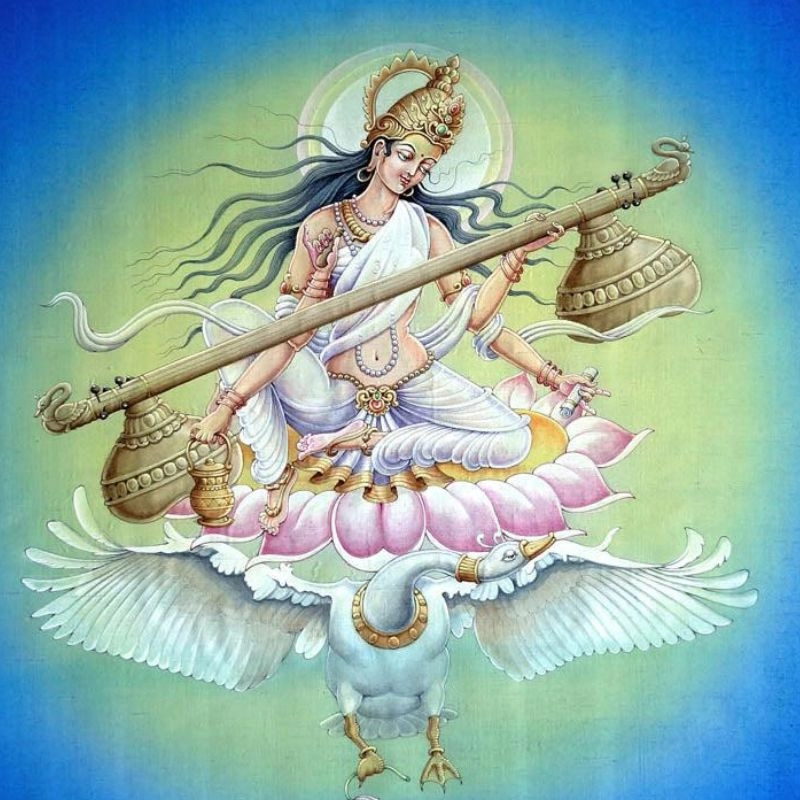
Queen Lila’s husband, King Padma, dies suddenly. Lila is in deep grief. She refuses to let his body be moved from the chamber. She prays to the goddess Saraswati. The goddess appears and tells her something strange. Your husband is not gone, exactly. His spirit has continued, and is now alive in another world, where he is another king with another name.
Lila asks to see. Saraswati takes her, in awareness, into that other world. They find Padma there, living another life. He has his own kingdom, his own queen, his own troubles. He has no memory of the life he lived with Lila. To him, this is the only life he has ever known.
Then the story does something stranger. Saraswati shows Lila that the world they have just visited is happening inside this one. And this one is happening inside another. What looks like a long lifetime in one world is, in another, only a few moments. Worlds inside worlds, the way a dream can hold a whole day even though you have been asleep for ten minutes.
The story is not asking us to take parallel worlds literally. It is pointing at something we already know but do not stop to look at. In a dream, an entire life can happen in five minutes of clock time. The dream felt long because the dreaming mind made it long. When we wake up, we say it was only a dream. The Vasishtha is saying that what we call waking is not as different from this as we assume.
If the mind can make a whole world in five minutes of sleep, what is it doing in the sixteen hours we are awake?
—
Queen Chudala and her husband, King Sikhidhvaja, were both seekers. But it was she who, through quiet practice, became free first. He kept looking. He was the king, he was the man, he was the one who was supposed to be the teacher in the household, and yet she had found what he was after, and he had not.
She tried to tell him what she had seen. He could not hear it. The mind that says “she is my wife, what does she know that I do not” is a stubborn mind. He decided his peace must be somewhere else. In the forest, away from the palace, away from her. He left.
For years he wandered and practiced austerities. He found nothing. Chudala watched all this from a distance, with affection. After some time she tried a different approach. Using her own yogic mastery, she took the form of a young Brahmin boy named Kumbha and went to him as a teacher. He, who could not accept his wife as a teacher, accepted Kumbha at once. And through Kumbha, slowly, over years, she led him home.
At the end of the story she reveals herself, and he sees what he had been refusing to see all along.
The point of the story is not that wives are wiser than husbands, though it is fine to read it that way. The point is closer to us than that. There is something we already know, very near, that we keep refusing to hear because of how it looks or who it is coming from. The teaching is right there. We make the form an obstacle. The same mind that builds the world also builds the wall we then cannot see through.
—
A word the Yoga Vasishtha returns to again and again is *vasana.* A vasana is a kind of residue. Every time the mind has gone after something — a craving, an old fear — a faint impression is left behind. The next time something similar comes up, the impression makes the mind tilt that way without our noticing. Over a lifetime, these impressions thicken into the personality we think of as ourselves.
The Vasishtha says the world we experience is not really being made by the mind freshly in the moment. It is being made by the vasanas the mind is already full of. We see what we have been trained to see. We feel what we have been trained to feel. Most of waking life is old vasanas playing themselves out.
The instruction that comes out of this is a simple one. Watch the mind. Notice what comes up again and again. Do not act on it; do not push it away. Just see it. When a vasana is seen clearly, without being fed, it weakens. When the vasanas weaken, the mind quiets, and what was always there underneath becomes available.
The text has a phrase for this state, *mano-nasha,* sometimes translated as the destruction of the mind. That sounds dramatic. What it actually means is gentler. The mind does not go anywhere. The vasanas loosen their hold, and the mind stops getting in the way of what it is looking at.
—
Sit in the morning, as usual. Watch the breath, as we were doing last month with the Hamsa Upanishad. This month, when a thought comes up — and it will, again and again — try one small thing. Instead of pushing it away or following it, ask quietly: where did this come from? Not in an analytical way. Just notice. A worry comes. Is this worry new, or has the mind been making this same worry for years? A judgment comes about someone. Is the judgment about them, or about a pattern in the mind that has been waiting for someone to land on?
After a while you will find that most of what the mind serves up is not new. It is old material being replayed. The Yoga Vasishtha is pointing at exactly this. The mind that sees its own pattern is no longer fully inside the pattern.
During the day, when something has set you off, pause for a moment. Ask: what part of this is the situation, and what part has the mind brought to it on its own? The answer is usually uncomfortable. More of it is ours than we think.
This is what Lila saw when Saraswati took her through the worlds. This is what Sikhidhvaja finally accepted from Chudala. The world is what it is. But the world we are usually living in, full of our reactions and stories and old hurts, is not quite the world. It is mostly the mind we are looking at.
—
The Yoga Vasishtha does not finish quickly. It tells story after story, sometimes for thousands of verses. The point is not that we will read all of it. The point is that the mind needs to hear the same thing many times, in many forms, before it lets go.
Pick one story and stay with it for a while. That is enough for a month.
Om Tat Sat.
BOOK REVIEW
Yoga Vasishtha
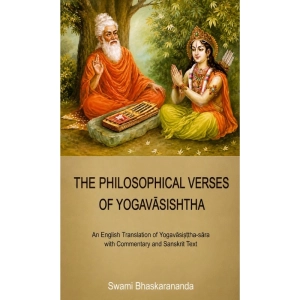
Yoga Vāsiṣṭha is not merely a philosophical scripture; it is a profound inner dialogue between the seeker and the seer, between the questioning mind of Śrī Rāma and the wisdom-filled vision of Sage Vasiṣṭha. The book addresses one of the deepest human questions: Why does the mind suffer, and how can one become truly free?
At the heart of the text is young Rāma’s intense dispassion. Having observed the impermanence of worldly life, the limitations of pleasure, and the uncertainty of human existence, he becomes inwardly restless. His sorrow is not ordinary sadness; it is the beginning of spiritual awakening. Sage Vasiṣṭha does not dismiss this state. Instead, he guides Rāma patiently, showing that sincere enquiry, right understanding, and direct knowledge of the Self are the true remedies for sorrow.
The central teaching of Yoga Vāsiṣṭha is that the world we experience is deeply shaped by the mind. Bondage is not imposed from outside; it arises through thought, desire, memory, imagination, and identification. When the mind mistakes the unreal for the real, it becomes bound. When it sees clearly, the same mind becomes quiet, spacious, and free. The text repeatedly points out that liberation is not the creation of a new state, but the recognition of what has always been true.
One of the most powerful messages of the book is the importance of self-effort. Yoga Vāsiṣṭha does not encourage passive belief or blind dependence on fate. It teaches that wisdom must be lived through discrimination, enquiry, discipline, and inner clarity. The seeker is asked to examine life carefully, understand the nature of the mind, and rise above mechanical habits.
Another key theme is the role of desire and latent tendencies, known as vāsanās. These tendencies silently shape our thoughts, actions, relationships, and repeated patterns of suffering. The text shows that the mind becomes restless because of these impressions. When they are understood and weakened through awareness, enquiry, and detachment, the mind becomes pure and peaceful.
In conclusion, Yoga Vāsiṣṭha is a scripture of inner awakening. It teaches that life becomes sacred when guided by enquiry, wisdom, contentment, and Self-knowledge. For every sincere seeker, it remains a luminous guide from sorrow to clarity, from confusion to wisdom, and from bondage to freedom.
ALUMNI CONTRIBUTION
Beyond the Funeral Pyre: Goddess Saraswathi’s Ultimate Lesson on Reality
The Yoga Vaashista is considered an advaitic text which explains the Advaita Vedanta philosophy in the form of a dialog between Sri Rama and his Guru Vaashista. It is said to be composed by Sage Valmiki . Many scholars say that the Yoga Vaashista, is a work which combines different, often thought to be opposing philosophies , like Vedanta, Jainism, Sankhya, Yoga, Tantra and even Buddhism.
In his book “The philosophy of yoga Vaashista” the author BL Athreya says – “The story of Queen Lilaa in the Yoga Vaashista is one of the most philosophically dense stories .This story is in Utpatti Prakarana as Lilopakhyana.”
The Gist of the Story –
There was on earth a king named Padma who was an abode of virtue,wisdom and courage. He had a wife called Lilaa, accomplished , beautiful, wise and the king’s alter ego. They lead an ideal life and enjoy life to the fullest. Lilaa loved her husband intensely and did not want to lose him to death. So she propitiated goddess Sarasvathi with intense austerities , who offered her two boons –
– one she would come to her side whenever the queen prayed to her ,
– and that the king’s soul (Jiva) would not leave the confines of the palace even after his death.
The king was mortally wounded in the battle a few years later and died in the palace. The queen Lilaa, sunk in grief, immediately prayed to goddess Sarasvathi who immediately appeared before her .The goddess asked her to cover the king’s physical body with flowers so that it does not decay and promised her that the soul would not leave the palace.
But Lilaa wanted to know where her husband’s soul was.Goddess Sarasvathi reveals that her husband has actually not gone anywhere.
She guides Lilaa into a subtler states of awareness.
She explains reality through three kinds of space or Aakaasha –
- BhutAakaasha (physical space).
- ChittAakaasha (mental space)
- ChidAakaasha (infinite space of pure consciousness).
Queen Lilaa has the same idea of space as all of us, the physical space or bhutaAakaasha where every person is separate from another . Kingdoms, people, objects exist outside and separate from us. Death means disappearance , and travel means movement from one point to another, distances feel real and all objects seem to occupy space separate from each other.
Slowly the goddess Sarasvathi reveals the experience shaped by the mind .This is the ChittAakaasha which is the field of our thoughts , imagination, memory, emotions,dreams, subtle impressions and mental projections.
Deeper and subtler is the infinite space of consciousness ChidAakaasha where one enters through intense meditation . Here the goddess says, Lilaa will be able to experience the presence of her husband whose existence continues in consciousness.Physical death does not mean non-existence. He continues to live experientially in consciousness. All movement in space is actually a movement within consciousness. Since it is infinite all spaces exist within consciousness and there is no far or near, and entire universes can appear in what feels like tiny spaces in the physical world.
To Lilaa’s amazement, within the very room of the palace where the king’s body lay , she saw another complete world. In that world her husband was alive again, ruling as another king in another kingdom.
Saraswathi explained that before being King Padma, he had been a poor braahmana Vaashista living with his wife Arundhatī. Though virtuous, he secretly longed for royal power and splendour. Eventually the braahmana died. Because his mind was filled with the strong vāsanā of being a king, consciousness immediately projected another experiential world in which he was born as King Padma.
The hut of that dead braahmana Vaashista still existed — and within its subtle space the entire kingdom of Padma had appeared. Lilaa realized that the vast royal world she had lived in for many decades was somehow contained within the subtle “space” connected to Padma’s previous life as Vaashista.
Even more shocking was the difference in time flow. From the standpoint of Padma’s kingdom, many years had passed – a full royal life with marriage, as a king , pleasures of life with his wife , and death. But in the realm connected to the braahmana’s original life, only a few days had elapsed since his death.
Lilaa became bewildered. How could an entire lifetime fit into what was, from the standpoint of Vaashista’s life, only a brief interval? How could a huge kingdom exist within such a tiny space?
The goddess then took Lilaa deeper into these subtle worlds. They arrived in another kingdom ruled by King Vidurathaa. Lilaa discovered that Vidurathaa too was actually her husband appearing in yet another form. To Vidurathaa himself, however, his own life and kingdom seemed completely real and continuous.
While they were there, a great war broke out. Vidurathaa fought bravely but was eventually killed in battle. Saraswathi then showed Lilaa what happened after his death. Vidurathaa’s consciousness, carrying its memories and latent tendencies, moved into yet another experiential state.
As Saraswathi continued teaching her, Lilaa understood that all beings move through worlds shaped by their thoughts, desires, and latent impressions.Lilaa was then shown many strangerea lities – worlds within worlds, dreams within dreams, lives nested inside other lives. In one realm many years passed, while in another only moments had gone by.
Lessons from this story –
Pure Consciousness (Brahman) in itself is motionless, infinite, and without object. It is Transcendent. Consciousness is beyond time.
When that same consciousness vibrates toward objectivity, imagination, differentiation, and experience, it is called mind.
Everything exists within that one Consciousness. Consciousness equals ‘Is-ness.’
Space and time are relative and are not fixed realities but appearances within consciousness itself.
We learn that time is not absolute and depends on the mind .Time duration is created through the movement in the mind and by memory.
In the story of Lilaa, Saraswathi freed Lilaa from the bondage of one lifetime, as well as the notion that lifetimes take place through the sequentiality of time. All lifetimes, and in fact all that is, exist simultaneously within Consciousness.
Waking experience is not fundamentally different from dream experience; both are mental projections sustained by thought and memory.
Yoga Vaashista constantly compares waking reality to dream
- both are manifestations of mind,
- both appear solid while experienced,
- and both dissolve back into consciousness.
Queen Lilaa saw directly how beings pass from world to world according to their vāsanās, imagining each new existence to be solid and real.
Worlds are projected in consciousness just as dream worlds arise in sleep. Vast universes may appear within tiny spaces because space itself exists only as an appearance in awareness.
In this story the goddess Sarasvathi is symbolically the Divine Intellect which has Viveka or the awakened discrimination.
Queen Lilaa can be seen as consciousness delighting in its own self-projection or divine play ( Lilaa ) until wisdom reveals its true nature.
References –
The Supreme yoga by Swami Venkatesananda
The Philosophy of Yoga Vaashista by BL Athreya
YOGA GUIDE
Reframing the Mundane: Every Task as a Yogic Practice

1. For Shama (Serenity)
- Paschimottanasana (Seated Forward Bend)
Quiets the nervous system. It triggers the parasympathetic response to deeply calm a racing mind. - Savasana (Corpse Pose)
Teaches absolute physical and mental stillness. It acts as the ultimate training ground for conscious relaxation. - Sheetali / Sheetkari Pranayama (Cooling Breath)
Cools physical and mental heat. It instantly reduces irritation and mental agitation.
2. For Vichara (Inquiry)
- Sirsasana (Headstand) or Viparita Karani (Legs-Up-The-Wall)
Increases blood flow to the brain. It enhances sharp, clear intellectual focus. - Padmasana (Lotus Pose) or Siddhasana (Accomplished Pose)
Locks the body firmly. This steady, immovable base allows you to self-inquire without physical distraction. - Nadi Shodhana with Kumbhaka (Alternate Nostril with Retention)
Balances both brain hemispheres. The breath retention (Kumbhaka) suspends random thoughts, creating a blank canvas for inquiry.
3. For Santosha (Contentment)
- Balasana (Child’s Pose)
Fosters a feeling of safety, surrender, and primal comfort. It helps you feel whole exactly as you are. - Bhujangasana (Cobra Pose) or Ustrasana (Camel Pose)
Opens the heart center. Physical chest expansion releases stored emotional tension and promotes feelings of abundance. - Bhramari Pranayama (Humming Bee Breath)
Directs focus completely inward. The internal vibration blocks out external comparison and desires.
4. For Satsanga (Good Company)
- Tadasana (Mountain Pose)
Cultivates alignment, dignity, and steadiness. It prepares you to stand tall in your truth and absorb positive energy. - Vrikshasana (Tree Pose)
Builds root connection and poise. It trains the mind to remain grounded and receptive when around others. - Dirgha Pranayama (Three-Part Breath)
Expands lung capacity and body awareness. Deep, conscious breathing builds the presence needed to fully engage with spiritual company.
YOGA RESOURCE
The Single-Quality Strategy for Total Spiritual Transformation
1. Shama (Serenity or Calmness)
The text views Shama as the bedrock of all spiritual progress. It is the state where the
mind is completely unruffled by the storms of desire, aversion, fear, or anxiety.
- The Textual View: Sage Vasistha states that for a person possessing Shama, the entire universe cools down. The text uses the metaphor that to a person wearing shoes, the whole earth feels covered in smooth leather. Similarly, to a serene mind, the entire world is full of peace.
- The Mechanism: Shama is achieved by understanding the illusory nature of external objects. When you realize that worldly objects cannot provide permanent happiness, the mind naturally stops chasing them and settles into its own true nature.
- The Fruit: It brings an unshakeable, quiet joy that is entirely independent of external circumstances.Guru/Spiritual Leader View
- The Technical Vedantic View (Chinmaya Mission / Br. Ved Chaitanya): Teachers of the Chinmaya Mission emphasize that Shama is a highly technical term. It shouldn’t be confused with passive peace or merely sitting quietly. They explain it like the term work in physics—it requires specific, applied energy. Shama is the active, deliberate orchestration of mind-control to redirect mental data away from outer sensory gratification.
- The Shield Against Duality (Swami Niranjanananda Saraswati): He explains Shama as an inner shield. When cravings, likes, and dislikes are conquered, the mind naturally turns inward and becomes protected from the dualities of pleasure and pain.
2. Santosha (Contentment)
Santosha is the state of being entirely satisfied with whatever comes naturally and unsought,
without craving what one does not have.
- The Textual View: The Yoga Vasistha declares Santosha to be the supreme gain and the highest bliss. A content person possesses a wealth that makes even the richest emperor seem poor.
- The Mechanism: It is not laziness or giving up action. It means performing duties wholeheartedly while letting go of anxiety regarding future results.
- The Fruit: Discontentment is the worst disease of the mind, creating endless desires. Santosha destroys this disease and provides lasting fulfillment.
Guru/Spiritual Leader View
- The Antidote to Modern Restlessness (Sri M): Contentment stabilizes the mind. Without it, a person trapped in material restlessness cannot become receptive to spiritual truth.
- The Supreme Gain (Swami Venkatesananda / Divine Life Society): A content person who may possess nothing externally actually owns the entire cosmos because the poverty of desire has been eliminated.
3. Vichara (Spiritual Inquiry)
Vichara is the sharp, analytical faculty of the intellect turned inward. It investigates the
nature of reality, the self, and the universe.
- The Textual View: Vichara is the antidote to ignorance. Wisdom arises through self-inquiry rather than blind belief, rituals, or mechanical repetition.
- The Core Questions: Who am I? How did this universe arise? What is real and what is changing?
- The Fruit: Like a lamp in a dark room, Vichara reveals truth and leads to the realization of absolute consciousness.
Guru/Spiritual Leader View
- The Ultimate Tool for Ego-Dissolution (Ramana Maharshi Lineage): Atma-Vichara is viewed as the master key that removes conditioning and ego until only pure consciousness remains.
- The Reality Check (Swami Suryadevananda): Vichara is a process of unlearning that encourages direct evaluation of reality in the present moment.
4. Satsanga (Association with the Wise)
Satsanga is the company of enlightened souls, sages, and spiritually evolved people who live in truth.
- The Textual View: The Yoga Vasistha praises Satsanga as the easiest and most effective means of crossing worldly existence. Even a brief encounter with a wise person can change the course of one’s life.
- The Mechanism: Human minds are impressionable. The peace, wisdom, and clarity of enlightened beings naturally influence and uplift others.
- The Fruit: Satsanga acts as a safety net, lifting a seeker back onto the path whenever personal effort weakens.
Guru/Spiritual Leader View
- The Human Catalyst (Chinmaya Mission): Enlightened environments naturally transform the mind, replacing negative tendencies with goodness and wisdom.
- The Ultimate Safety Net (Swami Sivananda / Divine Life Society): Holy company and guidance help seekers return to the spiritual path whenever worldly distractions pull them away.
The Interconnected Strategy
The beauty of the Yoga Vasistha’s teaching lies in its holistic unity. Sage Vasistha explicitly instructs Rama that you do not need to struggle to perfect all four simultaneously.
- Choose one Gatekeeper to Master
- Masteringly cultivate that single quality
- That guard commands the other three to serve you
- The entire gateway to liberation opens
- If you choose Vichara (Inquiry), your mind naturally becomes calm (Shama), you become content (Santosha), and you seek wise company (Satsanga).
- If you find inquiry too difficult, simply choose Satsanga (Wise Company). Their influence will automatically calm your mind, bring contentment, and spark the fire of self-inquiry within you.
COMMUNITY COLUMN
Navigating Daily Chaos: The Yoga Vasistha’s Framework for Peace

Every meaningful journey requires guidance and the journey toward self knowledge is no exception. The ancient sages identified four essential gatekeepers—forgiveness, self-inquiry, contentment, and noble company— that help seekers navigate life’s challenges and discover their true nature.
According to the wisdom of the Yoga Vasistha, liberation is approached through four gatekeepers that protect the entrance to higher understanding. These are Kshama, Vichara, Santosha, and Satsanga—qualities that guide the mind toward peace, clarity, and spiritual growth.
– The Yoga Vasistha uses powerful, destabilising questions designed to strip away your false identity and reveal your true nature
“Who am I in reality?” (Ko’ham)
This is the foundational question of the entire text. It is not an invitation to list your name, job, or roles. How to Contemplate: Look at your body and mind and think: “I am not this meat-suit, because I observe it. I am not these thoughts, because they come and go while I remain. Then who am I in reality?” The ultimate answer the Yoga Vasistha gives to the question “Who am I?” is Infinite Consciousness (Brahman or Pure Awareness).
The Goal: To separate your true self (the permanent witness) from your temporary body and ego.
To whom do these modifications of mind belong?”
When you feel a sudden surge of anger, pride, or worry, pull back immediately. Ask: “Who is the one experiencing this wave? Am I the wave of anger, or am I the ocean in which the wave rises?”
The Goal: To instantly break your identification with negative emotions and return to a state of calm
The text states that you are not a limited individual body or mind trapped in a physical world. Instead, you are the boundless ocean of consciousness in which the entire universe arises, exists, and dissolves.
Key Dimensions of the Ultimate Answer
The Reality of the Witness: You are the unchanging, eternal witness (Drasta) of all experiences. Bodies, thoughts, and universes change and pass away, but you—the absolute awareness that perceives these changes—remain untouched.
Non-Duality (Advaita): There is no division between “you” and “the divine,” or “you” and “the world.” The text uses the famous analogy of water and waves: just as waves are nothing but water, everything you perceive—including your own body—is nothing but your own supreme consciousness taking different shapes.
In the scripture, Sage Vasistha summarizes your true identity with absolute certainty:
“You are pure consciousness, untouched by the mind, body, and senses. You are birth less, deathless, and infinitely free.”
To practice the four gatekeepers effectively in modern daily life, you must treat them as an interconnected system. The Yoga Vasistha states that mastering even one unlocks the other three.
Here is a practical, structured framework to implement all four gatekeepers throughout your normal workday.
Shama is the practice of keeping the mind calm and unshakeable. Practice this first thing in the morning to set your baseline energy.
- The Technique (The 5-Minute Buffer): Do not check your phone for the first 15 minutes after waking. Spend 5 minutes sitting quietly, focusing solely on your breath.
- Daily Application: When your mind starts planning or worrying, mentally say the word “Calm” and return to the breath. You are
training your mind to remain neutral before the day’s chaos begins
Vichara is the practice of questioning your automatic thoughts and reactions. Practice this during your active hours when triggers occur.
- The Technique (The “To Whom” Intercept): When you feel an intense emotion—like annoyance at an email or anxiety about a deadline—pause for three seconds.
- Daily Application: Ask yourself internally: “Who is feeling this stress right now?” Realise that the deadline is outside, but the stress is a temporary wave passing through your mind. You are the silent witness, not the stress.
Santosha is being fully satisfied with reality as it is right now, without desperately craving more or fearing loss. Practice this at the end of your workday.
- The Technique (The “As It Is” Acceptance): When you close your laptop or finish your daily tasks, mentally declare the day “done.”
- Daily Application: Consciously drop the desire to fix, achieve, or change anything for the next hour. Tell yourself: “For right now, what I have is enough, and what I am is enough.” This breaks the loop of endless psychological craving.
Sadhu Sanga is surrounding yourself with truth and elevated thinking. Practice this before going to bed to clean your mental slate.
The Technique (The 15-Minute Truth Input): Replace late-night social media scrolling or news watching with high-quality spiritual input.
Daily Application: Read two pages of a scripture (like the Yoga Vasistha or Bhagavad Gita), listen to a philosophical podcast, or converse with someone who elevates your thinking. Let these
Sublime ideas be the last thoughts that enter your subconscious mind before sleep.
Weekly Checklist for Implementation
| Gatekeeper | Micro-Action | Trigger |
|---|---|---|
| Shama | 5 minutes of silent breathing | Upon waking up |
| Vichara | Ask “To whom does this belong?” | When feeling stressed or triggered |
| Santosha | Mentally say “This moment is enough” | When finishing the workday |
| Sadhu Sanga | Read/listen to 15 minutes of philosophy | Right before sleeping |
JOURNEY OF A SATSANGI
Journey of a Satsangis – Part 5: The Peepal Grove School
Welcome to Part 5 of the Journey of a Satsangis! In the previous episode, I had my first visit to the Satsang Vidyalaya campus in Madanapalle for the first time. For those who may be joining the story here, Part 1 of the journey began in the February BYK newsletter, with subsequent chapters continuing in later editions. Each part traces a different stage of the journey and I’m grateful to be able to share my experiences here with you.
As my week at the Satsang Vidyalaya campus drew to a close, I found myself looking forward to my upcoming visit to Peepal Grove School. I had learned that PGS was a fee-based boarding school serving students from more financially comfortable backgrounds, and that the support generated through the school helped sustain many of Sri M’s other initiatives, including the Satsang Vidyalaya school.
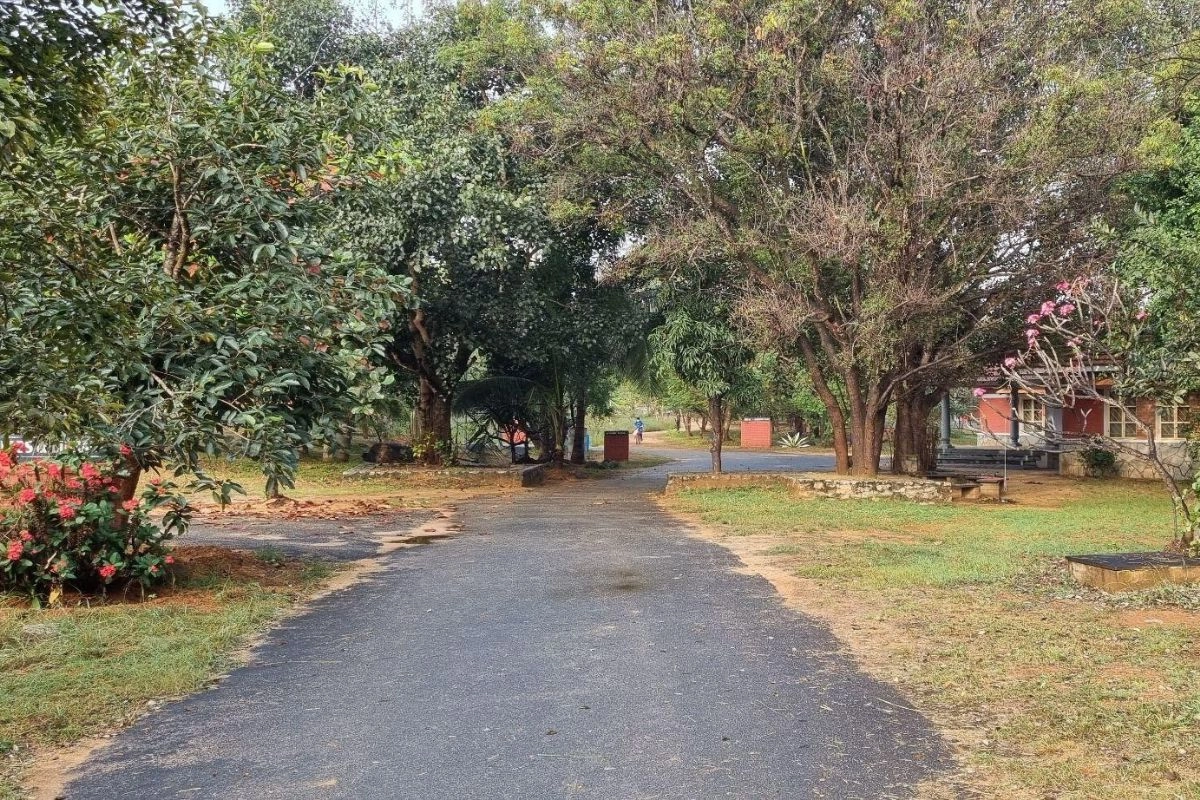
The school takes its name from the Peepal tree, the sacred tree under which Buddha is said to have attained enlightenment. As we approached the campus, I was struck by its stunning setting. The school is spread over a 30 acre campus nestled in a natural basin and encircled by hills. The basin was home to a sprawling mango grove, with hundreds of mango trees scattered throughout the campus and the surrounding countryside.
Near the main academic building stood a magnificent Peepal tree, its broad canopy providing a peaceful place where students often gathered to read and reflect. There was a sense of vitality and beauty woven into the school. From the moment I arrived, I felt an immediate connection to the place and quickly fell in love with its serene and inspiring atmosphere.
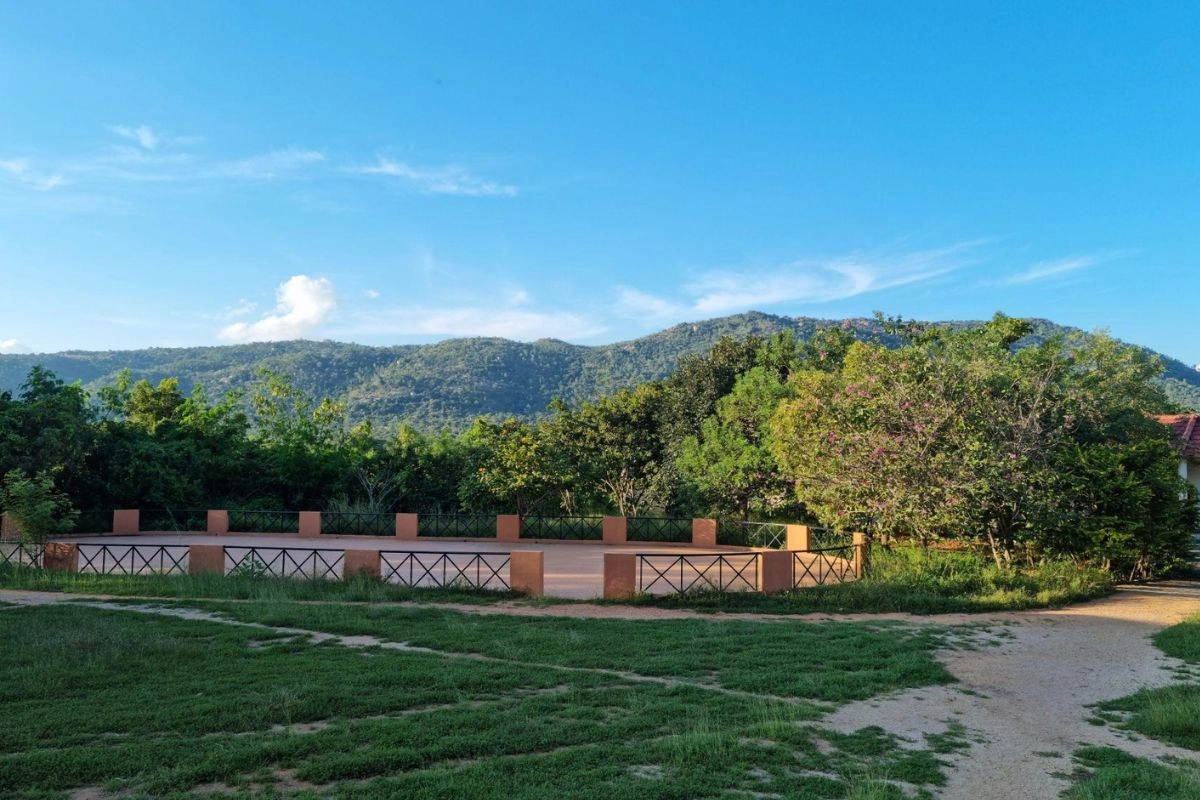
I knew almost immediately that I would love the opportunity to spend time here, exploring and reflecting on the connection between science and spirituality. As that realization settled in, I found myself growing nervous about meeting Sunanda and Viraj. I guess one of life’s little ironies is that it’s only as something begins to matter deeply to us, that the fear of losing it (or not receiving it at all) starts to creep in.
I met with Viraj shortly after arriving, and he helped me settle into a room in the guest house. He let me know that I would meet with both him and Sunanda the following day, which gave me the rest of the day to explore the campus and get acquainted with some of the teachers and students.
Viraj mentioned that the school grounds were home to a number of venomous snakes and scorpions, which made me a little uneasy, as I had not encountered many venomous animals back in Canada. I was somewhat reassured when he said that in the entire history of the school, there had never been a single incident involving a student or staff member getting bit.
Since the school was still on winter break, only a small number of teachers and students had returned early. I was happy to learn that language wouldn’t be an issue. All of the teachers and students spoke English fluently, and I learned that English was the primary language of instruction for all classes at PGS. This made it easy to strike up conversations and begin getting a feel for the community and culture of the school.
Many of the teachers at the school, as well as a number of the students’ parents, were followers of Sri M.I found the teachers and students to be very welcoming and open and were genuinely curious about what had brought me all the way from Canada to their school, and those conversations made it easy to feel at home.
In particular, I quickly formed friendships with Arvind, the art teacher, and Abhijit, the physics teacher. Both had daughters in the seventh grade at the school, and I thoroughly enjoyed spending time with them, learning about their lives, their experiences at PGS, and the close-knit community that had developed around the school.
As followers of Sri M, they also shared an interest in the relationship between science and spirituality. This led to engaging conversations, where we explored our understanding of the spiritual texts and reflected on how the ancient wisdom and modern scientific thought might intersect.
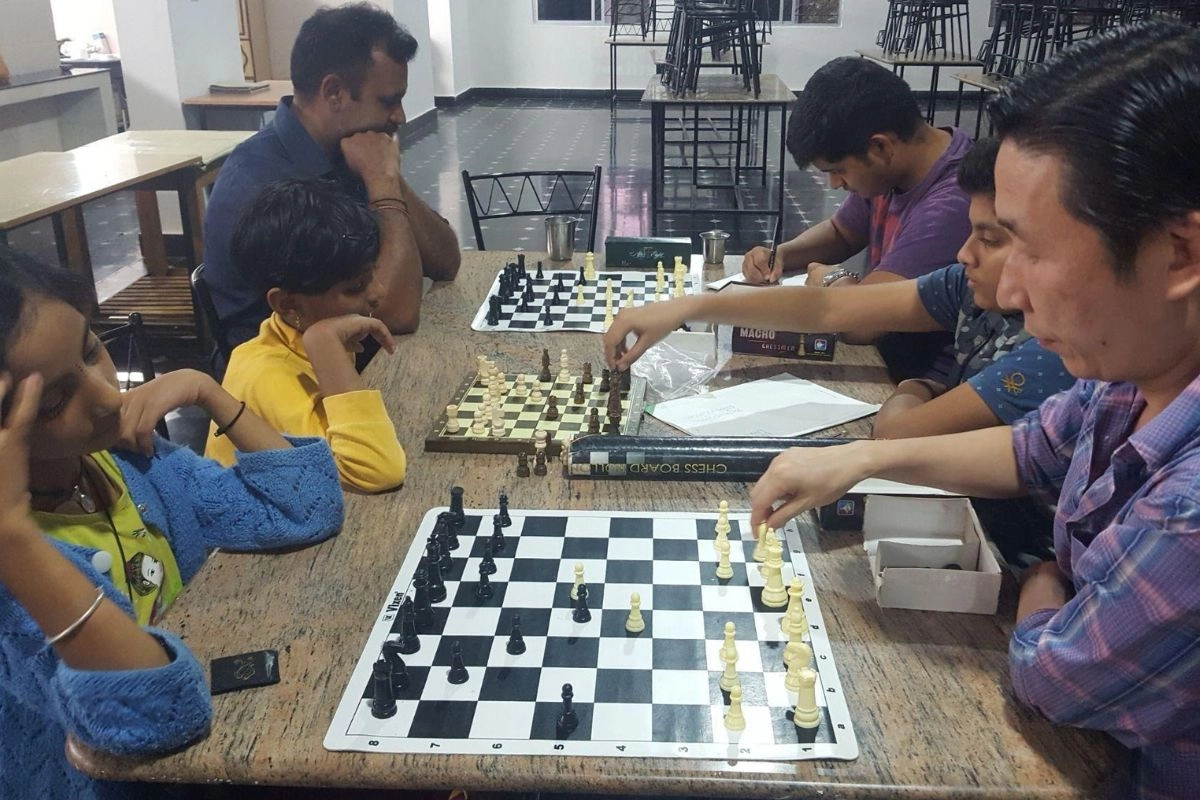
When the students learned that I was looking into teaching chess at the school, they became very excited and eagerly invited me to play a few games with them. The school had several chess boards available, so after the evening meal we gathered together and spent the next few hours playing matches. It quickly became a wonderful way to connect with the students.
I was pleasantly surprised by their level of skill. Many of them already had a solid understanding of the fundamentals, and a few demonstrated an impressive grasp of more advanced strategies and concepts and I thoroughly enjoyed the opportunity of getting to know them through the games.
The following day, I made my way to the main academic building to meet with Sunanda and Viraj. Sunanda, the wife of Sri M, was serving as the principal of the school at the time. Viraj was the school coordinator then and has since taken on the role of principal.
From the moment we met, I was struck by Sunanda’s presence. She possessed a rare combination of honesty and grace—speaking with clarity and directness, yet with a warmth and gentleness that immediately put me at ease. I quickly felt comfortable sharing what had brought me to Peepal Grove School and what I hoped to achieve during my time there.
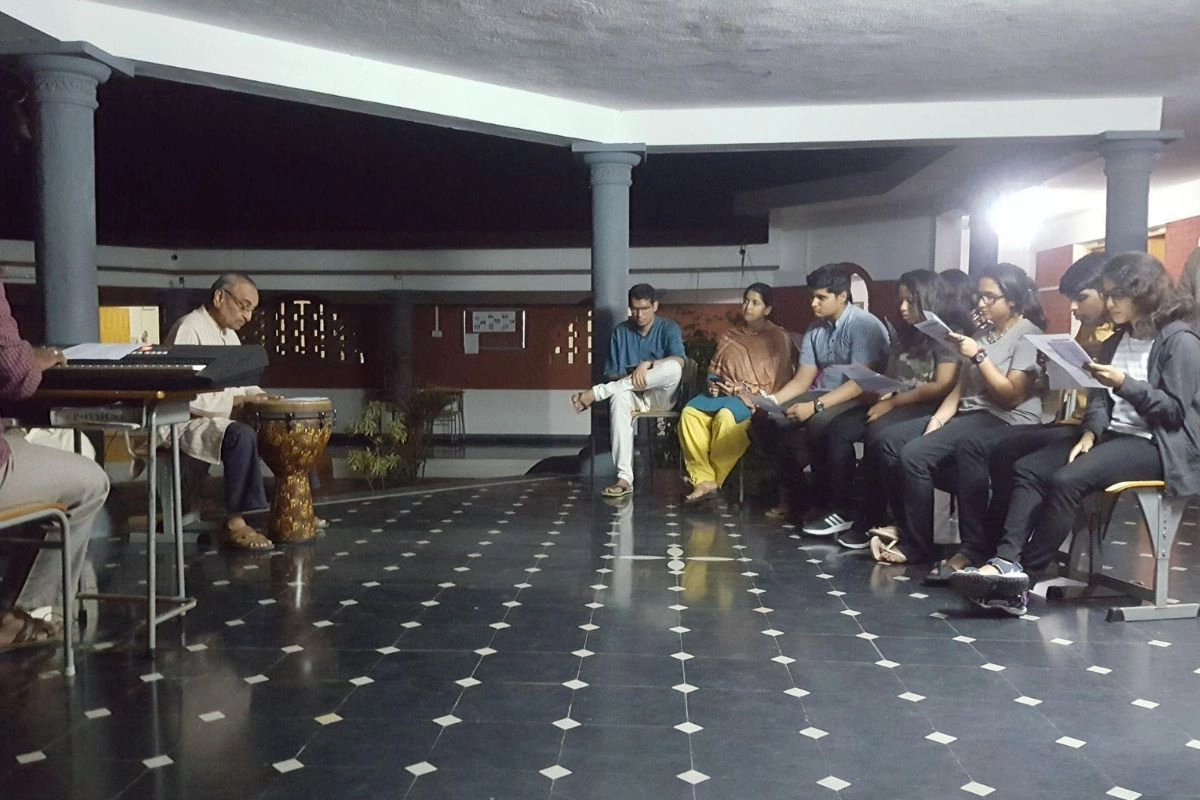
Viraj shared with me the history of the school and how it had evolved over the years. The school had been founded by Sri M and was inaugurated in December 2006 by the former President of India, Dr. A.P.J. Abdul Kalam. Both Sunanda and Viraj had been part of the school’s journey since its earliest days, and it was clear from the way they spoke about it that it was much more than just a place of learning.
Figure 4: Singing Christmas carols with the teachers and students at PGS
While academic excellence was an important part of the school’s mission, equal emphasis was placed on the holistic development of the students. Sports, art, music, dance, and yoga were all considered essential aspects of a well-rounded education. I was particularly impressed to learn that students were not permitted to have cell phones while on campus. In a world increasingly dominated by screens and constant distractions, the policy helped create an environment where students could be fully present with their studies and the natural beauty that surrounded them.
Learning more about the school only deepened my desire to spend time there. I tried to be as open and honest as I could about my desire to be a part of the school, and the meeting left me feeling very positive. Viraj explained that they would need some time to consider my application and would get back to me in a few weeks once they had worked through the logistics and assessed what the school needed. I truly hoped that things would work out, but reminded myself to accept whatever the result might be.
I spent another couple of days at the school, with one of the highlights being the evening Christmas carols we sang together with the students and teachers. There was something very special about those shared moments of music and celebration, which brought a real sense of warmth and togetherness to the campus.
As my visit came to a close, Viraj kindly helped me arrange a driver to take me to Bangalore, where I would catch a flight to Delhi to meet Diane and Prabs for Christmas and the New Year. I was also looking forward to attending my first Satsang with Sri M at the Pathway School in a couple of weeks.
To be continued…
Satsang is a Sanskrit term derived from sat (meaning truth) and sangha (meaning company/community) and refers to gathering with like-minded individuals, often with a guru, to listen to spiritual teachings aimed at elevating consciousness and fostering spiritual growth.
Ayurvedic Wisdom
The Alchemy of Manas: Aligning Ayurvedic Constitution with Spiritual Liberation

In the Yoga Vasistha, the four gatekeepers of liberation are Shama (serenity), Santosha (contentment), Vichara (spiritual inquiry), and Satsanga (good association). In Ayurveda, these philosophical concepts translate directly into practical tools for balancing Manas (the mind) and pacifying the doshas to prevent physical and mental disease and useful in clinical goals of Sattva-Vajaya (mental therapy) and Swasthavritta (preventive lifestyle) to balnce the minds energies.
Ayurvedic Application:
- This relates directly to pacifying Rajas (the energy of action/agitation) to cultivate Sattva (purity/equilibrium). Ayurveda prescribes Dinacharya (daily routines), Nasya (nasal administration of oils), and Shirodhara (continuous pouring of herbal oils) to physically calm the nervous system and achieve mental clarity.
- In Ayurveda, this serves as Prajnaparadha (the “mistake of the intellect”) prevention. Vichara represents strong Dhi (intellect) and Dhriti (retention). It allows you to discriminate between what is wholesome (Pathya) and unwholesome (Apathya) for your unique Dosha (mind-body constitution).
- Contentment stabilizes Manas (the mind).
In Ayurveda, unbridled desires and stress deplete Ojas (vitality) and lead to chronic physical and psychosomatic illnesses (Adhija Vyadhi). Santosha balances the mind by lowering the stress hormones and keeping the body’s Tridosha (Vata, Pitta, Kapha) in a steady state of equilibrium. - Satsanga builds a positive environment (Sadvritta / ethical living), which nourishes the mental Gunas. According to classic Ayurvedic texts, surrounding yourself with positivity and uplifting energy helps resolve grief, anger, and fear by constantly reinforcing healthy psychological patterns.
In conclusion, the four gatekeepers of the Yoga Vasistha serve as the ultimate psychological and behavioral framework for Ayurveda’s core goal: maintaining absolute health (Svastya).
- Mind-Body Balance: They act as practical tools to cultivate Sattva (purity), which stabilizes the mind (Manas) and prevents the erratic fluctuations of the Doshas.
- Root Cause Prevention: By practicing Shama, Santosha, Vichara, and Satsanga, an individual naturally eliminates Pragya-aparadha (intellectual errors), which Ayurveda considers the root cause of all physical and mental disease.
- Ultimately, what the Yoga Vasistha frames as steps toward spiritual liberation, Ayurveda utilizes as the foundational lifestyle medicine required for longevity, immunity, and holistic well-being.

TESTIMONIALS
It has been a month since I joined the yoga class, and honestly, in the beginning I wasn’t sure if I would be regular or continue for long. But slowly things started changing. Day by day I began to enjoy the practice, and now it has become something I truly look forward to every day.
Yoga makes me feel very soothing, calm, and relaxed. After each class my mind feels lighter and my body feels refreshed. It has become a peaceful part of my daily routine.
Another beautiful part of this experience is my trainer. He is very kind, supportive, and always smiling and laughing, which creates such a positive atmosphere in the class. His energy makes the whole session feel fresh and motivating
I’m really grateful that I started this journey. In just one month, yoga has already brought a lot of calmness and positivity into my life, and I’m excited to continue learning and growing with this practice.
From:
Anjali krishna
Yoga Sadhana Beginner
Upcoming Courses & Retreats
![Logo of Bharat Yogavidya Kendra [BYK]](https://bharatyogavidyakendra.in/wp-content/uploads/2025/07/BYK-Logo-300px.png "BYK-Logo-300px")
Thank you for reading
In this issue of Yogavidya, we have:
- Yoga Vasishtha: The Mind That Makes the World
- Four Gatekeepers to Freedom | Yoga Vasishtha | Sri M
- Talk with M
- Chittam Eva Hi Samsarah (The Mind Itself is the World)
- Yoga Vasishtha
- Beyond the Funeral Pyre: Goddess Saraswathi’s Ultimate Lesson on Reality
- Reframing the Mundane: Every Task as a Yogic Practice
- The Single-Quality Strategy for Total Spiritual Transformation
- Navigating Daily Chaos: The Yoga Vasistha’s Framework for Peace
- Journey of a Satsangis – Part 5: The Peepal Grove School
- The Alchemy of Manas: Aligning Ayurvedic Constitution with Spiritual Liberation