Ulladu Narpadu: Forty Verses on What Is
For three months now we have been looking at the mind. The Yoga Upanishads told us it is the cause of both bondage and freedom, the Yoga Vasishtha spent thirty-two thousand verses showing us that it builds the world we live in, and last month Tenzin Palmo described what she found after watching her own mind in a cave for twelve years. This month we read a man who asked the question sitting underneath all of that. Who is it that has this mind in the first place?
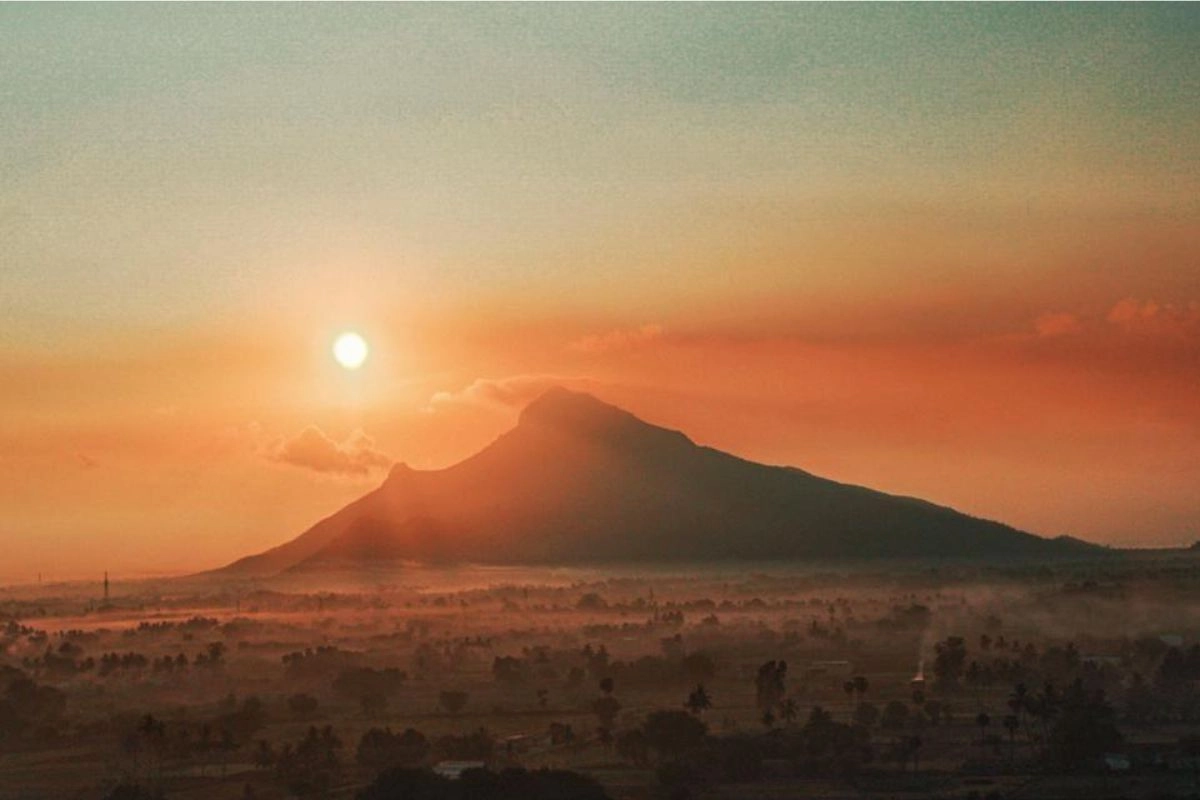
Ramana Maharshi was a sixteen-year-old schoolboy in Madurai when, one day in 1896, a violent fear of death took hold of him for no reason he could name. Instead of running from it, he lay down on the floor and asked himself what exactly was going to die. The body would die, he saw, but the sense of “I” did not depend on the body at all. The fear left him and never came back. Within a few weeks he had left home for the hill of Arunachala in Tiruvannamalai, and he remained there for the rest of his life, fifty-four years, teaching mostly through silence.
He wrote very little, and most of what he wrote was written because someone asked. In 1928 his devotee Muruganar, himself a fine Tamil poet, requested him to put the essence of his teaching into verse. What came out of that request is Ulladu Narpadu, forty short verses in Tamil, the title meaning roughly “forty verses on what is.” Kavyakanta Ganapati Muni rendered it into Sanskrit as Sat-Darshanam, and the English translations we read today come through one or the other of these.
The verses do not ask us to believe anything. They ask us to find out where this sense of “I” rises from, because the body, the world, and the whole day’s worry all rise along with it. That search is our practice for the month, and this month’s blog takes it up in detail.
Forty verses fit comfortably into one month. One verse in the morning, contemplated quietly through the day, is a good pace.
Om Tat Sat.
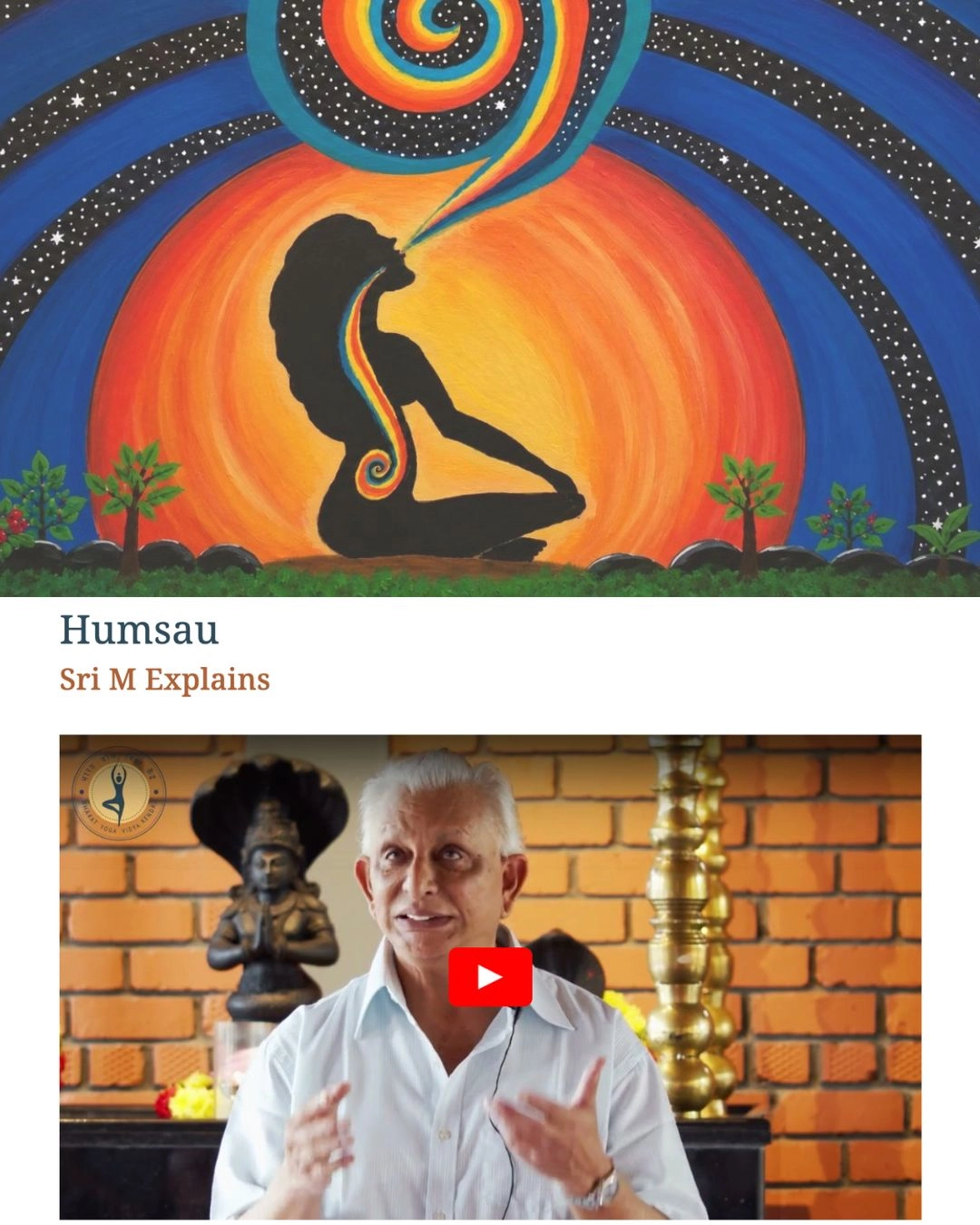
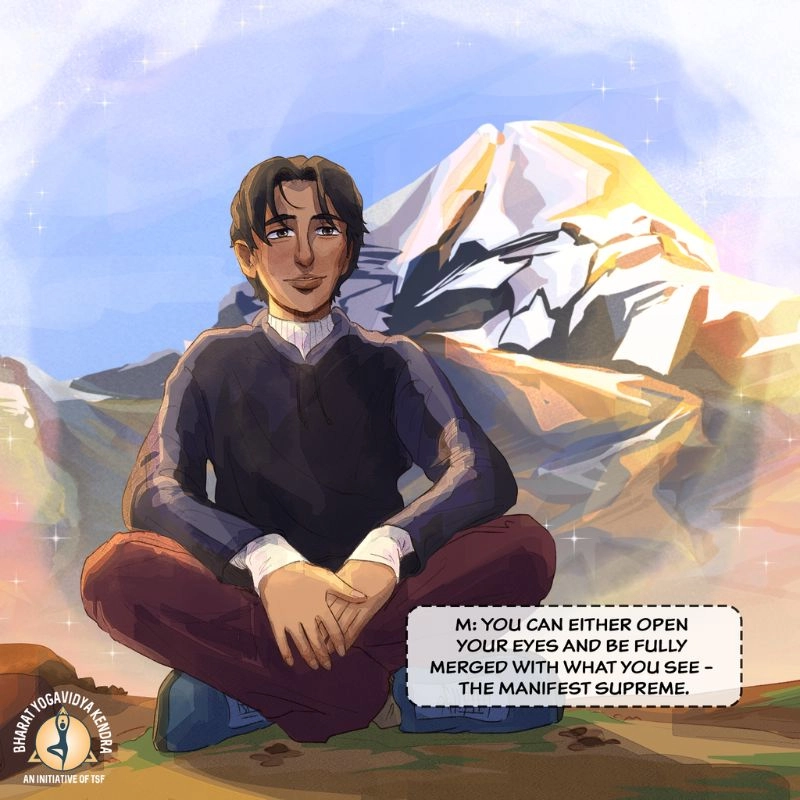
Sri M on Ramana Maharishi
Sri M Explains
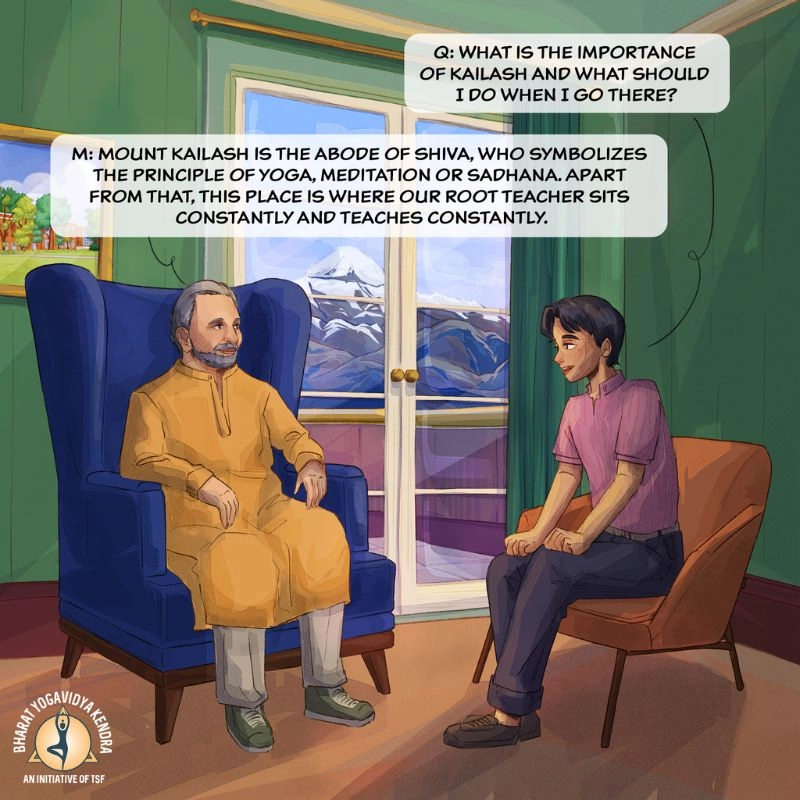
Talk with M
BLOG POST
Path of Self Knowledge
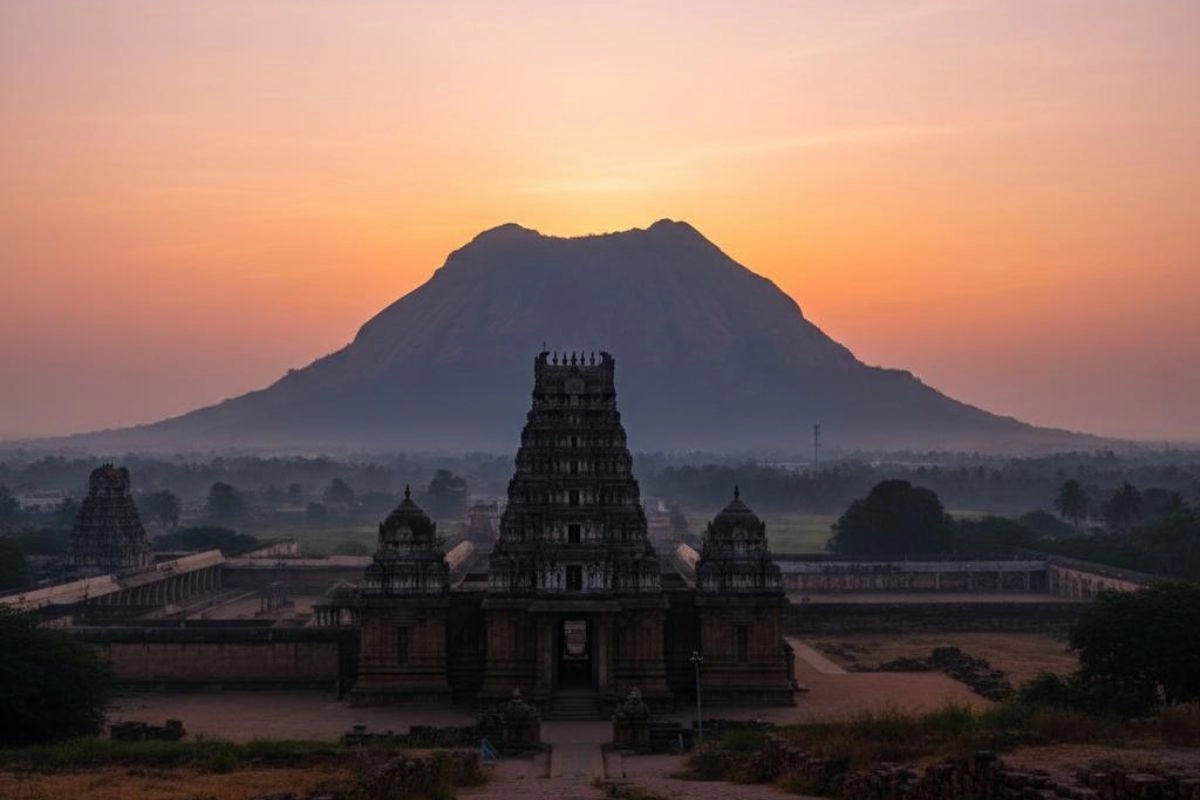
In 1928, at Ramanasramam near the hill of Arunachala, the poet Muruganar went to Ramana Maharshi with a request. Bhagavan had composed a few loose verses over the years, and Muruganar asked him to compose enough new ones to make forty in all, a number with a long history in Tamil devotional literature, so that the essence of his teaching would exist in one place. Ramana agreed. The verses came as they came, over a period of days, and Muruganar then arranged them so that the argument would flow, with Bhagavan’s approval. The verses that did not fit the sequence were kept aside and became a supplement. The main work is called Ulladu Narpadu, which translates as something like “forty verses on what is.” It is short enough to read in fifteen minutes and people have spent their whole lives inside it.
It helps to remember what stands behind these verses. Ramana was not a scholar working out a philosophy. He was sixteen, an ordinary schoolboy in Madurai, when a sudden and overwhelming fear of death came over him one day in 1896. He did not call for anyone. He lay down, held still, and looked directly at what was frightening him. The body dies, he saw, and is carried away and burned. But was the “I” the body? The sense of being was still there, untouched, on its own. The fear ended that afternoon and never returned, and the boy left home soon after for Arunachala, where he stayed until his death in 1950. So the forty verses are not a philosophy he worked out. They are a report, written thirty years later, of something he had seen for himself that afternoon and never stopped seeing.
Readers who have been with us since May will find that the first stretch of the text covers ground we know. The Yoga Upanishads told us the mind is the cause of both bondage and freedom. The Yoga Vasishtha went further and said the mind builds the world we experience. Ramana says the same in his own compressed way. The world we know comes to us as the five kinds of sense impression and nothing else, the senses report to the mind, and so the world we live in is, for us, a shape the mind has taken. One verse adds a detail worth sitting with: the mind and the world rise together and set together, as anyone can check by falling asleep tonight, yet the source out of which both of them rise does not itself rise or set.
Then he takes the step that is his alone. If the mind makes the world, the honest next question is not about the world at all. It is about the owner of the mind. Every thought in the mind refers back to a central thought, the thought “I”. The worry is my worry, the plan is my plan, the fear is my fear. Take away the “I” and no other thought can stand. So instead of examining the thousand thoughts, Ramana asks us to examine the one thought they all lean on.
What is this “I”, then? The verses examine it with an almost scientific patience. The body cannot be the “I”, because the body is matter and does not call itself anything. And the “I” cannot be absent in deep sleep, because nobody wakes up and reports that they stopped existing for the night. Something rises each morning between the silent body and the ever-present being, claims both of them, and runs the whole day. It says “I am this body” in one breath and “I was at peace last night” in the next. Ramana calls this in-between thing the ego, or simply the “I”-thought, and in one verse he calls it the knot that ties consciousness to matter.
The strangest verse in the book describes this ego as a kind of ghost. It has no form of its own, so it grasps a form and lives in it. It feeds on the forms it grasps, and it changes forms whenever it needs to. I am my body, I am my profession, I am my family, I am the one who was insulted in that meeting. Each costume is worn with full conviction. And then comes the line the whole text turns on: when this ego is actually searched for, it takes flight. It cannot survive being looked at directly, and everything it does depends on our not looking.
Anyone who tries this tonight will see what he means. In the middle of some irritation, turn around quickly and try to catch the one who is irritated. What is found is never a solid person. The irritation is there, the thoughts are there, and the “I” that was supposed to own them somehow cannot be produced.
This turning around is the famous inquiry, and the verses are careful about what it is and is not. It is not repeating “Who am I?” over and over like a mantra. It is also not declaring “I am not the body, I am the Self”, which Ramana says is a useful support for the search but is not the search itself. The search is a matter of attention. When a thought rises, notice that it has risen to someone, and let the attention slide back from the thought to the one it rose for. One verse compares it to diving for a thing that has fallen into deep water. The diver does not stand at the edge discussing the water. He takes a breath, closes his mouth, and goes down.
Each man counted the other nine and forgot himself, so the count came to nine every time, and they stood on the bank mourning the lost tenth man. A passerby, seeing what was wrong, had each man count again and gave the counter a knock on his own head to include himself. The tenth man was never missing, and finding him gave the group nothing they did not already have. Ramana says our situation is exactly this. The Self is not lost and cannot be attained. It is only being left out of the count.
The text is easy to find. Ramanasramam publishes English translations, and several faithful versions circulate freely. Some verses will open at the first reading and some will refuse to, and the ones that refuse are usually the ones worth staying with. Ramana sat with Arunachala for fifty-four years and said very little, and these forty verses are about as much of that silence as was ever put into words.
Om Tat Sat.
BOOK REVIEW
Who Am I?
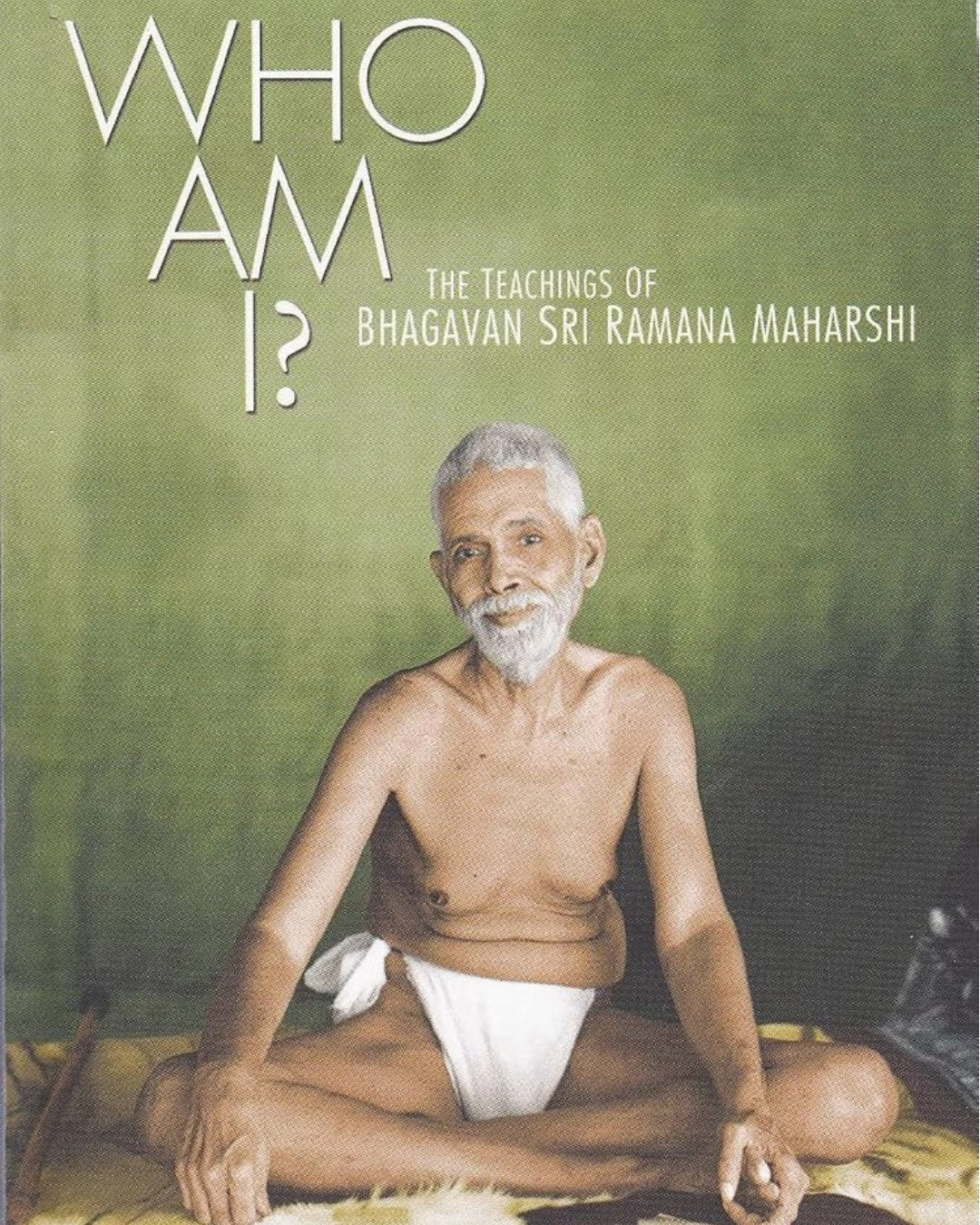
Who Am I? (Nan Yar?) by Sri Ramana Maharshi is a small book with a profound message. At its heart is one simple yet transformative question: “Who am I?”
Ramana Maharshi invites us to look beyond our usual identification with the body, thoughts, emotions and roles. Instead of seeking answers outside, he directs our attention inward—to the source of the “I” thought.
This practice, known as Self-inquiry (Atma Vichara), begins by asking, whenever a thought arises, “To whom has this thought arisen?” The answer is “to me.” We then turn our attention towards the deeper question: “Who am I?”
For a yoga practitioner, this teaching beautifully complements meditation and other yogic practices. It reminds us that the ultimate purpose of yoga is not merely to calm the mind, but to discover the awareness that remains when the fluctuations of the mind become quiet. Though the book is brief, it is not merely meant to be read—it is meant to be contemplated and experienced. Its simplicity is its strength, inviting us to move from intellectual understanding to direct inner enquiry.
A timeless invitation from Ramana Maharshi: turn inward, question deeply, and discover the Self.
YOGA GUIDE
Blossoming Through Inner Silence
Asana: Sukhasana (Easy Pose)
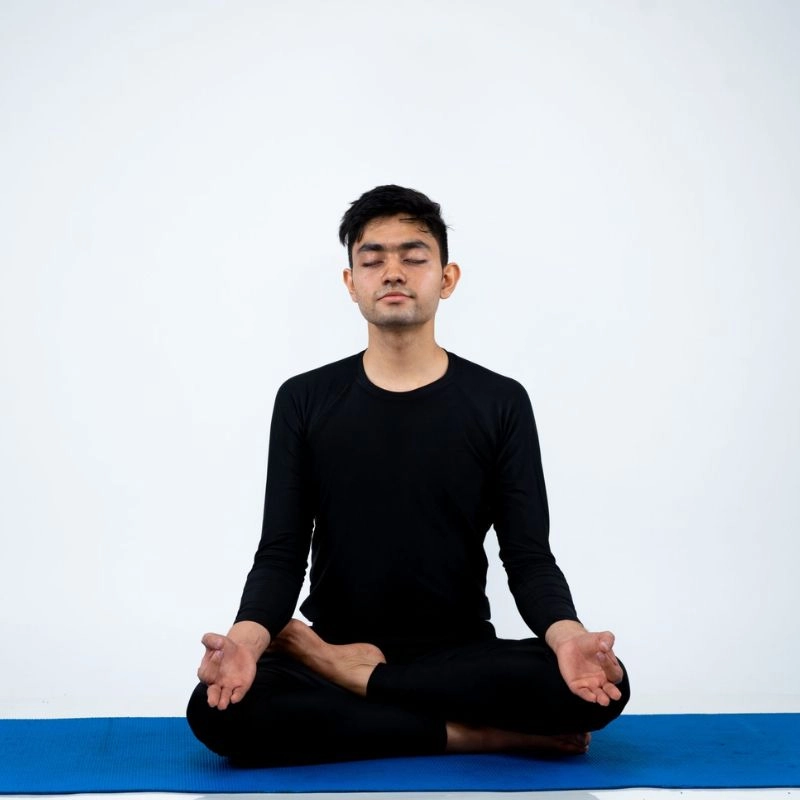
Maintain the same seated posture as described earlier to create a stable, comfortable base for meditation and breathwork.
- Sit cross-legged with a straight spine, shoulders relaxed.
- Rest hands on knees or thighs, palms up or down, whichever feels natural.
- Close the eyes gently and bring awareness inward.
Pranayama: Bhramari Pranayama (Bee Breath)
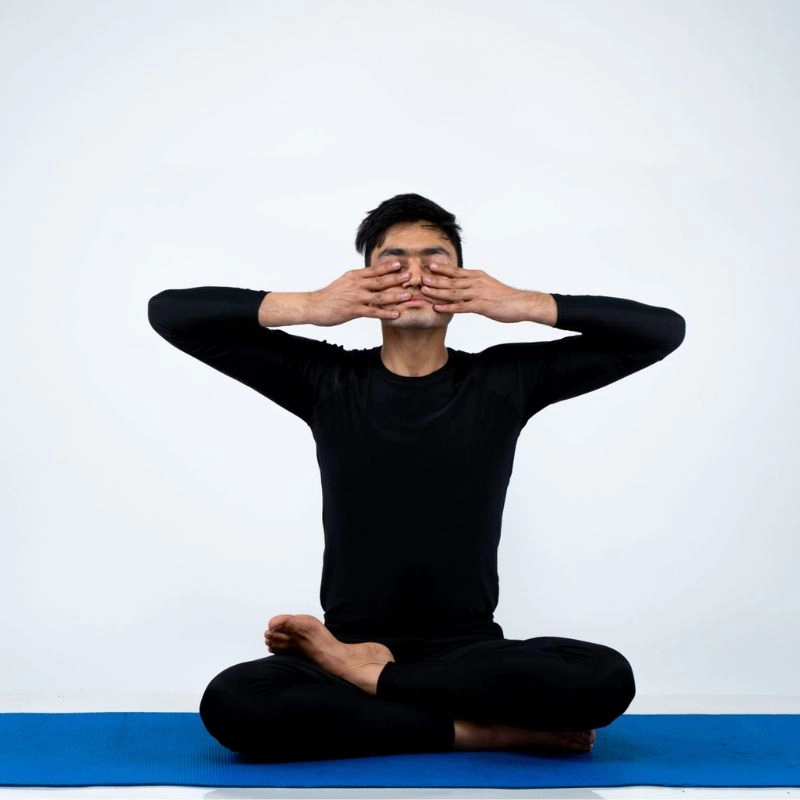
Bhramari Pranayama (Bee Breath). This pranayama cultivates deep inner calm and helps quiet the mind, making it an excellent choice for autumn’s inward turning and supporting inner awakening.
- Close your eyes and take a few natural breaths to settle.
- Place your index fingers gently on the cartilage between the cheek and ear (the tragus) to lightly close the ear canals.
- Take a deep breath in through both nostrils.
- As you exhale slowly, make a steady humming sound like a bee (“mmm”) with your mouth closed. Feel the vibration in your head and chest.
- Focus on the sound and the vibration, allowing the mind to settle into silence.
- Repeat this 5-10 times, maintaining slow, deep breaths.
- Bhramari Pranayama is known to reduce mental agitation, relieve stress, and promote a profound sense of peace, perfectly aligning with the idea of blossoming through inner silence during autumn’s introspective phase.
Together, Sukhasana and Bhramari Pranayama create a soothing practice that deepens inner stillness and awakens subtle awareness from within.
YOGA RESOURCE
Three Doorways into the Inquiry
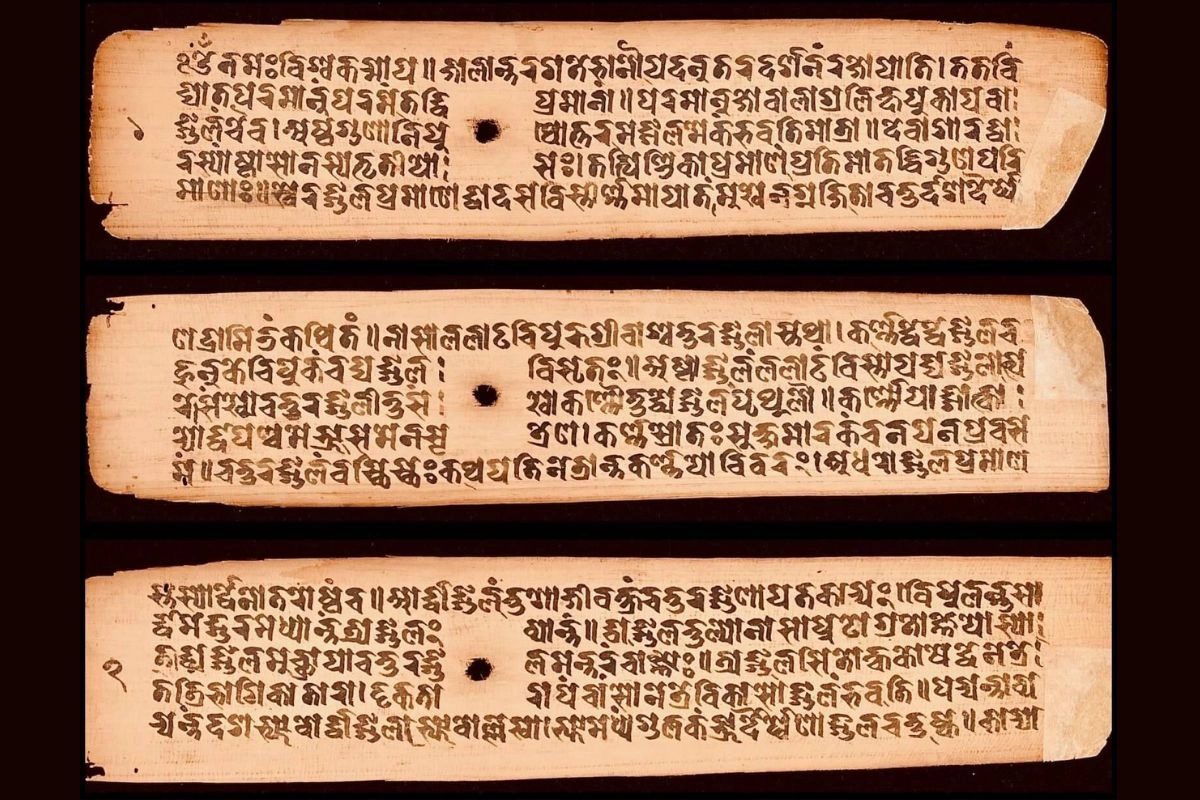
For those who would like to explore the question of Truth through the Upanishadic tradition, three texts offer three complementary doorways. They are not presented here as three more philosophical systems to collect, but as texts that can deepen the inquiry begun in this month’s reading.
- Bṛhadāraṇyaka Upaniṣad — What is the Self?
Begin with the teachings associated with Yājñavalkya, particularly the inquiry into the Self and the teaching of neti neti—“not this, not this.” The inquiry turns us away from identifying the Self with anything that can be known as an object.
It also leads to a more radical question: if everything we know can be observed, what is it that knows?
This gives us the first doorway:
What is the Self? - Kena Upaniṣad — What is the Knower?
The Kena Upaniṣad begins with a striking question: by whom is the mind directed, by whom does breath move, and what directs the eye and the ear? Its response points to that which is the “ear of the ear” and “mind of the mind” – that which cannot itself be grasped as an ordinary object of thought or perception.The inquiry therefore turns away from searching for another object and back toward the source of knowing itself.
The second doorway is:
What is the Knower? - Māṇḍūkya Upaniṣad — What Remains Across Experience?
The Māṇḍūkya Upaniṣad examines the states of waking, dreaming and deep sleep and then points to Turīya, the “fourth,” described in relation to these states. It provides a particularly concise doorway into questioning the nature of consciousness and experience.The third doorway is:
What remains across the changing states of experience?
Together, these three texts give us a natural progression:
What is the Self? → What is the Knower? → What remains across states of experience?
The purpose is not to collect three more philosophical ideas. It is to use the texts as pointers for inquiry.
This is where the search for Truth becomes different from the search for information.
A book can tell us that the Self is unchanging. A teacher can explain the distinction between the Seer and the seen. A scripture can point toward what cannot be described.
But the work is still ours.
We have to look.
The mind naturally wants to turn Truth into an idea that it can possess. Yoga keeps bringing us back to direct observation. What is here before the thought? What remains when the thought changes? Who is aware of the body, the emotions and the movement of the mind?
Perhaps Truth is not something we will eventually acquire.
Perhaps it is what remains when we become quiet enough to stop confusing everything that appears with what we are.
Om Tat Sat.
JOURNEY OF A SATSANGI
Journey of a Satsangi – Part 7: Accepted to Teach at PGS
Hello and welcome to Part 7 of the Journey of a Satsangis! In the previous episode, I attended my first Satsang with Sri M. Sri M also agreed to find some time to sit down with me to discuss the connection between science, mathematics and spirituality. For those who may be joining the story here, Part 1 of the journey began in the February BYK newsletter, with subsequent chapters continuing in later editions. Each part traces a different stage of the journey and I’m grateful to be able to share my experiences here with you.
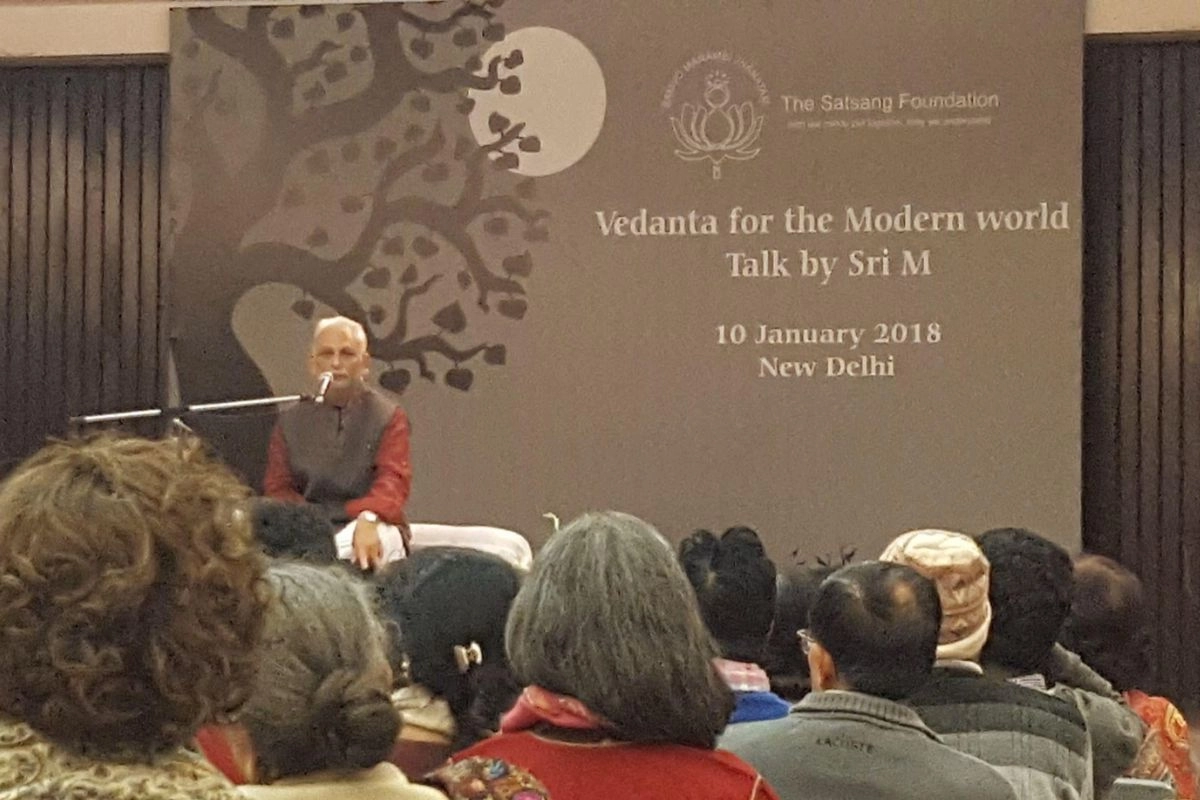
Having completed the Satsang with Sri M, Diane and I returned to Prab’s home to spend a few more days with him and his family. Prabs was delighted to hear that Sri M had agreed to speak with me about the question that had brought me all the way to India.
During our stay, we also had the opportunity to travel together to New Delhi to attend another talk by Sri M, held the day after the Satsang at Pathway School. It was a wonderful experience and a fitting way to celebrate our mutual connection to Sri M.
We spent our remaining days enjoying each other’s company, and the time seemed to pass all too quickly. Before long, it was time to say our goodbyes and continue our separate journeys.
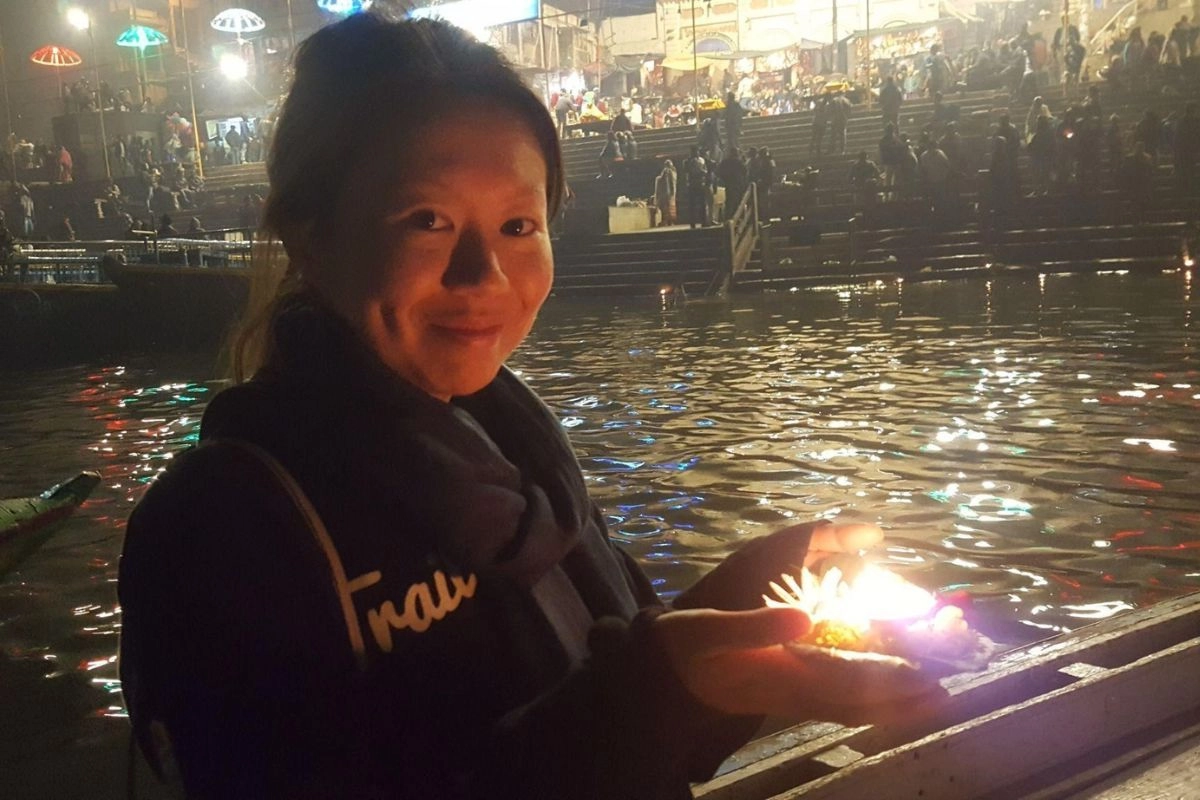
Our next destination was Varanasi, a city that had long been on Diane’s bucket list for places to visit. She had always dreamed of visiting one of the world’s oldest continuously inhabited cities, renowned for its rich history, deep spirituality, and sacred connection to the Ganges River.
We arrived in Varanasi in mid-January 2018 and stayed at a hotel near the banks of the Ganges River. It must have been pretty obvious that Diane and I were foreigners because every time we stepped outside the hotel, around ten vendors would rush over, each eager to sell us something.
The amusing part was that every one of them used the same sales pitch. Each insisted that we shouldn’t trust any of the other vendors and that they were the only honest person we should deal with. They would say this while standing right beside one another, seemingly unfazed by the contradiction. It was clearly a well-rehearsed routine, and we couldn’t help but laugh. Ironically, I think a more cooperative approach among the vendors might have been more effective in winning us over.
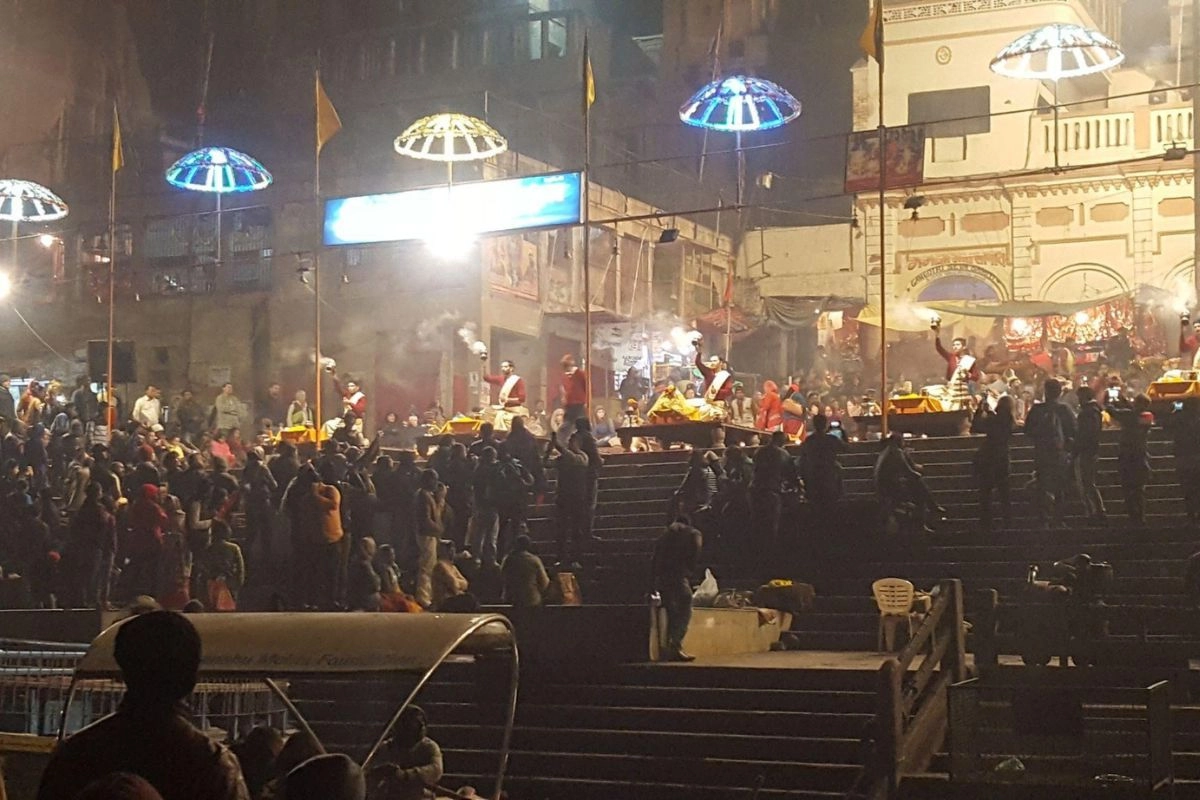
On our first evening, Diane and I hired a boat to take us on a tour of the Ganges River. As we drifted along the water, we watched the evening aarti ceremonies unfold on the ghats, with priests performing synchronized rituals of fire, chanting, and prayer. There were even vendors in small boats who rowed alongside the tourist boats, offering tea, snacks, and other refreshments to passengers without them having to leave the river.
Further along the river, we also passed several funeral pyres where families were performing the final rites for their departed loved ones. For Hindus, Varanasi is one of the holiest places on earth. It is believed that those who are cremated on the banks of the Ganges in Varanasi are freed from the cycle of birth and rebirth, allowing the soul to attain moksha—liberation and eternal peace. The sacred waters of the Ganges are revered as purifying, capable of washing away one’s sins and aiding the soul on its final journey.
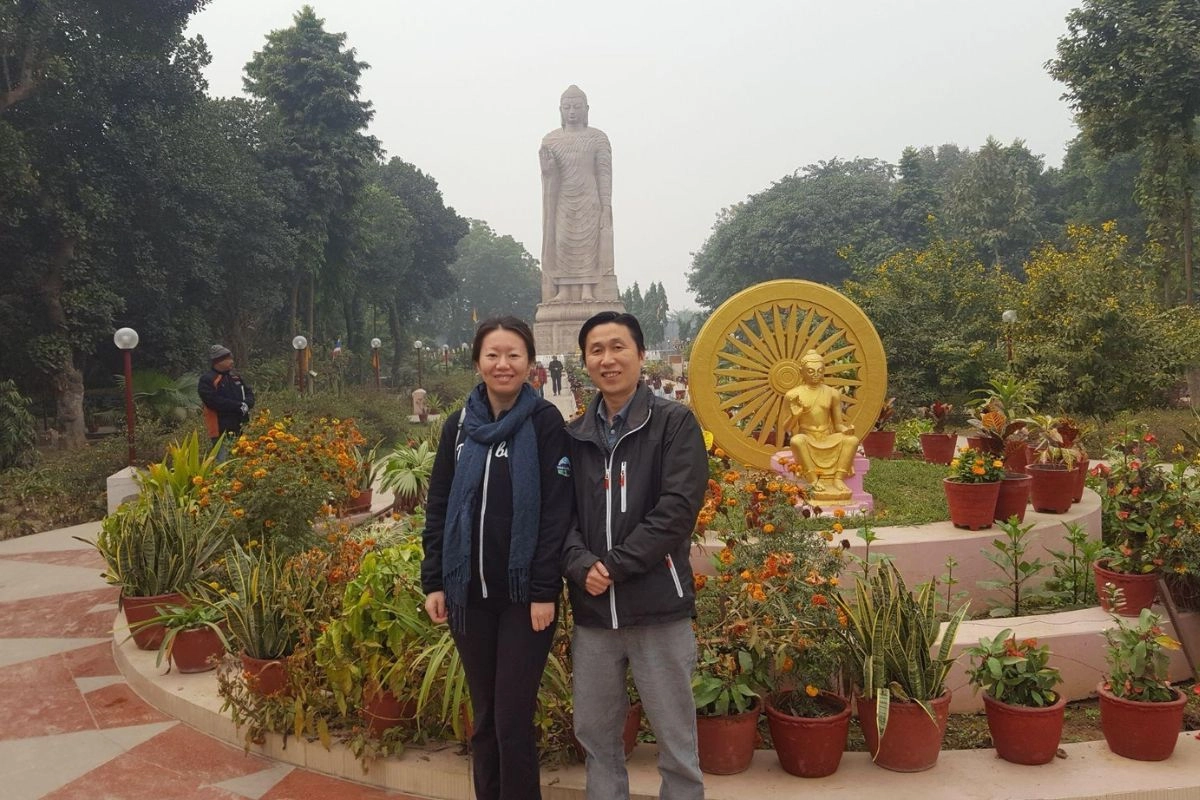
The following day, Diane and I visited Sarnath, located about 10 kilometers northeast of Varanasi in the state of Uttar Pradesh. Sarnath holds immense significance in Buddhism, as it was here that the Buddha delivered his first sermon—known as the Dharmachakra Pravartana, or the “Turning of the Wheel of Dharma”—to his five disciples after attaining enlightenment at Bodh Gaya. This event marked the beginning of the Buddha’s public teaching and the establishment of the Buddhist Sangha, making Sarnath one of the most revered pilgrimage sites in the Buddhist world.
It was during our visit to Sarnath that I received an email from Viraj, the school coordinator at Peepal Grove School, with the news that my application to volunteer had been accepted. They informed me that it would be best if I started my position at the start of the new academic year in June 2018 for a one-year term ending in April 2019. My role would involve running chess lessons and tutoring students in mathematics. They also generously offered to provide room and board for Diane, our dog Monkey, and me throughout our stay.
I was overjoyed by the news. Diane and I celebrated the occasion with a memorable evening in Varanasi before turning our thoughts towards our next chapter. With my plans now taking shape, I began preparing to return to Canada to complete all the arrangements and paperwork needed to spend the next year living and volunteering in India.
Diane wanted to spend a little more time exploring India before returning to Canada, so I accompanied her back to Madanapalle so that she could visit the Satsang Vidyalaya campus. After a few days together, we parted ways in Madanapalle. Diane continued her journey to Chennai before visiting Pondicherry, Auroville, and later Rishikesh, while I returned to Canada to begin preparing for my year-long volunteer position at Peepal Grove School.

Upon returning to Canada, I was finally reunited with Monkey after being apart for several months. The excitement was mutual—Monkey could hardly contain himself, and I was just as happy to see him again. Diane’s mom had been incredibly kind to look after him while we were in India, and thanks to her loving care, he had been in the best of hands during our absence.
As soon as I was settled back in Canada, I began the long process of obtaining my visa and gathering all the necessary paperwork. I needed a volunteer visa in order to bring Monkey with me to India, and I have to say it was one of the most frustrating bureaucratic experiences of my life.
From what I was told during the application process, volunteer visas were subject to especially careful scrutiny because some applicants in the past had failed to comply with the terms of their visas after entering India. As a result, the application required extensive documentation, numerous supporting letters, and what felt like an endless amount of paperwork. There were moments when I wondered whether the visa would ever be approved, but with the generous support of the staff at Peepal Grove School, I eventually managed to navigate the process successfully.
Even with Viraj’s invaluable support and the school’s assistance throughout the process, my visa was not approved until after my scheduled start date at Peepal Grove School had already passed. It ultimately took a dozen visits to the consulate and a personal meeting with the Indian consular before my application was finally approved. By the time I received my volunteer visa, more than four months had passed since I had begun the application process.
The entire ordeal was both exhausting and nerve-racking, but the sense of relief I felt when my visa was finally granted was immense. At last, I could turn my attention to preparing for Monkey’s paperwork and the move back to India and the year of volunteering that lay ahead.
During the process, Diane returned to Canada after staying another month in India and joined Monkey and I. Since she did not require a volunteer visa, she was able to get her tourist visa in under 2 weeks.
Once our visas had finally been approved, we turned our attention to preparing Monkey’s paperwork. To bring him into India, we needed to obtain a No Objection Certificate (NOC), which required hiring a consultant in India to guide us through the process.
This brought a new set of challenges. Many of the documents required for the NOC could not be issued until we were within seven days of our departure, leaving very little room for error. As our flight date approached, the pressure mounted, but thanks to the expertise of our consultants, everything came together just in time.
With all the paperwork finally in place, Diane, Monkey, and I boarded our flight to India and arrived at Peepal Grove School on June 15, 2018—two weeks later than originally planned, but grateful that we had made it at last.
To be continued…
Satsang is a Sanskrit term derived from sat (meaning truth) and sangha (meaning company/community) and refers to gathering with like-minded individuals, often with a guru, to listen to spiritual teachings aimed at elevating consciousness and fostering spiritual growth
COMMUNITY COLUMN
The Sacred Teachings of Bhagavan Sri Ramana Maharshi
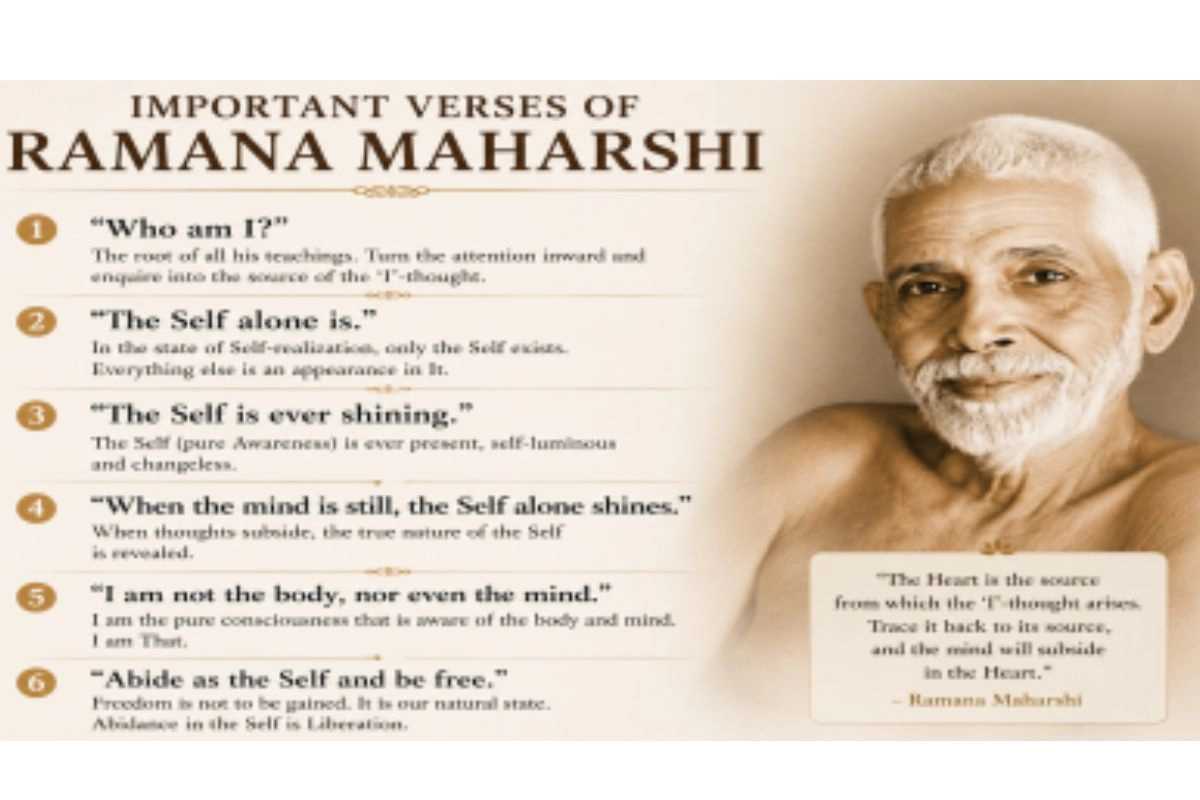
The sacred teachings of Bhagavan Sri Ramana Maharshi are beautifully summarized in his central text, Upadesa Saram (The Essence of Instruction). His core message is simple yet profound: you are already the eternal Self (Atman), and liberation is the removal of the false identification with the ego and the body.
The Upadesa Saram describes a gradual movement from action and devotion to meditation and, finally, to the direct path of Self-enquiry. The mind is seen as a collection of thoughts whose root is the “I-thought”. By tracing this egoic “I” back to its source, the true Self—pure awareness—shines as one’s natural state.
THE PATH OF ACTION — KARMA YOGA
- Action is insentient: Action by itself cannot bestow liberation; it produces results only within the realm of cause and effect.
- Desireless action: When duties are performed without attachment to their fruits, the mind gradually becomes purified.
- Purification of the mind: A pure and peaceful mind becomes a necessary preparation for Self-realisation.
THE PATH OF DEVOTION AND MEDITATION — BHAKTI AND RAJA YOGA
- Worship as seeing God everywhere: To regard the whole universe as a manifestation of the Divine and serve it with love is a high form of worship.
- Japa and prayer: Repetition of the Divine Name and heartfelt praise gradually turn the mind inward.
- Breath control: Pranayama can temporarily steady the restless mind, helping it become fit for deeper enquiry.
THE DIRECT PATH OF KNOWLEDGE — JNANA YOGA
The central movement is from the egoic “I” to the source of the “I”.
Mind and Ego
According to Ramana Maharshi, the mind is fundamentally a bundle of thoughts, and the root of all thoughts is the “I-thought”—the sense of a separate individual self.
The Direct Enquiry
Instead of fighting every thought individually, one turns towards the one to whom the thought has appeared. Whenever fear, anxiety, anger, desire or any disturbing thought arises, the enquiry begins:
“To whom has this thought arisen?”
The immediate answer is: “To me.” Then comes the deeper question:
“Who am I?”
This is not meant to be an intellectual question requiring a verbal answer. Attention is turned inward towards the very sense of “I”, tracing it back to its source.
THE FINAL REALISATION
- Dissolution of the ego: When the source of the “I” is deeply investigated, the false identification with the body and mind subsides.
- The “I-I”: What remains is the direct, self-luminous awareness often described by Ramana Maharshi as the true “I-I”, shining in the Heart.
- Abiding peace: This is not a newly created experience. It is the recognition of one’s natural, eternal state of pure awareness and bliss.
SOME IMPORTANT TEACHINGS OF RAMANA MAHARSHI
- “Who am I?” — The heart of his teaching: turn attention away from the objects of thought and enquire into the one who thinks.
- “The Self alone is.” — The underlying Reality is one Self; the sense of separateness belongs to the ego.
- “The Self is ever shining.” — Thoughts arise and disappear, but the awareness in which they appear remains ever-present.
- “When the mind is still, the Self shines.” — Stillness reveals the ever-present reality that is usually obscured by mental agitation.
- “I am not the body, nor the mind.” — The body and mind are known; therefore the true Self is the awareness in which they are known.
- “God, Guru and Self are one.” — The Guru ultimately turns the seeker inward towards the Divine Reality within.
PRACTICAL SUMMARY OF HIS METHOD
A simple inward practice based on the essence of Self-enquiry
- Do not become lost in the story of the thought. First notice that a thought, fear or emotion has appeared.
- Ask: “To whom has this thought arisen?”
- Recognise: “It has arisen to me.”
- Then ask: “Who am I?” Do not seek a conceptual answer.
- Turn attention towards the sense of “I”. Remain with its source instead of following further thoughts.
- Whenever the mind wanders, return again. With persistent inward attention, the false egoic identification gradually loses its hold.
THE ESSENCE OF HIS TEACHING
Ramana Maharshi’s teaching does not ask us to become something new. It asks us to discover what we have always been. Happiness, peace and freedom are not external achievements; they are obscured by the mistaken belief that “I am only this body and mind.”
When attention is turned outward, the ego experiences a world of separation, attachment and fear. When attention turns inward and the source of the “I-thought” is investigated, the false sense of individuality subsides and the true Self alone remains.
A BEAUTIFUL PRACTICAL REMINDER
When any problem, fear or anxiety arises, remember the simple movement of Self-enquiry:
Thought → To whom has it arisen? → To me → Who am I? → Return to the source of the “I”.
In the deepest sense, the journey is from the false “I” to the true “I”—from identification with the temporary to abiding as pure awareness.
“The thought ‘I’ is the root of all thoughts. Find out where it arises. When the ‘I’-thought subsides, the Self alone shines.”
IN ONE SENTENCE: Turn inward, enquire “Who am I?”, trace the false “I” to its source, and abide in the pure Self.
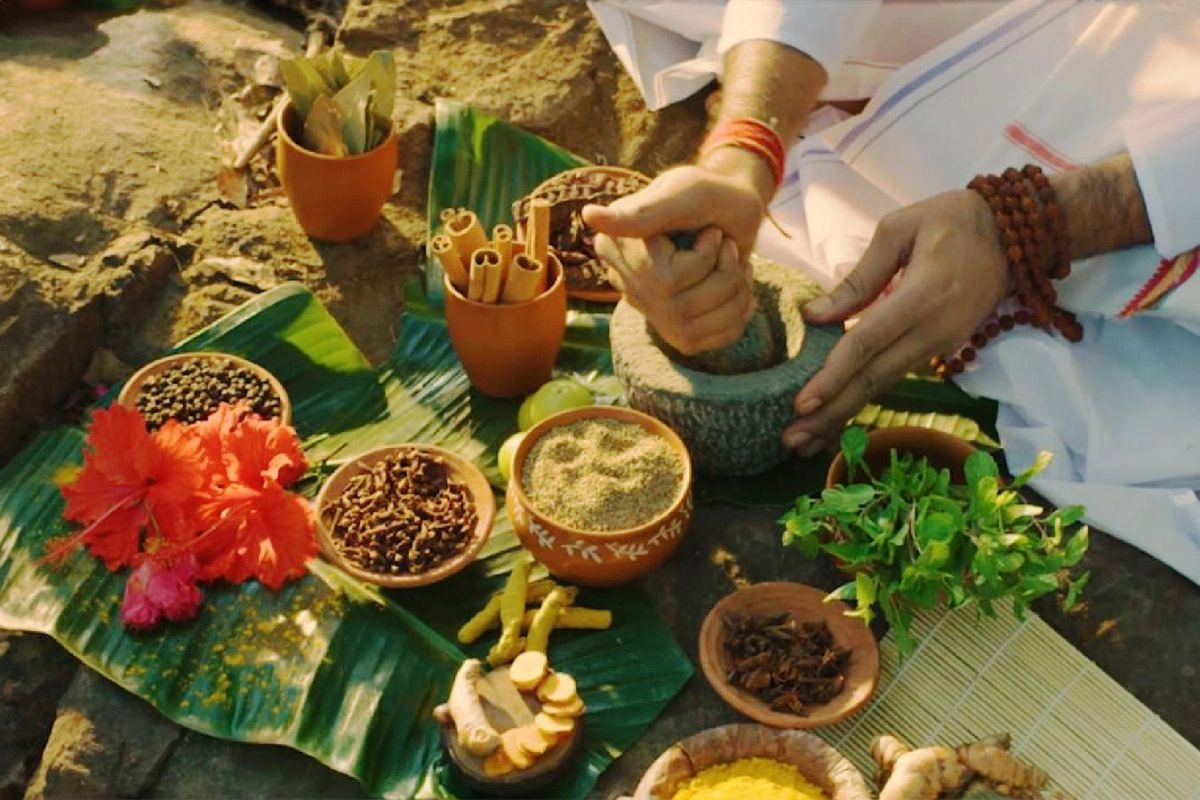
Ayurvedic Wisdom
Ayurvedic concepts
Sri Ramana Maharshi’s Forty Verses on Reality (Ulladu Narpadu) and classical Ayurveda share a deep root in Vedic epistemology, viewing physical and mental imbalances as derivatives of misidentification with matter. While Ayurveda addresses Svastha (holistic health of body, mind, and spirit) through diet, herbs, and lifestyle, Ramana’s Atma-vichara (Self-inquiry) targets Ajnana as root of all underlying suffering.
The Root of Disease (Vyadhi) and Bondage (Bandha)
- Ayurvedic View: Disease begins with Prajnaparadha (crimes against wisdom/intellect), where the mind forgets its true nature and makes choices that disrupt the Tridosha (Vata, Pitta, Kapha).
- Ramana’s Insight (Verse 2 & 12): Bondage is simply the ego-illusion of identifying with a perishable physical frame. When the core delusion “I am the body” persists, psychological and somatic disharmonies thrive.
Mind, Breath, and Vital Force (Prana)
- Ayurvedic/Yogic View: Prana is the vital breath managed by the sub-doshas (such as Prana Vayu). Calming the nervous system via breath regulation (Pranayama) stabilizes erratic mental activity (Manovaha Srotas).
- Ramana’s Insight (Upadesa Saram / Ulladu Narpadu): Regulating the breath restrains the mind like a bird caught in a net. Merging the ego back into its source subdues both breath and frantic mental tendencies effortlessly.
The Healing Power of Silence and Equilibrium (Samatva)
- Ayurvedic View: True health (Swastha) is characterized by balanced doshas, clear digestion (Agni), and a tranquil, happy state of the sensory organs and mind (Atma-indriya-manah-swastha).
- Ramana’s Insight (Verse 13 & 14): Cessation of the ego-thought complex restores an individual to absolute stillness (Silence/Shanti). This resting in pure awareness acts as the ultimate restorative state, dissolving psychological trauma and karmic friction at their conceptual root.
TESTIMONIALS
TSIP Testimonial
TSIP program was a wonderful opportunity to rediscover myself, a period of self reflection, to learn and unlearn, to find out where I am, and to look at my strengths and weaknesses.
Ashram environment was conducive for the practices, especially Yogashala. I developed a special bond with Patanjali. This long period helped me in getting closer to my practices and also carry them with me to my regular life.
The study sessions were very helpful, asanas classes were great and the Arti’s and temple visits were an opportunity one can never forget.
There were some rarely low moments but I reminded myself that this is a Tapasya and not a holiday. On the whole, I came back home with a joy in my heart. Much gratitude to all of you for conducting this program and making us more mindful.
Rekha Kalvakuntla| Jun-Aug 2026 Batch
![Logo of Bharat Yogavidya Kendra [BYK]](https://bharatyogavidyakendra.in/wp-content/uploads/2025/07/BYK-Logo-300px.png "BYK-Logo-300px")
Thank you for reading
In this issue of Yogavidya, we have:
- Ulladu Narpadu: Forty Verses on What Is
- Sri M on Ramana Maharishi
- Talk with M
- Path of Self Knowledge
- Who Am I?
- Blossoming Through Inner Silence
- Three Doorways into the Inquiry
- Journey of a Satsangi – Part 7: Accepted to Teach at PGS
- The Sacred Teachings of Bhagavan Sri Ramana Maharshi
- Ayurvedic concepts
- TSIP Testimonial