Teachings of the Holy Mother
For four months now we have been studying the mind, and every teacher we read did that work somewhere apart from ordinary life. The Yoga Upanishads and the Yoga Vasishtha come to us from forest hermitages, Tenzin Palmo watched her mind in a cave for twelve years, and Ramana sat on a hill for fifty-four. This month we read a woman who spent most of her life in a kitchen and a courtyard. Sarada Devi cooked, swept, nursed sick relatives, managed a house full of quarrelling nieces and brothers, and in the middle of all that gave some of the plainest instruction on the mind that exists anywhere in our tradition.
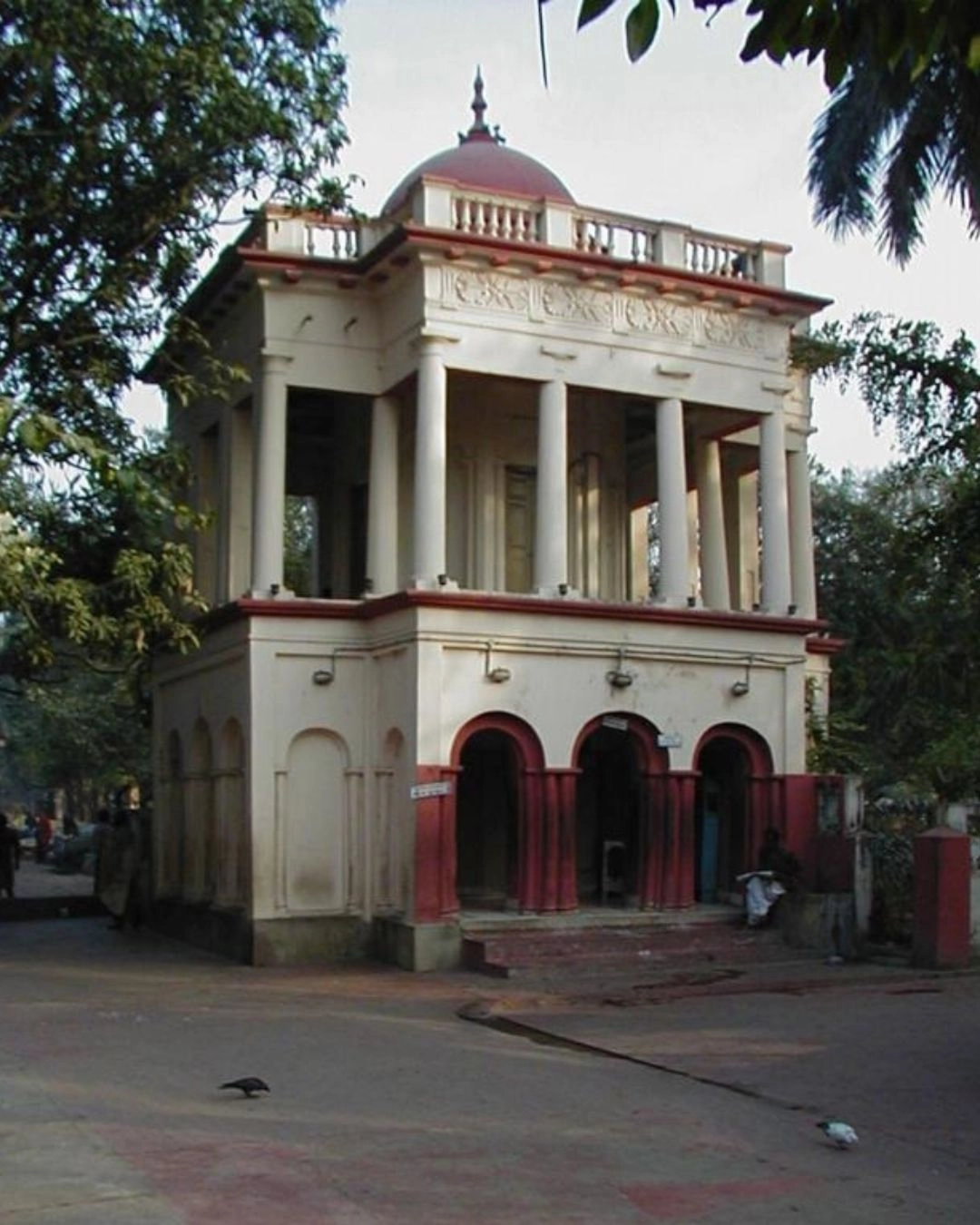
She was born in 1853 in Jayrambati, a village in Bengal, and at the age of five she was married to Ramakrishna, the priest of the Kali temple at Dakshineswar, who was then twenty-three. She grew up in her parents’ house and walked to Dakshineswar at eighteen because she had heard rumours that her husband had gone mad. What she found was a man absorbed in God most of the day, who took her as his disciple and then, one night in 1872, worshipped her as the Divine Mother herself. For the rest of his life she lived in the Nahabat, a small octagonal music tower at the edge of the temple garden, cooking for him and for the visitors who came to hear him. After he passed away in 1886 she lived another thirty-four years, and in those years his disciples, and then hundreds of people who simply turned up at her door, came to her for initiation and called her Holy Mother.
The book we are reading this month, Teachings of Sri Sarada Devi the Holy Mother, is a small paperback from Sri Ramakrishna Math, Chennai. It gathers her sayings from the conversations her attendants wrote down in her last decade and arranges them by subject, so there is a section on the mind, one on japa, one on work, one on the guru, and so on. There is no argument to follow. She spoke in short sentences in village Bengali, usually while doing something else, and the book reads that way. Her theme fits everything we have read since May. Everything depends on the mind, she said, and the mind is made pure by repeating the name of God and by not looking at the faults of others. A few days before she died a devotee asked her for a last instruction, and her answer was that anyone who wants peace should stop looking at other people’s faults, look at their own instead, and learn to make the whole world their own. The whole book is in that answer, and this month’s blog takes up her life and this instruction in more detail.
The practice for the month follows her own advice. She asked people to do japa at dawn and at dusk without fail and to carry it through the day’s work at whatever pace the work allows. One round of your mantra in the morning, one in the evening, and through the day a quiet attempt to notice the mind each time it starts on someone else’s shortcomings and to bring it back to the name.
Om Tat Sat.
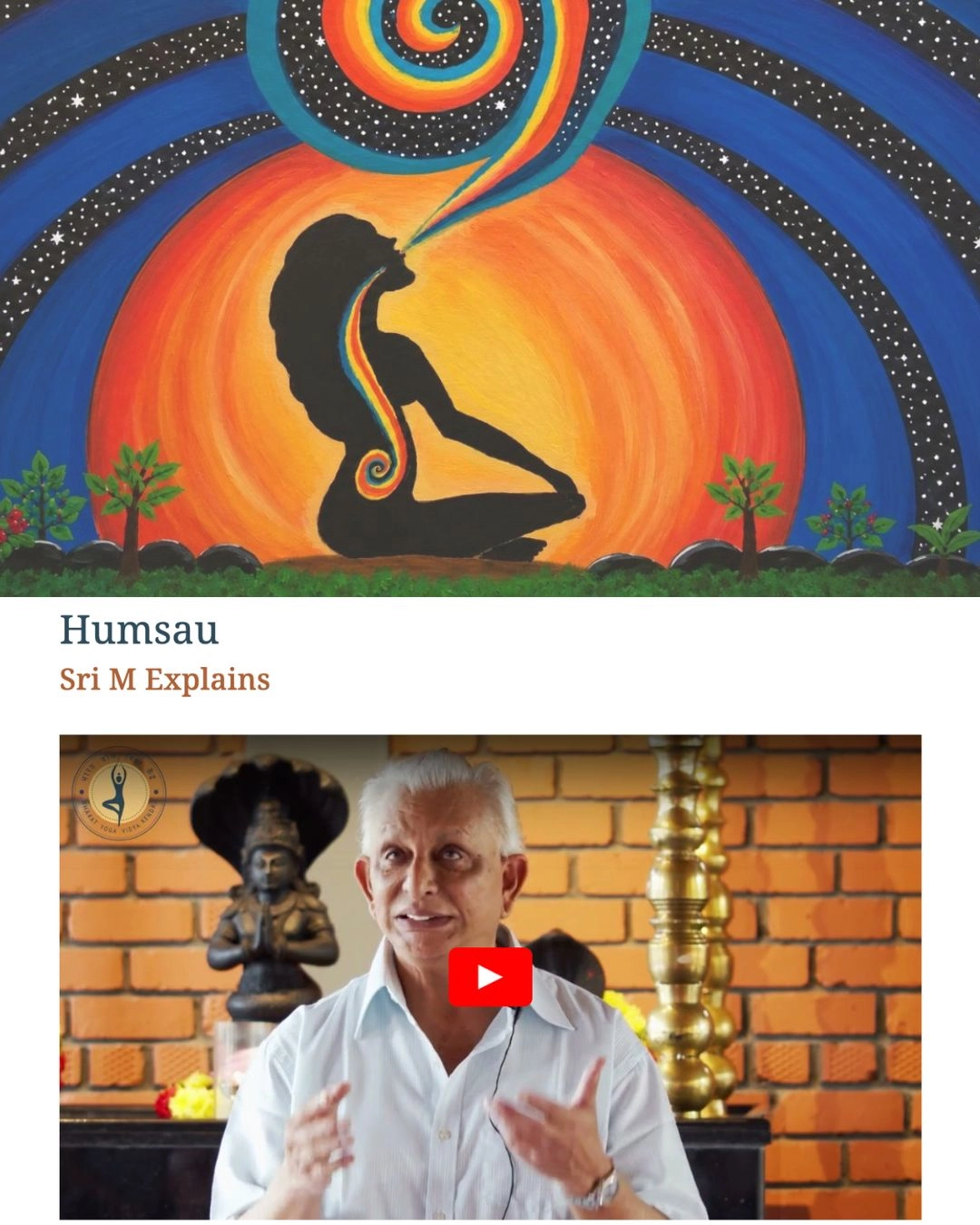
Sri M Speaks
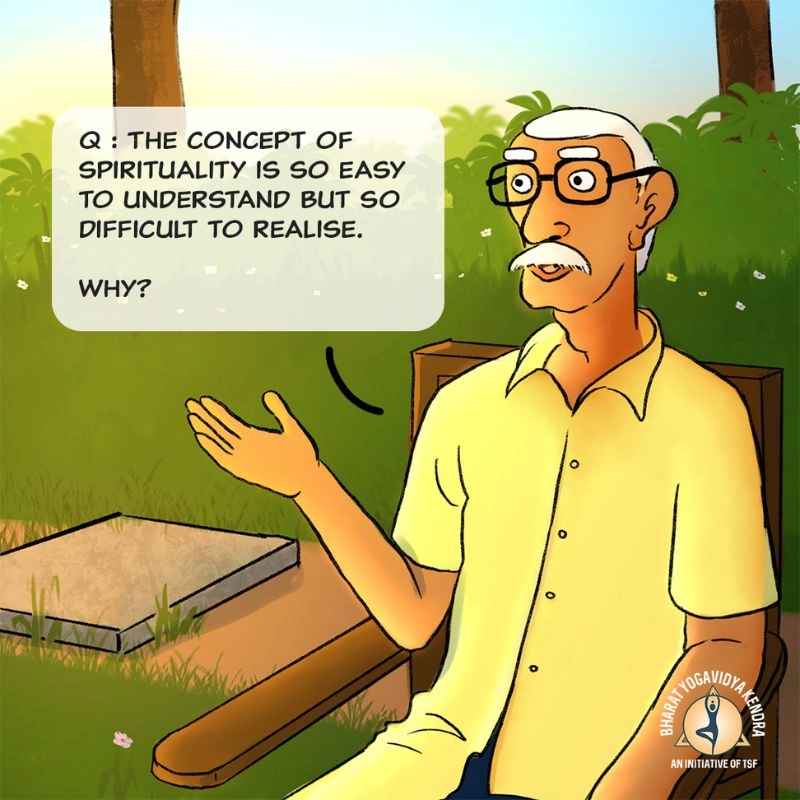
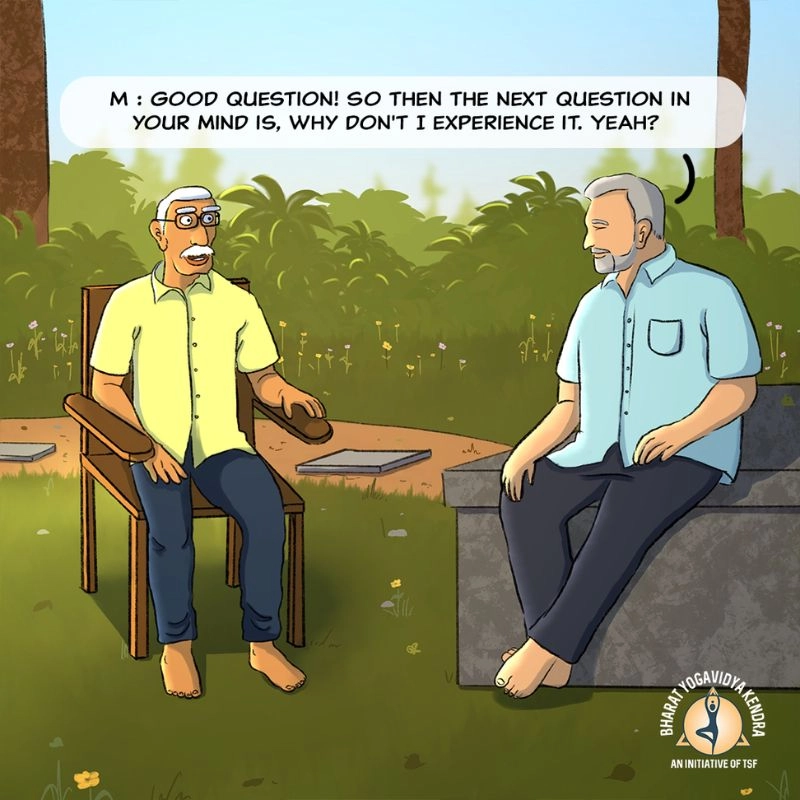
Talk with M
BLOG POST
Sri Sarada Devi
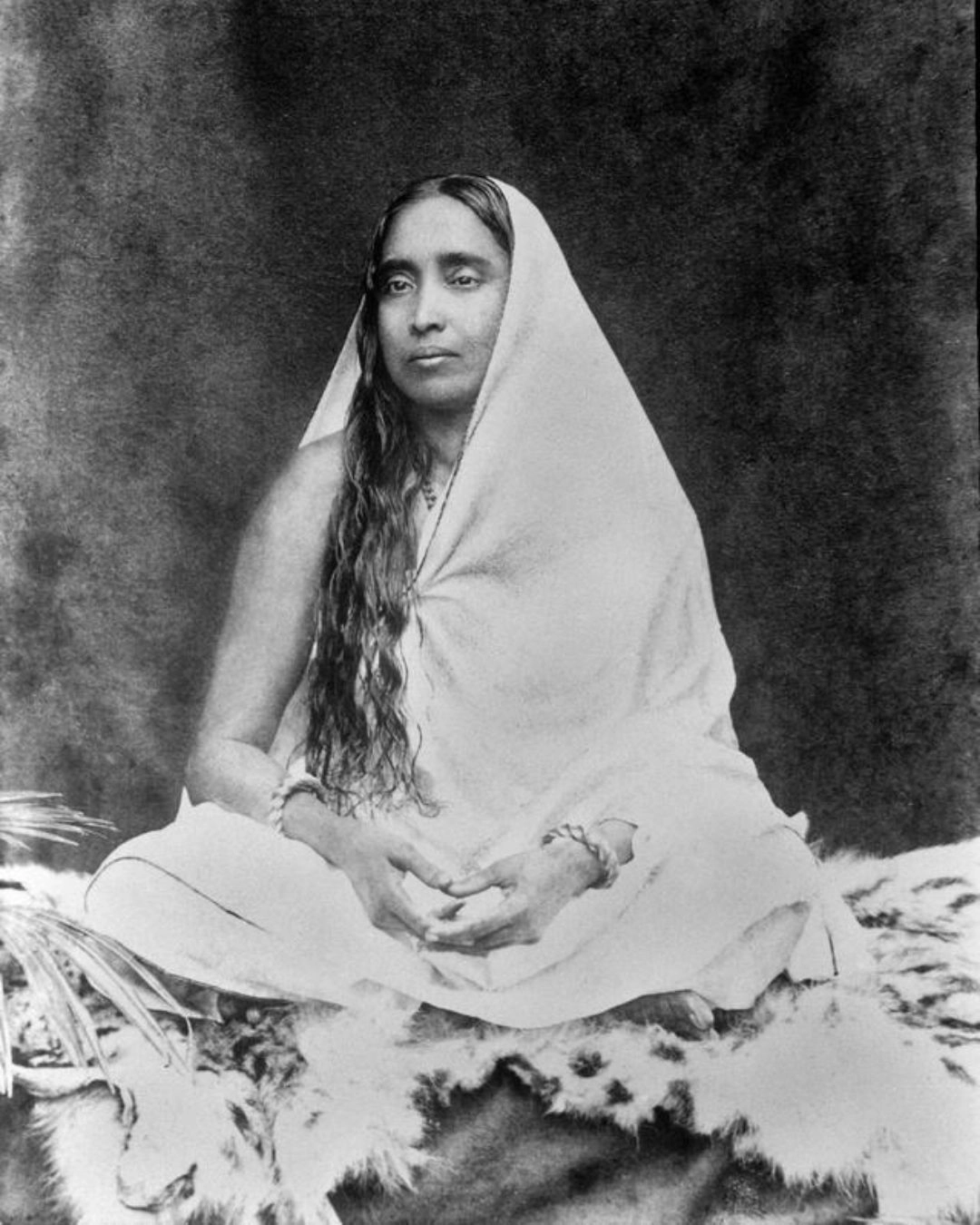
In July 1920, at the Udbodhan house in Calcutta, Sarada Devi was in the last days of a long illness. A woman disciple sat by her bed and wept, and asked what would become of them all. The reply she got has been repeated so many times since that it is easy to hear it as a slogan, so it is worth hearing it again as what it was, an old woman comforting a frightened younger one. If you want peace, she said, do not look at the faults of others. Look at your own faults. Learn to make the whole world your own. No one is a stranger, my child, the whole world is your own. She died a few days later, on the twentieth of July. The book we are reading this month is a collection of her sayings, and almost everything in it is a longer version of that one reply.
She was born in December 1853 in Jayrambati, a village of mud houses and rice fields in the Bankura district of Bengal, and was named Saradamani. In 1859, at the age of five, she was married to Gadadhar Chattopadhyay of the neighbouring village of Kamarpukur, who was twenty-three and already known as the strange young priest of the Kali temple at Dakshineswar, outside Calcutta. The marriage was arranged in the hope that it would settle him. It did not, and the girl stayed in her parents’ house as village girls did, learning to cook and to work the fields. When she was eighteen the rumours reached Jayrambati that her husband had lost his mind, and she asked her father to take her to him. They walked the sixty miles to Dakshineswar, and on the way she fell ill with fever and lay in a wayside rest house, and it was in that fever that she first saw, in what she later described as a vision, the dark woman who told her she was going to her husband and would reach him.
What she found at Dakshineswar was not a madman. Ramakrishna had spent twelve years in one spiritual practice after another and lived most of the day in a state of absorption that made ordinary people uneasy. He asked her, with some care, whether she had come to drag him down into worldly life, and she answered that she had come only to help him on his path. He took her at her word and treated her as his first disciple. He taught her to meditate and to manage the household, and she said afterwards that he taught her everything, from trimming a lamp wick to knowing God. On a night in June 1872 he seated her in the chair he used for worship, performed the full ritual of the Shodashi Puja to her as the living form of the Divine Mother, and at the end laid the fruits of his own practice at her feet. She lived after that in the Nahabat, a small octagonal music tower at the edge of the temple garden. The room on the ground floor was so low that she could not stand upright in it, and in that room, from before dawn until late at night, she cooked for Ramakrishna, for his mother who lived on the floor above, and for the devotees who came in growing numbers to hear him speak. Many of them ate her food for years without once seeing her face.
The stories from those years tell you what kind of person she was better than any description could. On one of her journeys between Jayrambati and Dakshineswar she fell behind her companions at dusk in a stretch of open field called Telo-Bhelo, which was known for robbers. A tall man with a staff came out of the dark towards her, and she went up to him, called him Father, told him she had lost her companions on the way to her husband at Dakshineswar, and asked him to take her along. The man was a dacoit. His wife came up a moment later, and Sarada Devi took her hand and called her Mother. The two of them took her to a shop in the next village, fed her, spread their own clothes for her to sleep on, and in the morning walked her back to her party. They visited her at Dakshineswar afterwards with gifts of vegetables from their garden and she treated them as her parents for the rest of their lives.
Ramakrishna died in August 1886, and she lived for thirty-four years after him. The first of those years were hard. She went to Vrindavan and did intense practice, and then returned to Kamarpukur and lived for a while in real poverty, with rice and greens from the field and not enough of either, and it was only when the young monks in Calcutta heard of it that they brought her out. From then on her life was divided between Jayrambati and Calcutta, and from 1909 between Jayrambati and the Udbodhan house, which the disciples built for her. The monks of the Ramakrishna Order, who had been young men when their teacher died, now came to her as their mother. So did a growing stream of ordinary people, and she gave initiation to almost anyone who asked, before dawn so that the day’s work would not be disturbed, sometimes to several people in a morning.
Those are the years that usually get told. What gets left out is that she was never alone and almost never at rest. Her brothers quarrelled with each other and with her over money and land. Her niece Radhu, whom she raised, was sick and difficult and demanded her attention at every hour. Her other niece Nalini had an obsession with ritual purity that made every meal a negotiation. She said more than once that the Master had left Radhu to her as a support for her mind, and that without something like Radhu to hold her mind down she would not have been able to stay in the body. There is a story that belongs here. A Muslim labourer named Amjad, who had a reputation in the villages as a dacoit, was working on the house being built for her at Jayrambati, and she fed him on her own veranda. Nalini refused to touch his plate afterwards. Sarada Devi cleared the place herself, washed it down, and told her niece that Sarat, meaning Swami Saradananda, the most senior of the monks, was her son in exactly the way Amjad was. That veranda is as good an explanation as any of what she meant by making the whole world your own.
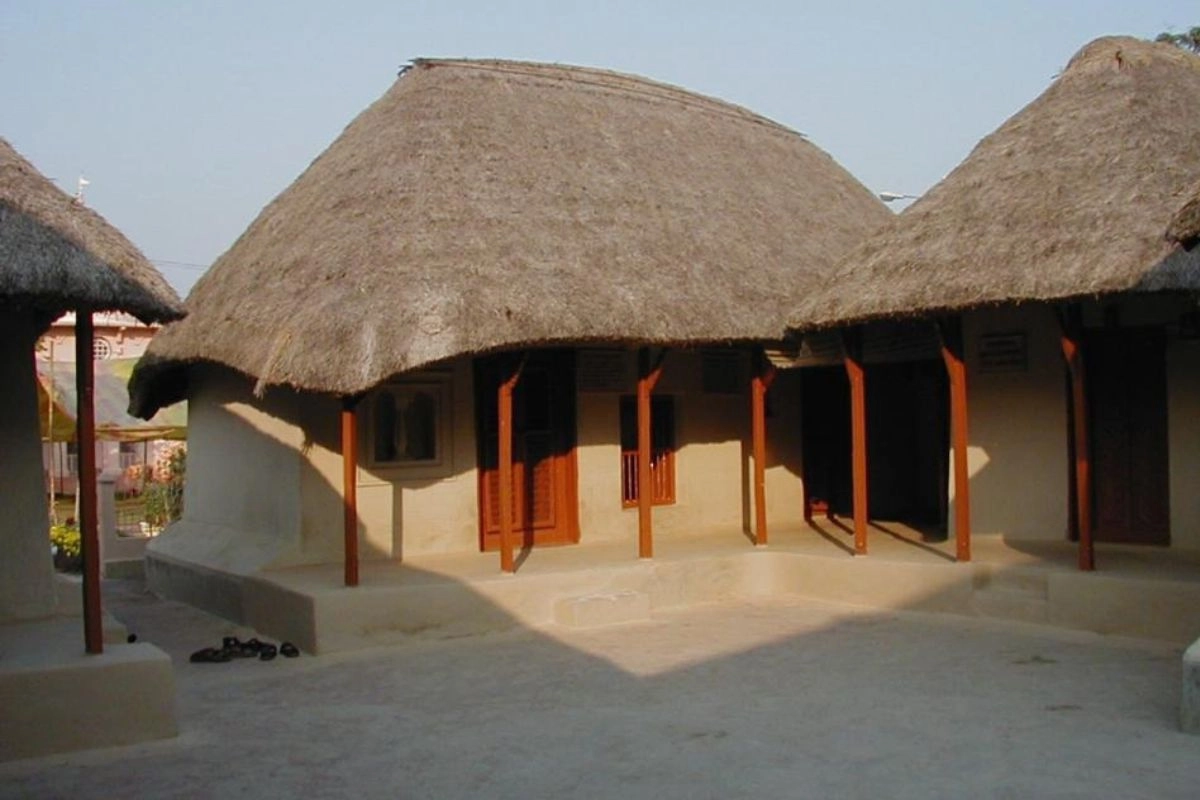
Her teaching about the mind is the same as what we have read all through this series, said without any of the philosophy. Everything depends on the mind, she told a devotee, and nothing is gained without purity of mind. One may have the grace of the guru and the grace of God, and still come to grief without the grace of one’s own mind. She did not ask people to study the mind. Her one instruction, repeated to almost everyone who came, was to keep it busy with the name of God, with a rosary at fixed times and without one at every other time. She said that even a mind that cannot meditate can do japa, and that through japa the mind slowly becomes fit for meditation on its own. She did her own japa through the day between tasks, and the people around her noticed that her lips kept moving even while she was talking with someone. She also told people to work, and said that work steadies the mind and that idleness is where most trouble starts, and she had little patience with anyone who wanted to give up their duties and simply sit.
The instruction about faults belongs to the same teaching. Ramana asked us last month to turn around and look for the one who is irritated. Sarada Devi comes at the irritation from the other side and points at where it usually starts, which is the account we keep, mostly without noticing, of what other people have done wrong. She said that the mind which is busy with the faults of others has no time left for the name of God, and that a person who finds fault also gradually takes on the fault they keep looking at. In her mouth this is less a moral rule than a description of how the mind works, along with practical advice about where to put it instead.
Sir has said more than once that the spiritual life has to be lived in the middle of ordinary life and not in retreat from it, and that the kitchen and the office are as good a place for practice as a cave. Sarada Devi is the clearest example of that anywhere in our tradition. Nothing about her circumstances was arranged for practice. She had the illnesses, the relatives, the money troubles, and the endless visitors that any householder has, and in the middle of them she kept the mind on the name and kept her heart open to whoever was in front of her, including the dacoits.
The book itself, Teachings of Sri Sarada Devi the Holy Mother, is easy to find and costs very little. Sri Ramakrishna Math in Chennai publishes it in a small format, and the sayings are drawn mostly from the conversations her attendants and disciples wrote down between 1911 and 1920, which exist in full as The Gospel of the Holy Mother for anyone who wants more. The sayings are grouped by subject, so a reader can go straight to what they need. It is a book to keep near the place where you do your morning meditation and open at random. She did not build an argument, and there is nothing to be gained by reading her from front to back. A saying or two in the morning, with the practice she asked for through the day, is how this book is meant to be used.
Om Tat Sat.
BOOK REVIEW
The Gospel of the Holy Mother
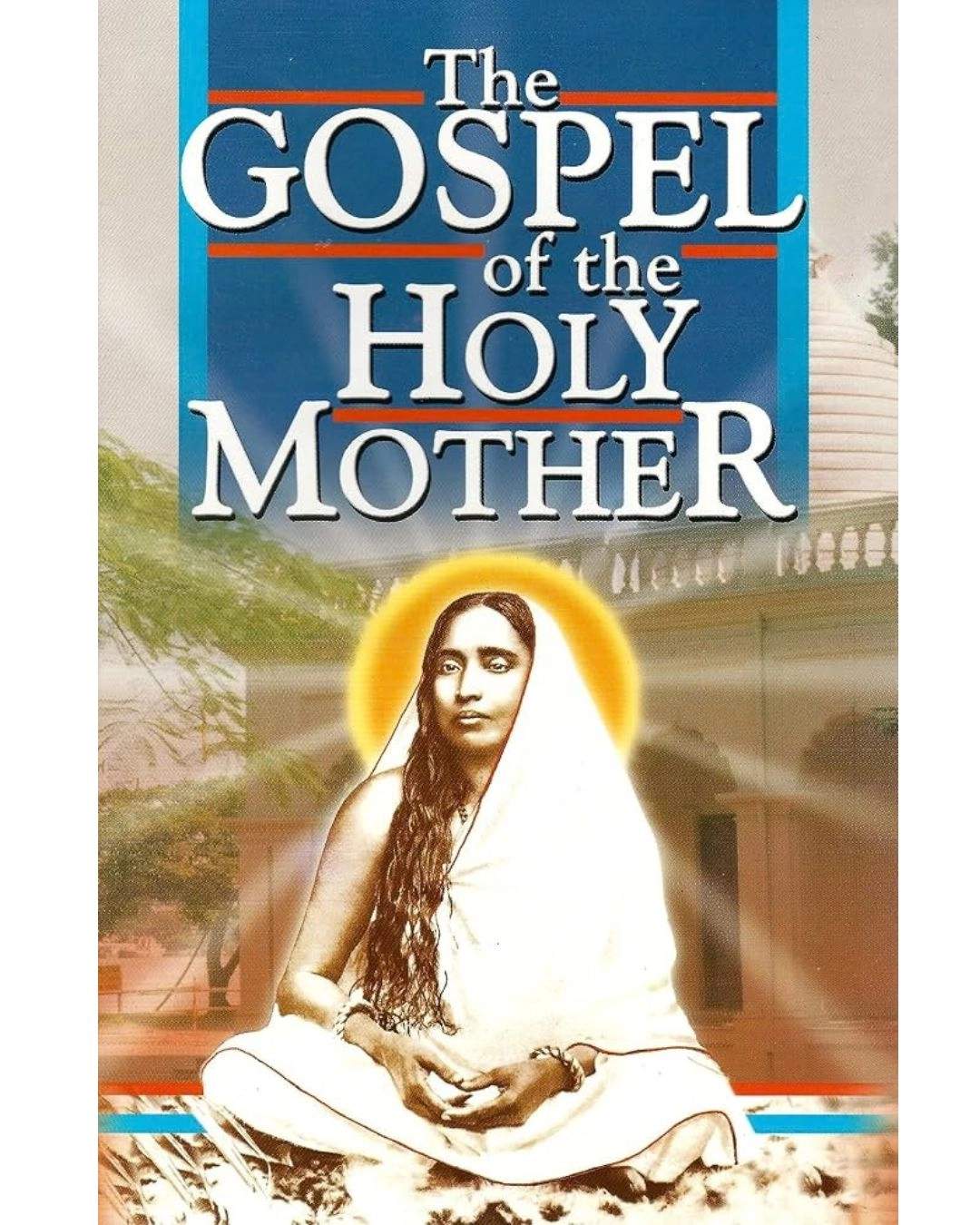
Any book we pick to read from the treasure trove of Sri Ramakrishna Math is worth reading. Hence, they do not need any special review. However, personally, this one will remain very special as this is the first book I read about Holy Mother Sri Sarada Devi.
It is a collection of experiences, stories shared by the disciples, devotees of the Holy Mother. I had read The Gospel of Sri Ramakrishna long back and always wondered what it would have been like to be in the place of Mother Sarada Devi. As I read through the book, it made me experience the different roles this one great being took on – Wife, Disciple, Mother of thousands of children, Monitoring the administration of the various institutions, Guiding all the direct disciples of Sri Ramakrishna after he left, Caretaker of family members, above all still did such intense sadhana every day!! Is it really possible for a normal mortal like us to handle all these and still present oneself as a normal ordinary lady from a small village?
All the different narrations of the devotees, disciples present seemingly contradicting, yet subtle teachings taught by The Mother. The book is truly a treasure house for all seekers who want to get a glimpse of a Great Saint’s life and a living example of how she sailed through all odds giving us the most important message in this path – Faith, Perseverance, Continuous Sadhana. SHE indeed is the Divine Mother incarnate who have shown the path by living it.
NEWS FROM BYK
CEO Foundation Talk
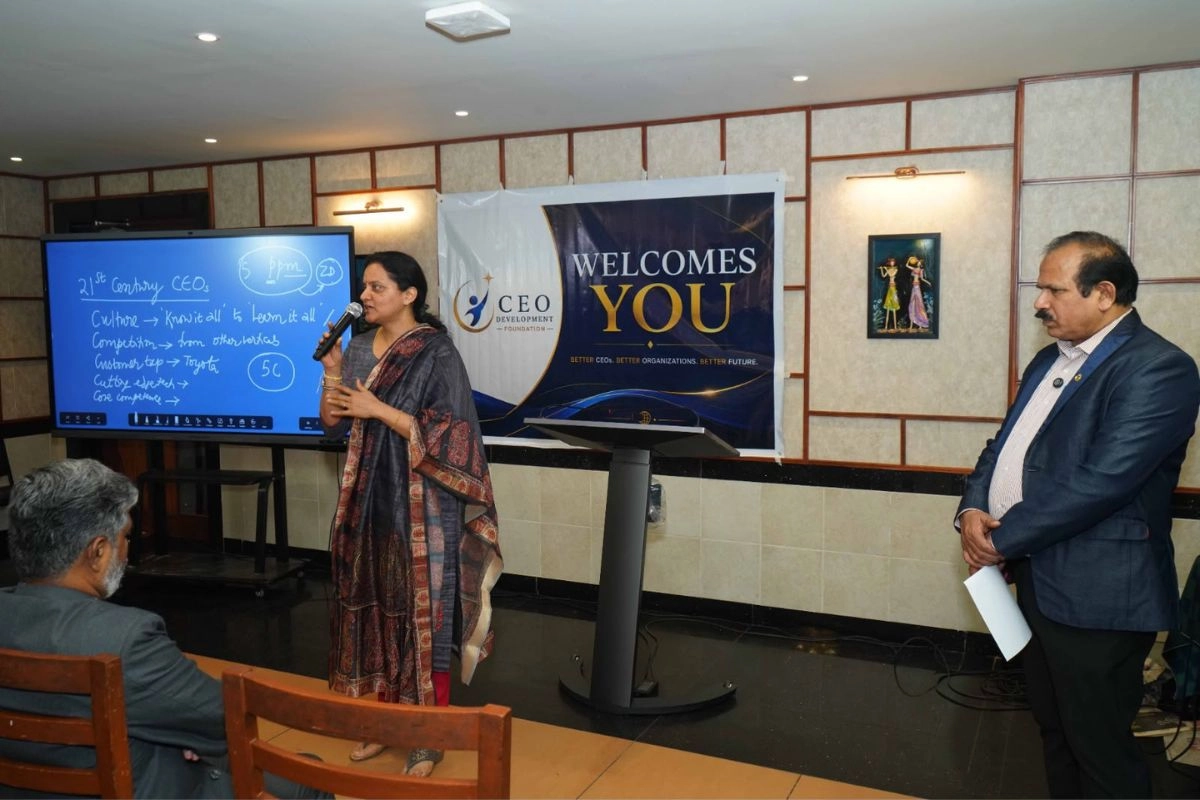
We at BYK are very happy to share that our Academic Lead, Chitra Ganesh was invited as a guest speaker at the CEO Foundation – Chennai Chapter meeting held in Chennai recently. She spoke about the relevance and importance of Yoga practice for CEOs of the 21st century. An experiential session on Pranayama helped participants understand that being in a world that constantly demands performance, how Yoga can help CEOs pause, breathe and lead better with awareness.
Testimonial below :
Dear Smt. Chitra Ganesh,
On behalf of CEO Development Foundation, I sincerely thank you for sharing your valuable thoughts on the importance of Yoga in the health and well-being of CEOs at our Chennai Chapter First Meeting. Your message beautifully reinforced our belief that strong leadership requires not only professional excellence, but also physical, mental and emotional well-being.
Thank you for making the session meaningful and inspiring.
Warm regards,
Durai Kandasamy
Founder
CEO Development Foundation
Would you like a session like this in your organization, please write to connect@bharatyogavidyakendra.in
JOURNEY OF A SATSANGI
Journey of a Satsangi – Part 8: Life at the Peepal Grove School
Hello and welcome to Part 8 of the Journey of a Satsangis! In the previous episode, I visited Varanasi with Diane and received my invitation to teach chess and mathematics at the Peepal Grove School. For those who may be joining the story here, Part 1 of the journey began in the February edition of the BYK newsletter, with subsequent chapters continuing in later editions. Each part traces a different stage of the journey and I’m grateful to be able to share my experiences here with you.
For the next few episodes, I’ll be stepping away from telling the story in chronological order. Instead, I’ll focus each episode on a particular aspect of my experience at Peepal Grove School (PGS) and explore it in a little more depth.
It would be impossible to capture everything I experienced during my year at PGS in just a few episodes of this journal. So rather than trying to tell every story, I’ll share some of the moments and experiences that were most meaningful to me and, hopefully, give you a sense of what made my time at PGS so special.
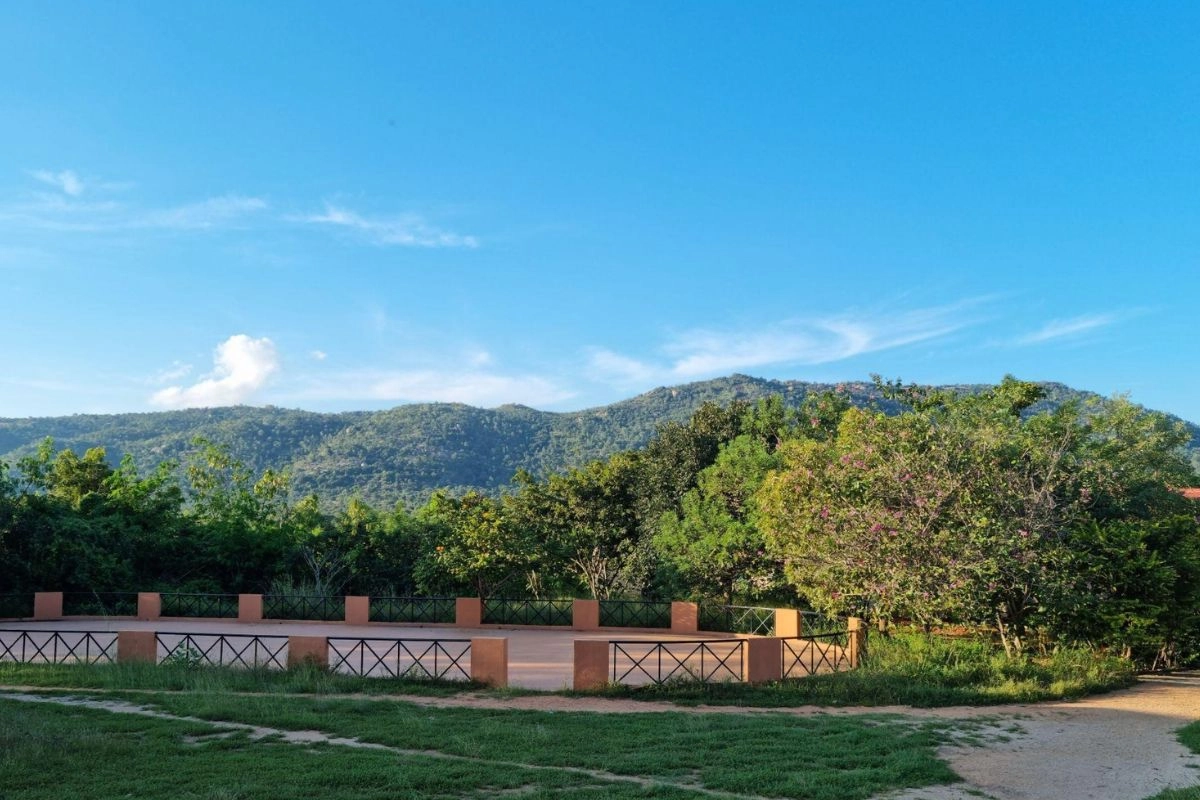
The Peepal Grove School was founded in 2006 by Sri M, Sunanda, and Viraj and was inaugurated by the then President of India, Dr. Abdul Kalam in December, 2006 . The 30 acre campus is nestled in a natural basin and encircled by hills. The basin is filled with hundreds of mango trees scattered throughout the campus and the surrounding countryside.
The school has a rich biodiversity that is home to dozens of birds, butterflies and flora where children learn to live in harmony with nature. The school has also adopted several environmentally sustainable projects such as rainwater harvesting, biogas, composting, and solar power generation.
The school is also home to a number of lizards and snakes, including venomous species such as cobras and pit vipers. I personally saw a large pit viper on the school grounds. What I found particularly amazing was that, during the more than 12 years of the school’s history up to 2018, and now nearly 20 years since its founding, there has not been a single incident of a student, teacher, or worker being bitten by a venomous snake.
The school is a fully residential boarding school and, in 2018, was home to approximately 130 students ranging from Grades 4 to 12, along with around 30 teachers. With such a relatively small student body and class sizes typically ranging from 10 to 25 students, the school had a strong sense of being a close-knit community. Students and teachers lived, learned, ate, and participated in daily activities together, creating opportunities for meaningful relationships and allowing each student to receive individual attention and support from their teachers.
As mentioned in the previous episode, Diane, Monkey and I arrived at PGS on June 15, 2018 and we began our process of getting settled in. Our residence was a unit on the 1st floor (or what would be called the 2nd floor in Canada, since the ground floor is considered the 1st floor there) of the staff quarters.
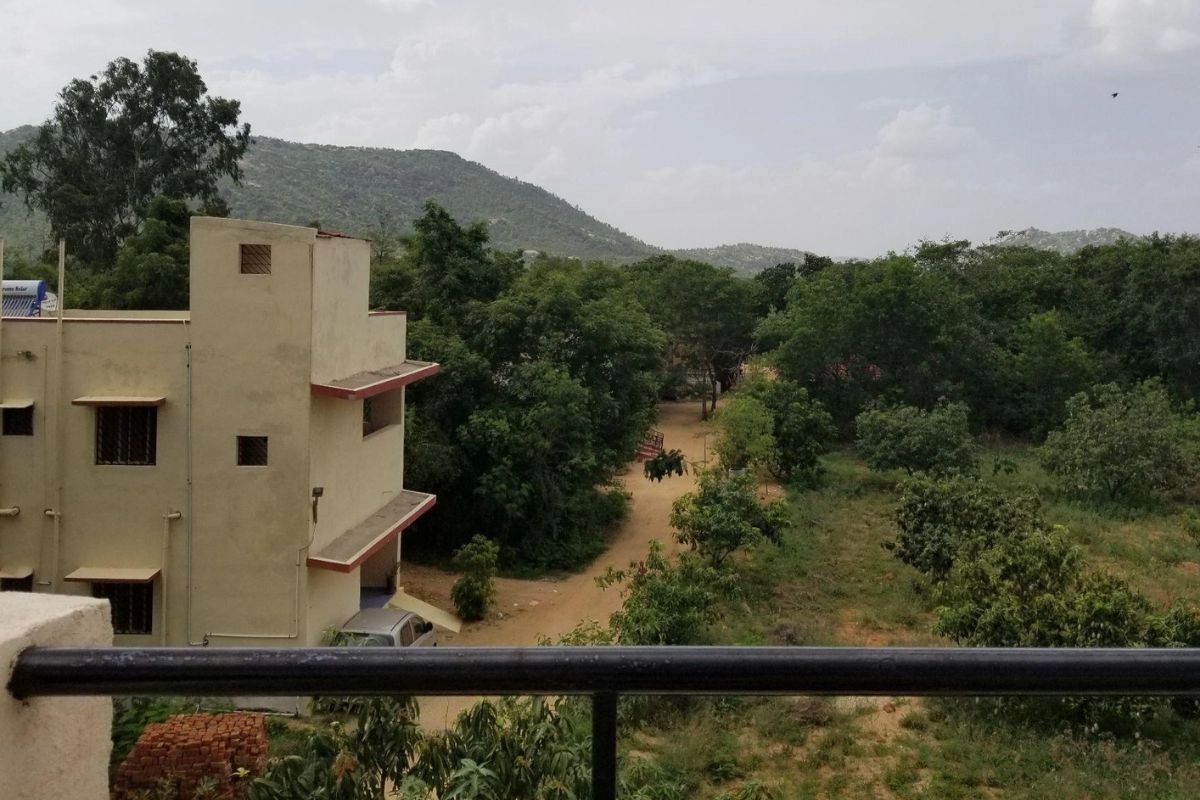
Our unit was a single room of approximately 250 square feet with an attached bathroom. It had an open-concept layout, including a small kitchen area with a sink and counter, but no stove or refrigerator. We bought an induction stovetop so that we could do some cooking, but living without a refrigerator took a little getting used to.
One thing I initially missed was not having cold drinking water, but I soon learned an amazing workaround. Viraj showed me that storing drinking water in a clay pot could naturally lower its temperature by a few degrees. Because the clay is porous, a small amount of water seeps to the outer surface and evaporates, creating a natural cooling effect.
It was a simple but fascinating solution. It was just one example of how people in India had found practical and environmentally friendly ways to improve their quality of life without relying on appliances that consume significant amounts of electricity.
We really did not do much cooking in our room since breakfast, lunch, and dinner were provided for both teachers and students in the dining hall. On the occasions when we wanted to prepare something ourselves, fresh fruits, vegetables, and eggs were relatively easy to obtain either from a small market on the school campus or from the market in the nearby town of Sadum, about 6 km away.
The cost of fresh produce was also remarkably inexpensive. You could buy around a kilogram of onions, carrots, okra, or various other seasonal vegetables for approximately Rs. 50 (about US$0.75).
The food at the school consisted of a wholesome rotating menu of vegetarian dishes, along with eggs, which changed each day of the week. However, having grown up as a non-vegetarian eater in Canada, it did take some getting used to.
Every couple of weeks, Diane, Monkey, and I would make a trip to the nearby town of Sadum—or occasionally all the way to Bangalore, approximately 180 km away—to satisfy our cravings for non-vegetarian food, with dishes such as chicken biryani and seafood like fish and prawns.
The food at the school was also quite spicy, as is common throughout much of India, and especially in Andhra Pradesh, where the school is located. Fortunately, this did not pose too much of a challenge for me since Korean food is generally quite spicy as well. It was more challenging for Diane, however, as she was not accustomed to that level of spice and she had to be much more careful and selective about what she ate in the dining hall.

Monkey turned out to be very popular with the teachers and especially the students (more popular than me, by far!) I was even given permission to bring him with me to classes. Whenever I showed up to class without him, students would immediately run up to me and ask:
Student: “Bhaiya” (a term the students used for male teachers, similar to “older brother”), where is Monkey?
Sam: Oh, I left him at home with Diane akka. (“Akka” is similar to “Bhaiya,” but is used for female teachers.)
Student: (Clearly disappointed). “Oh, okay. Then I guess I’ll see you later…”
Monkey also created a bit of confusion among some of the students’ parents when they came to visit. You see, in Canada, you don’t see monkeys roaming around. In India, however, monkeys are a common sight, including a few that lived around the school grounds. This occasionally led to some amusing moments:
Student: (Seeing Monkey and happily pointing) “Monkey! Monkey!”
Parent: (Clearly a little embarrassed by their child’s mistake) “Uhhh… that’s a dog, not a monkey…”
Amusing mishaps like that aside, Monkey actually did some good at the school and was personally responsible for helping a number of students overcome their fear of dogs. Unlike most Chihuahuas, Monkey rarely barks—except when he is at home and someone knocks on the door. He is also remarkably calm and gentle with children.
For students who were afraid of dogs, Monkey provided a gentle way for them to slowly learn to trust one. They could approach him at their own pace, first simply being around him, then gradually getting close enough to touch him. By the end of the year, some of those same students who had once been terrified of dogs were confidently petting Monkey and even picking him up. It was heartwarming to see how this little dog was able to help them overcome a fear that had once seemed so difficult to conquer.
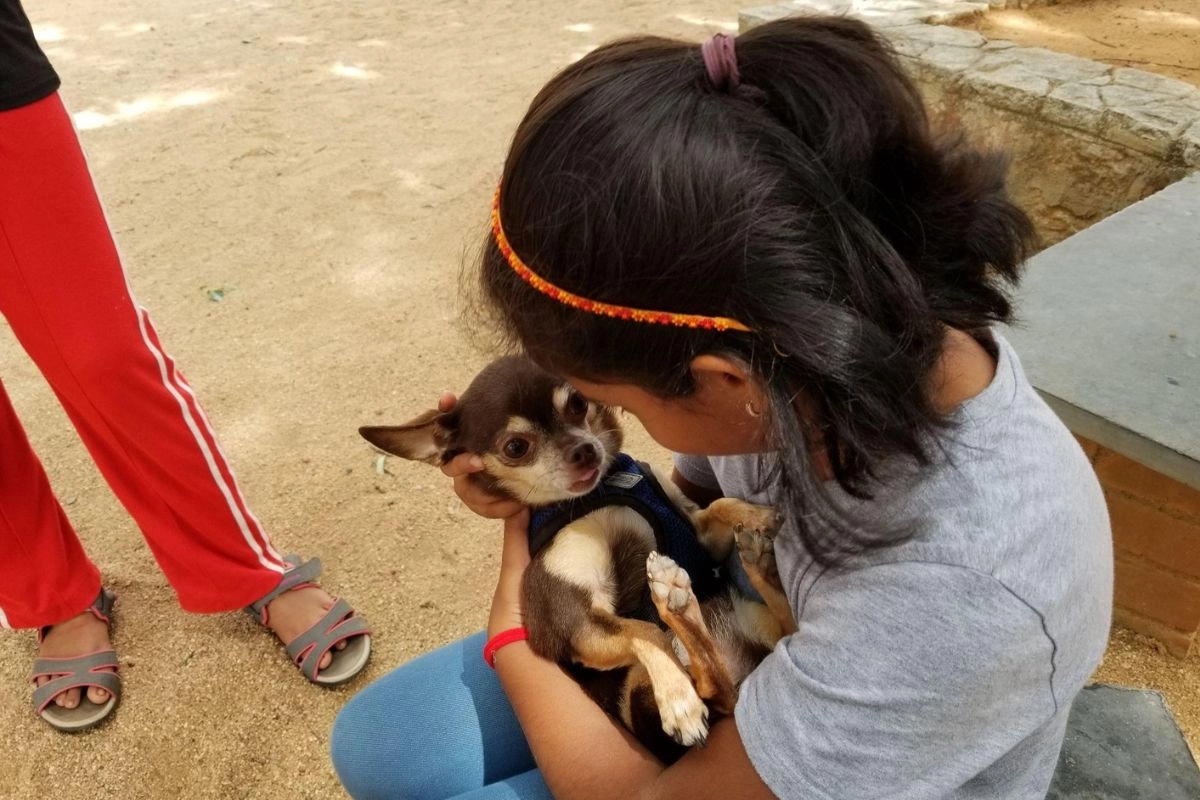
Monkey was also very popular in town. While stray dogs were everywhere in India, Chihuahuas like Monkey were quite rare. Whenever we went into town, people would invariably come over to ask about him. It became a wonderful way to start conversations with people and get to know them. We also received several invitations to visit the homes of local families.
I found the people in the area to be incredibly warm and welcoming, and they treated their guests with the utmost respect and hospitality.
You did, however, have to be careful about how much you ate. Indian hosts, especially in the south, love feeding their guests, and refusing a second helping could be taken almost as a personal rejection. They would often give you a hurt look and ask, “Don’t you like the food I prepared for you?” At that point, you really had no choice but to eat a little more!
Little by little, we began to adjust to the new people, customs, and environment around us. I won’t lie, it took some time to settle into the rhythm and pace of life at Peepal Grove School. But as we gradually found our footing, we began to experience the magic and vibrancy of the place. Before long, we had fallen in love with the beautiful campus and, more importantly, with the wonderful community of teachers and students who made the school feel so special.
To be continued…
Satsang is a Sanskrit term derived from sat (meaning truth) and sangha (meaning company/community) and refers to gathering with like-minded individuals, often with a guru, to listen to spiritual teachings aimed at elevating consciousness and fostering spiritual growth.
Ayurvedic Wisdom
Rituchariya
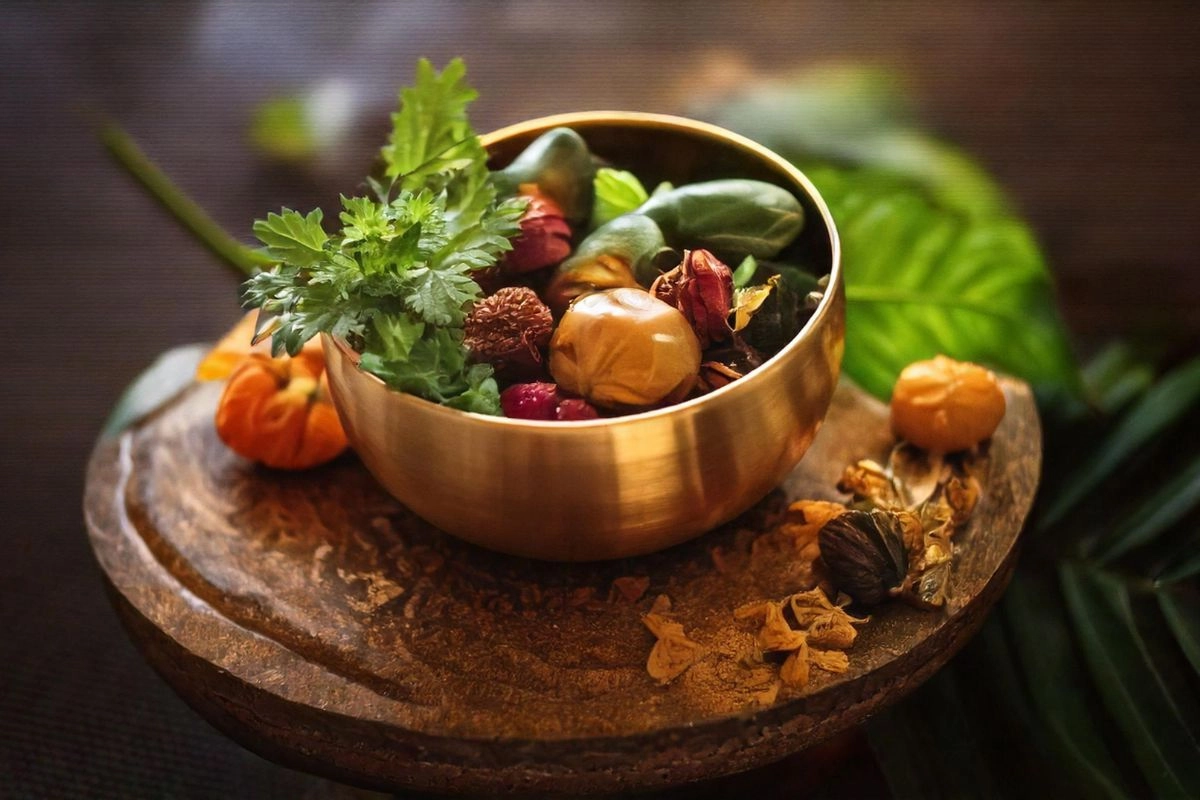
The rainy season is beautiful, refreshing, and deeply nourishing for nature. However, according to Varsha Ritucharya in Ayurveda, this season can weaken digestion, aggravate Vata dosha, and make the body more susceptible to seasonal health concerns. Varsha Ritucharya in Ayurveda is the seasonal regimen recommended during the monsoon season (Varsha Ritu) to balance aggravated Vata dosha, support digestion, and strengthen immunity.
Ayurveda explains that seasonal changes influence the balance of the three doshas—Vata, Pitta, and Kapha. During Varsha Ritu, Vata becomes aggravated while digestive fire (Agni) weakens, making proper dietary and lifestyle practices essential for maintaining health.
- The primary goal of Varsha Ritucharya is to:
- Balance Vata dosha
- Improve digestive strength
- Support immunit
- Prevent seasonal ailments
- Promote overall wellbeing
Varsha Ritu follows the intense summer season and is characterized by increased humidity, rainfall, and environmental changes. The dryness and depletion caused by summer accumulate Vata dosha. When the rainy season arrives with its cool, damp, and unstable qualities, the accumulated Vata becomes aggravated. Signs of increased Vata may include:
- Gas and bloating
- Joint discomfort
- Dry skin
- Irregular digestion
- Restlessness
- Fatigue
Managing Vata is one of the most important principles of Varsha Ritucharya in Ayurveda.
Ayurvedic Diet During Varsha Ritu
Food is one of the most powerful tools for maintaining balance during Varsha Rutu. Ayurveda recommends eating foods that are warm, freshly prepared, nourishing, and easy to digest.
Foods to Include During Monsoon
- Freshly cooked meals
- Steamed foods
- Rice, barley, and wheat preparations
- Seasonal vegetables
- Warm soups
- Cow’s ghee in moderation
- Buttermilk instead of curd
- Ginger with rock salt before meals
- Herbal teas
- Warm water throughout the day
Digestive Spices Recommended in Ayurveda
Include:
- Ginger
- Black pepper
- Asafoetida (Hing)
- Cumin
- Coriander
Foods to Avoid During Varsha Ritu
To support digestive health during monsoon, Ayurveda recommends limiting:
- Deep-fried foods
- Excessively spicy snacks
- Refrigerated foods
- Cold beverages
- Ice creams
- Carbonated drinks
- Raw salads
- Undercooked foods
- Excess red meat
- Heavy processed foods
Choosing warm, freshly prepared meals helps maintain digestive balance throughout the season.
Practice the following daily regimen to stay healthy and improve immunity
Abhyanga (Oil Massage)
A warm oil massage followed by a bath can help calm Vata, nourish tissues, and improve circulation
Exercise Moderately
Choose gentle activities such as:
- Yoga
- Stretching
- Walking
- Pranayama
- Avoid excessive physical exertion during the rainy season.
- Stay Warm and Dry
- Avoid Daytime Sleep
Conclusion
The monsoon season offers an opportunity to reconnect with nature and support the body’s natural rhythms. By following the principles of Varsha Ritucharya, making mindful food choices, and adopting healthy lifestyle practices, you can enjoy the beauty of the rainy season while maintaining balance, vitality, and wellbeing.
COMMUNITY COLUMN
The Divine Soul Saradamma
A personification of compassion and love
“No one is a stranger, my child: this whole world is your own!”
1. LOVE THAT TRANSFORMS
Saradamma’s way of reforming people was rooted not in anger, punishment or guilt, but in unconditional love. Her kindness gave people the dignity to change from within.
- The Thief Who Became a Devotee
A thief once entered her garden intending to steal. Overcome by fear, exhaustion and remorse, he collapsed in the courtyard. When the devotees wanted to punish him, Saradamma instead brought him warm food and spoke to him like a mother. Her compassion moved him deeply, and he resolved to abandon his old ways. - The Drunkard’s Transformation
A troubled man known for alcohol, gambling and aggression was treated with kindness rather than rejection. Saradamma offered him sweets and reminded him gently that he was a good soul. She invited him to sit with her whenever temptation arose. Her home became a place of dignity and refuge, and he gradually left his destructive habits behind. - Her Secret Weapon: Total Acceptance
Her teaching was simple: before trying to reform another person, accept them as they are. Harshness can harden the heart; love can awaken the desire to become better. - Seeing Into the Future
A devotee once planned a boat journey and sought her blessing. Saradamma urged him to wait two days. A severe storm followed the next day, and several boats were overturned. The story is remembered as an example of her intuitive spiritual guidance.
2. HER UNIQUE LIFE WITH SRI RAMAKRISHNA
Saradamma’s way of reforming people was rooted not in anger, punishment or guilt, but in unconditional love. Her kindness gave people the dignity to change from within.
- An Unusual Wedding
Sri Ramakrishna was deeply absorbed in spiritual life from a young age. According to the traditional account, he indicated that his future wife would be found in Jayrambati, in the house of Ramachandra Mukhopadhyay. The girl was Saradamma. They were married when he was 23 and she was five; as was customary at the time, she continued to live with her parents until she grew older. - Becoming a Spiritual Student
At 18, Saradamma heard that her husband had become absorbed in religious ecstasy and travelled to Dakshineswar to see him. Ramakrishna asked whether she had come to draw him into worldly life. She replied that she had come to help him in his spiritual path. He then guided her in meditation, devotion and the graceful management of daily life. - Worshipping His Wife as the Divine Mother
During the Shodashi Puja, Ramakrishna seated Saradamma on the altar and worshipped her as a living manifestation of the Divine Mother. The event is regarded within the Ramakrishna tradition as a profound recognition of her spiritual stature and as a defining moment in her life as the Holy Mother. - A Life of Mutual Respect and Care
Their relationship was marked by reverence rather than ordinary worldly expectations. Saradamma cared for Ramakrishna with loving attention, including preparing food suited to his delicate health. He, in turn, treated her with deep respect and defended her dignity whenever others spoke harshly. - Continuing the Spiritual Mission
After Ramakrishna’s passing, Saradamma continued his spiritual mission. She guided seekers, welcomed people from every background and became a motherly refuge for countless devotees. Her strength was expressed through simplicity, patience, service and an all-embracing love.
“True spiritual life is not only meditation; it is also love, service, patience and seeing the Divine in all.”
3. HER FINAL MESSAGE AND LASTING LEGACY Her Ultimate Message
Shortly before her passing, a distressed woman named Annapurna came to Saradamma seeking peace in a world filled with suffering and difficult people. Saradamma answered with the teaching that is remembered as her ultimate message:
“If you want peace of mind, do not look at the faults of others. Rather, look at your own faults. Learn to make the whole world your own. No one is a stranger, my child: this whole world is your own!”
- Three Lessons for a Peaceful Life
Protect your peace. Constantly searching for faults in others disturbs the mind.
Be your own judge. Put your energy into correcting yourself rather than controlling others. Make the world your family. When no one is treated as a stranger, loneliness gives way to belonging. - Swami Vivekananda’s Reverence
Swami Vivekananda regarded Saradamma with extraordinary reverence and saw her as the Divine Mother. Her blessing and spiritual authority were deeply respected by him and by the wider Ramakrishna movement. - Belur Math
In the traditional account, Saradamma blessed the land by the Ganga that became the site of Belur Math, expressing her conviction that it would become a great centre of peace and spiritual life. - Work Is Worship
For Saradamma, cooking, cleaning and serving guests were not lesser activities. When performed with love, they became forms of worship. Her life demonstrated that spirituality can be expressed through the smallest acts of daily service. - Her Peaceful Passing
On 21 July 1920, at the age of 66, Saradamma passed away in deep spiritual absorption. Devotees remembered her assurance that she would remain a Mother to those who turned to her in times of difficulty.
“Whenever you are in trouble, remember you have a Mother.”
A life of compassion. A heart that made no stranger. A spiritual presence remembered as a Mother.
TESTIMONIALS
Yoga M Testimonial
I was always apprehensive about learning online, specially a thing like Yoga, where accuracy matters so much, but I just joined it because in such hot weather, I could not dare go out, and I am not very tech Savvy first 2/3 days, I was having a hard time getting used to online sessions, I had not done yoga any physical exercise in a long time. I just didn’t have the motivation to go out and exercise, and as I said before I didn’t have inclination to do online courses, but I I am glad that I took this course. from the comfort of home, I got such amazing training with precision. Our trainer, Adith sir, not only watched over us carefully and taught us the subtleties of correct postures, and Pranayamas accurately but also guided us through our confusions and questions( and we had so many) with so much patience that it just felt that grace of masters just flowed through him. I have learnt yoga and practice it many times before, but I got to know so many new things and correct way of doing the practice and strangely. I never felt tired after the sessions. Although I sweated a lot. He also helped me a lot in my personal journey of spirituality. I just think I am a little better person after completing this course. Then I was before I started also, the participants were wonderful and helped each other. I think I’m going to miss them all and Adith sir.
Gratitude to Sri M and the whole team of Bharat Yogavidya Kendra for designing this course with so much precision and thoughtfulness. Thank you.
– Sulakshna Jasra, YogaM
Upcoming Courses & Retreats
![Logo of Bharat Yogavidya Kendra [BYK]](https://bharatyogavidyakendra.in/wp-content/uploads/2025/07/BYK-Logo-300px.png "BYK-Logo-300px")
Thank you for reading